Read this important piece by my @CFR_org colleague @JoshKurlantzick on Prabowo Subianto’s rocky rule in Indonesia: “The economy is in free fall, and the Indonesian people are suffering badly, with the potential for an outright economic implosion at its highest since the late-1990s Asian financial crisis.”
Indonesia seems on the verge of collapse. A story lost in the headlines but very important- my latest for @WPReview and @CFR_org Prabowo Pushes Indonesia Further Toward the Brink https://t.co/4Mox2v1BPo
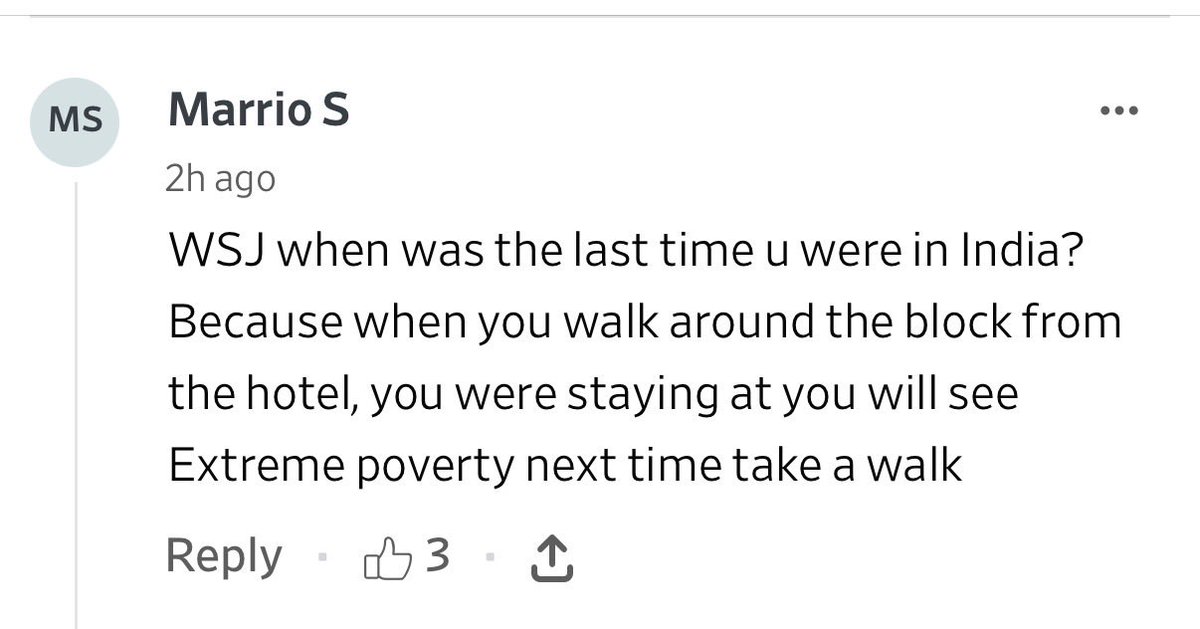
Nobody confuses poverty with lack of luxury. The problem is more straightforward. It’s natural for people to compare India with places they know (almost always richer than India) rather than with India’s own past. Not that easy to grasp that no matter how poor India looks today it was a lot poorer 50 years ago.
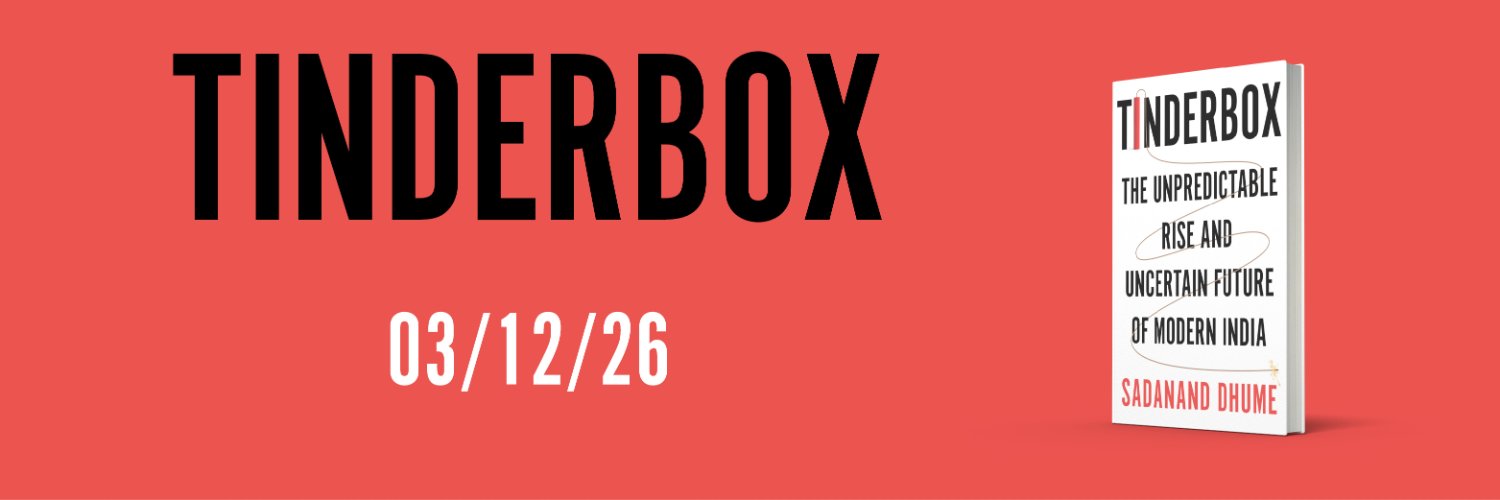
From @WSJopinion: India’s reduction of extreme poverty is no small accomplishment. But to achieve widespread prosperity, New Delhi will need to go much further in embracing free markets, writes @dhume.
https://t.co/nAhfcYPGas
Many people find it hard to accept that India has more or less eliminated extreme poverty. This is understandable. When a person from a rich country visits India, often their first and most overwhelming impression is of privation. Widespread urban squalor compounds this effect.
To many Westerners, as well as to many privileged Indians, the fact of Indian poverty is mindnumbingly obvious. If you contest it you must be either crazy or some kind of government shill. There is data to support this view. About 30% of all humans who live on the equivalent of less than $8.30 a day live in India.
Skepticism about India’s success in battling poverty may be understandable, but it’s nonetheless mistaken. The World Bank does not claim that India is no longer poor by developed world standards. The claim is much more limited. India has not eliminated poverty. It has virtually eliminated EXTREME poverty. Only about 2% of Indians live on the equivalent of $3.00 a day, down from 27% who lived under the equivalent benchmark for extreme poverty 15 years ago.
In practical terms, this means that hundreds of millions of people who once lived on the very edge of human existence have moved a small distance from that edge. Is this enough? Of course not. India is still far from becoming rich. And despite the frantic enthusiasm of the “Gorakhpur equals Singapore” crowd, any reasonable person must remain open to the possibility that India may not become rich in our lifetimes.
Nonetheless, we can still celebrate India no longer being extremely poor. The type of poverty that once defined the country, the type that Naipaul documented in the 1960s, and Oxfam fundraised off for decades, has all but vanished. This is a landmark in both Indian and human history.
India’s reduction of extreme poverty is no small accomplishment. But to achieve widespread prosperity, New Delhi will need to go much further in embracing free markets, writes @dhume
https://t.co/JGDTBYyFl4
@sunraysunray Agree that it will almost certainly play out differently in the U.S., but my hunch is that ultimately we’ll end up in a broadly similar place as the UK, where celebrating religious diversity is accepted across the political spectrum.
My bet is that over time speaking warmly about Hinduism will become the norm for U.S. politicians in both parties. But right now there’s one party where you can hold forth on the wisdom of the Ramayana and the Mahabharata and another party where this would be political suicide.
Zohran Mamdani praises the Hindu epics:
“The Ramayana shows us the brother, wife, husband and friend we desire to be. The Mahabharata shows us what families are really like, where even the bravest heroes and wisest gods stumble..”
Sure. My point isn’t that most politicians will be as eloquent or well-informed on this topic as Mamdani, but that the space for politicians to say warm things about Hinduism will likely widen over time. The UK offers a template. Hardly anyone batted an eyelid at a Tory PM celebrating Diwali at 10 Downing Street.
Not everyone is going to wax lyrical about the Ramayana and Mahabharata like Mamdani, but no Democrat gets into trouble for wishing their constituents Happy Diwali. The idea that there’s some dark Democratic conspiracy against Hinduism is nonsense largely spun by Hindu nationalists who would like you to believe that criticizing a political party in India is the same as criticizing the faith of over a billion people.
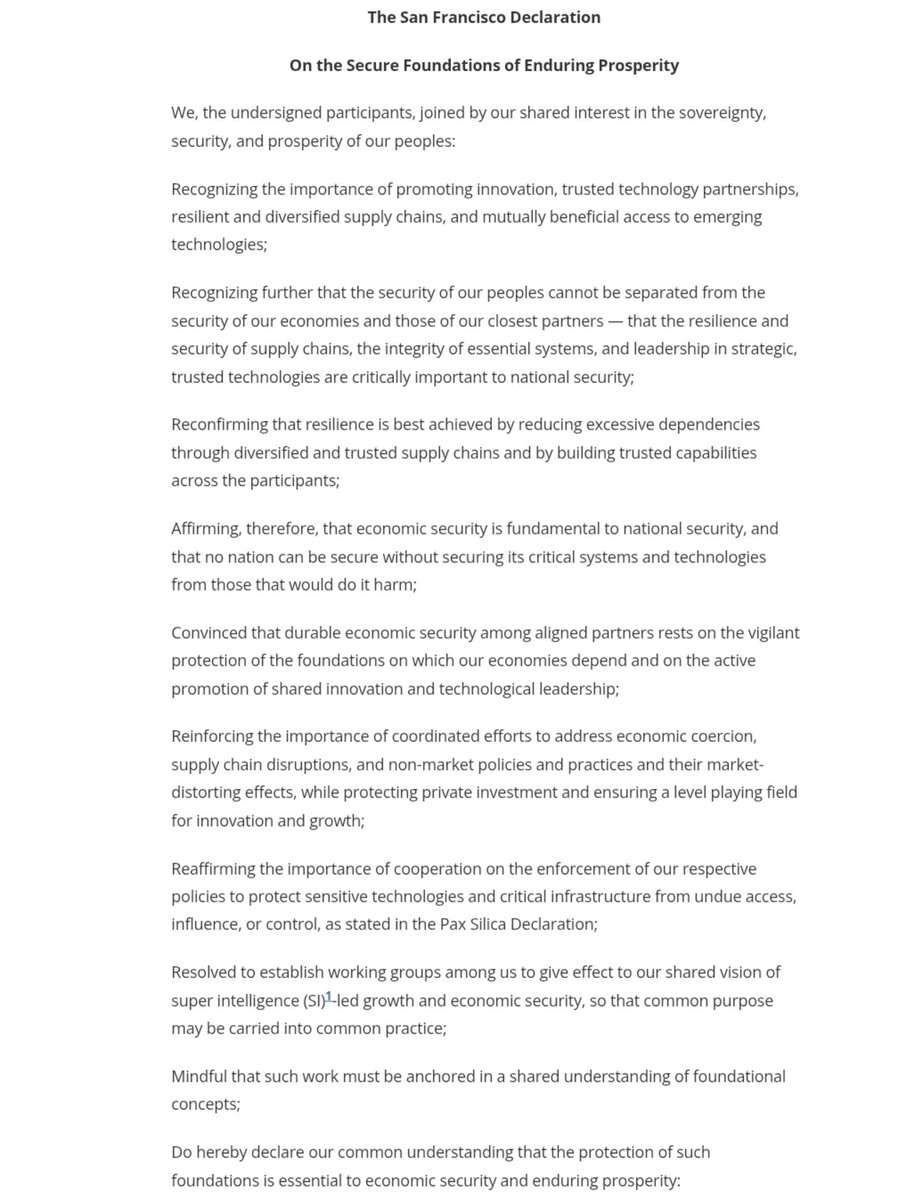
India signs "San Francisco Declaration on the Secure Foundations of Enduring Prosperity" alongside the United States and eight other countries.
It focuses on sensitive technologies, critical infrastructure.
The U.S. has undoubtedly become far more illiberal than before under Trump, and visa policies are a good example of this. But most Americans don’t get upset if you point this out. Only the Indian right has perfected the art of being deeply and proudly illiberal while at the same time taking offense at being called illiberal.
Ironically, the same people who applaud visa cancellations to stifle an opposition event tend to get awfully upset if you point out that India is becoming increasingly illiberal.
A disappointing footnote to the #BharatSummit proceedings: when I got to Hyderabad, I learned that 115 of the 315 speakers whom the External Affairs Ministry had cleared for the event ended up being refused entry to India or having their visas cancelled, apparently on the instructions of the Ministry of Home Affairs. It is completely unclear under what provision of law the government has taken such a drastic step, but it is obviously impossible to reverse it since the conference concludes tomorrow. What a shame that a proud democracy has become so insecure that it must stifle any voices it fears will be critical!
@razibkhan Do you think a movement that has gone “full retard” is capable of diagnosing the problem and self-correcting? (A first step may be to acknowledge that Mitt Romney would have been a far better president than Trump.)