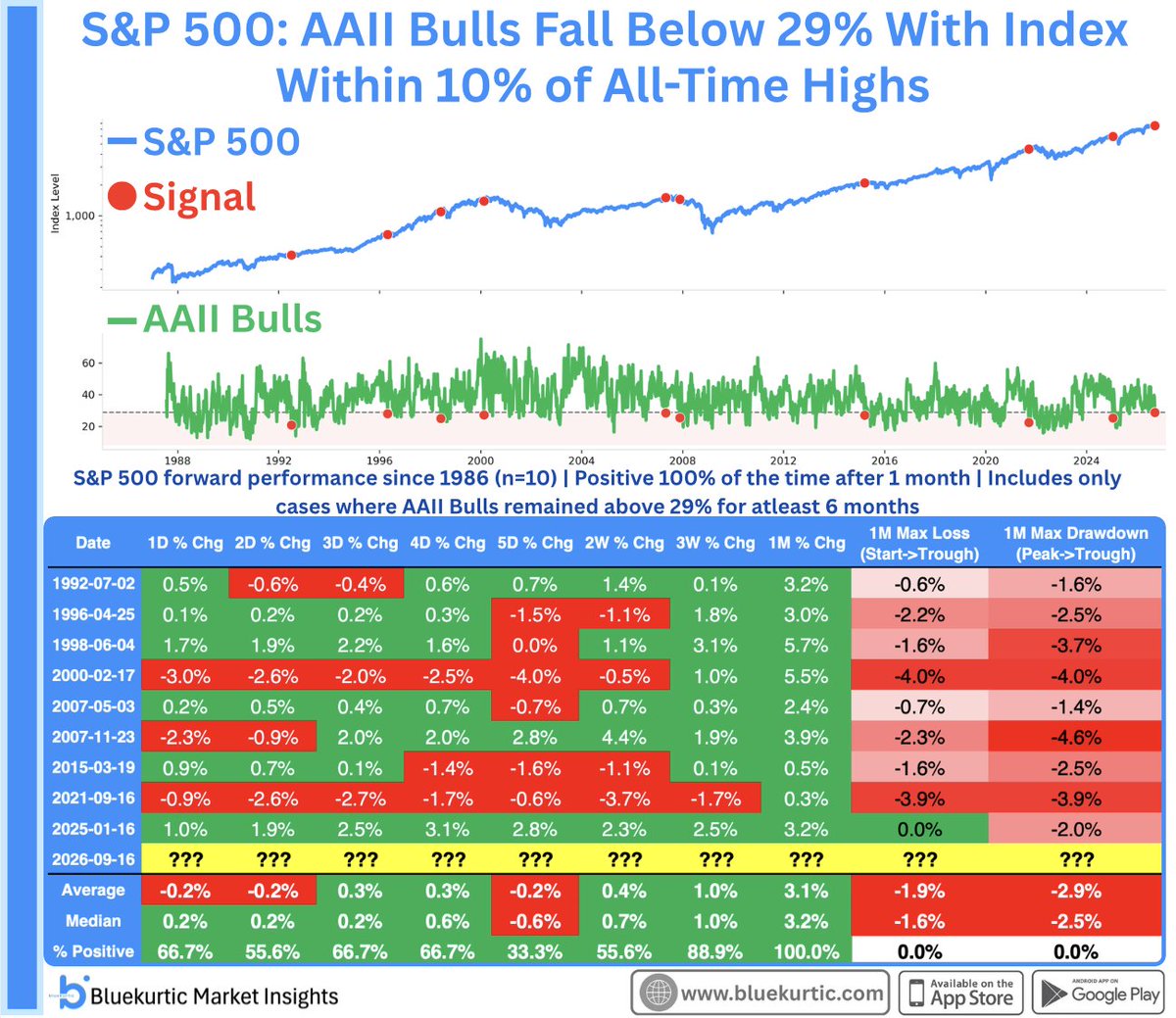
This time, bulls went into hibernation. AAII bullish sentiment fell to just 28.8% this week, even with the S&P 500 near its highs.
$SPX was higher 1 month later 100% of the time, with a 3.2% median gain. Bulls, now's the time to wake up.
TOM LEE SAYS ONE OF THE BIGGEST RALLIES OF OUR LIFETIME COULD BE STARTING
He thinks the fourth quarter could mark the beginning of a much larger move into next year:
- Lee says the S&P 500 $SPX could easily finish above 8,200 by year end
- Tech is expected to do much of the heavy lifting, with the Mag 7 and software names starting to come back to life
- As long as the AI trade stays intact, he expects the current correction to give way to a major year-end rally
U.S. Mortgage Applications just fell back to the lowest level since 1995.
And are now down 50% from the pandemic peak.
Demand to buy with a mortgage today is shockingly at the same level as 31 years ago, even though U.S. population is 30% higher.
The reason demand is so low is due to sky-high home prices, which are in a massive bubble.
To go along with sky-high prices, mortgage rates are now back to normal at 7%.
Meaning the vast majority of buyers can't afford it, with the typical household needing to spend nearly 40% of their gross income on house payments.
This historic demand collapse will not improve until home prices drop meaningfully.
And the situation is becoming especially dire in America's highest cost markets.
Check your ZIP on Reventure to see where your market ranks: https://t.co/f4qNQ29CIP
I just found the CRAZIEST Market statistics
Save this. This is the investing roadmap to RETIREMENT.
19 FOR 19.
Since 1950, the S&P 500 $SPY has been higher 12 months after EVERY midterm.
19 midterms.
19 times higher.
Average gain: ~16%.
21 FOR 21.
Since 1942, EVERY November-through-June period following a midterm has been positive.
21 straight.
Average gain: +16.6%.
YEAR 3 HAS HISTORICALLY BEEN THE STRONGEST.
The year after midterms has historically been the strongest year of the 4-year presidential cycle.
LPL’s 1950+ data puts the average around +18%.
This is why a difficult midterm year does NOT tell you what comes next.
19/19.
21/21.
Then historically the strongest year of the cycle.
This is when you strike. Stay patient for my NEXT move.
THE NEXT 10 YEARS WILL RETIRE MANY WHO FOLLOW
KEEP this. Do not lose it. Use it.
Many will chase whatever is already moving.
I’m watching where money is being FORCED to go next.
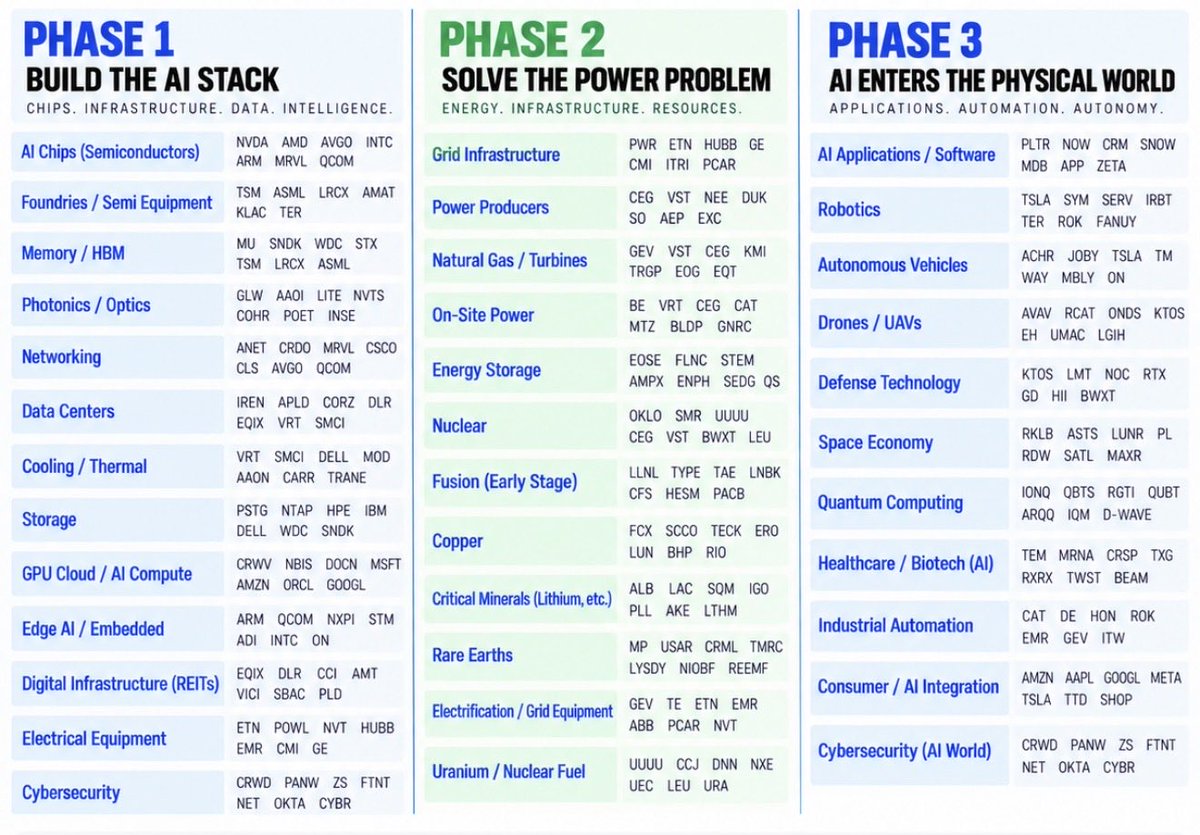
PHASE 1 - BUILD THE AI STACK
AI Chips: $NVDA $AVGO $AMD
Foundries / Semi Equipment: $TSM $ASML
Memory / HBM: $MU $SNDK
Photonics / Optics: $AAOI $LITE
Networking: $ANET $CRDO $MRVL
Data Centers: $IREN $APLD
Cooling / Infrastructure: $SMCI $DELL
Digital Infrastructure: $EQIX
Storage: $HPE
GPU Cloud: $CRWD $NBIS
Edge AI: $QCOM $ARM
Electrical Equipment: $NVT
Cybersecurity: $CRWD
PHASE 2 - SOLVE THE POWER PROBLEM
Grid Infrastructure: $HUBB
Power Producers: $CEG
Natural Gas / Turbines: $GEV
On-Site Power: $BE
Energy Storage: $EOSE
Nuclear: $OKLO $SMR
Fusion: Emerging / mostly private
Copper: $FCX
Critical Minerals: $ALB
Rare Earths: $MP $USAR
Electrification: $TE
PHASE 3 - AI ENTERS THE PHYSICAL WORLD
AI Applications: $PLTR $SNOW
Robotics: $TSLA $SYM
Autonomy: $JOBY
Drones: $AVAV $RCAT $ONDS
Defense Tech: $KTOS $LMT
Space: $RKLB $ASTS
Quantum: $IONQ $QBTS
The opportunity isn’t finding one “AI stock.”
It’s understanding what has to be built next.
FOLLOW THE BOTTLENECKS. FOLLOW THE CAPITAL.
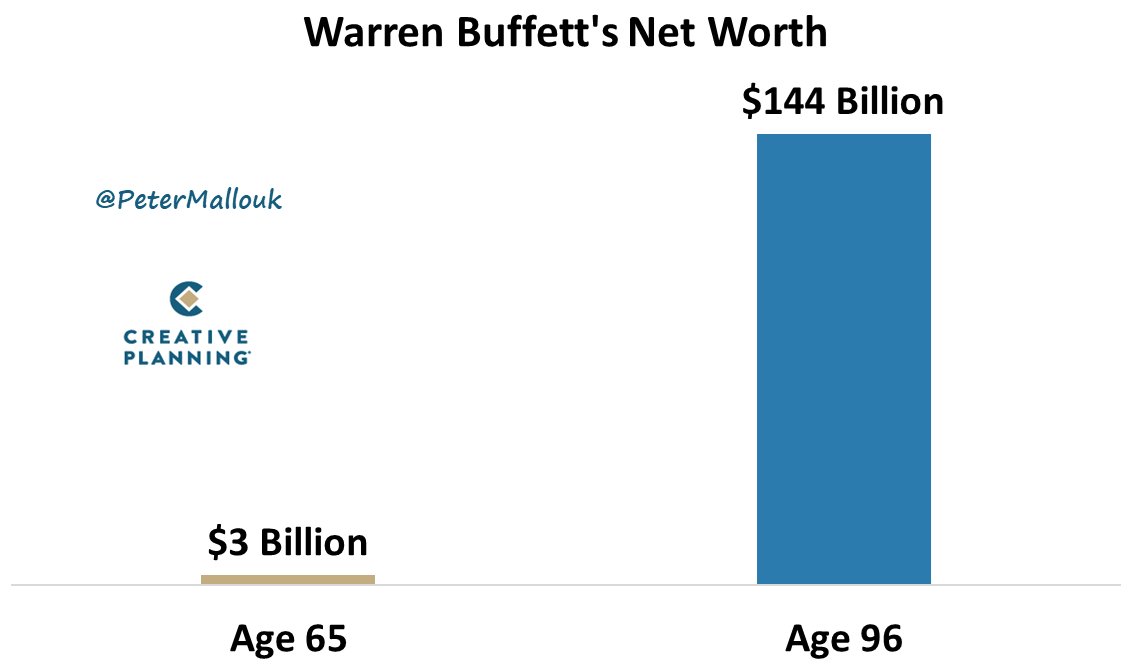
Warren Buffett just turned 96 with a net worth of $144 billion.
Here’s the incredible part:
98% of his wealth was accumulated after age 65.
"My life has been a product of compound interest." - Warren Buffett
THE AI CYCLE THAT WILL RETIRE YOU IN THE NEXT 5-10 YEARS
Sharing this once. Do NOT lose it. Keep this.
The government and the largest companies in the world are showing you where capital is going.
Follow the BUILDOUT:
PHASE 1 2026–2027: BUILD THE AI STACK
AI Chips: $NVDA $AMD $AVGO $INTC
Memory / HBM: $MU $SNDK
Networking: $MRVL $QCOM
Photonics / Optics: $AAOI $LITE
Data Centers: $IREN $APLD
Cooling / Infrastructure: $SMCI $DELL
Storage: $HPE
GPU Cloud: $CRWV $NBIS $MSFT $AMZN
Electrical Equipment: $NVT
Cybersecurity: $CRWD
PHASE 2 2028–2030: POWER THE MACHINE
Grid Infrastructure: $PWR
Power Producers: $CEG
Natural Gas / Turbines: $VST
On-Site Power: $BE
Nuclear: $OKLO $CEG
Fusion: Emerging / mostly private
Copper: $FCX $SCCO
Critical Metals: $ALB $MP
Rare Earths: $MP $USAR
Electrification: $TE
PHASE 3 2030+: AUTOMATE THE WORLD
AI Applications: $PLTR $NOW $SNOW
Robotics: $TSLA $SERV
Autonomy: $ACHR
Drones: $AVAV $ONDS $KTOS
Defense Tech: $KTOS $AVAV
Space Economy: $RKLB $ASTS
Quantum: $IONQ $QBTS
WHAT DOES AI FORCE THE WORLD TO BUILD NEXT?
That’s what you ask yourself.
Save this.
🚨 WE ARE NOW ENTERING THE HOTTEST PHASE
Every midterm election year for the last 50 years has delivered a market drawdown:
1974 Ford: -35%
1978 Carter: -15%
1982 Reagan: -17%
1986 Reagan: -9%
1990 Bush: -20%
1994 Clinton: -8%
1998 Clinton: -22%
2002 Bush: -34%
2006 Bush: -8%
2010 Obama: -17%
2014 Obama: -7%
2018 Trump: -20%
2022 Biden: -27%
2026 Trump: ???
13 midterm years. 13 drawdowns.
Average intra-year drawdown: ~17%.
But this year there’s another cycle hitting at the SAME time.
A new Fed chair.
Over the last nine decades:
12 new Fed chairs. 12 equity drawdowns within their first three months.
Average: -12%.
The last time both cycles collided was 2018.
Powell became Fed chair.
Markets broke almost immediately.
By Christmas Eve:
S&P 500: -20%
Then Powell pivoted.
2019:
S&P 500: +30%
And now the timing gets even more interesting.
Market fear historically bottoms in early summer.
Then rises into September and October.
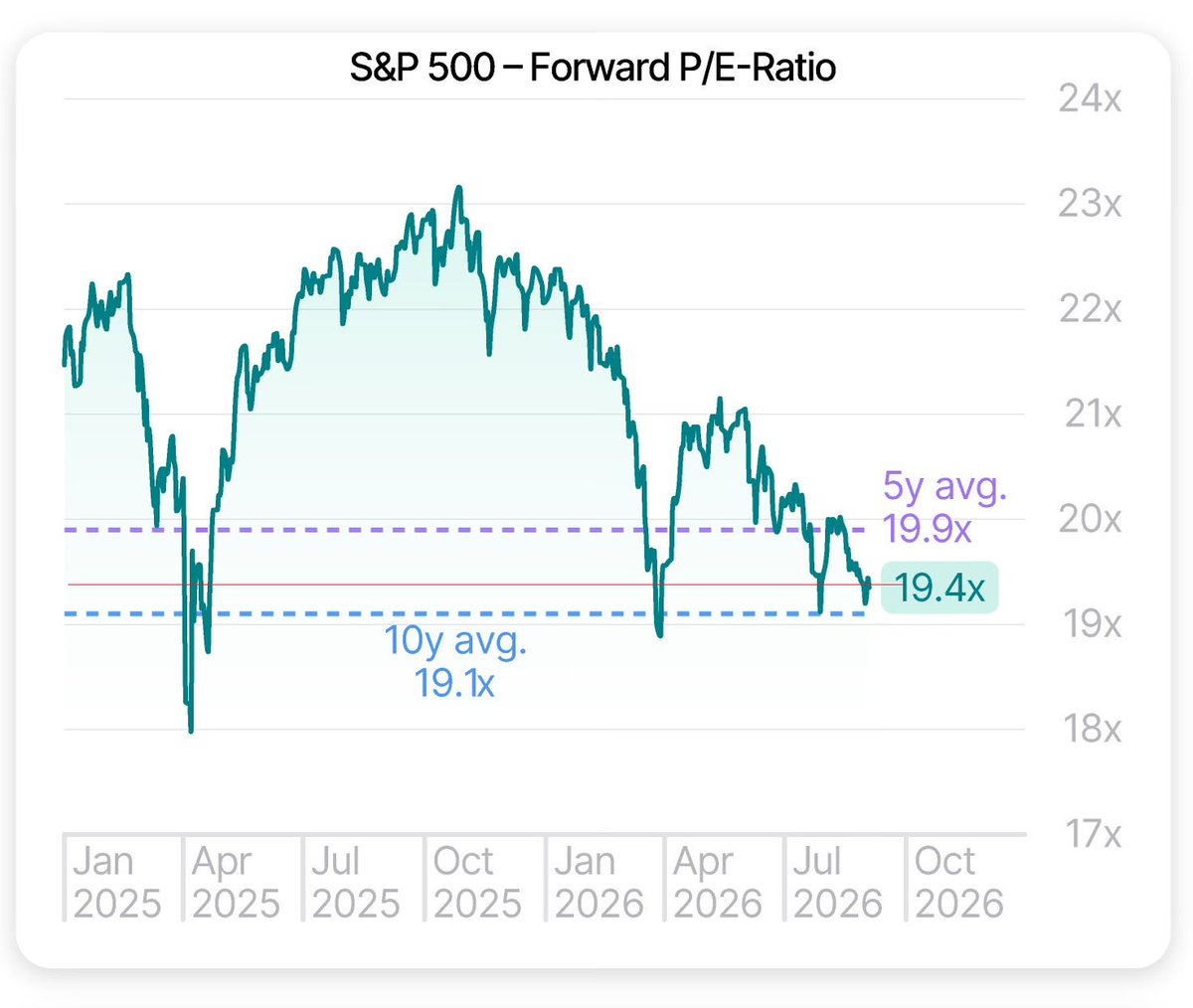
The VIX was near the mid-teens in July.
Now it’s already above 18.
At the same time:
Retail cash allocations are near extreme lows.
Almost nobody is hedging.
Record IPO supply is draining liquidity.
And we’re entering the exact window where midterm-year corrections historically accelerate.
But here’s what most people will get wrong:
This is NOT where I become bearish long term.
Every one of those 13 midterm drawdowns became a buying opportunity.
13 out of 13.
Average rally from the midterm low:
~47%.
That’s the opportunity I’m waiting for.
First the fear. Then the bottom.
The next 60 days could create the best buying opportunity of this cycle.
Keep in mind: I publicly called Bitcoin’s $17K bottom in 2022 and the $126K top in 2025.
When I start buying again, every call will be posted here first.
Follow and turn notifications on.
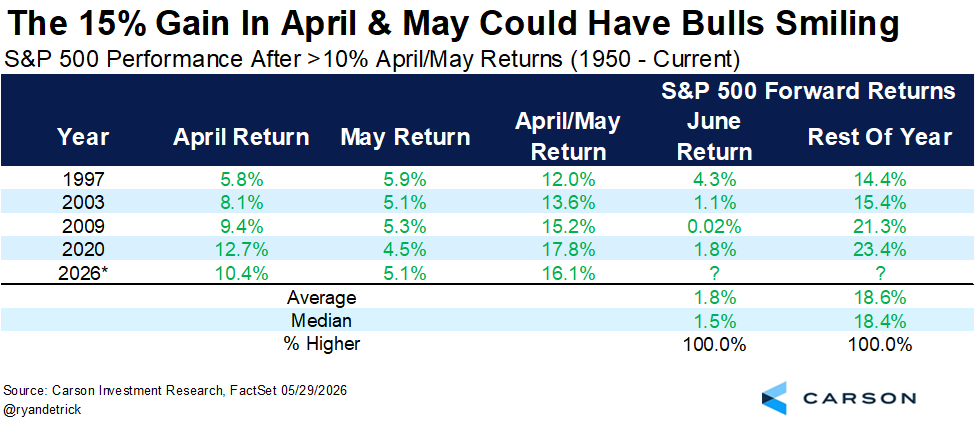
April and May gained more than 15% for the S&P 500, which suggested a very strong rest of year.
Previous times? Never lower and up another 18.8% on avg the rest of the year.
In 1977 a 33-year-old Fidelity analyst in Boston took over a small mutual fund with eighteen million dollars in assets.
Thirteen years later he retired at 46 with the fund holding fourteen billion dollars the best-performing mutual fund in the world by a wide margin.
His name was Peter Lynch. Between 1977 and 1990 he averaged 29.2 percent a year. The S&P did roughly twelve percent in the same period.
He had no computer on his desk. He had no team of analysts. He picked stocks by walking through shopping malls and phoning company managers directly. At his peak he owned more than 1,400 different stocks because he refused to say no to a good idea.
He bought Dunkin Donuts because he liked their coffee on the drive to work. He bought Hanes because his wife brought home a package of L'eggs pantyhose from the supermarket and told him the product was terrific. He bought Taco Bell after visiting five franchises in California and asking each manager how much lettuce cost that week.
He bought Chrysler at $2 a share when Wall Street had written the company off as bankrupt. It went to $50.
His father died of brain cancer when Peter was ten. He started caddying at Brae Burn Country Club in Newton, Massachusetts at eleven to help his mother pay rent. The wealthy golfers he served would talk about their stocks between holes. He noticed they had no more information than anyone else, and most of them were rich anyway.
His entire investment philosophy fit in six words. Invest in what you already know.
In 1994, four years after retiring, he agreed to give a full-length lecture explaining his method. He walked through the six categories he separated every stock in the market into slow growers, stalwarts, fast growers, cyclicals, turnarounds, and asset plays. He listed the questions he asked every CEO on every quarterly call. He explained why he had held Fannie Mae until it was five percent of the fund and why he had sold Chrysler on the way up.
He was fifty years old. He would never manage a public fund again.
Bookmark and watch today ↓