Ellen & Howard Katz Chair, Associate Professor: Barrow Neurological Institute. Director: BNIC. Develop nerve and spinal cord MRI methods to guide neurosurgery.
🍃 Week 20 of our #DiffusionMRIZeroToHero series!
Welcome to the Tractography module!🧠
We are moving from local voxel models to global brain wiring. Today we introduce the basics: how do we connect the dots using Deterministic vs. Probabilistic tracking?
Full post: https://t.co/mjfzxOkrjx
#DIPY #Neuroimaging #dMRI #Tractography
🍃 Week 21 of the #DiffusionMRIZeroToHero series!
This week: Deterministic Tractography - it builds streamlines by following the peak fiber direction at every step.
Fast and consistent, but sensitive to noise and struggles with curved or fanning fibers.
Full Post - https://t.co/DpPluTNZgA
#DIPY #Neuroimaging #dMRI #Tractography
🍃 Week 22 of the #DiffusionMRIZeroToHero series!
This week its Probabilistic Tractography. It samples directions from the full orientation distribution at each step, not just the sharpest peak. Run it multiple times from the same seed and you get a map of connection probability that tells how often a streamline passed through a voxel.
Full post: https://t.co/mepLovZDp2
#DIPY #Neuroimaging #dMRI #Tractography
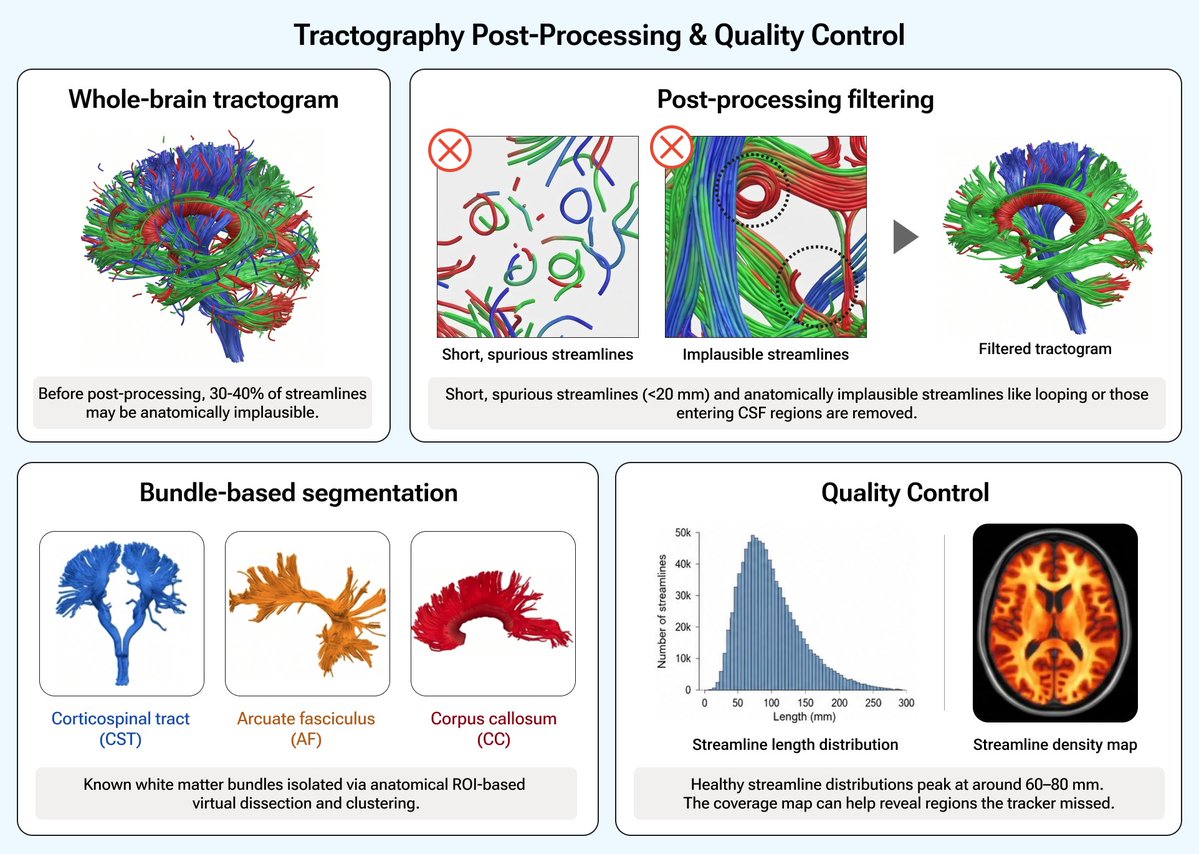
🍃 Week 23 of the #DiffusionMRIZeroToHero series!
Raw tractograms may contain 30-40% implausible streamlines.
Hence, post-processing (length filtering, ROI dissection, clustering, compression) and quality control (visual checks + quantitative metrics) are not optional, they're a part of the pipeline.
Full post: https://t.co/3HGWjCR6Vv
#DIPY #Neuroimaging #dMRI #Tractography
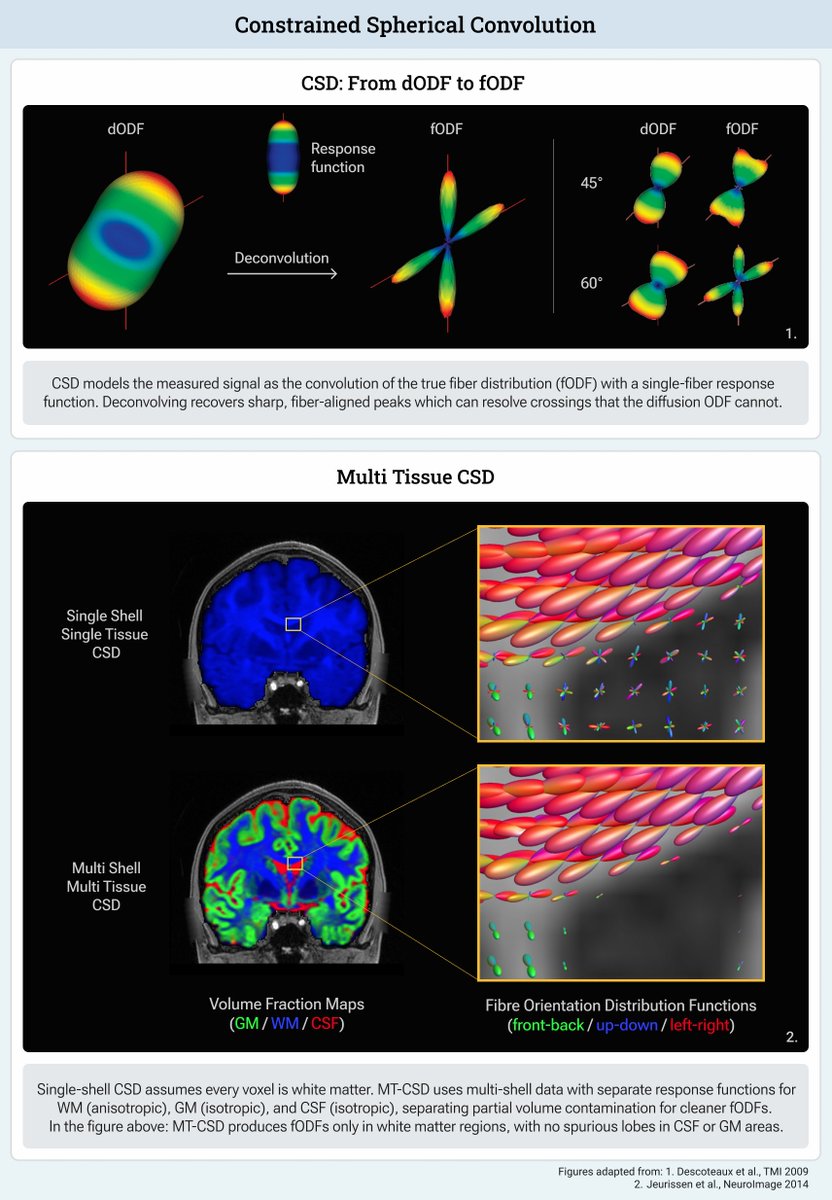
🍃 Week 18 of #DiffusionMRIZeroToHero series!
Learn how CSD creates sharp fiber ODFs resolving crossings down to ~30-40°, and how Multi-Tissue CSD goes further by separating WM, GM & CSF for cleaner results.
Full post: https://t.co/NFCkC7lV6L
#DIPY#Neuroimaging#dMRI
In Week 12 of #DiffusionMRIZeroToHero, we dive into Diffusional Kurtosis Imaging (DKI). 🧠
Read more about how DKI overcomes the limitations of DTI in modeling the microstructure independent of the underlying fiber orientation -https://t.co/KR4FXu4h99
#DiffusionMRIZeroToHero #DIPY #Neuroimaging
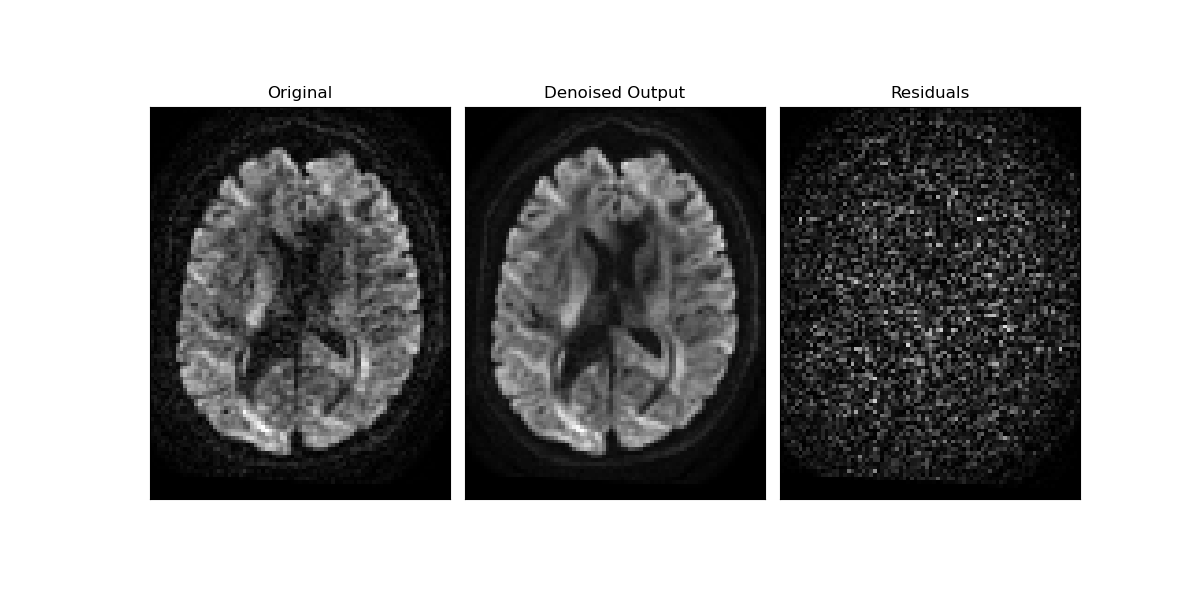
#dMRI data is noisy, even after motion & distortion correction, obscuring subtle microstructural details.
Week 7 of #DiffusionMRIZeroToHero, we look at Denoising - the process of recovering the underlying signal without blurring.
Read: https://t.co/PizMNPzSeQ
#DIPY#Denoising
This week in #DiffusionMRIZeroToHero we look at where DTI breaks down when voxels contain crossing fibers or mixed tissue.
Why DTI struggles, and how advanced models go beyond the tensor: https://t.co/pN1GwYVjPu
#DIPY#dMRI#Neuroimaging#DTI
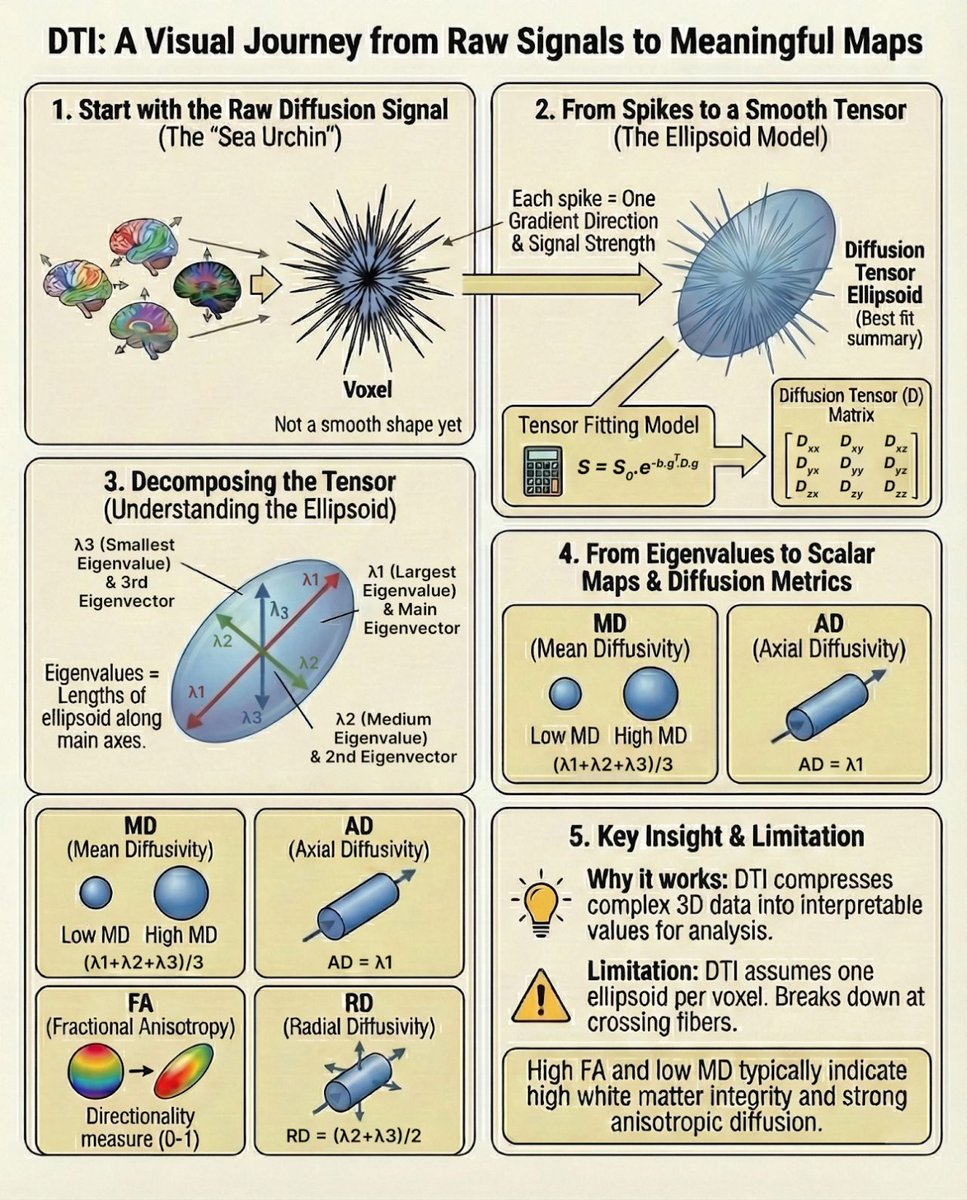
This week in #DiffusionMRIZeroToHero we unpack Diffusion Tensor Imaging. 🧠
See how multi-directional diffusion-weighted measurements per voxel are summarized into 3D diffusion tensors, turning raw DWI into interpretable diffusion metrics: https://t.co/QDExJVSvvh
#DIPY#DTI #Neuroimaging #MedicalImaging
Seeing ripples near sharp edges in your MRI? That's Gibbs Ringing. 🌊
This week's #DiffusionMRIZeroToHero explains why this happens, how it affects dMRI metrics, and how to fix it without blurring your data.
Full Post - https://t.co/wLayxvfsGN
#dMRI#DIPY#MedicalImaging #NeuroImaging
A cubic millimeter of mouse brain with 75,000 neurons, vizualized by @quorumetrix :
https://t.co/2UvxxneSw2
Watching the way the signals propagate through the layers, with pyramidal cells integrating and processing 11,061 inputs at a time is mindbending.
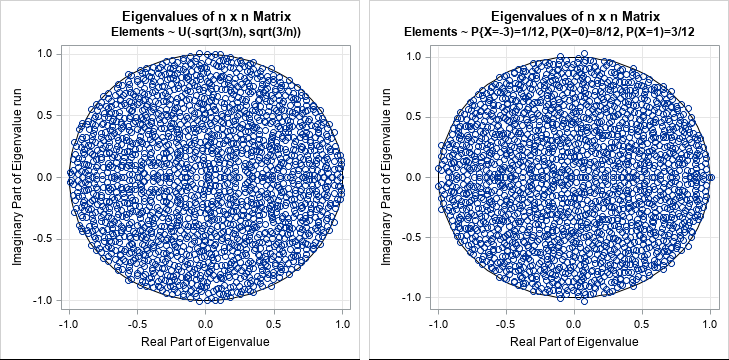
Eigenvalues of large random matrices are a central object of modern probability known as random matrix theory, which studies how the spectrum of a matrix with random entries behaves as its dimension grows. Remarkably, despite the randomness, the eigenvalues follow universal laws such as the semicircle law or Marchenko–Pastur law, allowing one to predict the distribution of variance and correlations in high-dimensional systems. In probability, these results explain fluctuations in complex interacting systems, from particle gases to queuing networks. In machine learning, the eigenvalues of data covariance matrices and neural network weight matrices reveal effective dimensionality, overfitting, and training dynamics, guiding practices like PCA, ridge regression, and deep network initialization. In real life, random matrix eigenvalues appear in wireless communication, where they determine channel capacity, in finance to separate signal from noise in correlation matrices of assets, and in physics to model energy levels of heavy nuclei, showing how order can emerge from apparent randomness.
Image: https://t.co/OlbyfMc2mp
Seems like there may be an awful lot of extrapolation here starting with the suggestion that amyloid clearance is dependent on improved glymphatic function and that DTI measures are an accepted measure for Alzheimer's Disease neuropathologic change.
New data question short-term efficacy of anti-amyloid drug https://t.co/bgSjzQ9FUs
Connectome datasets alone are generally not sufficient to predict neural activity. However, pairing connectivity information with neural recordings can produce accurate predictions of activity in unrecorded neurons
https://t.co/EWaBaM7soD
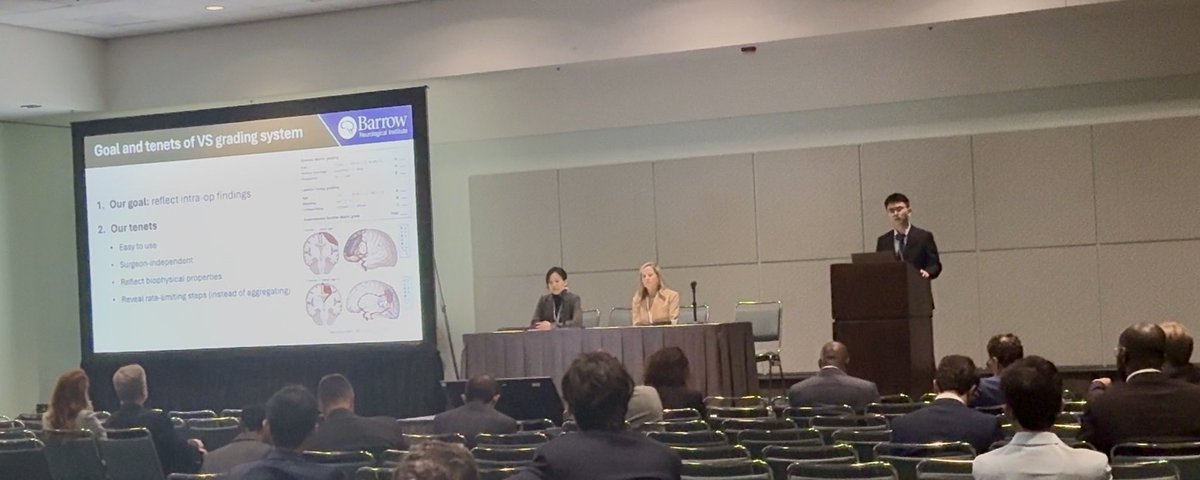
Introducing the Barrow Vestibular Schwannoma Grading System — the first of its kind that quantifies rate limiting steps during tumor resection. It’ll pave the way for the next exciting step—quantitative MRI @mtlawton@RichardDortch@BarrowNeuro@CNS_Update#cns2025#neurosurgery
Barrow & @ASU share a mission of advancing biosciences across #AZ. That’s why we teamed up to establish the Barrow-ASU Center for Preclinical Imaging, which provides essential core technologies & professional expertise to Valley researchers. Learn more at https://t.co/umKwFBNCOn.
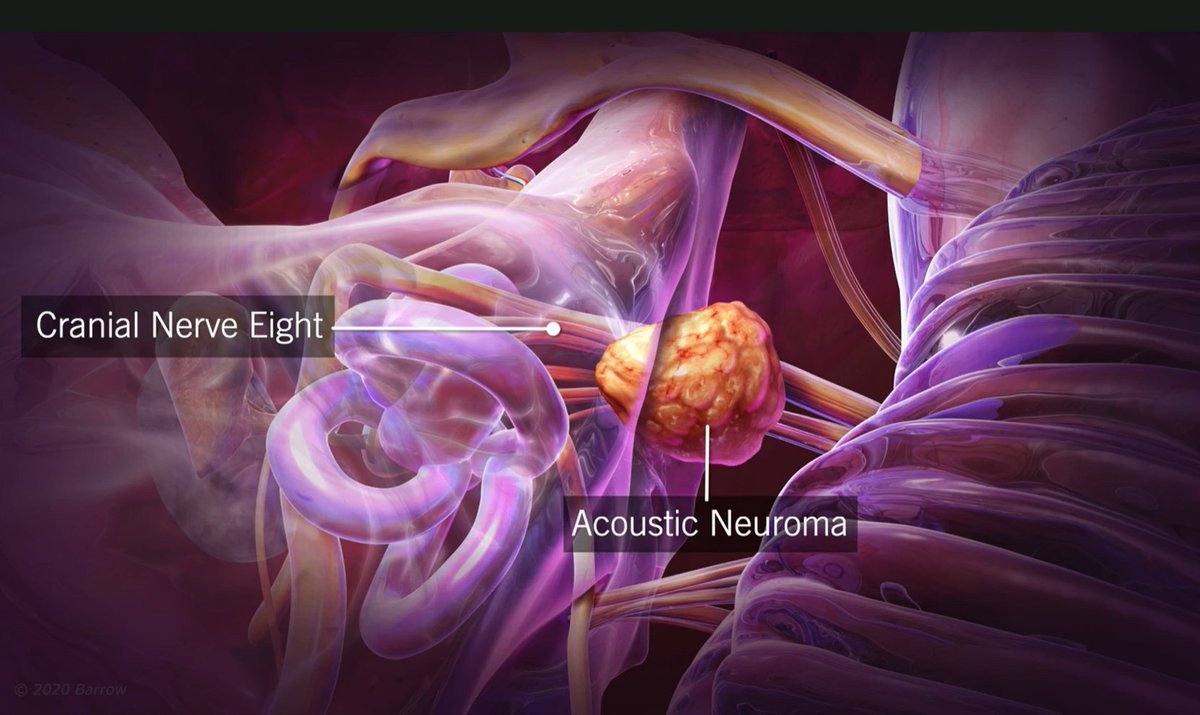
It's #ANAWareness Week. An #acousticneuroma is a noncancerous tumor that develops on the nerve that carries sound & balance info from the inner ear to the brain. Barrow offers a team-based & patient-centered approach for managing these tumors. Learn more: https://t.co/YM2cX32AJH