@FarmerSimonC@Paulbonnett6 2. The Ca required on high cec soil with high Mg low Ca can indeed be “lorry loads/acre”, but application rates should never exceed 2 t/ha as you can end up with tie up of many traces. Lime is very insoluble so the small annual application makes sense.
@FarmerSimonC@Paulbonnett6 I have had good results with small annual applications of lime on high cec soils (ie 30 plus) with the farmers planning it as part of their annual fertiliser program. 500 kg/ha of lime is only approximately $30/ha annually.
Latest Solar Cycle Update from Hathaway and Upton confirms our local star has a similar output as it did over 100 years ago. By a strange “coincidence” the presence of a Triple La Niña looks to be the cause of similar conditions that happened over 100 years ago.. go figure.
When it comes to renewables, and people like Twiggy Forrest, Simon Holmes á Court, and Malcolm Turnbull, it’s a case of:
“show me the subsidies, show me the subsidies, show me the subsidies”
Taxpayers are being fleeced like never before.
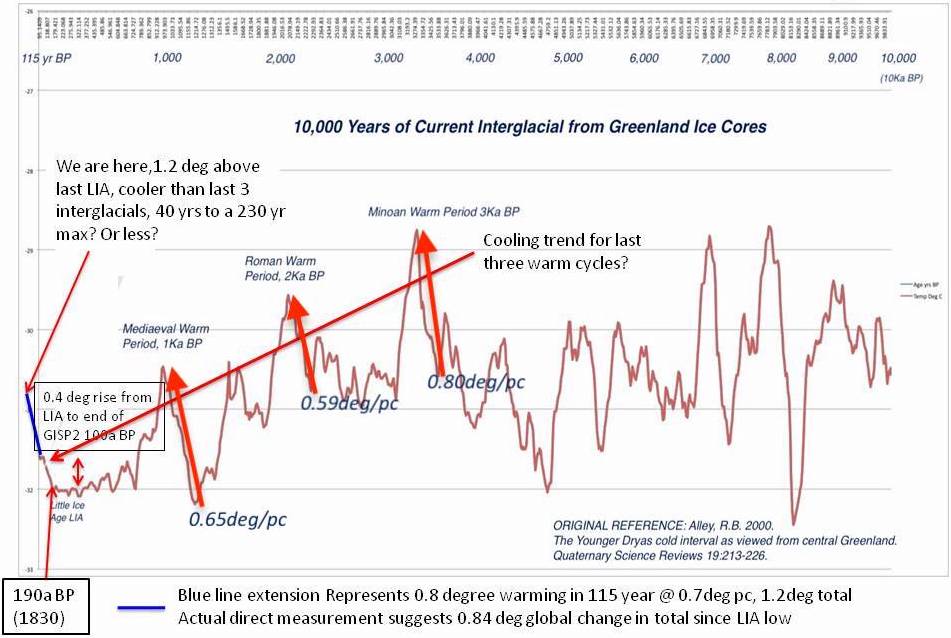
The world is cooling. The Holocene is a warm spell lasting around 15,000yrs after the last glaciation lasting 90,000 years. Warm pulses in the Minoan, Roman and Medieval times were short-lived. Climate is metaphor for past weather over long time scales. No-one can predict change.
Well done! These are exactly the questions the vast majority of mainstream Australian journalists do not ask. They are subservient to the “renewable” energy industry and are responsible for brainwashing the community. Shame on you all.
The uprisings in Sri Lanka & Netherlands seem unrelated but they’re both reactions to governing green elites trying to destroy modern farming by restricting fertilizer use. Farmer resistance is appropriate and merits our solidarity.
https://t.co/WpL0XfrODK
"if I ever repeated anything you point out in your book, I would be a persona non-grata at Columbia."
This kind of anti-fossil-fuel dogmatism at our universities is a major reason we have a global energy crisis.
#FossilFuture
Sri Lanka has received an ESG score of 98 out of 100.
ESG measures environmental goodness by how little humans impact Earth.
But human beings survive and flourish by impacting Earth.
ESG and the broader anti-impact movement are anti-human. So Sri Lanka is close to their ideal.
A food, energy, and financial crisis has brought down Sri Lanka's government. But the underlying cause is the fact that the nation's political leaders had fallen under the spell of green elites peddling “ESG” and banning modern fertilizers.
https://t.co/En6rbDrsYu