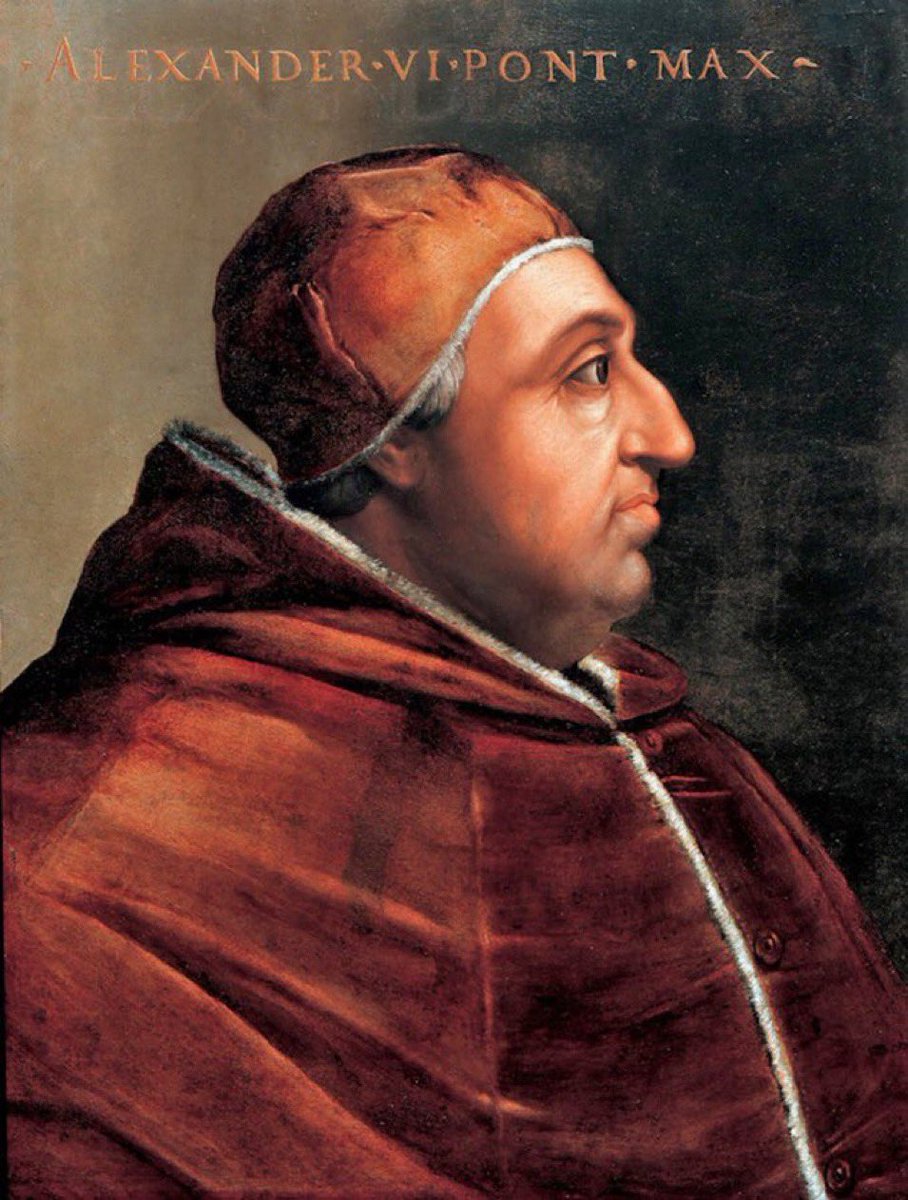
1501: Pope Alexander VI criticizes Gutenberg’s printing press safety
“The art of printing can be of great service in so far as it furthers the circulation of useful & tested books; but it can bring about serious evils l..it will, therefore, be necessary to maintain full control”
From the Rockaways in Queens, N.Y., you get a postcard view of the Manhattan skyline. I was there this weekend with my wife and daughter. As we drove along Beach Channel Drive, we passed a pair of guys with paint cans touching up the mural at the 9/11 Tribute Park.
All I could think was, “How has it come to this?”
Every monopoly you have ever feared was built by politicians, not by entrepreneurs.
The free market actually punishes monopolistic behavior. When one firm charges above-market prices, it hands competitors an engraved invitation to undercut it. High profit margins attract entry. Consumers shift. Prices fall. The system self-corrects constantly, without a single bureaucrat lifting a finger.
Then the state arrives.
Washington granted AT&T its telephone monopoly through FCC licensing in 1934, keeping it legally insulated from competition for decades. The United States Postal Service holds a statutory monopoly on first-class mail delivery today, backed by criminal penalties if you try to compete. The American Medical Association lobbied Congress throughout the twentieth century to restrict medical school admissions and license requirements, artificially compressing the supply of doctors and pushing your medical bills upward. Politicians manufactured these outcomes, usually with the enthusiastic cooperation of the very industry being "regulated."
This pattern has a name. Free market thinkers call it regulatory capture: the regulated industry eventually controls its regulator, using the government's coercive power to strangle rivals in the crib. The FDA, the FCC, state occupational licensing boards, patent law, zoning codes. Every one of these mechanisms transfers competitive pressure away from established players and onto consumers.
You pay the price. Literally.
The intellectual move most people miss is conflating size with monopoly. A firm can dominate ninety percent of a market through superior service and still face the constant discipline of potential competition. Monopolies become dangerous when legal barriers prevent entry, and only the state can erect one with lasting force. Remove the government privilege, and the monopoly dissolves faster than most people expect.
I was thinking about why late-stage (whatever that is) Capitalism sucks and a big part is because all the established old money leverages its way into controlling and stifling new technologies and there are never any new success stories, only the old oligarchs getting richer and the tech barely advancing. Like how the Rockefellers, Rothschilds and DuPonts captured and controled Amazon, Apple, Google, and SpaceX while keeping them from innovating.
@CliffordAsness I'm old enough to remember that they bought BusinessWeek and turned it into yet another lefty "financial news" outlet. I don't know if it even exists anymore, it became unreadable way before peak woke.
I downloaded and reviewed NYC's grocery store RFP... as someone who has built biz's and bought a lot of food... wow.
Forget for a moment whether or not the govt should own a grocery store. Let's review the doc instead.
Here you go... /1
New York City will require IDs to prove you live in the city in order to shop in the city owned grocery stores. So you need an ID to shop in the city’s stores, but it would be racist to require an ID to vote. Perfection.
Joseph Stalin murdered more human beings than almost anyone in recorded history, and he did it with a clipboard and a five-year plan.
Let me give you the numbers, because the numbers matter. The Holodomor, the man-made famine in Ukraine from 1932 to 1933, killed somewhere around 4 million people. Stalin engineered it. He confiscated the grain, sealed the borders so starving peasants couldn't leave, and let them die in the snow while the state exported wheat abroad.
He collectivized agriculture, meaning he seized private farms and forced peasants onto giant state operations. The productive farmers, the ones who owned a cow or two and actually knew how to grow things, he branded "kulaks" and shipped to Siberia or shot. He destroyed his best producers on purpose.
Then came the Great Terror of 1937 and 1938. Stalin's secret police executed roughly 700,000 people in about two years. Not battlefield deaths. Confessions extracted in basements, quotas handed down for how many "enemies" each region should find.
Quotas. For arrests. Somebody in Moscow decided your town owed the state 200 traitors, and the local officers went and found 200, guilty or not.
The whole thing rests on a simple lie: that a handful of men in a Kremlin office know how to run millions of lives better than those millions running their own. Stalin believed that lie hard enough to build a machine of corpses around it.
Property rights aren't some dusty legal technicality. They're the thing standing between you and a bureaucrat deciding your grain belongs to the collective and your life doesn't matter.
Stalin proved that 20 million dead is just a statistic to a central planner.
George Washington's Spectacles:
At the end of the Revolutionary War, Congress was broke and owed back pay to many officers and soldiers in the army.
Rumors began to spread that to solve the problem, Congress would just disband the army and send them home without pay.
Some officers, influenced by anonymous letters known as the Newburgh Addresses began discussing radical action such as marching on Congress.
This raised fears of a military coup that could have destroyed the nation in its infancy.
On March 15 1783, new Newburgh New York, General Washington called his officers together at the Temple of Virtue - a large wooden hall built by the soldiers as a chapel and dance hall.
He arrived unexpectedly just after General Horatio Gates had opened the meeting.
Washington spoke to his men and he sympathized with the officers’ hardships including his own but firmly condemned any move against the civilian government.
He appealed to their patriotism, honor, and sense of duty. He warned against plunging the country into “civil horror.”
As Washington prepared to read a letter from Congress explaining the situation, he struggled to read the print.
Then he reached into his pocket and pulled out a pair of reading spectacles—the first time most of the officers had ever seen him wear glasses. He had only recently started needing them and had kept it private.
He paused and said:
“Gentlemen, you will permit me to put on my spectacles, for I have not only grown gray but almost blind in the service of my country.”
The officers were stunned.
Here was their revered, seemingly invincible commander—now openly acknowledging his age, weariness, and physical frailty after years of shared sacrifice.
Many of them were moved to tears. The tension in the room dissolved. The conspiracy collapsed.
The officers voted to express their “unshaken confidence” in Congress and rejected any irregular or mutinous actions.
Washington later successfully lobbied Congress on their behalf, and the army received a settlement of five years of full pay.
The moment is widely regarded as one of Washington’s greatest acts of leadership.
Our country was founded and preserved by the greatest of men.
The last time the Knicks won the NBA championship, there were still Japanese soldiers, in the jungles of the Pacific islands, that had not surrendered.
#knicks
I think possibly the best thing about Elon Musk becoming a trillionaire is how angry it makes a bunch of losers who've never built a thing in their lives.
I see many of you are still bitching about a man who builds rockets, autonomous cars and satellites becoming rich - on the platform he owns.
Maybe get out of bed and go build something yourself?
@DylanRatigan AI written, zero stats, unsupported assertions. Capitalism is doing just fine thank you. Sloppy writing will not help address flaws in the marketplace.