Arrived @ St. Pete's for #VSS2026@VSSMtg😎🌴
If you're around - come check out my talk on Monday!
Revisiting Iconic Memory with a New Experimental Paradigm
Room 2
May 18th, 10:45 (1st talk)
Super fun collaboration with John Morrison & my 1st study from Mike @shadlen's lab🤩
@manuelbaltieri This might be a stipend in addition to their own postdoc salary, I believe. "Be employed in their home country and commit to returning after the fellowship". If so, that's pretty good.
1/7 Does the infant brain have representational structure? 👶🧠In the FOUNDCOG project, we scanned 134 awake infants using fMRI. Published in Nature Neuroscience, our research reveals 2-month-old infants already possess complex visual representations in VVC that align with DNNs.
I love this so much. After pushback on his recent "Medicine is the only field that reaches 6 sigma" with "my field, psychophysics is so awesome" he posted this. Hurray all Psychophysicists. LETS CELEBRATE PSYCHOPHYSICS. An island of large effects is us!
The most complex piece I ever made, the famous Purkinje neuron drawn 100 years ago by Ramon y Cajal. It took me more than 30h of cutting with a scroll saw.
I'm recruiting PhD students to join my new lab in Fall 2026! The Shared Minds Lab at @USC will combine deep learning and ecological human neuroscience to better understand how we communicate our thoughts from one brain to another.
🧠 New preprint: Why do deep neural networks predict brain responses so well?
We find a striking dissociation: it’s not shared object recognition. Alignment is driven by sensitivity to texture-like local statistics.
📊 Study: n=57, 624k trials, 5 models https://t.co/GSowf8JYUA
#CCN2025 looks so good, I am absolutely gutted to miss it! But I am happy that my PhD student Akilles Rechardt will be presenting "Explaining neural mechanisms of age-related dedifferentation in the ventral stream through deep neural networks" (B52, Session B: Wed 13, 1-4pm). 1/3
We have surprising results on how neurodegeneration/damage can lead to dedifferentiation of category selectivity in ageing.
Sneak peek: different predictions for white and gray matter damage! 2/3
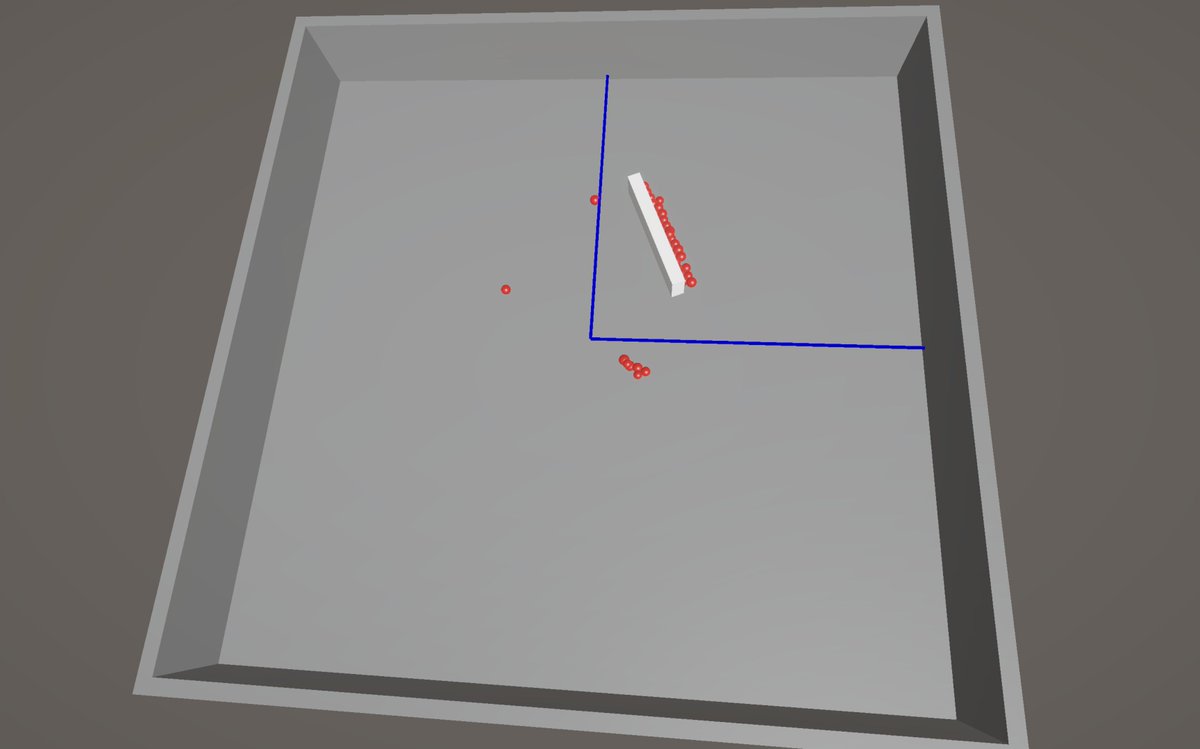
Folks at #CCN2025, drop by my poster tomorrow to hear about the fun task I have been developing with Roland Fleming, to gauge internal models of diverse physical objects in a controlled way! There will be a demo as well 🕹️
Tuesday, August 12, 1:30 – 4:30 pm, de Brug & E‑Hall
Do DNNs represent images in the same way as the human brain? Our new work in #CCN2025 Proceedings suggests that DNNs and brains only agree on the gist but not the actual details of what a scene looks like. https://t.co/4w8PZGIJtb
Not just one, but two fantastic chances to discuss how infant development can inform machine learning and vice-versa at CCN 2025 in Amsterdam!!! Satellite workshop https://t.co/40nkdcG7e6
and Generative Adversarial Collaboration https://t.co/uGg5LOSYtE.
Register now!
Hi, we will have three NeuroAI postdoc openings (3 years each) to work with Sebastian Musslick (@smusslick), Pascal Nieters and myself on task-switching, replay, and visual information routing.
Reach out if you are interested in any of the above, I'll be at CCN next week!
1
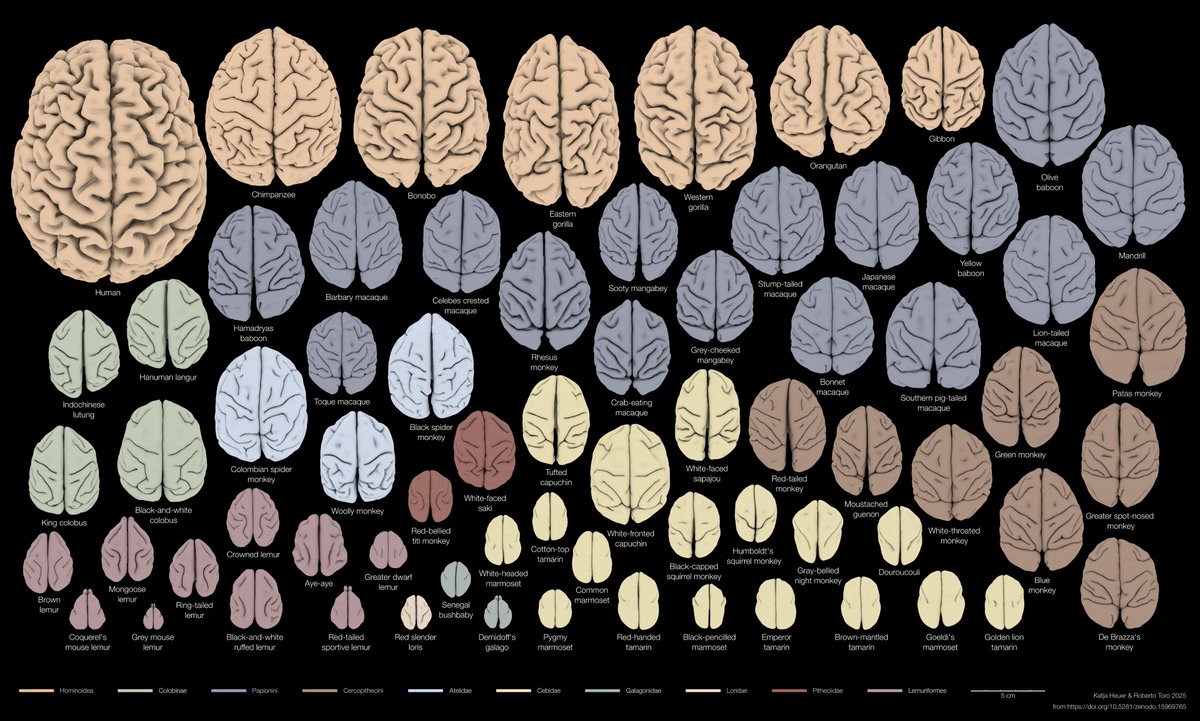
To predict the behaviour of a primate, would you rather base your guess on a closely related species or one with a similar brain shape? We looked at brains & behaviours of 70 species, you’ll be surprised!
🧵Thread on our new preprint with @R3RT0 , https://t.co/668msRHMNu
🚀 New Open-Source Release! PyTorchTNN 🚀
A PyTorch package for building biologically-plausible temporal neural networks (TNNs)—unrolling neural network computation layer-by-layer through time, inspired by cortical processing. PyTorchTNN naturally integrates into the Encoder-Attender-Decoder (EAD) architecture (Chung*, Shen* et al., 2025), which flexibly combines diverse neural networks, motivated by the fact that no single model (Transformer, SSM, RNN) dominates all sequence learning tasks.
🧵👇