Sorry for writing a novel, but the Mark Walter/Dodgers situation took another crazy turn today during a lender call held by Guggenheim, which Walter co-founded and is the current CEO of.
Guggenheim held a lender call meant to calm everyone down, but it basically did the exact opposite. A $1.2 billion loan tied to the firm was trading around 96 cents on the dollar last week. It had already slid into the low 80s before dropping straight to 78 cents on the dollar after the call wrapped. That is the credit market sending an unmistakable signal.
Management told lenders they aren't aware of any formal probe into Guggenheim itself, but the rest of the update did not help. Lenders sat through a sharp quarterly profit drop, accounting questions around when certain advisory fees hit the books, an old whistleblower report resurfacing and zero guidance for 2027.
Trading at 78 cents does not mean lenders are booking an automatic 22% loss tomorrow. The debt still yields and could theoretically pay back at par, but it means the market wants a massive risk premium just to hold debt tied to Mark Walter right now.
That discount is a real problem given the sheer volume of cash Walter needs to move.
Regulators and rating agencies are looking at more than $20 billion his life insurers parked in affiliated entities, and he has to unwind billions of that into independent assets or fresh outside equity. That sudden scramble explains the headline churn: parting with the Lakers stake, kicking the tires on selling Chelsea, pledging his Guggenheim equity as collateral and dangling double-digit yields just to get debt deals done.
The squeeze is obvious. He needs billions in outside money right as the market is getting skittish about the exact collateral he would use to secure it. That translates to brutal rates, heavier collateral demands and shrinking leverage.
Walter is not going broke tomorrow, and nobody is putting a "For Sale" sign on Dodger Stadium just yet.
But if debt tied to his empire keeps bleeding while he is forced to plug multi-billion-dollar holes in the insurance balance sheets, cheap borrowing is off the table.
The Dodgers are almost certainly the crown jewel he would fight hardest to keep, which also makes them the one asset in the portfolio that could wipe out the problem in clean cash overnight.
I did a video that said Mark Walter has to move $20B of related-party investments out of his insurance companies by December 31.
I was low.
Add the other carriers and it's closer to $26B.
His holding company has now signed a definitive agreement to take $6.5B of it back. Delaware still has to approve that.
Which leaves most of it.
Apollo's internal presentation on First Brands has surfaced, the same deck that led to a bespoke short position on the Term Loan.
What did Apollo catch before anyone else: cash flow never matched claimed margins, 20% operating margins were unbelievable for the business and its many acquisitions, and the CEO had a long trail of failed entities with almost zero public footprint. Apollo then declined to buy Katsumi’s factored invoice exposure, shorted the debt, and made money. Katsumi allegedly saw massive invoice fraud in 2023 samples yet kept funding billions more.
Sometimes, the edge is just reading the financial statements and looking up the CEO on Google.
Shoutout to the Financial Times for obtaining the deck.
Great scoop from @EricGPlatt & team.
Before agreeing to sell the Lakers to one of the Kushner scions, Mark Walter sought a loan against his ownership of the team, as he dashed for cash.
https://t.co/AajVLXBsNv
Mark Walter has to take roughly $20 billion of loans off his insurers by December 31.
There are 4 ways to do that.
Sell the loans: nobody buys paper under a grand jury subpoena.
Grow: the company has to be 4 times bigger in 2 quarters.
Reinsure: the good assets leave, the loans stay, the ratio goes UP.
Sell things and repay in cash.
The Lakers covered about a third.
How long will Billionaire Mark Walter (Guggenheim CEO, Dodgers owner) be a billionaire?
He used insurance companies he controls to loan billions to his other businesses, and allegedly didn’t properly disclose the conflicts to regulators.
@NickNemo17 has been all over this story and says Mark Walter may be forced to sell the Dodgers too
August 2026
Prosecutors are looking at four middleman companies that helped route billions in loans from Mark Walter’s insurance companies back to other businesses he controls (including parts of his Guggenheim empire and sports holdings like the Dodgers)
https://t.co/IjWzKhRpt1
Mark Walter's insurers told Bloomberg they'd take $8 billion of affiliated loans off the books this quarter.
I bought the Q2 filings. Across 7 companies the number came down $115 million. That's 1.4%. And the biggest one is holding more than it was in December, not less: $19.1 billion, up $896 million.
The ratio improved, from 41.6% to 38.8%, but only because they grew the balance sheet $5.45 billion around it.
Then on August 17 they filed the answer.
His own holding company has agreed to buy up to $6.5 billion of the loans off the insurance company he owns
NOBODY WOULD BUY THE LOANS. SO MARK WALTER IS BUYING THEM HIMSELF.
https://t.co/8pcaoMNQ4J
I hate being right when it comes to predictable failures, but the fact these guys are taking Paramount’s 30 films per year commitment at face value is utterly baffling.
What do they think happens if Paramount falls short? They don’t think the leopards will eat their face?
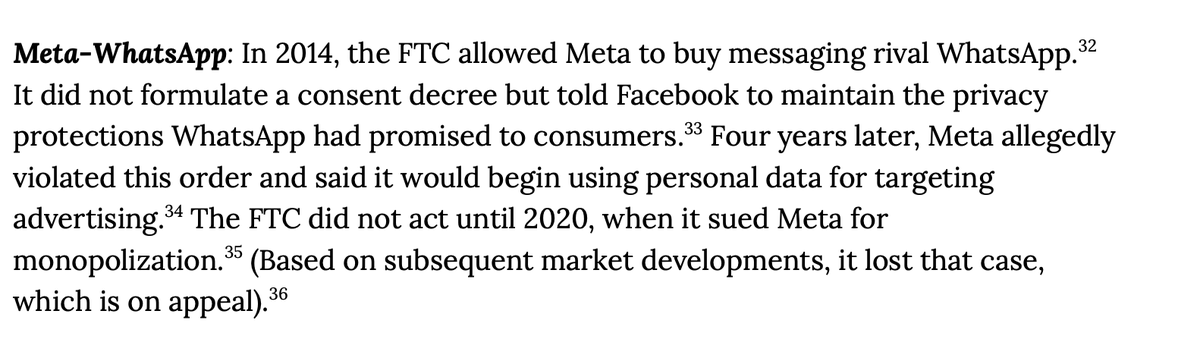
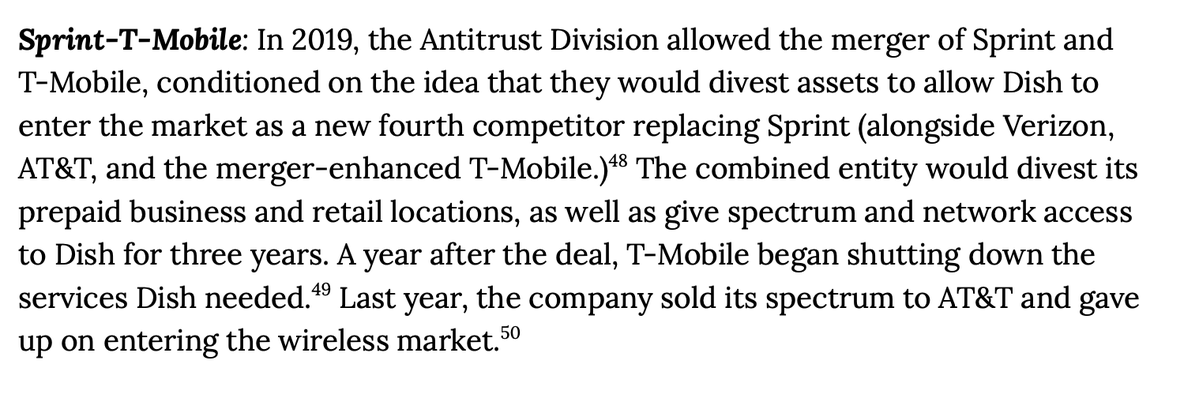
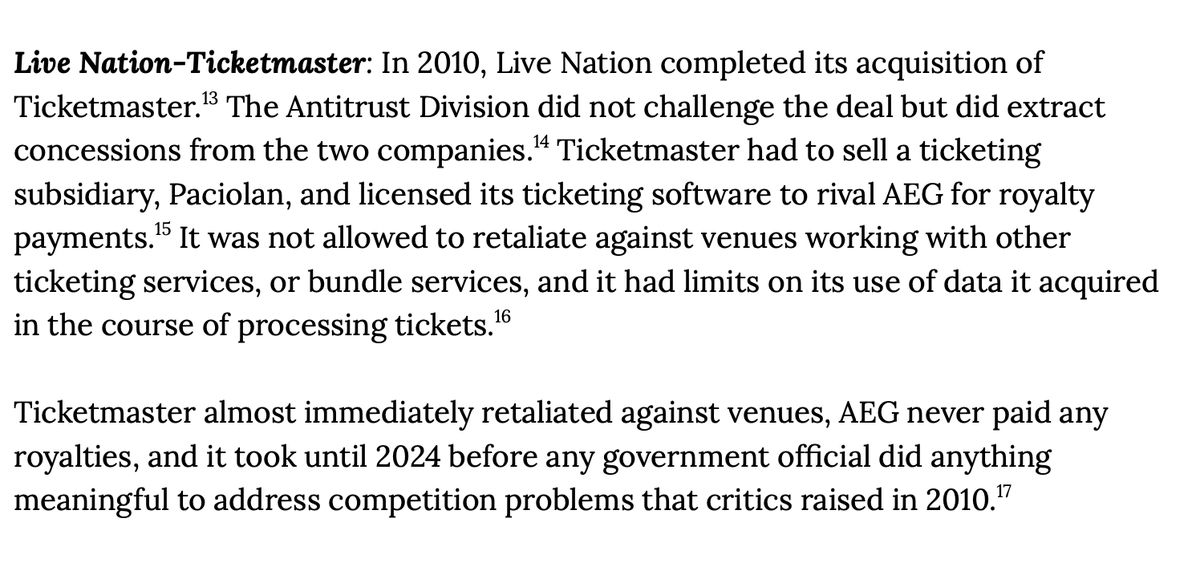
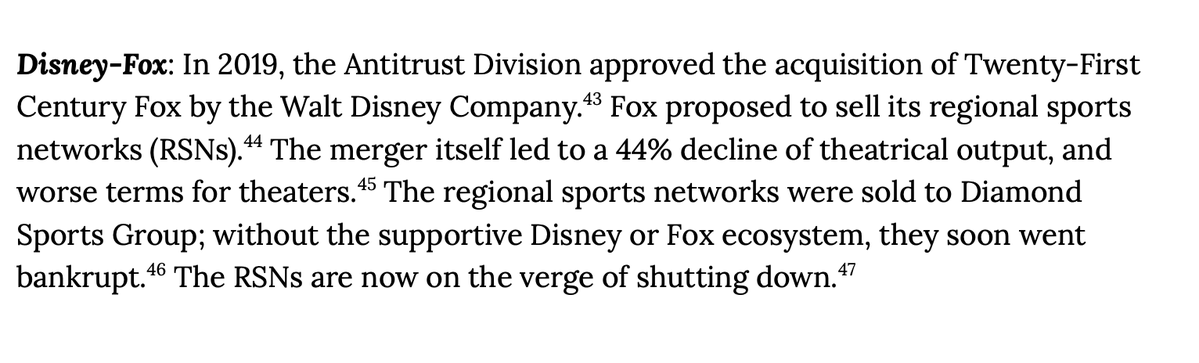
Once a merger is approved, challenging a consent decree violation becomes next to impossible.
Here's just a few past mergers — from Live Nation-Ticketmaster to Disney-Fox, and more — that left massive broken promises:
One thing that is interesting here from a criminal perspective is that Securtity Benefit (Boehly) filed the AMP debt as a related party transaction. Clear Spring (Walter) filed the same paper as unaffiliated.
The entire defense to a characterization charge is that the standard is ambiguous, reasonable people can come to different conclusions and everyone in private credit codes it this way. But a co-investor, at the same table on an identical asset kills that. The prosecution doesn’t need an expert to explain it to jury. Just put the two filings side by side on the screen.
Great find by Nick who if you aren’t following by now, you need to be.
Meanwhile, every fire that burns around a refinery unit lowers its structural strength: its ability to hold weight, pressure, temperature.
Measuring that loss would require stopping the units for serious studies. Nobody is stopping them so nobody in Russia actually knows.
[4/8]
NATO officials have released a plan in the instant that Russia was to invade a Baltic country or fire missiles at one according to Bild:
-1st Nato would intercept incoming missiles and begin a massive strike campaign against military infrastructure in particular Kaliningrad whilst also targeting Russian launch points close to the borders of the Baltics.
-2nd If Russia decided to launch a armoured attack on a Baltic state NATO forces would meet these attacks via setting up a grey zone on the border aimed at slowly Russian offences and delivering heavy losses with drones and other autonomous systems first in order to stop the momentum of assaults first and then counter attack with armoured brigades.
-3rd Once an assault was stopped NATO would form an airbridge and begin to target Russian military infrastructure at a long range with missiles and drones deep into the country.
I spoke to @FOS about the Walter sports team selloff and criminal penalties for intentional concealment of affiliated insurance transactions under Delaware law.