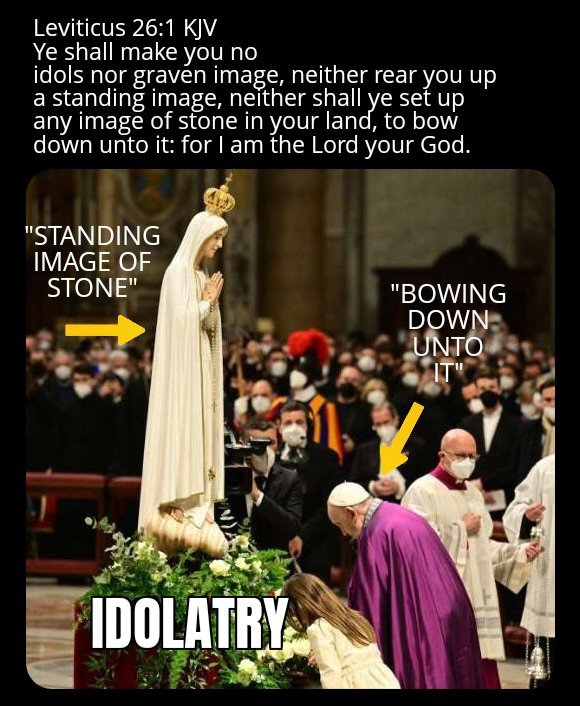
@Burgess7281975 If you are such a “good” Catholic. Then you are well aware if the difference between God and God incarnate. Your twisted lies seem to be aimed at proving how Catholic you are. You certainly have no knowledge outside of your pagan institution.
“At the time of secession they only talked about slavery and preserving it.”
They complained of a long list of grievances such as protective tariffs, internal spending, bounties, centralization, national banks, and more. Only four of the eleven States that ultimately seceded even mentioned slavery as an issue driving secession. And the upper slave States didn’t even secede until Lincoln raised troops to invade the South in violation of the Constitution.
Many times Southern statesmen said that slavery was only the “immediate occasion” and not the cause of secession. What did they mean? Slavery issues simply represented the most recent issues representing a long list of issues wherein the North violated the compact that held the States in union. Slavery in the territories represented a violation of the Constitutional mandate for the equity of the States. The fugitive slave clause represented the North’s willingness to violate the Constitution. Harboring radicals that sought to cause slave insurrections were a violation of the Constitutional mandate of protecting the peace and tranquility of the States. So yes, some mentioned slavery because it was the most recent example of Northern infidelity to the Constitution. Therefore it represented the most legal claim for the right to secede. It also placed Lincoln in the awkward position of appearing to try to raise troops in a racist North to free slaves. It was a strategy that almost worked as many Northern papers and even men in Lincoln’s own cabinet were calling for him to “just let the South go.” He had to say repeatedly that his war was not about freeing slaves but rather preserving the Union. And when you examine his statements, it is easy to see that his true intentions - continued economic exploitation of the South.
It was? When? I know, when Kentucky still had slave auctions in November 1865. Or New Jersey still had de-facto slavery in December 1865? Delaware as well. Or when the North admitted the illegal State of West Virginia as a slave State during the War? Or when Lincoln told Stephens in 1865 that if the South rejoined the Union they could vote down the 13th Amendment? Or when Lincoln rescinded Fremont's military order ending slavery in Missouri? Or when Lincoln mandated that Union officers protect slave property in areas they controlled after the Emancipation Proclamation? You know, because the "Union federal government was committed to the destruction of slavery," right? Seems like a "Righteous Cause" to me.
As to your last paragraph, nothing says nobility like supporting an ideology that has killed more people than any other in the history of Western civilization and has led to literal genocide. Yes, there are no good lies, just as there are no good Marxists, only stupid fools.
@Burgess7281975 Your deceptive comments are clearly shown in your continued mistranslation of Gen 3:15. Even after providing proof of the error you still use it. Basically you prove Catholicism is a big lie
@Burgess7281975 Mary worship (synonym for veneration) is not scripture. You can’t make it scripture no matter what verses you twist and falsify. Mary exists in the Old Testament in the virgin shall give birth and in your mistranslated Gen. 3, Her son Jesus shall crush Satan.
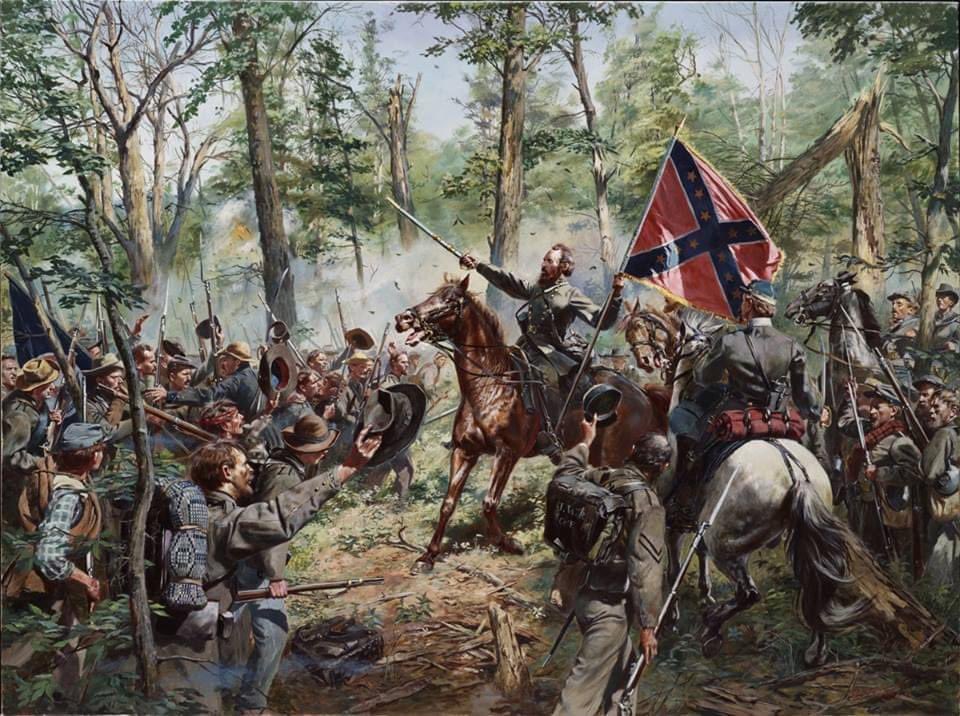
JACKSON RALLIES HIS MEN
Culpeper County, Virginia
August 9, 1862.
“It was the moment of crisis at the battle of Cedar Mountain. Hand-to-hand fighting sent the left wing of Stonewall Jackson's army reeling back in confusion. Jackson realized he needed to rally his men. He raised his sword, rusted to the scabbard, grabbed a battle flag, and shouted to his men, ‘Jackson is with you; rally brave men, and press forward’!”
Art by Don Troiani
A note to all the Righteous Cause Myth Twitter historians from William B. Hesseltine: The historian "may not judge past acts in terms of present day morality: Morality is not immutable. The moral climate changes, and what is moral at one time may be immoral at another."
Just when you think the Democrats can't go any lower, the Democrat governor of NY says kids who look like me don't know what a computer is. #ncgov#ncpol
On May 7, Grant issued orders for the Army of the Potomac to march toward Spotsylvania Court House, a small crossroads village on the Brock Road. He hoped to get between Robert E. Lee’s army and Richmond, or at least draw the Confederates into the open where he could take advantage of superior Union numbers. It was Confederate General J.E.B. Stuart’s job to prevent the Federals from reaching Spotsylvania. For two days, a division of Stuart’s cavalry, led by Fitz Lee, had battled Union horsemen for control of the Brock Road, the most direct route between the Wilderness Battlefield and Spotsylvania Court House. Forced to relinquish his position near Todd’s Tavern, Lee withdrew to Laurel Hill on May 8. Laurel Hill was the last defensible position this side of Spotsylvania. If the Confederates lost Laurel Hill, they would also lose Spotsylvania.
Union General Gouverneur Warren, meanwhile, brimmed with optimism. Unaware of Anderson’s proximity, he believed Spotsylvania to be within his grasp. “The opposition to us amounts to nothing as yet,” he wrote Meade at 8 a.m. “We are advancing steadily.” When he saw Stuart’s cavalrymen making a stand at Laurel Hill, Warren ordered General John Robinson to brush aside the horsemen and capture the town.
Robinson’s division advanced only to be met by a sheet of flame. After a night of hard marching, Anderson’s infantry had beaten Robinson’s men to the crest by a matter of minutes. As additional Union troops arrived at the front, Warren sent them in. “Never mind cannon. Never mind bullets,” he shouted. “Press on and clear this road.” But by now additional Confederates too had reached the field, and they beat back each of Warren’s assaults. The Confederates had won the race to Spotsylvania.