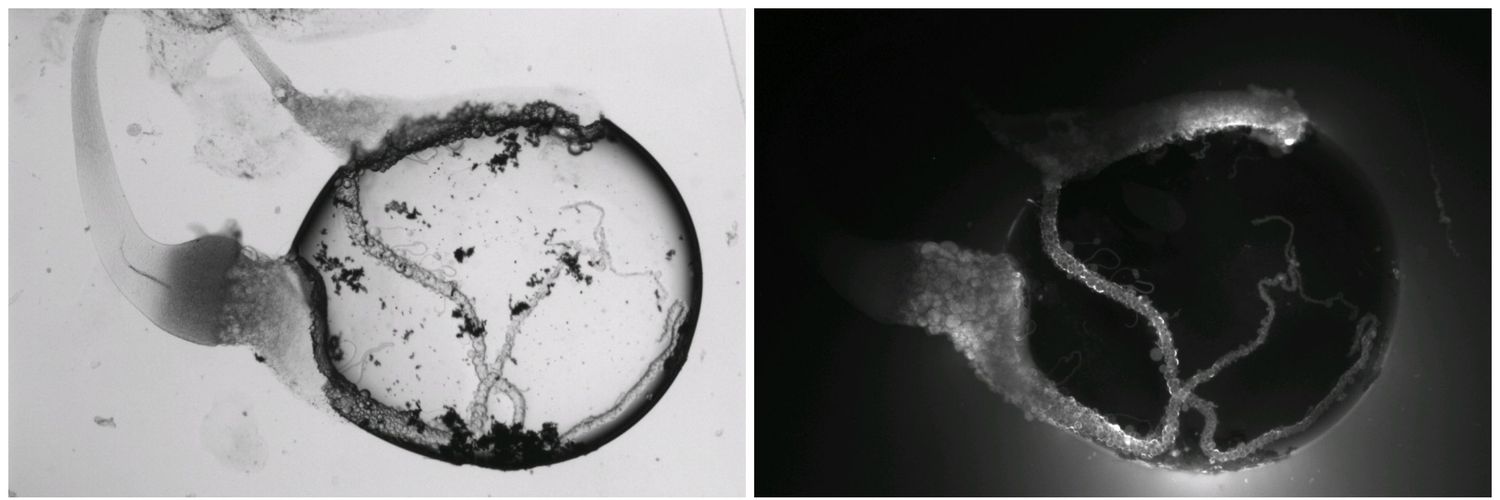
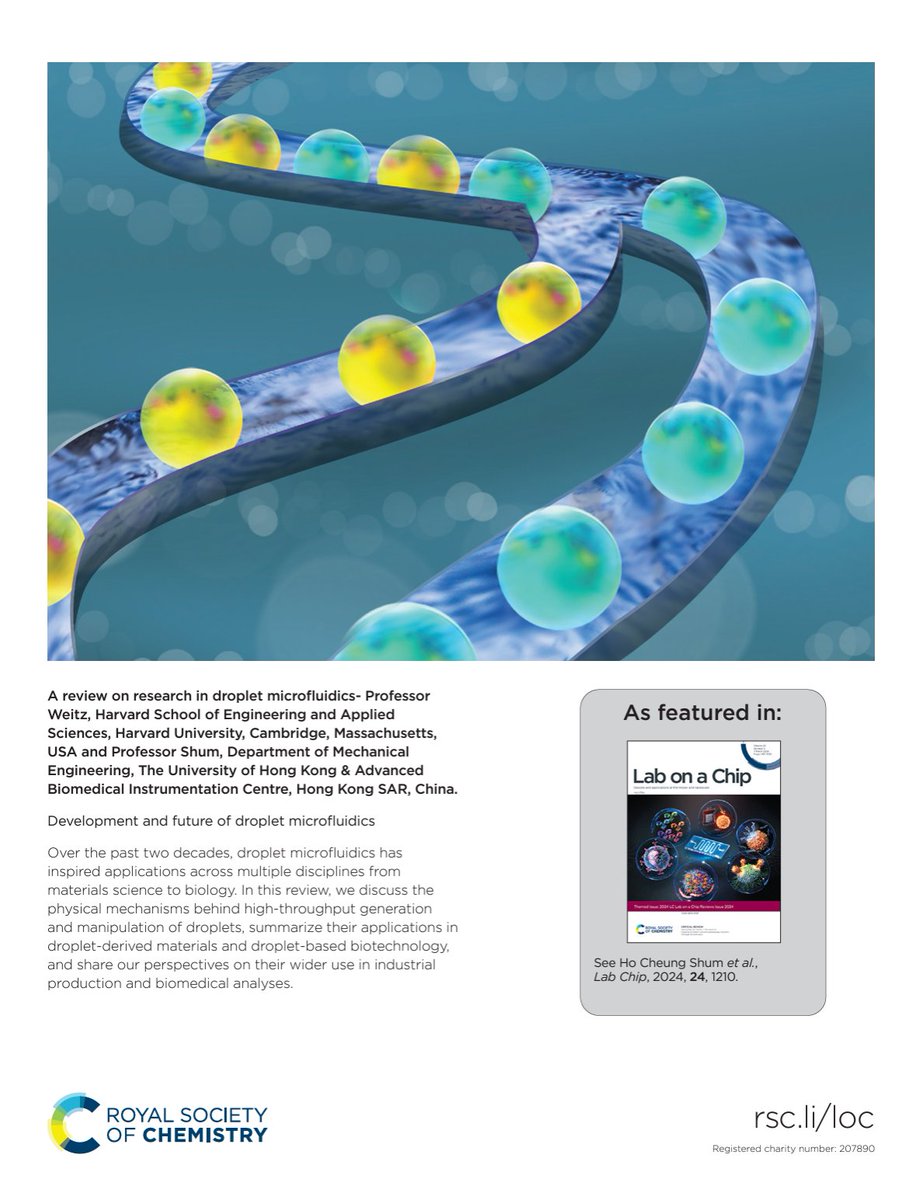
Happy to see this out - a perspective on how high throughput droplet technologies may be scaled up for chemistry, biology and beyond.💧🧪⚗️https://t.co/b0Y89KOyuR
Have a read of our new perspective article in (@LabonaChip ) on droplet microarrays. We explore droplet generation, manipulation and analysis for high throughput screens. We’re excited about the future of these technologies!💧 @RobertStrutt@bijing_xiong https://t.co/BtvCcRzta3
Molecular intelligence: enzymes that compute
Living matter already processes information — it senses, reacts, and adapts — but doing so with the precision of a computer has long seemed out of reach. What if molecules themselves could perform computation, without any electronics?
Souvik Ghosh and coauthors demonstrate exactly that: a recursive enzymatic network built from just seven immobilized enzymes that can perform reservoir computing. Instead of transistors, the system uses competition between chemical reactions, feedback loops, and non-linear kinetics to classify inputs and respond to changing conditions — all inside a microreactor.
The result is remarkable. With a simple linear readout, the chemical network performs non-linear classification tasks, senses temperature with ~1.3 °C precision, and even detects light-pulse periodicity by coupling to a photoacid dye. The computation happens entirely within wet chemistry, where sensing, processing, and decision-making merge into one process.
Compared to earlier chemical reservoirs, this one operates under mild, bio-compatible conditions — opening the door to soft, autonomous materials that think and act chemically.
Paper: https://t.co/k0Vi7llqoy
I recently learned that the novelist, Cormac McCarthy, spent several years at the Santa Fe Institute helping scientists write papers.
His advice was condensed into a brief Nature column. The first three points, and some of the final points, are really good. (h/t @eryney_ok)
Our new manuscript reports using microwave resonator to count droplets network formed in 3D-printed microfluidics. Available on Lab on a chip now. https://t.co/tMwauwauvG
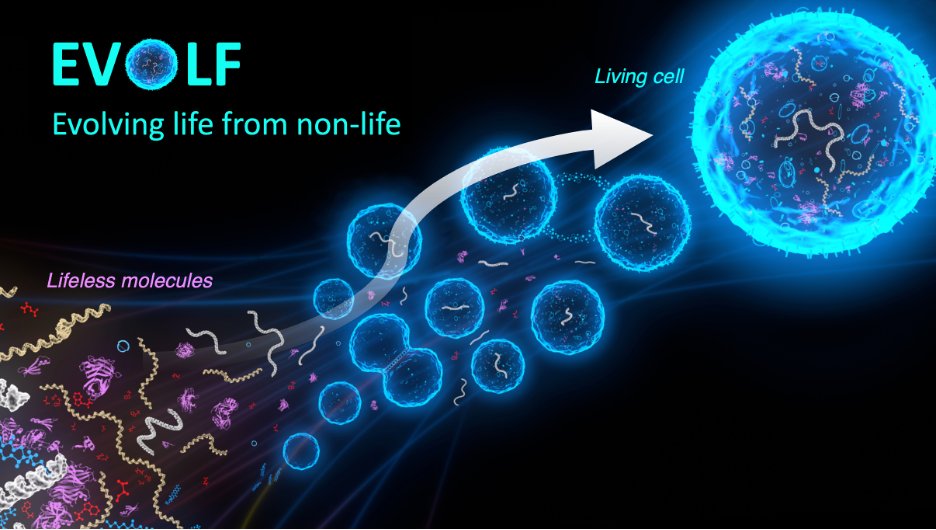
I’m thrilled to be able to announce that we were granted a NWO Summit grant entitled ‘Evolving Life from Nonlife’ (EVOLF) with 40 million euro for a 10-year project aimed to cross the gap between non-life and life by assembling a living synthetic cell from lifeless biomolecules!
Excited to see one of my PhD projects published in JACS Au today! Co-authored by my amazing PhD supervisors @YuvalElani, Marina Kuimova and @NickBrooks22 within @impchemistry!
Read bellow:
https://t.co/NrQOSmOsXR
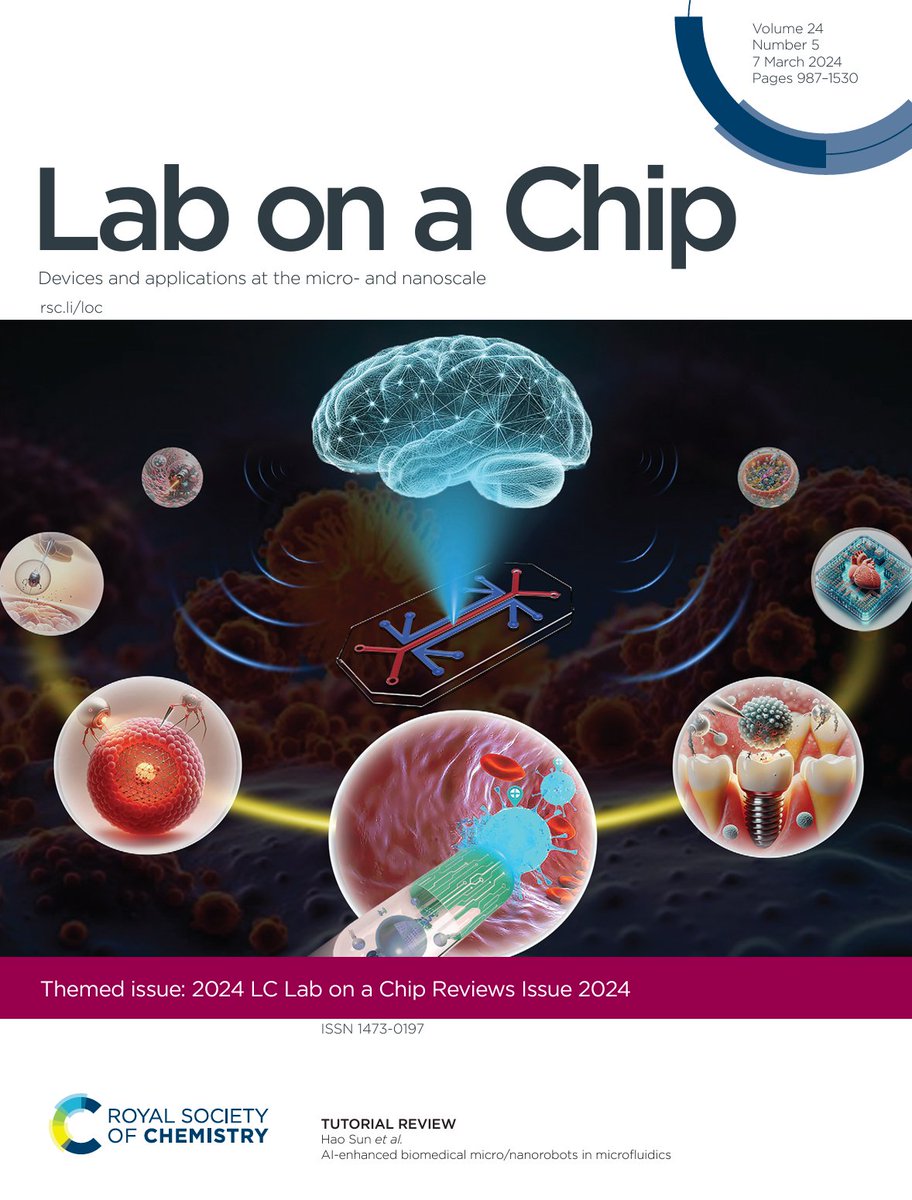
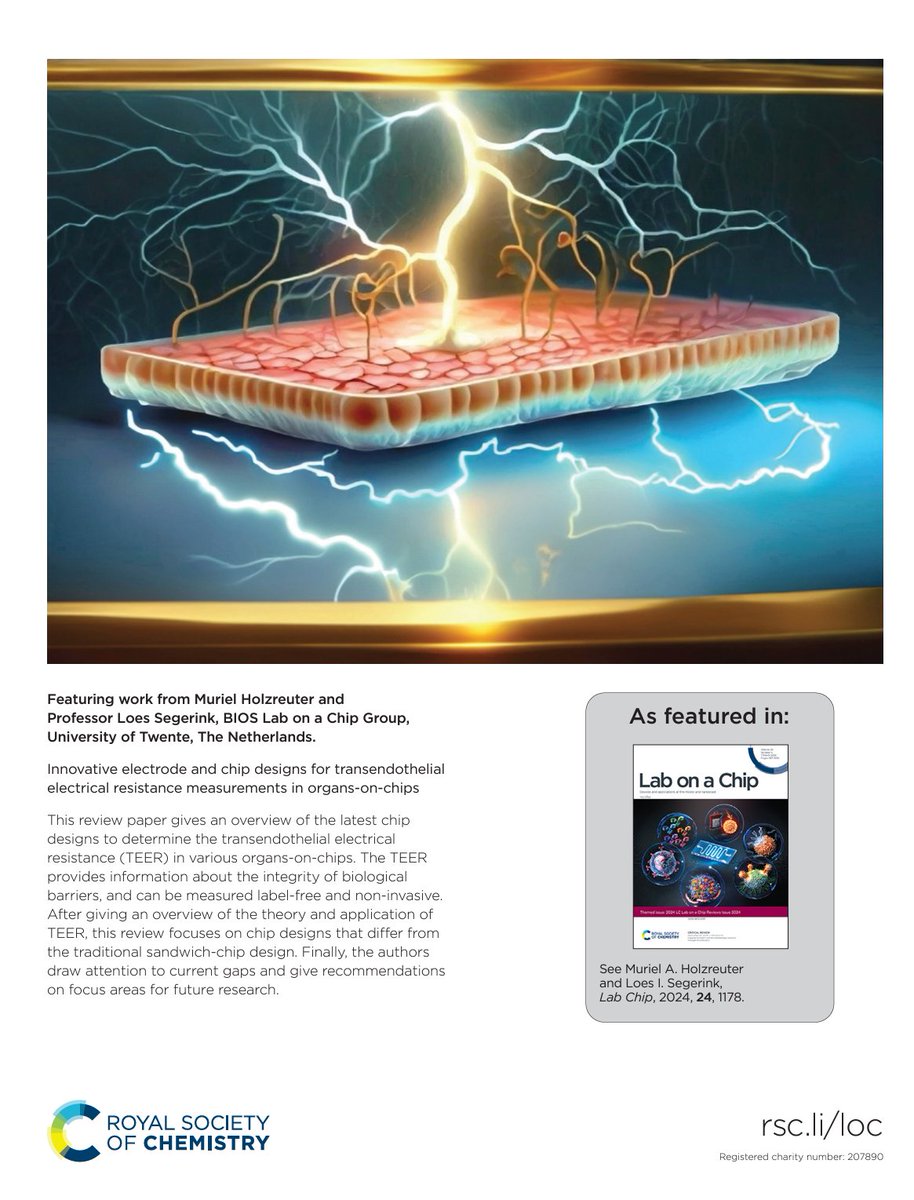
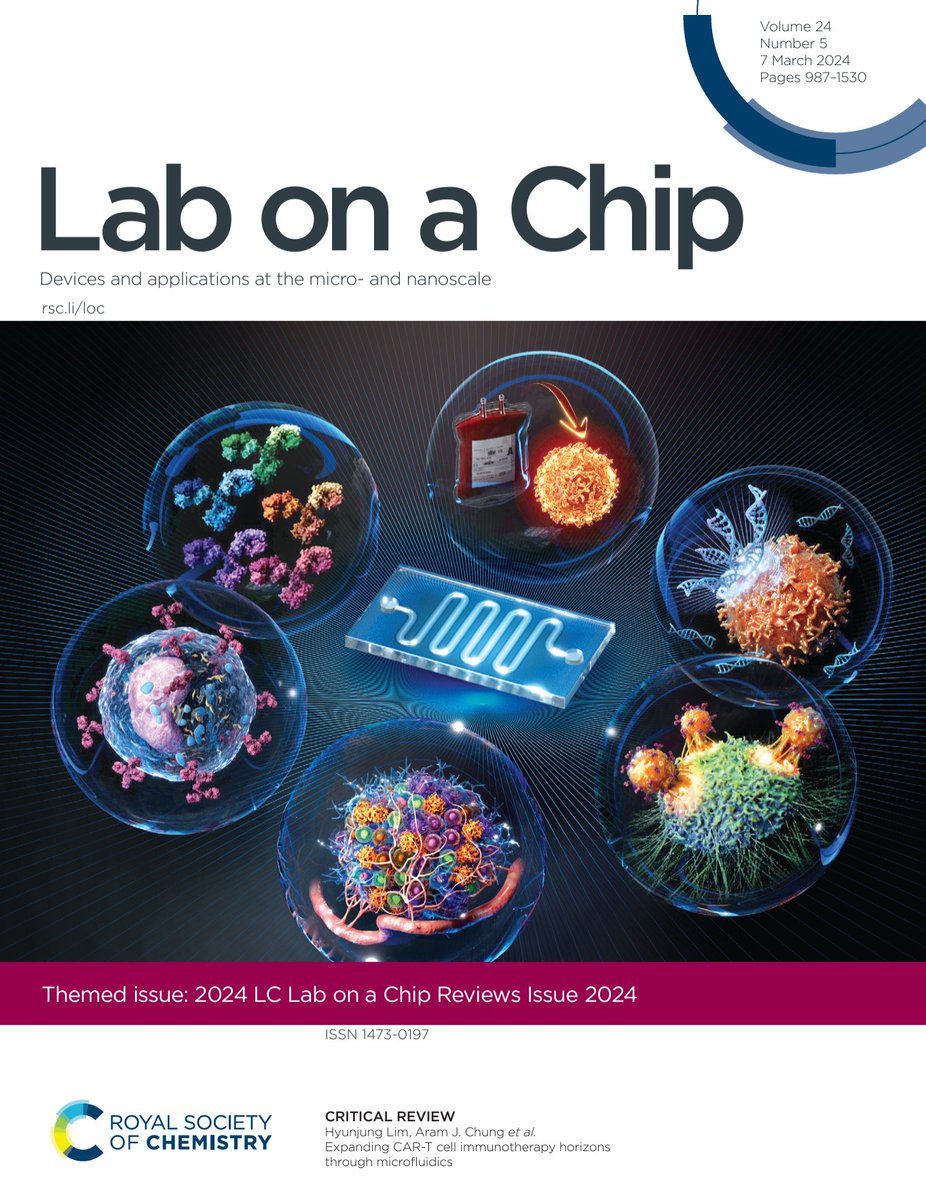
We at @LabonaChip are very pleased to present our second-ever annual Reviews issue! 📚🎉
📒 Lab on a Chip 2024 Reviews Issue - FREE TO READ
🔗https://t.co/WoxoNUQ4bZ
@ETH_en Public Tour: At today’s fully booked lab tour some 40+ visitors learned about microchips and their great use for medical and diagnostic applications or for biological analyses. Big thanks to the @BioanalyticsLab!
> https://t.co/GGdpZaBjpG
Delighted to receive the best ECR talk for the "World Premiere" of the DIB-BOT, an open-source hardware approach for high throughput droplet interface bilayer deposition!
A quick thread to introduce my robot to the rest of the world... 🤖
Our new perspectives article, out now in Lab on a Chip, explores how 3D printed artificial tissues could replace the use of ex-vivo animal tissues when screening the safety of cosmetics. https://t.co/ABY1hMVn1j @ImperialDyson@Imperial_IMSE@fabriCELL_UK@imperialcollege
Congratulations to Dr. Robert Strutt for winning the best talk award at 32nd Swiss Soft Days! Rob gave a talk on artificial cells.
The event was hosted at the Biozentrum in Basel and brought together Swiss researchers in the areas of soft matter, biophysics and nano materials🥇
Inspiring moments at Euroanalysis XXI in Geneva, August 27th-31st, 2023! The theme of the meeting was 'Analytical Probing of Complex Systems.' Here Prof. Petra Dittrich after an inspiring keynote talk and post doc Robert Strutt after an insightful poster presentation 🌟
Check out this incredible paper, developing a soft, microscale droplet-based power source able to activate neurons!
Just published in @Nature from @bayley_lab@LinnaZhou1@OxfordChemistry https://t.co/0CgAW4AEcr