Inventor of 24® game and @FirstInMath online. Engineer, Social entrepreneur, TEDx speaker, contributor to Huffington Post, London Economic, NCSM, EdTech Times
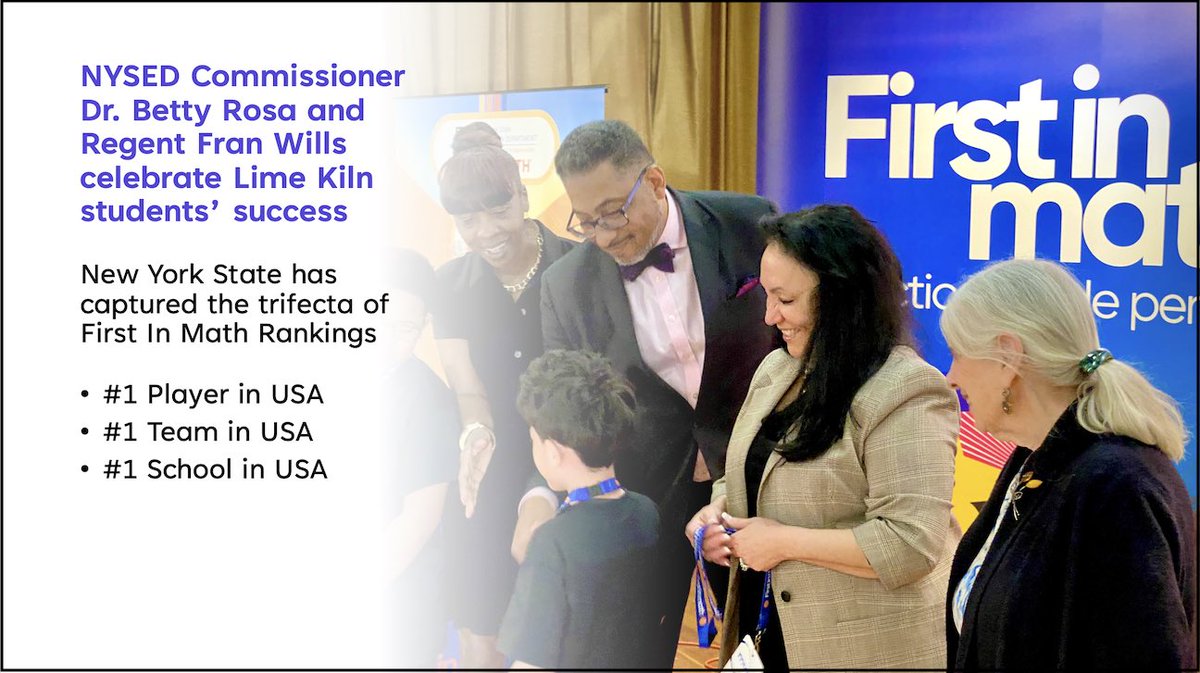
NYSED Commissioner Dr. Betty Rosa, Regent Fran Wills, and New York State Senator Bill Weber honor the extraordinary accomplishment of Lime Kiln students on @FirstInMath.
Watch this powerful video: https://t.co/neXjEHLHRW
@NYSEDNews@NCTM@usedgov
I was too engaged and didn't take many pictures! @Mrs_Kling_Tech and I had TWO fantastic 3 hour @24game@FirstInMath workshops today with the wonderful staff in Danville, VA today! Thank you so much for having us!
A mathematician at Bell Labs noticed that the scientists who won Nobel Prizes and the ones who never amounted to anything were equally smart, equally hardworking, and equally credentialed, and the only thing that separated them was a single question almost nobody is brave enough to ask themselves before they die.
His name was Richard Hamming.
He spent 30 years at Bell Labs, in the same building as John Tukey, Walter Brattain, and a long list of physicists who took home Nobel prizes for work they did down the hall from his office, including the legendary Claude Shannon.
His invention of error-correcting codes made modern computing possible. He has won the Turing Award. And all the while he was creating his own legacy he was secretly doing a study on the people around him.
The study was straightforward. 2 Teams. The legends and the lost. Same I.Q.s. Degrees same. Same desk hours. Same access to the world’s best resources.
And yet, at the end of 40 years in their careers, one group had changed entire fields, and the other group could not be remembered by their own colleagues five years after retirement. He wanted to discover what the actual difference was.
In March 1986, he stood before 200 researchers in a Bellcore auditorium and told them what he had seen.
He said it all came down to one question. And hardly anyone he ever met was willing to ask it directly.
He called it the Friday-afternoon ritual. He spent years blocking out his Friday afternoons and not doing anything productive with them every week. No experiments. No meetings. No deliverables.
He called it Great Thoughts Time. He sat down with a notebook and asked himself a couple of questions in order. What are the most relevant problems in my discipline? And why I am not working on either of them.”
Most weeks, the answer was the same, he said. For a week now he had marched confidently in a direction he did not think was the most important direction. He was a goer. He worked a bit. He was getting clean results that would publish in respected journals. (
And for five days straight he'd been lying to himself about whether any of it mattered.
The reason almost nobody does this ritual is because the honest answer is unbearable. The thing is that if you sit down on a Friday afternoon and say out loud that you are not working on the most important problem in your field, now you have to do something about it.
You have an immediate change in direction, or you have to keep lying to yourself every week from that point on. Most people choose the lie.
In the short term it’s cheaper, but over a career it’s more expensive.
Hamming took the ritual a step further in the Bell Labs cafeteria. He began approaching scientists he barely knew, asking them what they thought the most important problems in their field were.
A week later he would ask them why they had not worked on these problems. Eventually people wouldn't have lunch with him. “I had to keep finding new tables,” he said.
Nobody had a good answer for that, and being around someone who kept asking it made every meal feel like a performance review.
The line that broke me is the line that most people skim over in the transcript. His words: If you do not work on an important problem you are unlikely to do important work.
That’s not motivational line. It is a rational one. You cannot make a great result from a problem that does not matter. Input restricts the output. The choice of the problem is the ceiling of the career.
The transcript has been freely available on the internet for almost 40 years. Stripe Press published the complete lectures as a book. Naval Ravikant quotes it all the time. It’s still given out to new hires at every serious engineering lab in Silicon Valley.
Most people will not run the ritual this Friday. They will be busy. They always are.
@tylerkingkade@NBCNews I heard groans from Ss when they had to log on to iReady and found no correlation to a rise in student achievement. @FirstInMath was a superior product that actually raised math scores for my Ss. They loved it, I had some of the highest assessment scores because of FIM.
Grateful to be working with Lehigh University, Dr. Pan and his team on studies showing how First In Math can build cognitive readiness, engagement, and stamina. Our partnership with Lehigh University goes back three decades with then president Peter Likins and the hosting of the 24 Challenge tournaments at Mountain Top Campus.
Share https://t.co/lQb49Q9Dhz
Three things that seem to be contributing to poor math achievement:
1. Multiple strategies for novice learners.
Recommendation: Choose an efficient strategy that generalizes easily to (e.g.) larger numbers, teach it well, give lots of practice on it.
2. Too much focus on manipulatives & pictures.
Recommendation: Fluency with abstract symbols sets kids up for later success. Move quickly to the abstract - that's where the majority of practice should be.
3. Not enough practice.
Recommendation: Give lots of practice and then give more. It's how we get good at math.
Jean Paul Van Bendegem, a philosopher of mathematics, believes that infinity may not exist. His journey began in childhood, when he watched his math teacher draw a line on the chalkboard that supposedly extended infinitely. “To where?” he recalled asking. His teacher told him to stop asking questions.
https://t.co/zBRnmBsgGL
Congratulations Dr. Snehal Pinto, Director of the Ryan Group of Schools, for being the first to launch the iconic 24 game tournament nationwide in India! Tremendous success with the premiere in Mumbai - now off to Dehli and then Bangalore. Grateful for our partnership.
@AboutImpact
https://t.co/nUnwXoBPja
A Hungarian mathematician with terminal cancer spent the last year of his life writing a single short book comparing the human brain to the computer. He died before he could finish it. The unfinished manuscript is the most important book about AI almost no one has read.
I started reading it at midnight and could not believe a man on his deathbed had predicted almost everything about modern AI 70 years before it happened.
His name was John von Neumann. The book is called The Computer and the Brain.
He was widely considered the greatest mind of the 20th century. Eugene Wigner, who won a Nobel Prize in physics, said von Neumann's mind was so fast that the rest of the world, including Einstein, looked like they were thinking in slow motion.
He had personally designed the architecture that every computer on Earth still uses today. He had helped build the atomic bomb. He had invented game theory. He had laid the mathematical foundation of quantum mechanics. He was 53 years old.
In 1955 he was diagnosed with terminal bone cancer, almost certainly caused by radiation exposure during the Manhattan Project. The doctors gave him months.
He kept working.
In 1956 Yale University invited him to give the Silliman Lectures, one of the most prestigious lecture series in the world. He started writing the lectures from a wheelchair. Then from a hospital bed. He was racing against his own body.
He never finished. He died on February 8, 1957. The manuscript on his bedside table was incomplete. His widow Klára published it a year later under the title he had given it. The Computer and the Brain.
The book is short. Under a hundred pages in most editions. It is the smallest important book ever written about artificial intelligence.
Here is what a dying man figured out about AI in 1956 that most working researchers are still catching up to.
He started by laying the human brain and the digital computer side by side and comparing them like two engineering systems.
Neuron speed.
Memory capacity.
Energy efficiency.
Error tolerance.
The arithmetic was savage. Computers were millions of times faster than neurons. Neurons were millions of times more energy efficient than vacuum tubes. The brain ran at 20 watts. A computer of equivalent capability would have melted itself.
The first insight that hit me was about fault tolerance. Von Neumann pointed out that the brain loses neurons every day. Concussions, strokes, normal aging, alcohol, lack of sleep. The system keeps working. You do not crash when a single brain cell dies. Computers crash if a single bit flips in the wrong place. He argued that any future intelligent machine would have to be biologically tolerant of error, not mechanically perfect. Modern AI engineers are still trying to figure out how to build systems that degrade gracefully the way brains do. He flagged the problem 70 years ago.
The second insight is the one I cannot stop thinking about.
He said the brain runs on a different kind of math than the computer. Computers run on rigid logic. Step by step. Each step deterministic. The brain, he said, is fundamentally probabilistic. Neurons fire in noisy patterns. The whole system works statistically, not logically. The "answers" the brain gives are not derived. They are sampled.
This is exactly what modern deep learning is. ChatGPT, Claude, Gemini, every neural network in production today is a probabilistic engine, not a logical one. They do not derive answers. They sample them from a distribution. The entire field of AI spent 30 years trying to build intelligent systems on rigid logic before someone figured out that von Neumann had been right since 1956. The brain was never doing logic. The brain was doing statistics. AI only started working when it gave up logic and copied biology.
The third insight is the one that reads like prophecy.
He warned that the language the brain uses internally is not English, and not anything humans have written down. He called it the brain's "secondary language." A code that the brain uses to talk to itself, far below conscious thought, that no human has ever directly accessed. He predicted that we would build artificial neural networks before we ever decoded that internal language, and that those networks would also develop their own internal codes that no human would understand from the outside.
This is exactly the situation we are in right now. We do not actually know what an LLM is "thinking" in any deep sense. The vectors in its hidden layers are not English. They are not any language. They are something the network developed on its own, and modern interpretability research is, in 2026, the field of trying to translate that internal code back into something humans can read. Von Neumann predicted both the problem and the discipline that would have to exist to study it. He did this lying in a hospital bed.
The fourth insight is the one nobody quotes but everyone needs.
He argued that the brain operates on parallel hardware while the computer of his time was strictly serial. One instruction at a time. He said real intelligence would require massive parallelism. Hundreds of millions of simple operations happening simultaneously, the way billions of neurons fire at once.
For 50 years computers stayed serial. They got faster but they did one thing at a time. Then around 2010, AI researchers realized they could repurpose graphics cards, which were already doing parallel math for video games, into massive parallel processors for neural networks. Modern AI is built on GPUs, which are essentially the parallel hardware von Neumann said we would need. Every Nvidia chip running every modern AI model is delivering on a prediction he made before the integrated circuit existed.
The strangest thing about reading the book is how calm it is.
There is no panic in his sentences. No fear of running out of time. He writes like a man who has already accepted that he will not finish, but the work itself still matters more than his ability to complete it. The last few pages are visibly thinner than the rest. He is fading. The reasoning stays clear until the final sentence.
Steve Jobs reportedly gave copies of this book to senior engineers at Apple. It is the kind of book you read once and then carry around for a year, returning to specific pages when you hit a problem in your own thinking.
The man who designed the architecture of every computer ever built spent his final months explaining what computers cannot do. He died before finishing the explanation. His widow published the gap.
70 years later, the entire AI industry is still trying to fill it.
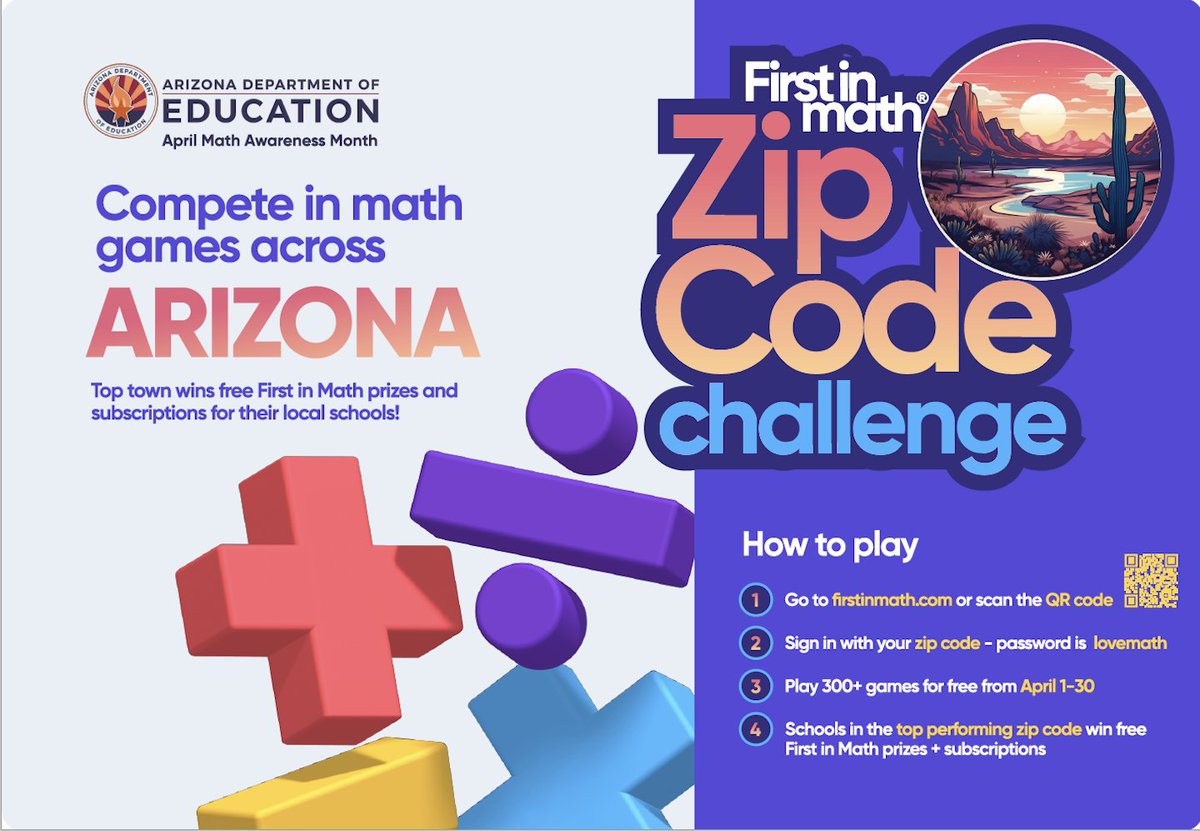
Huachuca City just proved everything can change—jumping from off the radar 2 #1. 60,000 prob solved in just days, the leaderboard is still wide open. A strong push right now could move yr zip code to the Top 10 & earn prizes, recognition, & serious bragging rights. @azedschools
How Japanese have produced wood for 700 years, without cutting down trees.
Daisugi is an ancient Japanese forestry technique developed in the 14th century originally used by people living in the Kitayama region, because the territory was extremely poor in saplings.
They planted cedars pruned in a special way to produce shoots that eventually would become perfect, straight, knot-free lumbers.
The shoots are gently pruned by hand every two years leaving only the top boughs, allowing them to grow straight. Harvesting takes 20 years and old 'tree stock' can grow up to a hundred shoots at a time.
There was actually another reason why the technique was developed: fashion. In the 14th century, a linear, stylized form of architecture known as sukiya-zukuri (数寄屋造り) became popular, and every prominent samurai or nobleman wanted a house built in this way.
There were simply not enough raw materials available to keep up with demand, so daisugi was developed to produce more wood in a shorter time.
The wood produced with this technique has also impressive qualities: it's 140% more flexible than standard cedar and 200% denser and stronger. And, it's extremely durable.