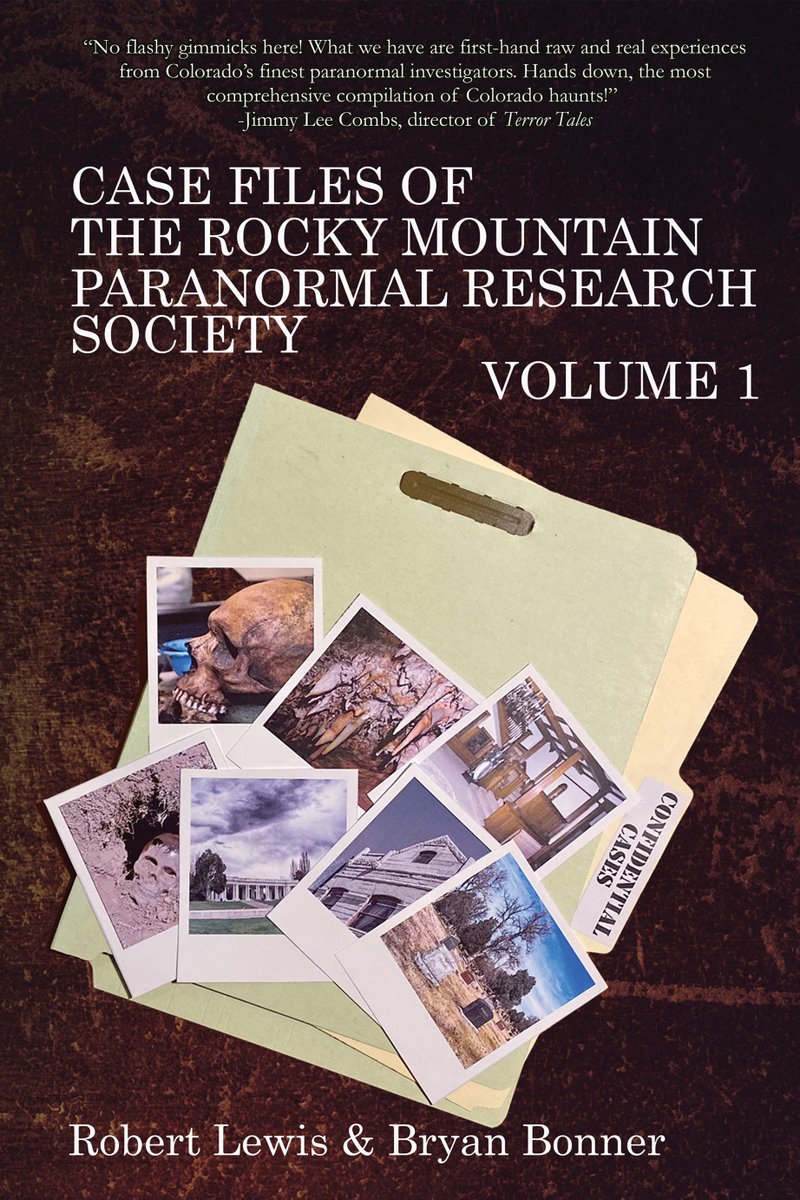
Since I’ve got some new people on my page—welcome!—it’s probably a good time to once again mention my books.
The Case Files of the Rocky Mountain Paranormal Research Society books are haunted histories and reports from open minded but skeptical paranormal investigations.
Arithmophobia is an anthology of mathematically inspired horror stories.
In the Woods is an anthology of horror and fantasy in woodland settings.
A little something for everyone. Hope y’all enjoy!
This is the interesting part a lot of people are ignoring. Obviously checks still need to be run on both, but today we got *two* potential proofs of Riemann.
This is all terribly exciting and quite beyond my mere BS in mathematics, so I've been reaching out to experts (including some of my own former professors) to learn more.
🕯️
Holy crap -
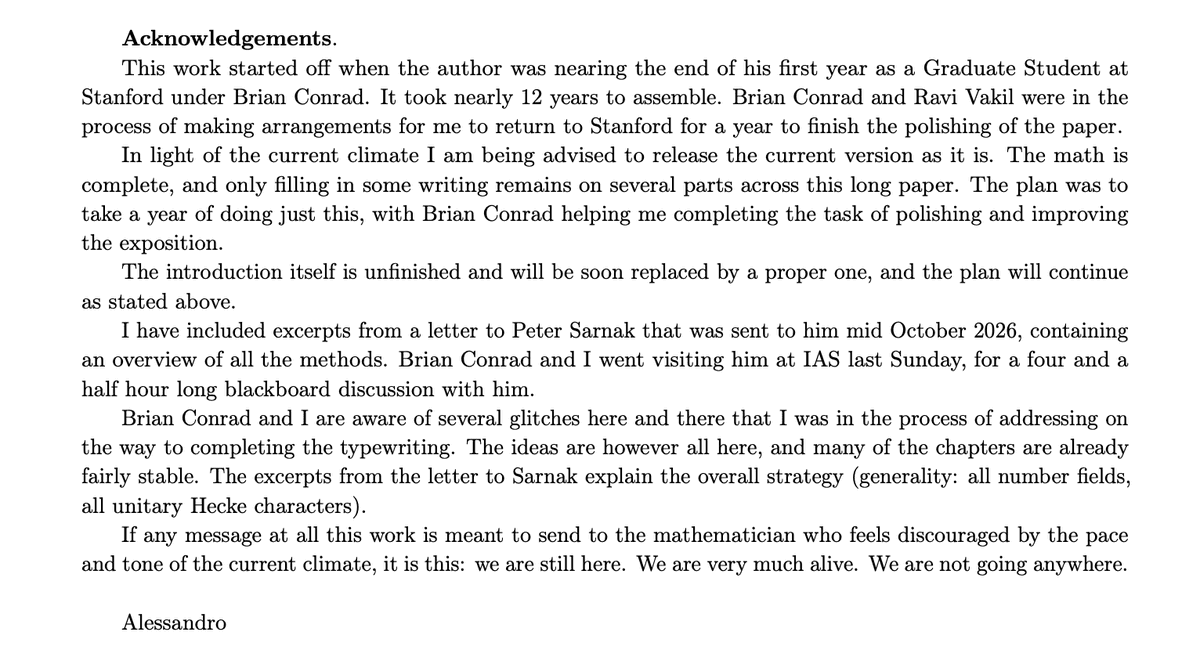
The release of AI assisted Riemann hypothesis solution, forced the hand of Alessandro Masullo to release his own, completely human (no AI) proof he said should have taken another year or so to formally "polish"
@TonyLaneNV "Less, not none" is the closest I could come to "so radically re-envision the idea of education that 'schoolwork' and 'homework' lose all meaning as categories."
Being out of touch with the poetry of the present time is the greatest compliment I can imagine!
There's a reason I read Guite and don't read almost anyone else working today. Guite has rescued structure and form and beauty from the godless and God-forsaken world of contemporary poetry.
I think we all kinda suspected the Riemann Hypothesis was right...but with a claimed (and plausible) proof, I don't know what to think. It's like the Holy Grail has been found. Should I celebrate the victory or mourn the end of the quest?
Or are we calling this prematurely?
🕯️
BREAKING: A mathematician at Anthropic claims to have used the company's AI to solve the Riemann hypothesis, the most notorious open problem in all of math
https://t.co/nEXAyIkvSt
@BookAnonJeff@DanNEO_SS (And no, I'm not saying this ordinance is on the same moral level as the prohibition of murder; far from it. I'm just making a point that one can and must have a moral law without being religiously partisan in a way that invokes the First Amendment.)
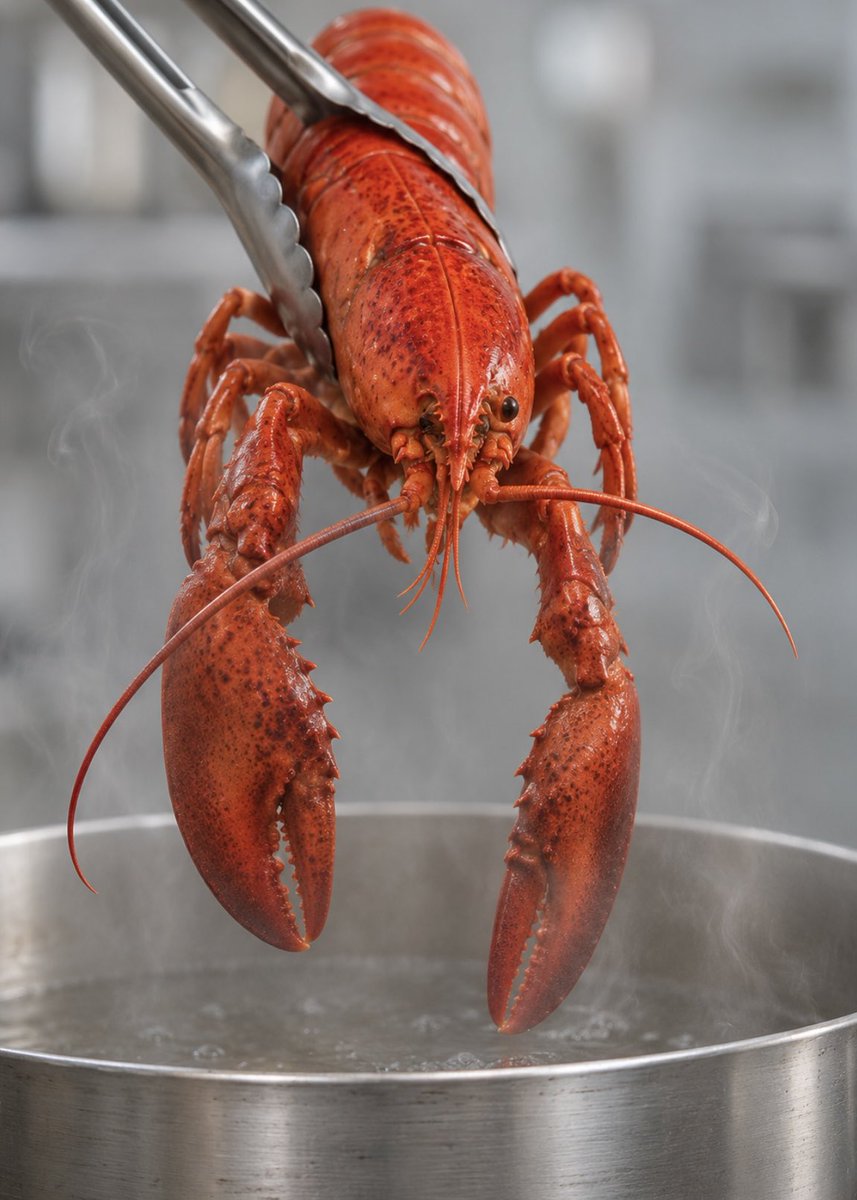
Hell might be about to freeze over: I might agree with New York City about this.
Look, I hate regulations and legislation as much as anyone and I'm not a real animal rights nut. I'm certainly not going to support the vegans or PETA or anything like that.
But with that said, and while lobsters do need to be cooked immediately upon death or they go bad, there's no reason they need to be live-boiled. Some chefs even think quickly dispatching them with a knife results in *better* meat because they don't thrash and contract the muscles in those last moments. As long as they make it into the pot within a few minutes, you're good.
At the end of the day, I'm not sure if it's right or wrong that it ought to be a law. But I do agree that it's best practice to quickly dispatch the lobster with a knife before cooking. It's as good or better a technique in terms of food quality and frankly more ethical.
You don't have to be some kind of PETA nutjob to inflict the least suffering possible for your dinner.
🕯️
I would oppose such a ban, but not on First Amendment grounds.
But if that's the challenge, go ahead and make the argument to justify *any* law on purely objective grounds. Any at all. I'll wait. Start with the law against murder. You may not make any moral or ethical arguments since you've declared them forbidden.
Nonsense. Agree or disagree with the ordinance, and though I happen to lean a little on its side I certainly see plenty of valid counterarguments, it's entirely about cruelty to animals. That this might be a religious matter for some people does not make the question itself religious in nature unless you want to call making murder illegal unconstitutional because religions also happen to forbid murder. It has absolutely nothing to do with the First Amendment.
I don't see it as a religious law in the slightest. Maybe the Mayor's motivation is religious--could be--but there's obviously interfaith and/or secular purpose here.
It's fair to argue this particular moral concern is of less importance than the concern of government overreach. I'm sympathetic to that idea.
But to make a First Amendment case out of a lobster bill? That seems like quite the stretch. Not every law one might disagree with is unconstitutional, and certainly not a violation of the First Amendment.
@trad_west_ A friend of mine has been making a movie about St. Michael, as a matter of fact. I can almost guarantee it's going to be better than the couple Hollywood has attempted.