𝗦𝘂𝗴𝗴𝗲𝘀𝘁𝗲𝗱 𝗥𝗲𝘃𝗲𝗿𝘀𝗮𝗹 𝗦𝘁𝗿𝗮𝘁𝗲𝗴𝗶𝗲𝘀 𝗼𝗳 𝗢𝗿𝗮𝗹 𝗔𝗻𝘁𝗶𝗰𝗼𝗮𝗴𝘂𝗹𝗮𝗻𝘁 𝗨𝘀𝗲 𝗳𝗼𝗿 𝗠𝗮𝗷𝗼𝗿 𝗕𝗹𝗲𝗲𝗱𝗶𝗻𝗴 𝗮𝗻𝗱 𝗯𝗲𝗳𝗼𝗿𝗲 𝗘𝗺𝗲𝗿𝗴𝗲𝗻𝗰𝘆 𝗦𝘂𝗿𝗴𝗲𝗿𝘆.
As shown in Panel A, reversal management depends on the urgency of surgery or the invasive procedure. Reversal management includes administration of oral or intravenous (IV) vitamin K with or without 4F-PCC, depending on the timing of the procedure (emergency or urgent), baseline international normalized ratio (INR) value, and presence (or absence) of active bleeding. For patients receiving direct oral anticoagulants (DOACs), the decision also depends on time to surgery. Decision making is informed by DOAC type, time since last dose, half-life, presence (or absence) of active bleeding, and renal function tests to estimate residual drug activity.
Panel B shows reversal strategies for patients presenting with major bleeding while receiving an oral anticoagulant. The reversal strategy of vitamin K antagonists includes vitamin K given intravenously or orally, combined with 4F-PCC and INR testing. Management of anticoagulant reversal of direct oral FXaIs is based on four key factors (shown as the 4Ts): type of bleeding, timing of the last dose, thrombotic risk, and need for invasive procedures in the next 48 hours that would result in the administration of UFH. These factors may facilitate the use of specific (e.g., andexanet alfa) or nonspecific (e.g., 4F-PCC) antidotes. The reversal of dabigatran is informed by three clinical variables (shown as the 3Rs) — the type of bleeding, time of the last dose of dabigatran, and preserved renal function.
Learn more in the Review Article “Antidotes for Anticoagulation Reversal” by Bianca Rocca, MD, PhD, and Hugo ten Cate, MD, PhD: https://t.co/XobqwMebfy
NEJM subscribers: Explore this article deeper with AI Companion.
Mañana comenzará el Mundial, y muchos estarán atentos a los partidos. El fútbol nos recuerda algo que no debemos olvidar: la vida no es una carrera para lucirse en solitario, sino un camino que aprendemos a recorrer juntos. Quien no sabe pasar el balón, aunque tenga talento, todavía no ha entendido el juego. Y quien no sabe vivir con los demás y para los demás, todavía no ha entendido la vida. #ViajeApostólico
I’m pleased to share Mayo Clinic has announced a strategic collaboration with @Microsoft to develop and deploy a frontier AI model designed specifically for healthcare. Read more: https://t.co/I6RGCtR8MF
Coronary microvascular obstruction: the "no-reflow" problem that haunts STEMI care. New ESC clinical consensus on pathophysiology, prevention & management: a must-read. Read more in #EHJ.
https://t.co/WWlcFSfVyj
#cardiotwitter@ESC_Journals@escardio
🫀MINOCA is finally entering the era of precision medicine.
The PROMISE trial is the first randomized study showing that a structured diagnostic approach with mechanism targeted therapy improves outcomes in patients with myocardial infarction and non obstructive coronary arteries (MINOCA).
The most important finding was not mortality.
It was diagnostic clarity.
Using OCT, vasoreactivity testing, CMR, and embolic evaluation, investigators identified the underlying mechanism in 80% of patients and reclassified the initial diagnosis in 75.5%.
The most frequent mechanisms were:
• Epicardial spasm: 35.6%
• Plaque instability: 22.2%
• SCAD: 13.3%
This matters because MINOCA is not one disease.
Treating vasospasm, embolism, SCAD, and plaque rupture with the same empirical post MI regimen may be ineffective or even harmful. The paper specifically highlights that beta blockers may worsen vasospastic disease, while antiplatelet therapy alone may be inadequate in coronary embolism.
The intervention improved Seattle Angina Questionnaire scores by +9.38 points, exceeding the clinically meaningful threshold.
One major message from this trial: MINOCA should no longer be considered a “diagnosis.”
It is a working syndrome that demands phenotyping.
Future ACS pathways may increasingly incorporate:
• routine CMR
• intracoronary imaging
• vasoreactivity testing
• mechanism specific therapy
This is likely the beginning of a major paradigm shift in ischemic heart disease.
Reference 📚
Montone RA et al. Stratified treatment of myocardial infarction with non obstructive coronary arteries: the PROMISE trial. European Heart Journal. 2026;47:1456–1466. https://t.co/5vXc6Qy8Q9
💡 JAMA Insights: #HearingLoss affects nearly 55 million US adults, with 35 million experiencing mild loss and 20 million experiencing moderate or greater loss.
Hearing aids are the primary intervention, improving hearing-related quality of life in adults with mild to moderate loss.
🔗 https://t.co/EuSVQYWvaN
The Ebola virus disease outbreak rapidly spreading through the Democratic Republic of the Congo and into Uganda could become the “deadliest on record” without urgent action, warns aid agency International Rescue Committee
@emahase_ reports
https://t.co/mBH9bvmMLc
Stroke localization is one of the most powerful bedside skills in neurology and also one of the most favorite questions consultants ask during morning rounds.
So if you want to avoid getting embarrassed during rounds, you should definitely know these patterns.
Here are more high yield stroke localization pearls for residents and house officers 👇
➡️ Aphasia = dominant hemisphere lesion (usually left MCA) until proven otherwise.
➡️ Neglect = non-dominant parietal lobe stroke (usually right MCA).
➡️ Crossed signs (cranial nerve deficit on one side + body weakness on opposite side) = brainstem stroke.
➡️ Sudden vertigo + ataxia + diplopia = posterior circulation stroke unless proven otherwise.
➡️ Pure motor hemiparesis with no cortical signs = lacunar infarct.
➡️ Visual field defect without weakness = think PCA territory.
➡️ Locked-in syndrome is basilar artery thrombosis until proven otherwise.
➡️ Face and arm weakness worse than leg = MCA stroke.
➡️ Leg-predominant weakness = ACA stroke.
➡️ Dysphagia + hoarseness + ipsilateral facial sensory loss = lateral medullary syndrome.
➡️ A patient who “cannot speak” may still fully understand you → Broca aphasia.
➡️ Fluent but meaningless speech with poor comprehension → Wernicke aphasia.
➡️ Eye deviation usually points toward the side of hemispheric stroke.
➡️ Thalamic strokes commonly present with pure sensory deficits.
➡️ Sudden coma with pinpoint pupils should raise concern for pontine hemorrhage.
➡️ Severe headache + vomiting + decreased consciousness = think hemorrhagic stroke.
➡️ New atrial fibrillation in stroke patient = always suspect cardioembolic stroke.
➡️ Brainstem strokes can present subtly but deteriorate rapidly.
➡️ Bilateral weakness is never a typical MCA stroke pattern — think brainstem/basilar pathology.
➡️ If symptoms do not fit one vascular territory, reconsider the diagnosis.
➡️ Cortical signs = aphasia, neglect, gaze deviation, visual field defects, seizures.
➡️ Absence of cortical signs strongly favors lacunar stroke.
➡️ Sudden isolated ataxia in elderly hypertensive patient can still be a stroke.
➡️ Posterior circulation strokes are commonly missed in emergency settings.
➡️ Normal CT brain early in ischemic stroke does NOT exclude stroke.
The link between chronic exposure to several preservative food additives and hypertension, along with risk of cardiovascular disease
https://t.co/FIm02gPv3f
Until now, physicians using AI in clinic had to assemble the patient’s context themselves. Allergies, comorbidities, medications, prior procedures, copy-pasted in from the chart.
Today we’re announcing a partnership with @CedarsSinai. OpenEvidence now works directly inside Epic, drawing on the patient’s full record and interpreting the medical literature through the lens of that specific patient.
Cedars-Sinai is the first academic health system to deploy patient-aware clinical intelligence at enterprise scale. The clinician asks a complex question in natural language. The answer reflects both the best available evidence and the patient in front of them.
Patient data is never stored after the clinical session or used for any other purpose.
Every Olympic endurance coach in the world now tapes their athletes' mouths shut at night because a Swedish lab proved in 1995 that the nose produces a gas the mouth cannot, and that single gas determines whether your blood absorbs 100% of the oxygen you inhale or only 82%.
The gas is nitric oxide.
The lab was the Karolinska Institute in Stockholm. The discovery was published in Nature Medicine that same year, and it quietly rewrote everything respiratory physiology thought it knew about why humans have a nose in the first place.
Here is what they actually found.
The empty air-filled cavities inside your skull, the ones anatomy textbooks called evolutionary leftovers for a hundred years, are not empty and not useless.
The lining of those sinuses contains an enzyme called inducible nitric oxide synthase. It runs continuously. It produces large amounts of nitric oxide gas. That gas sits in your nasal cavity at concentrations hundreds of times higher than anywhere else in your body.
The Karolinska team measured it. Air leaving the nose contains roughly 56 parts per billion of nitric oxide. Air leaving the mouth contains 14. Air leaving the trachea, below both, contains 6. The nose is the only factory.
Then they ran the experiment that changed sports medicine.
When you inhale through your nose, that nitric oxide rides the airstream down into your lungs. It hits the small blood vessels surrounding your alveoli and forces them to dilate.
More blood flows past more oxygen, and more oxygen crosses into your bloodstream. The exact figure they measured was an 18% increase in arterial oxygen uptake compared to mouth breathing the same air.
Same lungs. Same oxygen in the room. Same heart rate. One nostril of difference and your blood is carrying nearly a fifth more fuel.
The reverse is what should haunt anyone who mouth breathes at night.
Mouth breathing bypasses the sinuses entirely. The nitric oxide never enters the lungs. Pulmonary blood vessels stay constricted. Less oxygen crosses into the blood.
The heart has to pump harder to deliver the same oxygen to the same tissues. A 2008 review in the Anatomical Record showed mouth breathers develop measurably higher pulmonary artery pressure over time, simply because the gas designed to lower it never arrives.
There is a second finding most people miss.
Nitric oxide is antimicrobial. It directly inhibits the replication of viruses and bacteria in the upper airway. During the COVID pandemic, researchers in the European Journal of Pharmacology proposed that habitual mouth breathers were getting hit harder partly because they had bypassed the body's first chemical line of defense. The nose was not just a filter.
It was a chemical weapons factory aimed at every pathogen trying to reach the lungs.
The implication is the part that should change how you sleep tonight.
Your body built a free 18% oxygen upgrade and a free antiviral system into the same organ. Both only activate when air passes through your nose. Both shut off the moment your mouth opens.
Half the adult population sleeps with their mouth open and has no idea they are running their lungs at 82% capacity for a third of their life.
The fix costs nothing. A strip of tape across the lips at night. That is the entire intervention.
The most expensive thing in human performance is the oxygen you already paid for and never absorbed.
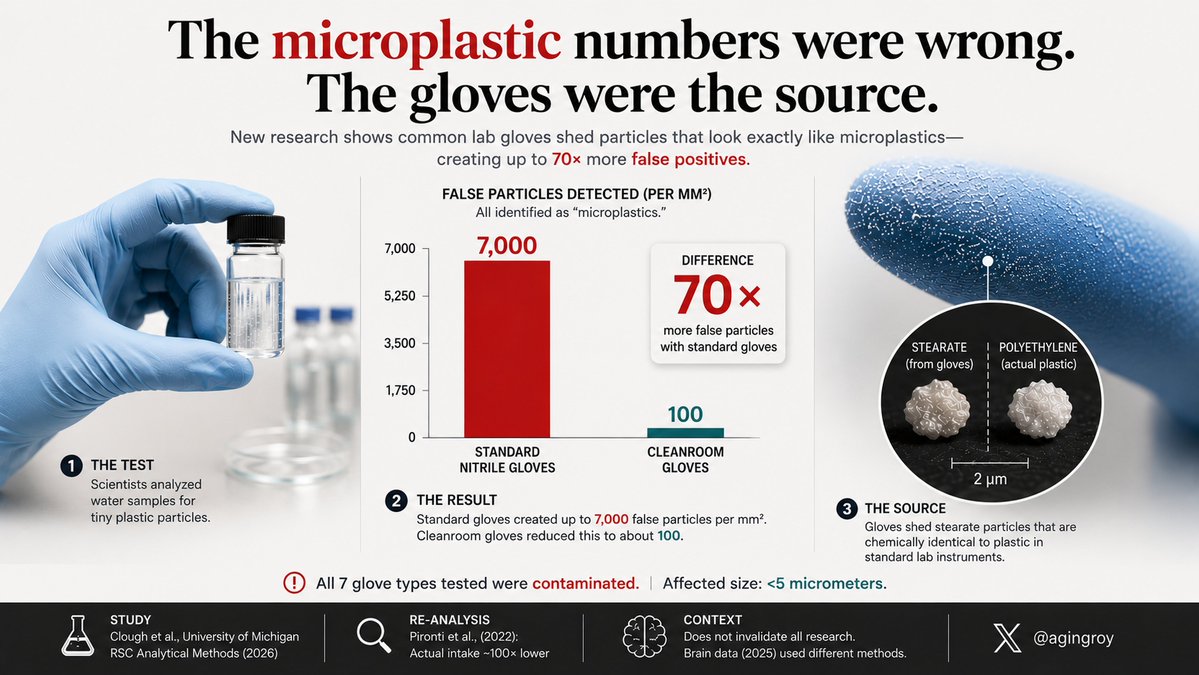
7,000 false positives per square millimeter. The culprit was the lab gloves.
University of Michigan researchers just upended a core assumption in microplastics science. Latex and nitrile gloves, worn by the scientists doing the measuring, shed stearate particles that look chemically identical to polyethylene. Standard infrared and Raman instruments can't tell them apart. The gloves were counting as plastic.
Seven glove types tested. All contaminated. The cheapest fix: switch to cleanroom gloves, which dropped false positives to around 100 per mm² vs. 7,000.
The "credit card per week" headline (5 grams, WWF/Newcastle 2019) has separate problems. A 2022 re-analysis found severe methodological errors in the original estimate. Actual measured intake is likely 100x lower.
None of this means microplastics are harmless. Last month's data on brain accumulation still stands. But the numbers driving the panic may have been measuring the scientists, not the environment.
Science catching its own errors is exactly how it's supposed to work.
𝗣𝗖𝗢𝗦 𝗶𝘀 𝗡𝗼𝘄 𝗣𝗠𝗢𝗦:
A historic change in women’s health:
PCOS (Polycystic Ovary Syndrome) has officially been renamed to Polyendocrine Metabolic Ovarian Syndrome (PMOS) after 14 years of global collaboration involving experts, researchers, and thousands of patients worldwide.
The previous name was considered misleading because many women with the condition do not actually have ovarian cysts. Experts say the old term reduced a complex hormonal and metabolic disorder to only “ovaries” and “cysts,” contributing to delayed diagnosis, poor awareness, stigma, and inadequate treatment.
PMOS better reflects the true nature of the condition, including its effects on:
• Hormones and endocrine function
• Weight and metabolism
• Fertility and reproductive health
• Skin and hair changes
• Mental health
The condition affects nearly 1 in 8 women globally, more than 170 million people worldwide.
More than 50 international medical and patient organizations participated in the renaming effort, and over 22,000 survey responses helped shape the final decision. Experts hope this change will improve awareness, encourage earlier diagnosis, advance research, and ensure women receive more comprehensive care instead of having their symptoms dismissed for years.
A major step forward for women’s health, recognition, and patient advocacy.
https://t.co/WcuUgYfwbQ
#PCOS #PMOS #MedTwitter
En cuanto al Hantavirus de los Andes, informo lo siguiente:
1. A la fecha, en México no se han detectado casos.
2. México mantiene una vigilancia epidemiológica permanente, de acuerdo a los protocolos internacionales.
The hantavirus linked to the cruise ship outbreak is the Andes virus which, is the only type that can spread from person to person. This is rare and typically limited to close, prolonged contact. At this time, there is no indication of wider community spread. https://t.co/hXvFL93phs
You have your mother's cells in your brain right now. If she ever carried you, yours are in hers.
Scientists looked at the brains of 59 women after they died, ages 32 to 101. In 63% of them, they found their sons' DNA scattered across different brain regions. The cells had traveled from the womb, through the blood, past the wall that normally keeps foreign material out of the brain, and settled in. The oldest woman still carrying her son's cells in her brain was 94. In mice, those cells became functional brain cells.
The transfer starts as early as 7 weeks into pregnancy. Your cells slip through the placenta into your mother's body. Hers slips into yours. One study found a mother still had her son's cells in her blood 27 years after giving birth. After delivery, between 50 and 75% of women carry their child's cells. During pregnancy, up to 6% of a woman's blood DNA comes from the baby.
When a mother's heart gets damaged during or after pregnancy, the baby's cells travel to the injury, latch on, and turn into beating heart cells, blood vessel lining, and muscle. Heart failure tied to pregnancy has a 50% spontaneous recovery rate, better than every other kind. The Mount Sinai team behind the research thinks the baby's cells are fixing the mother's heart from the inside.
The cancer data caught me off guard. A study compared healthy women to women with breast cancer. 85% of the healthy group still carried their children's cells. Only 64% of the breast cancer group did. That works out to about 4x lower odds of getting breast cancer if you kept those cells. The working theory is that they patrol the body and catch cancer cells before they grow.
A 2022 study found that in developing mouse brains, a mother's cells controlled the brain's immune cells, preventing them from cutting too many connections between brain cells. Your mom's cells helped wire your brain before you were born.
And it stacks across generations. A woman can carry cells from her kids, from her own mother, and even from pregnancies her mother had before her. Three generations of cells from different people, living inside one body.
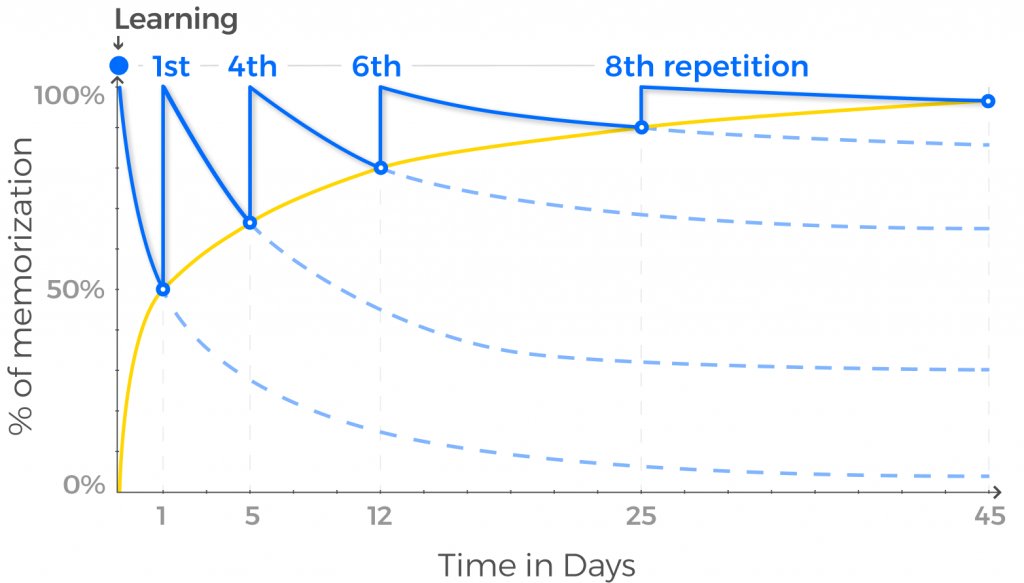
Doctors take more high-stakes exams than virtually any other profession.
Over 10+ years of this, I became obsessed with one question: which study techniques actually work?
Here's how I learned to study less and score higher
🧵1/11
Everybody talks about obesity, sedentary lifestyle, low-fiber diet, etc., as risk factors for type 2 diabetes. It’s easy and evident.
But no one talks about solitude, lack of economic and emotional support, lack of access to places to work out, etc. This is hard to talk about because it’s hidden.
They’re equally important, though.
The future is not more doctors. But doctors working alongside assertive politicians, innovative architects, and engineers.
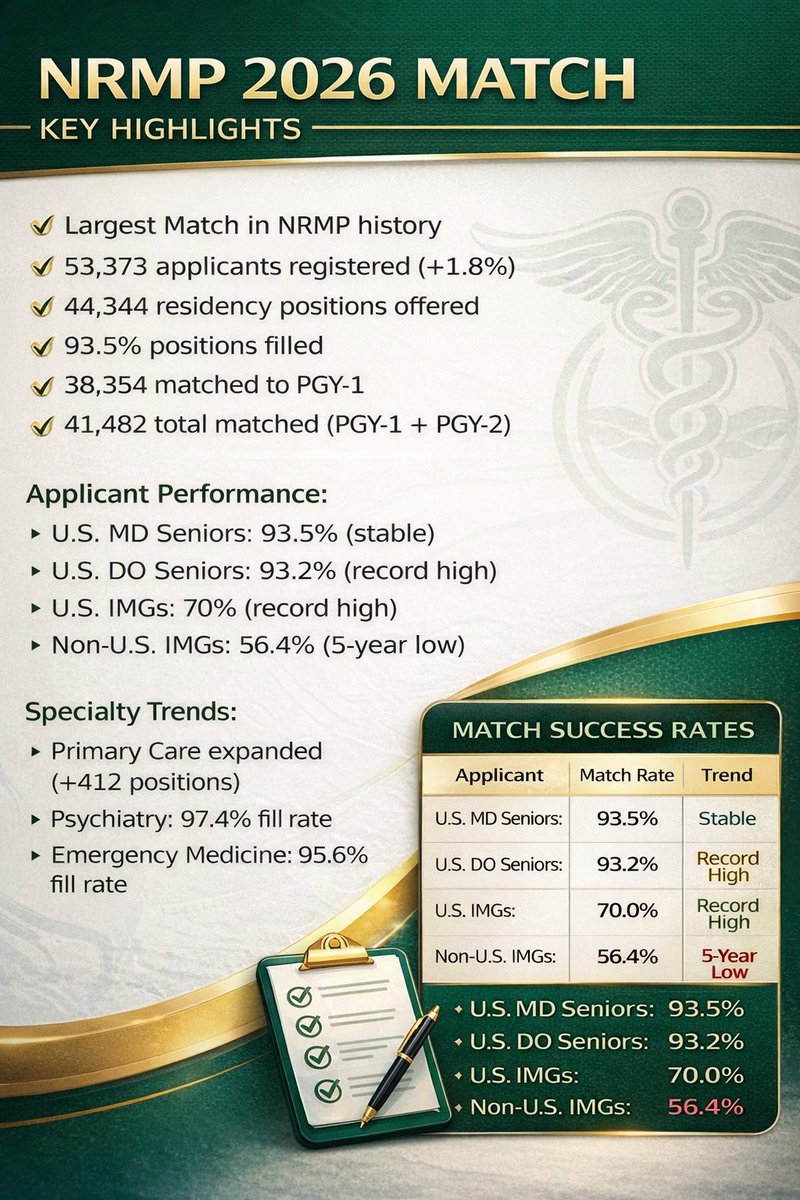
𝟮𝟬𝟮𝟲 𝗠𝗔𝗧𝗖𝗛 𝗗𝗔𝗧𝗔:
As highlighted earlier, the 2026 Match tells a very clear story:
🔹 Non-U.S. IMG match rates have dropped to a 5-year low, driven by visa uncertainty, travel restrictions, and increasing reluctance of programs to rank visa-requiring applicants.
🔹 In contrast, U.S. IMGs and DO applicants achieved record-high match rates, reflecting a shifting landscape in residency selection.
🔹A stark reminder that policy and logistics, not just merit, continue to shape outcomes in the Match.
Key Highlights of the 2026 Match:
Record Participation: A total of 53,373 applicants registered, an increase of 1.8% over 2025.
Expansion of Positions:
The Match offered 44,344 total residency positions across 6,809 program tracks, both all-time highs.
High Fill Rate: Nationwide, 93.5% of all positions were filled through the matching algorithm.
Total Matched: 38,354 applicants matched to PGY-1 (first-year) positions, while the total number of matched applicants across PGY-1 and PGY-2 reached 41,482.
U.S. MD Seniors: Remained the largest group with 20,934 active applicants and a consistent 93.5% match rate.
U.S. DO Seniors: Achieved their highest PGY-1 match rate on record at 93.2%, continuing a four-year trend of growth.
International Medical Graduates (IMGs):
U.S. Citizen IMGs saw a record-high match rate of 70%.
Non-U.S. Citizen IMGs saw a decline to 56.4%, a five-year low, largely driven by challenges for those requiring visa sponsorship (54.4% match rate).
Specialty Trends:
Primary Care: Offered 412 more positions than last year, reflecting a push to meet workforce needs.
Psychiatry: Continued to show strength with a 97.4% fill rate and 128 additional positions.
Emergency Medicine: Maintained stability with a 95.6% fill rate despite a slight dip from 2025.
Summary of Match Rates by Applicant Type:
Applicant Type | 2026 PGY-1 Match Rate Trend
U.S. MD Seniors | 93.5% | Stable
U.S. DO Seniors | 93.2% | Record High
U.S. Citizen IMGs | 70.0% | Record High
Non-U.S. IMGs | 56.4% | 5-Year Low
#Match2026 #Matchday #NRMP
All men and women, especially Christians, are called to fix their gaze on those who suffer, on the pain of the lonely, and on those who are emarginated for various reasons, for without them we cannot build a just society. Only together can we build communities of solidarity capable of caring for everyone, in which wellbeing and peace can flourish for the benefit of all. Caring for the humanity of others helps us to live our own lives to the full.