Glad to see our recent podcast on @CryptoAltruism and the launch of our Regen Bank fork added some momentum to this exact discussion 😉
Heavy bureaucracy in dMRV kills grassroots impact. In crisis conditions or with closed land registries, standard paperwork simply fails.
Structuring claims directly at the source and focusing on territory stewardship rather than paper titles is exactly what we are already implementing for @GEN_Ukraine communities. Looking forward to seeing how the main protocol adapts! 🛠️🌍
Let's move capital 💰 more effectively and efficiently into verified impact 🌎
Impact diligence today takes 8–12 weeks. Most of that time is spent on data archaeology.
A foundation or impact investor asks a portfolio company for evidence. The company sends a folder. Inside: PDFs, scanned reports, spreadsheets with inconsistent column names, a few photos, links to a dashboard that hasn't been updated in six months.
A junior analyst spends a month cleaning it. A senior partner spends a week interpreting it. The committee gets a slide.
Everyone involved knows the underlying problem is the same one every time: there is no shared substrate for impact data.
Regen's approach: Structure the claims once, at the source. Verify them. Anchor them. Then any party — analyst, partner, AI assistant, auditor, regulator — can work from the same trustworthy material.
That doesn't just speed up diligence. It changes who can do it, and at what scale.
60+ ecovillages. 3,000 people sheltered. Regeneration in the middle of a war 🌱🇺🇦
@gen_ukraine shows how collective action & blockchain can combine to build more resilient communities 🤝🌐
We sat down w/ their Founder @RodovidMe to learn more 🎙️
🎧 https://t.co/lqFyHII7xn
We discuss:
🌱 How GEN Ukraine has built a network of 60+ resilient ecovillages during wartime
🏠 How the "Green Road of Ecovillages" project has sheltered 3,000+ displaced Ukrainians since Russia's full-scale invasion
☀️ How Web3 partnerships with @arkreen_network, @SilviProtocol, @regen_network, and @grassEcon are pairing regeneration with economic development
📊 A look inside their Eco Impact Dashboard and Regen Bank where they track and fund their work in real time
**We are tired of shape-shifting.**
For 20 years, @gen_ukraine has acted as stewards of the earth across 50 land-based locations, but today’s Web3 funding ecosystem forces us to be lawyers, grant-writers, and code-wranglers just to survive.
This morning, we audited major #ReFi and #Web3 platforms only to find an industry obsessed with short-term hackathon sprints, AI, and abstract protocols—completely disconnected from the soil.
As #Regen activists beautifully noted, nature is slow, yet Web3 ignores the need for "patient capital" for land-based projects.
While millions roll into software presentation decks, we are left scraping $2,000 out of our own pockets for physical sensors to tokenize frontline biodiversity impact. Read our full manifesto on why Web3 must stop sprinting, drop the rigid tech-bureaucracy, and finally look back at the actual ground:
https://t.co/Yn8u1Ss6ut
The Illusion of Isolation: Moving from Accidental Protection to Systemic Stewardship 🌾
During a recent working meeting at Charivne ecovillage, we analyzed a critical systemic contradiction in land conservation: the fine line between natural ecosystem recovery and commercial land degradation.
When human interference is limited to active stewardship—stopping plowing, illegal logging, and human-induced fires—the ecosystem responds immediately. Biodiversity recovers, water retention networks form naturally, and native flora begins to push back against invasive species.
Yet, under current conditions, these fragile landscapes are often protected by nothing more than an irony: bad roads and the absence of mobile connectivity. "We have excellent roads here," locals say, meaning they are impassable enough to keep land developers and heavy agricultural machinery away.
But relying on isolation is not a sustainable strategy. Beautiful landscapes, meadows, and undisturbed groves are rapidly disappearing under the pressure of infrastructure expansion and intensive farming.
The Shift to Legal Structures
To solve this dilemma, we are shifting from informal care to institutional protection. Thanks to collaboration with Illia from the Ukrainian Nature Conservation Group (UNCG), we analyzed cadaster data to identify 12 hectares of highly valuable land that remain untouched by commercial interests. Our next step is formally designating this area as a local nature reserve (zakaznik).
The Forward Outlook
This process highlights a scalable model: horizontal cooperation between environmental scientists and ecovillages. While major national parks receive state funding and protection, smaller yet ecologically vital micro-regions are often left vulnerable. Decentralized communities can fill this gap by acting as long-term, on-the-ground stewards for these local reserves.
Data-driven mapping combined with local community management might be the exact mechanism needed to secure regional biodiversity before the roads get "too good."
#RegenerativeFinance #EcosystemStewardship #Biodiversity #Conservation #Web3Monitoring #LandUse #DecentralizedCommunities
After a long hiatus, I am finally back at the "Zeleni Kruchi" (Green Hills) Ecovillage.
It feels incredible to be here again. This is the space where everything began, a place with a rich and vibrant history. Today, the ecovillage hosts a permanent kindergarten, which has become the vital "glue" bringing community members together every single day.
And, of course, we couldn't skip the permaculture discussions. We talked about future plans, including:
* The upcoming gathering of ecovillage leaders
* Web3 platforms, tokenization, and the carbon economy
* Environmental protection and regenerative practices
* An introduction to biodiversity monitoring using iNaturalist
The team was particularly excited about the potential of **solar energy tokenization**.
Honestly, reconnecting in person felt amazing—true, live contact is something we all deeply miss these days. We talked for hours about various topics; everyone is at a different stage of involvement, but this ecovillage undeniably remains one of our key anchor points.
We also received some incredibly useful supplies from our Danish friends to equip the community spaces, including children's furniture that will be perfect for the kindergarten.
At the end of the day, we are all working toward one big, shared mission: growing and strengthening the ecovillage movement.
Wishing everyone some zen. To be continued…
#Ecovillage #Sustainability #Permaculture #Regeneration #Web3 #GreenEnergy #SimpleLiving
Can soil regeneration be economically attractive for grassroots communities? 🌾
Reflecting on the recent cross-sectoral Soil Assembly held at the "Hlyboki Balyky" Ecological Research Station, the answer is a definitive yes—if we integrate digitalization.
Exactly one year after discussing this framework with Latin American communities, we brought the format to Ukraine. The event united top-tier academia (Sumy State University, Kyiv-Mohyla Academy, Kherson State University), UNCG, permaculture practitioners, and the @gen_ukraine Global Ecovillage Network Ukraine.
While post-war land restoration is our urgent priority, our discussions ventured further into:
• Digitalization of Ecology: Transitioning from assumptions to verifiable data.
• Voluntary Carbon Markets: Creating mechanisms to fund local eco-initiatives.
• Soil Stewardship: Supporting ecovillages, eco-stations, and activists directly managing the land.
My talk was a bit rebellious, pushing for a radical shift: forming a new regenerative economy backed by carbon verification. To scale restoration, we must make soil health and biodiversity preservation financially viable for the people on the ground.
The video will be uploaded to YouTube shortly—I’ll drop the link in the comments.
#SoilAssembly #GENUkraine #CarbonVerification #ClimateTech #Permaculture #EcoStations
ETHCluj: Bridging Programmable Capital and Real-World Ecosystems
My initial perception of @ETHCluj as a specialized conference for developers shifted the moment the official stage gave way to "corridor" discussions. The true value of the event was found in these informal circles, where the concentration of mission-aligned people shifted the agenda from trading to **Public Goods, Privacy, and the Invisible Web3.**
The "Lunchroom" Agenda: Public Goods & Reality Gaps
During an informal lunch discussion on Public Goods, we delved into the core challenges of decentralized coordination:
Global Context: We compared the integration of Web3 tools in Ukraine with experiences from the Global South.
The Capital Gap: A critical takeaway was the immense disconnect between the billions flowing in speculative trading and the reality on the ground. While the market operates in macro-scales, vital regenerative projects often require precision funding rounds of as little as **2,000 USDC**. Closing this gap is the primary challenge for the mass adoption of ReFi.
Governance in Action: From Colombia to @ReFiDAOist
Private conversations with Juan from @RefiColombia confirmed that community resilience in Colombia and Ukraine shares many common denominators. Simultaneously, via remote sessions with **ReFi DAO**, we progressed on the architecture of the **Steward Council**—designing governance mechanisms intended to serve as a foundation for local regenerative hubs.
The Tech Stack: Invisible Web3
@denisigin presentation, **"Turning Retail Intent into Programmable Capital,"** provided the perfect theoretical framework for our "behind-the-scenes" inquiries.
* His concept of intent-based programmable capital is the roadmap to **"Invisible Web3."** By hiding complex logic under the hood, the end-user—whether a farmer or a volunteer—receives a simple, effective tool without needing to understand the underlying blockchain infrastructure.
From Transactions to Memory
While Cluj-Napoca (rightfully called the Silicon Valley of Transylvania) focused on code, I continued working with the @gen_ukraine team on the **"Economy of Memory"**—a concept focused on capitalizing and preserving the collective experience and values of our network in a digital format.
Conclusions & Scenarios
* **Resonance:** The feeling of being "among my own" didn't come from shared price charts, but from shared values: privacy, the coordination of public goods, and making technology seamless for the user.
* **The Route:** Thanks to Denis Igin for the logistical support. I am heading from these discussions directly to Kyiv and then to the eco-station in Balyky for the **Soil Assembly**. We are moving the global code into the local soil.
#ETHCluj #ReFiDAO #GENUkraine
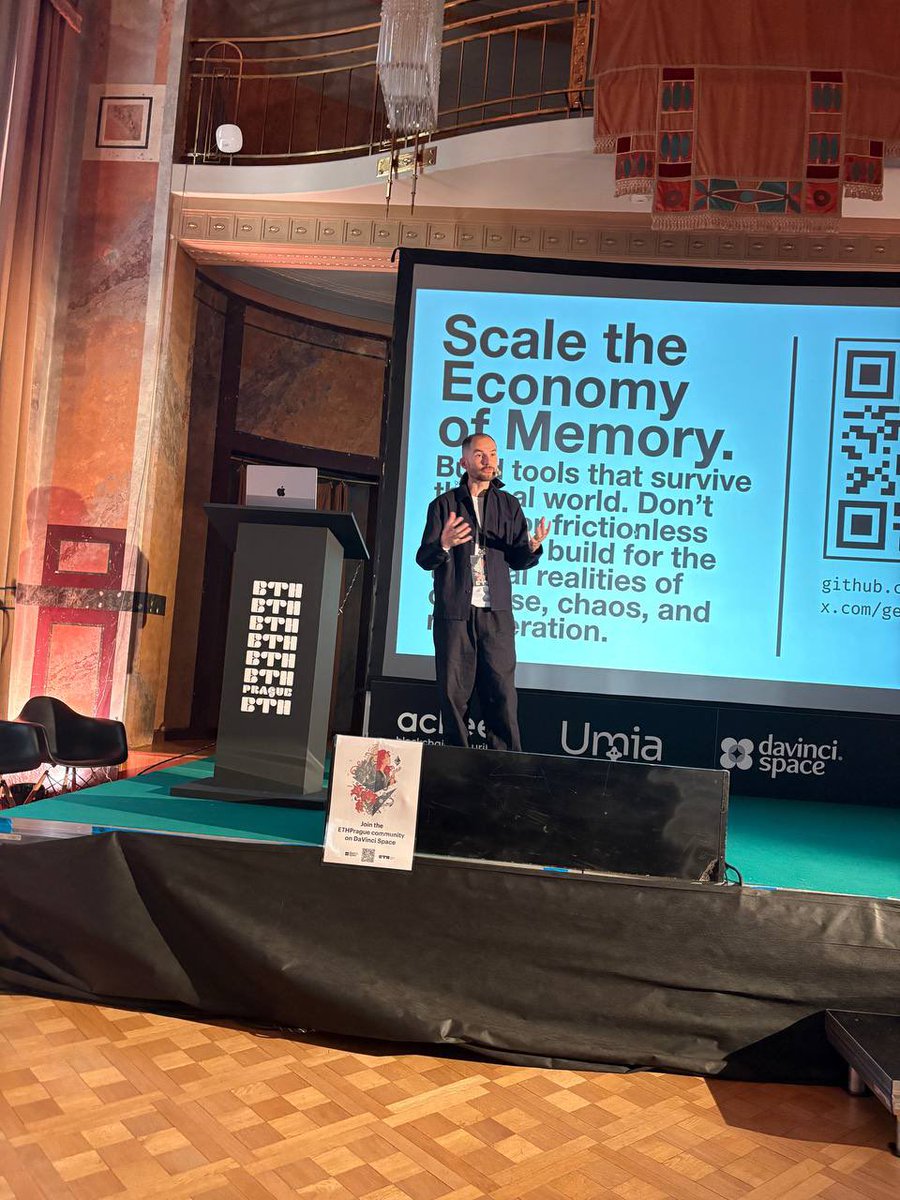
My talk at @ETHPrague 2026 is now live.
In the middle of the presentation, my laptop screen went black and the slides cut out. It felt like an eternity getting everything reconnected, but I managed to push through and finish the session.
Technical glitches aside, the focus remains on the hard truths of implementing #Web3 and #ReFi in real-world decentralized communities.
Watch the recording here:
https://t.co/2BhkgNveD0
#ecovillages #impact #tokenization
Yesterday I had a talk at @EthPrague 2026 — a fairly technical crypto conference — where I shared our real experience of implementing Web3 in a network of ecovillages during wartime.
I started with things that usually stay behind the scenes. Access. When parts of your country are flagged as “sanctioned territories”, even Ukrainian users can get excluded from platforms. Crimea is a constant edge case — sometimes we literally have to explain manually that Ukraine should have access. What looks obvious becomes ongoing digital diplomacy.
Right at the conference we continued negotiating access for Ukraine to MiniPay within the Celo ecosystem — a simpler mobile wallet that could actually work in our communities. Before that, we managed to open Hypercerts for Ukraine, and we’re already using it for environmental impact.
Then I spoke about where Web3 “breaks” at the user level.
Quadratic funding looks elegant until algorithms start interpreting a real human network as a sybil attack. Our villages interact, transact — and the system flags it as bots. Funds understand, but the logic is rigid.
Smart meters on solar stations can take hours to connect. GPS drifts in frontline areas when air defense is active, so we sometimes manually shift tree coordinates just to pass verification. Land registries are closed, ownership is informal, while carbon verifiers expect 20–40 year contracts. The gap between code and reality becomes obvious.
And sometimes it’s simpler: people call in panic because a button doesn’t work and they can’t complete a transaction.
This is why I raised the idea of an “invisible” blockchain. As Vitalik Buterin has suggested, users shouldn’t need to understand networks, L2s, or bridges. A person should just say: here is my impact — account for it.
Right now we have energy, trees, biodiversity, carbon, water — all tokenized separately. It becomes a fragmented set of wallets and tokens that don’t connect. The real problem is how to unify these layers into one system.
This links to another tension — short-term vs long-term capital. Most funding runs in sprint logic. But regeneration and community building are multi-year processes. When forced into short cycles, real work turns into simulation.
Communities shouldn’t live in permanent hackathons. They need continuity.
We also spoke about internal economies — not constantly off-ramping to fiat, but keeping value circulating through local exchanges and commitment pools. We’re testing this in practice.
Finally, I shared how we’ve identified a set of platforms that fit our reality, aggregated data into a unified impact dashboard, and started testing stewardship and carbon accounting through Regen Bank. At some point, we moved from being users to shaping how these systems should work.
A ReFi colleague from Colombia told me:
“I’ve been watching you for a year. What you’ve built — most haven’t.”
It felt less like praise and more like a signal: our case is being noticed.
hashtag
#ETHPrague
#ecovillages
#ReFi
Building connections at @EthPrague with my son. 🇨🇿 Great to see Ukrainian teams and the **#ReFi** community in full force.
Top insights from Day 1:
1️⃣ **Invisible Blockchain:** For @gen_ukraine ecovillages, tech must be invisible. Residents should see "impact" (trees planted, kWh saved, credits earned), not complex wallet interfaces.
2️⃣ **Retaining Value:** Learning from @Circles (Paul Boes) how local P2P currencies can stop economic "leakage" from communities. It's about turning social trust into local liquidity.
3️⃣ **DAO Coordination:** Insights from Maria Keiko (CoW DAO)** on protecting users and optimizing decentralized exchanges—crucial for transparent resource management.
The goal: Building a real-time regenerative economy where every positive action has a digital footprint.
#ETHPrague #Regen #Ecovillages #Web3 #Impact
Why Ukraine is not Africa
For a long time, we were moving almost exactly along the classic “aid dependency” trajectory — copying models, importing governance frameworks, and slowly losing our own internal logic.
At some point it broke.
What came after is still messy, unfinished, and often contradictory — but it’s no longer external by default. By mixing local capital, crypto funding, and traditional grants, we started building something that feels closer to our own system rather than someone else’s template.
This text is not about denying the risks.
It’s about understanding where we actually are — and why the outcome is not predetermined.
https://t.co/TuvzlfTyrS
Why Community Coordination in Web3 Doesn’t Scale Like Code
I shared a bit more of my thoughts in this article.
In our field reality, these are simply different levels of complexity.
Code works well where there are clear rules and formalization. Communities work where there is trust, conflict, and context.
At @gen_ukraine, we are essentially living inside this gap — between protocols that are ready and a reality that doesn’t fit into them.
Our approach for now is simple — not to build another tool, but to connect real-world processes to existing systems and start measuring them.
And it seems that this is where the biggest potential is right now — not in new code, but in the emergence of real meaning that this code is supposed to serve.
https://t.co/06jMSJzpMt
Our experience of digitizing the impact of tree planting together with the Silvi platform:
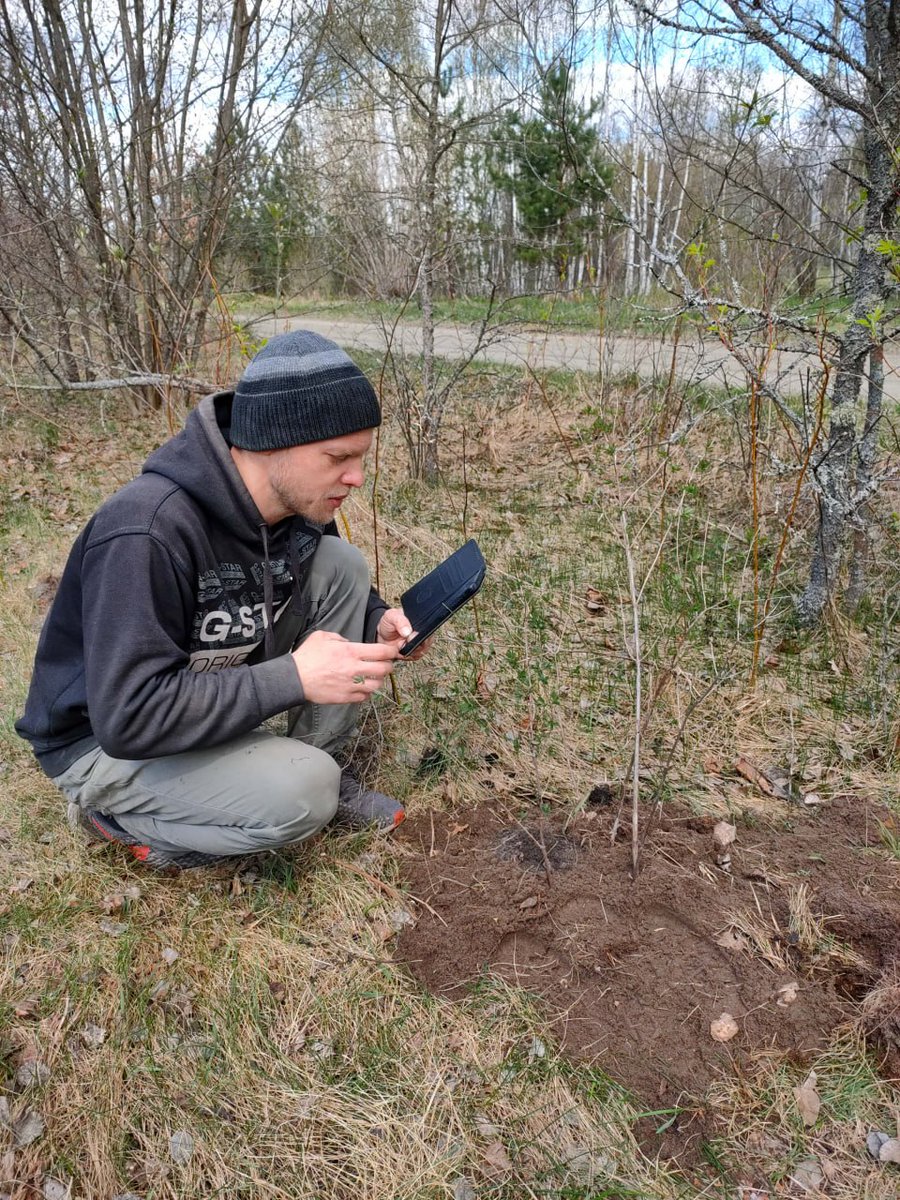
We started with simple community actions — planting trees across different ecovillage locations — and gradually moved toward documenting this work in a digital, verifiable way.
In practice, this meant mapping each seedling, adding geolocation data, connecting wallets, and going through verification. The process is straightforward in theory, but in real conditions it comes with challenges: unstable connectivity, GPS inaccuracies (especially in sensitive regions), and limited access to suitable devices.
Despite this, we managed to digitize a significant part of our plantings and receive the first direct payments to local wallets. This created a tangible link between physical ecological work and a Web3-based coordination and reward system.
What we see so far:
— digitization helps structure and visualize impact
— small but real financial flows create motivation and continuity
— communities begin to understand and use basic Web3 tools through practice
At this stage, Silvi works well as an entry point — a simple layer connecting real-world regeneration activities with digital tracking and incentives.
How we digitized tree planting — and earned a bit of crypto 🌱
We’ve reached a point where we can not only talk about impact, but actually record it in digital form.
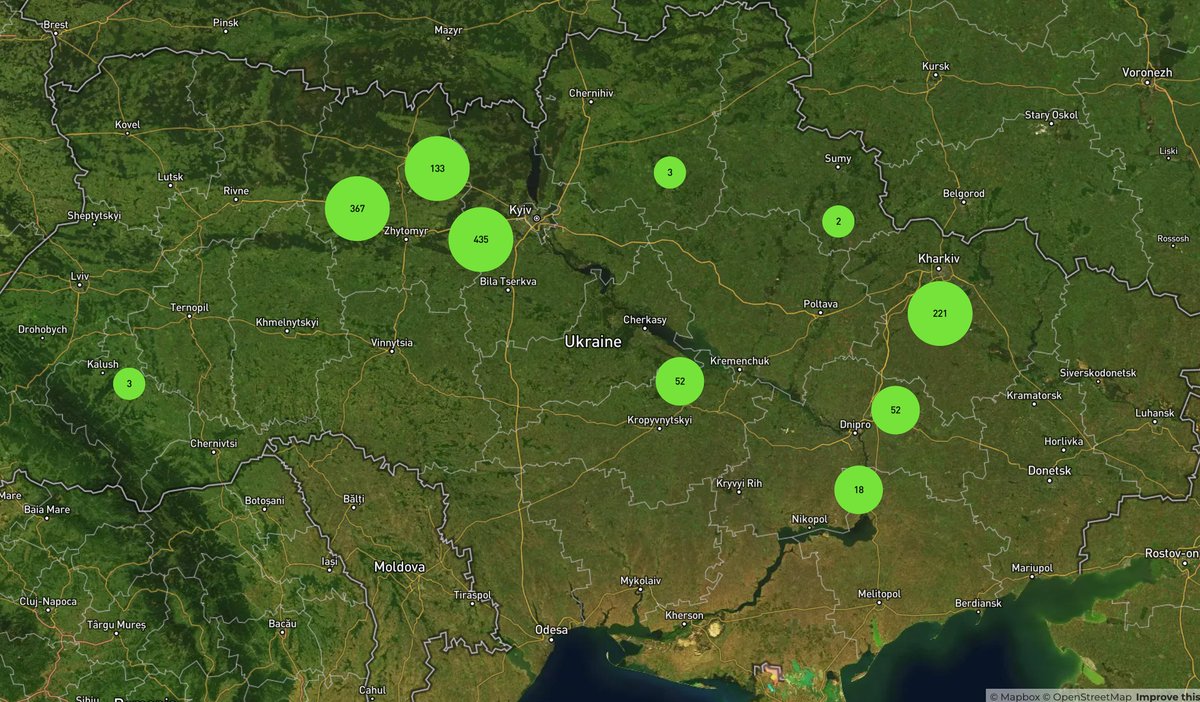
It’s not a final system yet, but already on @SilviProtocol you can see around 1,100 verified and digitized trees across more than ten of our locations.
One detail stands out: most of these plantings are happening in frontline regions. If you look at the map, it becomes obvious.
In reality, we planted closer to 2,500 trees. And this highlights a core issue — the gap between physical work and Web3 accounting.
In the field, things don’t follow a script.
Geolocation can shift by tens of kilometers due to security constraints.
Phones fail to capture points.
People work with their hands — not with apps.
To fully operate in this system, we would actually need to upgrade devices across the network — phones, laptops — otherwise the digital layer simply can’t keep up with real-world activity.
Still, even with these limitations, the results are tangible:
— ~2,500 trees planted
— 1,100 digitized and verified
— 12 projects created on the platform
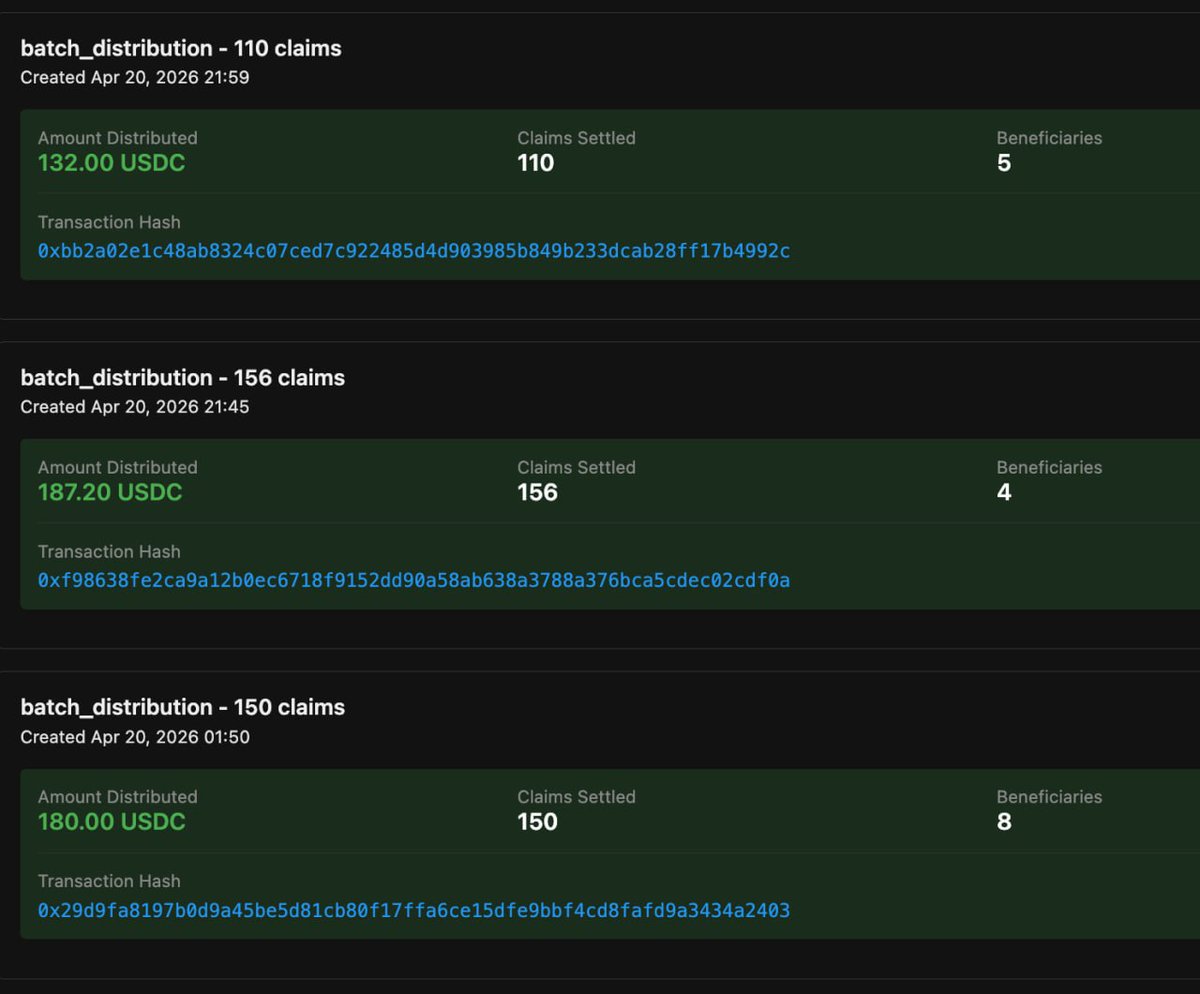
— 480 USDC already paid directly to local wallets
This is what an emerging horizontal economy looks like.
The model is simple:
Each verified tree brings $1.20 USDC upfront
$0.80 USDC after one year if the tree survives
This is not “income” in the traditional sense. It’s a tool:
— to support local initiatives
— to create incentives for impact verification
— to onboard communities into Web3 (wallets, transactions, validation)
In practice, it’s a preparation layer for more complex systems — carbon credits and biodiversity markets.
What matters is accessibility.
The onboarding is simple, the mechanics are clear, support is responsive, and payments are relatively fast. This allowed us to test everything not in theory, but in real conditions.
At this stage, we can confidently recommend this approach to others:
permaculture groups, foresters, volunteers — anyone involved in tree planting.
Because this is one of the few tools where a physical action — planting a tree — already has a digital trace and a basic economic layer around it.
Special thanks to @DjimoSerodio for continuous support and fast responses to all our “field-level” challenges. Without that, this experiment likely wouldn’t have worked.
#ecovillage #treeplanting #ReFi #Web3platform #tokenizing
Regenerative Economy in Practice: How Ecovillages Move from Community Work to Tokens
Our recent team call made one thing clear: we are no longer just talking about a new economy — we are already inside it.
Yes, we are tired.
Some of us are on the third call of the day, others spend the whole day in the garden, others balance this with family, blogging, and daily responsibilities.
But at the same time — there is a clear sense of movement.
And that is what matters.
Right now, several directions are developing in parallel.
The first is energy.
We are connecting solar stations to arkreen. A model is emerging where energy generation = tokens. Essentially, it’s a Web3 version of a “feed-in tariff”.
The second is ecology.
Through @SilviProtocol we have already mapped dozens of tree-planting locations. The process is not easy — in some regions (like Kharkiv), GPS is unstable, and people go out early in the morning just to log the data.
But the key shift is this: we are learning not just to plant, but to verify.
The third is community economy.
Using Sarafu Network @grassEcon Economics we are documenting activities across the network. We can now see who is doing what, how many people are involved, and how the system evolves. A transparent internal economy is starting to take shape.
The fourth is eco-certificates and carbon.
We are working with @regen_network, launching first projects around biodiversity, water systems, and tree planting, while also starting verification processes for protected areas.
What is important here is the structure that is emerging.
We are seeing a two-layer economy:
On one side — external funding: grants, rounds, crypto financing.
On the other — direct rewards flowing to individuals’ wallets based on their real actions.
And this second layer is what we have been calling a horizontal economy.
Where action is directly linked to value:
plant a tree → record it → receive
generate energy → receive
host a community work day → it is visible and accounted for
Without intermediaries.
There is still a lot of uncertainty.
We don’t fully understand yet:
– how fast verification will scale
– how pricing will stabilize
– when consistent payouts will begin
But one thing is already visible: the system is forming.
And the most interesting part — we are not just users of this system.
We are becoming its foundation.
We also shared practical steps on how this digital layer works:
— how to create activity reports
— how to distribute tokens to participants
— how to onboard people using paper wallets
This is no longer theory — these are working tools for communities.
🔗 Sarafu Network
https://t.co/75WRfU2WLp
🔗 Dashboard (our digital activity)
https://t.co/og3xUz52Xz
🔗 Disperse
https://t.co/jIlAAO3GRw
If you are working with communities, regeneration, or decentralized systems — this may be relevant to you.
Building Resilience through Decentralized Energy: Milestone Update
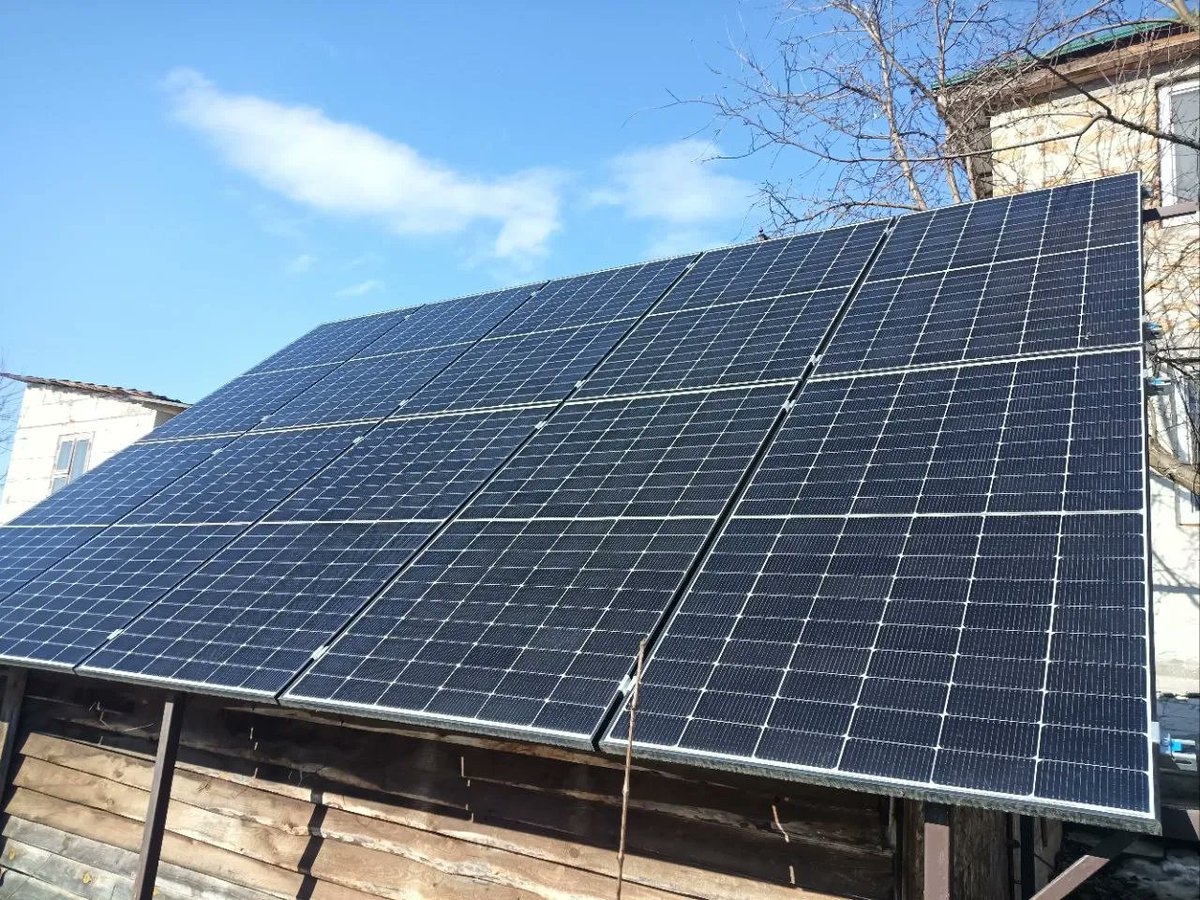
We are excited to share a significant leap forward in our journey toward the tokenization of renewable energy. The first solar power plants in our network have been successfully verified on the @arkreen_network platform, and data tracking is now live.
Analysis: Strengthening Community Infrastructure
In the face of ongoing war and systemic blackouts, energy independence is not just a technical goal—it is a critical necessity for survival. To meet this challenge, we have significantly scaled our physical and digital infrastructure:
Solar Expansion: We have purchased and activated +10 new solar stations.
Precision Monitoring: The deployment of our first 5 smart meters enables real-time, verified accounting of energy production.
Energy Security: Critically, we have integrated 5+ battery storage stations. These are vital for maintaining community stability and power continuity during grid failures.
Transparency & Data: We have developed the Ecovillage Impact Dashboard, a central hub where we track every step of our tokenization process: https://t.co/nUvKCEvUWc
Strategic Scenarios
Tokenizing Resilience: By onboarding these assets to Arkreen, we are transforming physical stability into digital assets, creating a transparent record of our community's regenerative efforts.
Climate-Finance Integration: This progress was accelerated by our participation in the @OctantApp Climate Epoch 7, demonstrating how ReFi (Regenerative Finance) provides tangible support for infrastructure in high-risk zones.
Scalable Autonomy: The combination of solar generation, smart metering, and battery storage creates a functional blueprint for other communities seeking energy autonomy under extreme pressure.
Conclusion
This achievement is the result of the collective effort of our team and partners. We are moving beyond simple monitoring toward a fully transparent, incentive-aligned energy ecosystem that directly supports life and restoration on the ground.
Onward to further decentralization and resilience!
#DePIN #EnergySecurity #SolarEnergy #Web3 #ReFi #Arkreen #Octant #ClimateTech #Resilience #Ecovillage #RegenerativeEconomy