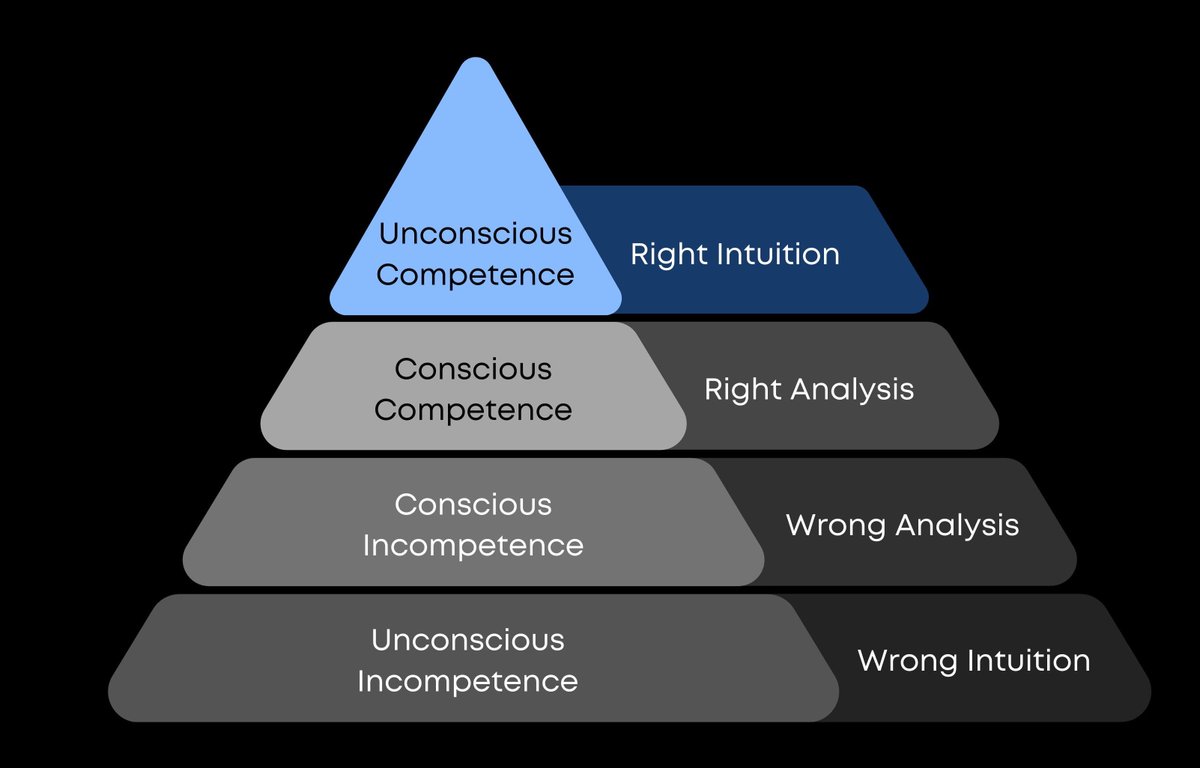
@richardrx@hermogenesfpn@sseraphini Ai depende da complexidade do que está sendo feito e da motivação de quem está construindo. Concordo que a narrativa do “construí em 30 minutos” é frágil, mas alguém com um bom conhecimento e disposto a realizar testes consegue agora fazer o que antes não era possível.
@HeglerHenri Pessoal está perdendo o ponto. Fazer um produto (pressupõe comercialização) é bem diferente de construir uma solução interna. E esse é o ponto: se é possível construir individualmente uma solução razoável (boa suficiente, com baixa superfície de ataque), por que pagar por uma?
@richardrx@hermogenesfpn@sseraphini Fazer um produto (pressupõe comercialização) é bem diferente de construir uma solução interna. E esse é o ponto: se é possível construir individualmente uma solução interna razoável (boa o suficiente, com baixa superfície de ataque), por que pagar por um produto comercial?
@brunofaggion Temos aqui a diferença entre teoria e prática.
Se a teoria diz uma coisa e a prática mostra outra, temos que assumir que talvez o conhecimento sobre a situação esteja incompleto.
Você quer ter razão ou colocar o dinheiro no bolso?
@richardrx Isso entrará no treino com o input desses experts ao usarem a IA como ferramenta de trabalho.
Para tudo que existe uma resposta considerada tecnicamente correta, a IA servirá.
O que for questão de preferência, gosto pessoal ou visão de futuro, continuará nas mãos dos humanos.
Agency > Intelligence
I had this intuitively wrong for decades, I think due to a pervasive cultural veneration of intelligence, various entertainment/media, obsession with IQ etc. Agency is significantly more powerful and significantly more scarce. Are you hiring for agency? Are we educating for agency? Are you acting as if you had 10X agency?
Grok explanation is ~close:
“Agency, as a personality trait, refers to an individual's capacity to take initiative, make decisions, and exert control over their actions and environment. It’s about being proactive rather than reactive—someone with high agency doesn’t just let life happen to them; they shape it. Think of it as a blend of self-efficacy, determination, and a sense of ownership over one’s path.
People with strong agency tend to set goals and pursue them with confidence, even in the face of obstacles. They’re the type to say, “I’ll figure it out,” and then actually do it. On the flip side, someone low in agency might feel more like a passenger in their own life, waiting for external forces—like luck, other people, or circumstances—to dictate what happens next.
It’s not quite the same as assertiveness or ambition, though it can overlap. Agency is quieter, more internal—it’s the belief that you *can* act, paired with the will to follow through. Psychologists often tie it to concepts like locus of control: high-agency folks lean toward an internal locus, feeling they steer their fate, while low-agency folks might lean external, seeing life as something that happens *to* them.”
@WeiseFranklin O treinamento, principalmente dos mais juniores, acaba sendo impactado. No dia a dia no presencial isso se dá por “pontos de contato”, microfeedbacks dados ao longo do dia (isso está bom, isso pode ser feito diferente, etc). Em HO isso acontece muito menos. E é cumulativo.
@MatInvest1 Você consegue fazer algumas pesquisas adicionais (que as vezes não consegue fazer diretamente no site) em algumas capelas dos Mórmons, onde tem o que eles chamam de Centros do Family Search.
Da uma olhada aqui: https://t.co/VWyNoj73lq
It sounds like a boring topic, but air conditioning is more important than you realise.
First: there are 2 billion air con units in the world and they account for 10% of all electricity we use.
Second: it has revolutionised architecture and totally reshaped global politics...
Se você assistiu (ou leu) O Problema de 3 Corpos, já deve saber do que se trata esse problema.
Mas por que ele é um problema tão importante na Física? Por que ele é tão difícil?
E o que tem a ver com caos?
Uma thread de Páscoa porque estou entediada. 👇
What the hell are italics?
First: proper italics aren't just the same letters but slanted — they've been slightly redesigned.
Second: it turns out they come from Italy, hence the name.
But the story begins with a man called Johannes Gensfleisch zur Laden zum Gutenberg...
Last January, I noticed something peculiar in my 2yo’s bedroom that - after a year of obsessive reporting - led me to a profound cosmic revelation about what’s even possible in our universe. A 🧵.
Twitter's story from 2006 - 23 is so chaotic that it can be turned into an epic TV show with 7 seasons
It starts with 4 musketeers
• Evan
• Noah
• Jack
• Biz
And ends with the big baddie Elon Musk
Here's the story of X where everyone is a villain and everyone is a hero
SEASON 1: THE ORIGINS
The pilot episode introduces Evan Williams burning the midnight oil and writing code for Blogger.
Blogger was a diary website that was meant for internal communication in a company that Evan was working on. But later on he made it public and millions of people started using it.
Blogger gave Evan his big break in the tech industry. People were recognizing him, he was featured in Forbes. And he made millions when Blogger was acquired by Google.
Since Evan became a known face, Noah Glass — his neighbour also recognized him from his balcony and shouted, ‘Hey Blogger! You’re Evan Williams from Blogger right?’
And pretty soon, Noah with his loud personality became friends with Evan.
Before meeting Evan, Noah was working on a pirate-radio project but after meeting Evan, he refocused his project to work with Blogger,
creating AudBlog — an application that allowed anyone to post voice based blogs from their phone.
When Noah decided to turn AudBlog to a startup called Odeo — a service that would make it easy to make and share podcasts. He asked Evan to invest in Odeo.
Evan agreed reluctantly, as he didn’t want to mix friendship and business.
Odeo took off but after a few months, it needed more investment to survive. And Noah again had to ask Evan for money.
Evan agreed to finance more of the project and help secure funding in future, but on one condition — that Evan becomes the CEO.
SEASON 2: Entry of a friend or foe?
Evan had no interest in podcasting. So why did he want the CEO position?
It’s because he had started to enjoy the label given to him. He didn’t want to be known as a one time-wonder.
But unlike Evan, Noah considered Odeo his baby.
He also had a loud passionate personality that oftentimes overshadowed Evan in company’s decisions and hiring. So a resentment started building between them.
In the next episode, you see a 28 year old guy with a silver nose ring and multiple tattoos sitting at the window of a coffee shop, punk music streaming in his years and his fingers dancing over his keyboard and coding.
That’s Jack Dorsey.
He notices Evan enter into the coffee shop. And instantly recognizes him as the guy who sold Blogger for millions.
He searches for Evan’s email ID and sends him an email along with his resume saying, ‘I just saw you at the cafe, are you hiring?’
Jack gets hired at Odeo.
Surprisingly, one of Jack’s tattoos on his left forearm read, ‘Odaemon!?’
The word ‘daemon’ referred to a computer program that runs in the background.
To Jack, this signified what he saw in himself, a person who lived behind the curtain, worked in the shadow & had little influence.
But that’s the thing, the people who work in the shadows know which strings to pull to turn the whole game in their favor.
Evan acted like a magnet for assembling the future team of Twitter.
He met Noah as his neighbour
He met Jack because he was at the right coffee shop at the right time.
And he met Biz Stone, the 4th Musketeer, when Biz reached out to him after quitting Google and leaving $2 million in stock options, just to work with him.
One might wonder, what’s so special about Evan?
You see, Evan took care of his friends. Whenever any of his friends would get stuck in a financial crisis, he would help them out without expecting anything in return.
Well, except that one time where insecurity drove him to bargain for a CEO position.
Not only friends but investors also trusted Evan blindly.
Even with no business model, Odeo received 5 million dollars in funding.
It was a bet on podcasting and Evan and not necessarily on the company or the people working for it.
But even after getting funding, Odeo was a mess. No one who worked there even used it.
And the final blow to Odeo was when Steve Jobs declared that Apple was adding podcasts to iTunes.
In that moment, where the entire company thesis for Odeo was based on podcasting, it had become a simple add on for Apple.
SEASON 3: THE PIVOT
Evan wanted to dissolve Odeo as he saw no future in it.
But Noah was desperately trying to find new ideas to save the company. Or at least the people in it.
One day, over drinks, Noah probes Jack and asks him what he wants to do and Jack says he wants to go into fashion and make jeans.
Noah continues asking, what else is he interested in.
And then Jack mentions an idea that was always at the back of his head — a one-off site where people could share their status, like telling people what music they are listening to.
Noah resonated with the idea and said, ‘This status thing could help connect people who weren’t there. Something that makes people feel less alone.’
To give this status thingy a name Noah spent hours going through the dictionary, and then his phone vibrated.
His vibrating phone led him to think of the brain impulses that cause a muscle to ‘twitch’
He thought ‘twitch’ would never work. 👀
But he still kept going through the ‘tw’ section.
And then he found it — Twitter, the light chirping sound made by certain birds.
Noah discussed this idea with Evan. And Evan got so intrigued that he built his own crude version of Twitter using old Blogger code. He called it Twitlog.
Evan used to organize hack days to Odeo for employees to work on new ideas. And on Odeo’s last hack day — one of the projects built was Twitter.
The difference between Twitter and Odeo was that no one in the team used Odeo even with incentive but the team got addicted to Twitter within a few hours.
On March 21, 2006, Jack tweeted, ‘just setting up my twttr’
A tweet that was going to be followed by a lot celebrities, politicians and millions of people.
SEASON 4: BETRAYAL OF A FRIEND
With the company pivoting from Odeo to Twitter, Evan was going to present the idea of making Noah the CEO as Evan wanted to focus on other things.
But Noah messed up. Big time.
You see, people who run too high on emotions aren’t able to keep their head in the game and start losing. They aren’t considered an ideal candidate for any leadership position.
Everything was crumbling down in Noah’s personal and professional life.
He would lash out at employees for the tiniest of reasons. And then there was a lack of communication and growing resentment between Noah and Evan.
Jack who was the most important developer on Twitter was also irritated by Noah’s behavior. He didn’t like it when engineers would complete tasks assigned by Noah first and ignore him.
So Jack went to Evan and gave him an ultimatum and said, ‘If Noah stays, I’m going to leave’
For Evan the choice was simple. Even though he could see Noah was falling apart and he was trying to hold onto anything as he fell.
But he couldn’t risk the newborn Twitter falling with him.
He fired Noah.
Or more like he created a tradition where the person is given a choice, ‘Resign yourself before you get fired publicly’
Noah never imagined that the power he gave to his friend & neighbour in exchange for the early funding would be one day used to fire him from his own company.
He resigned.
Noah turned to Jack, his ‘friend’ for comfort.
The ‘friend’ who had drinks with him, comforted him and acted as if he isn’t the one who gave the gun to Evan to fire the shot.
And let him believe that it was all Evan’s decision.