ICLR has placed OpenReview in a difficult position, so I want to offer a few words about the OpenReview team working behind the scenes.
OpenReview has long been operated at UMass Amherst as a non-profit organization founded by Andrew McCallum. Each year, Andrew must raise more than $2 million to support a 20-person team that provides essential infrastructure for most major conferences.
I once asked Andrew what might have been a naïve question: whether he had considered developing a business model for OpenReview, given its prominence and the seemingly obvious opportunities. He pushed back, explaining that everything he has done for OpenReview is driven by a commitment to serve and strengthen the academic community. He is willing to devote significant personal effort to ensure the platform remains freely accessible to all.
We should not blame such a brilliant and dedicated team for an accidental issue. Otherwise, fewer people would be willing to shoulder this kind of responsibility in the future.
Deep respect to the OpenReview team! I’m grateful for their work and happy to support in any way!
Active Learning selects samples iteratively during training (online), while
Data Filtering rejects samples upfront before training starts (offline).
This significantly impacts how we approach data selection, but why should we phrase this as "selection vs. rejection"?
2/11
📣 4 days left to submit your work to the Foundation Models for V2X Cooperative Autonomous Driving workshop at CVPR (https://t.co/CTSERxPQeh)
📝 Deadline: March 26, 2025
🗣️𝗞𝗲𝘆𝗻𝗼𝘁𝗲 𝗦𝗽𝗲𝗮𝗸𝗲𝗿𝘀: T. Darrell, C. Stachniss, M. Pavone, L. Leal-Taixé, and many more!
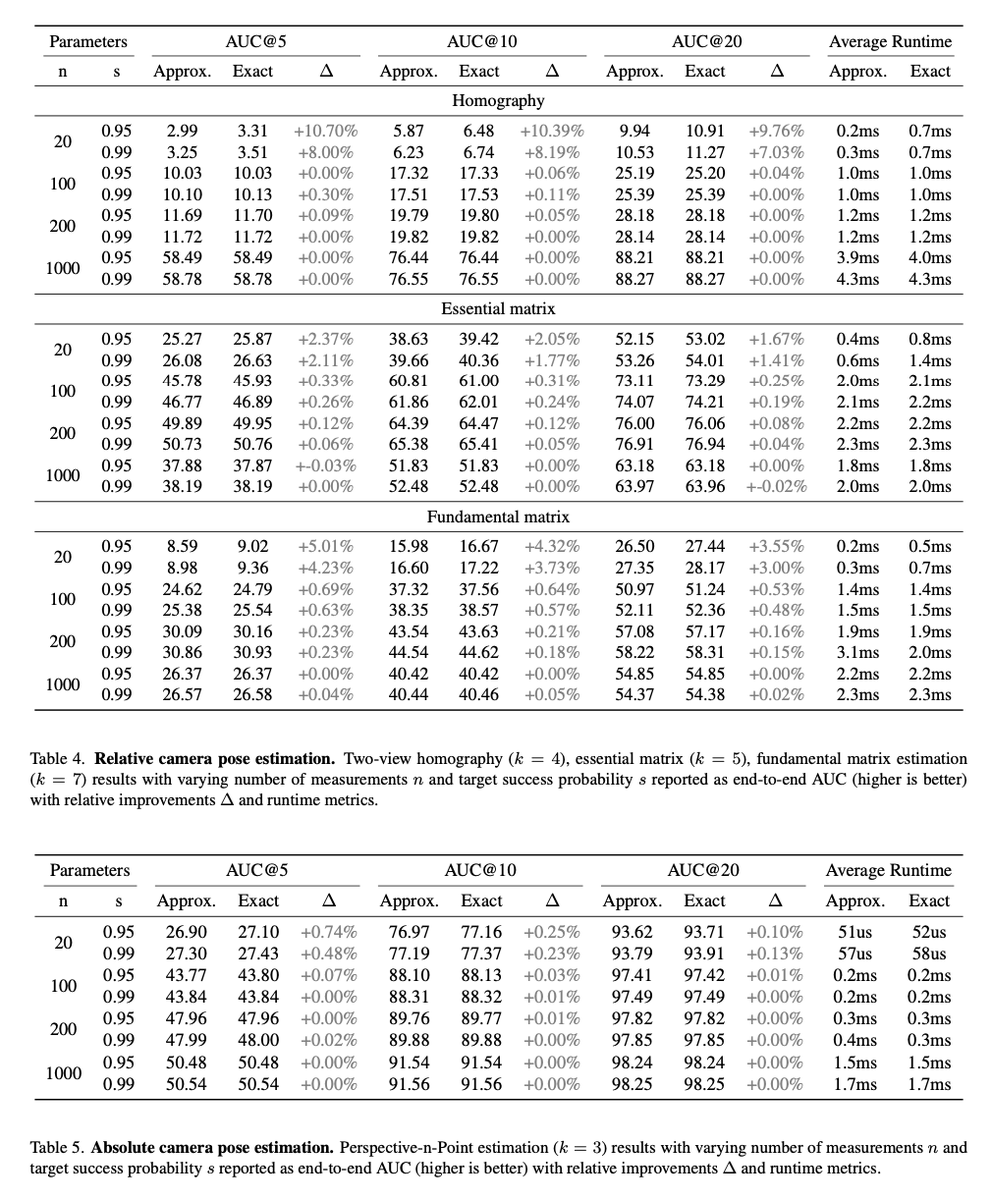
Fixing the RANSAC Stopping Criterion
Johannes Schönberger, @visionviktor@mapo1
tl;dr: original RANSAC formula for number of iterations underestimates for hard cases and overestimates for easy. Here is corrected one -> better results
https://t.co/fz1A3YpzcN
Introducing Gaze-LLE, a new model for gaze target estimation built on top of a frozen visual foundation model!
Gaze-LLE achieves SOTA results on multiple benchmarks while learning minimal parameters, and shows strong generalization
paper: https://t.co/Is2NgrrurO
Very excited to be at ICPR in Kolkata this week!
I will presenting with Mohan Trivedi at the Intelligent Mobility in Unstructured Environments workshop, sharing ways that VLMs may be used in novelty recognition and control transitions.
Please reach out if you are attending!
🎉 New Pre-print! 🎉
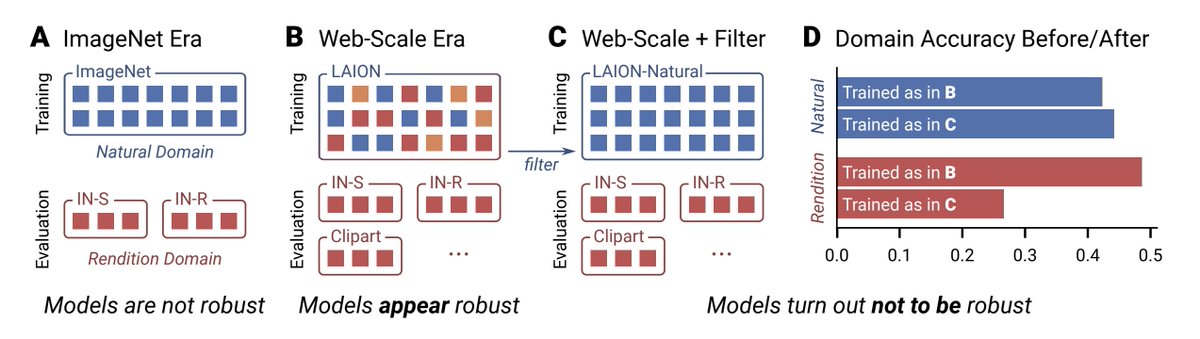
Do CLIP models truly generalize to new, out-of-domain (OOD) images, or are they only doing well because they’ve been exposed to these domains in training? Our latest study reveals that CLIP’s ability to “generalize OOD” may be more limited than previously assumed!
Preprint available at: https://t.co/UR4swAPblk 🧵 1/8
We figured out a way to solve long-horizon planning problem by composing a bunch of modular diffusion models in a factor graph!
This allows us to reuse the diffusion models in unseen new tasks and achieve zero-shot generalization to multi-robot collaborative manipulation tasks.
This is another solid step in our effort to Task and Motion Planning as a fully generative problem. More to come & stay tuned.
"Make sure that your model can overfit on small training set" might be the single best sanity check when building ML models. It helped me solve countless implementation errors and to better understand capacity. I first heart it from @fchollet, thanks!