Different COVID-19 vaccine formulations have distinct effects on the stromal cell landscape and function of draining lymph nodes @SciImmunology@SalmiLab
https://t.co/OKcbBnfvad
In our recent Sci. Signal. paper by Gutjahr et al. @GutjahrJulia 10.1126/scisignal.adt2678 we did not discuss in detail this point: "Using CXCL12 should improve the efficiency of in vitro blood production" Fortschritt in der künstlichen Blutproduktion https://t.co/Abfk8zTWhE
A team finds that the #chemokine CXCL12 can support the production of #RedBloodCells in mice, suggesting that this pathway could be investigated for the treatment of disorders related to red blood cells. @stevenduke@GutjahrJulia@QMULWHRI https://t.co/IH59m8o8nq
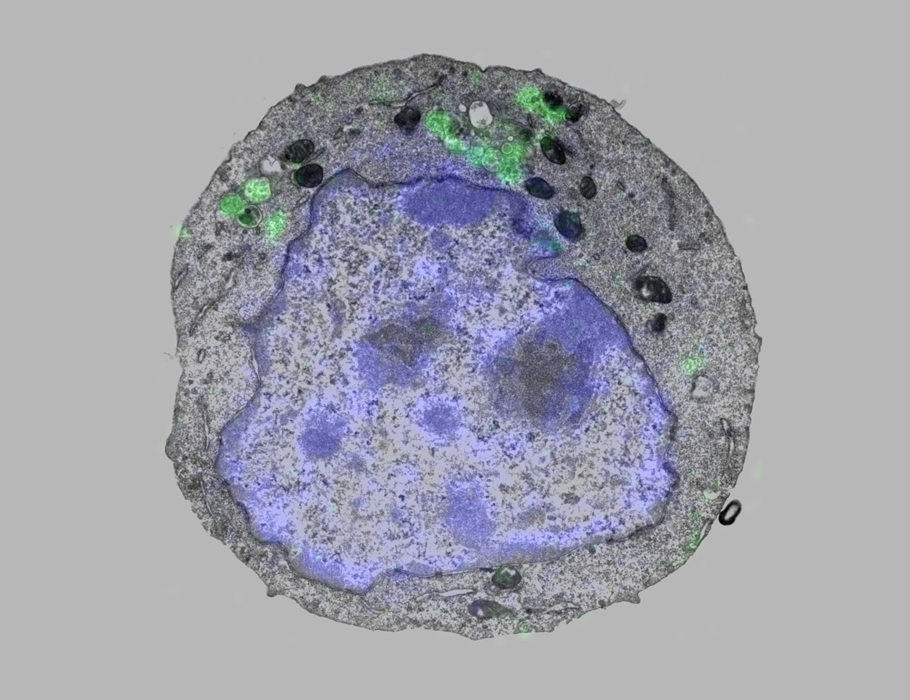
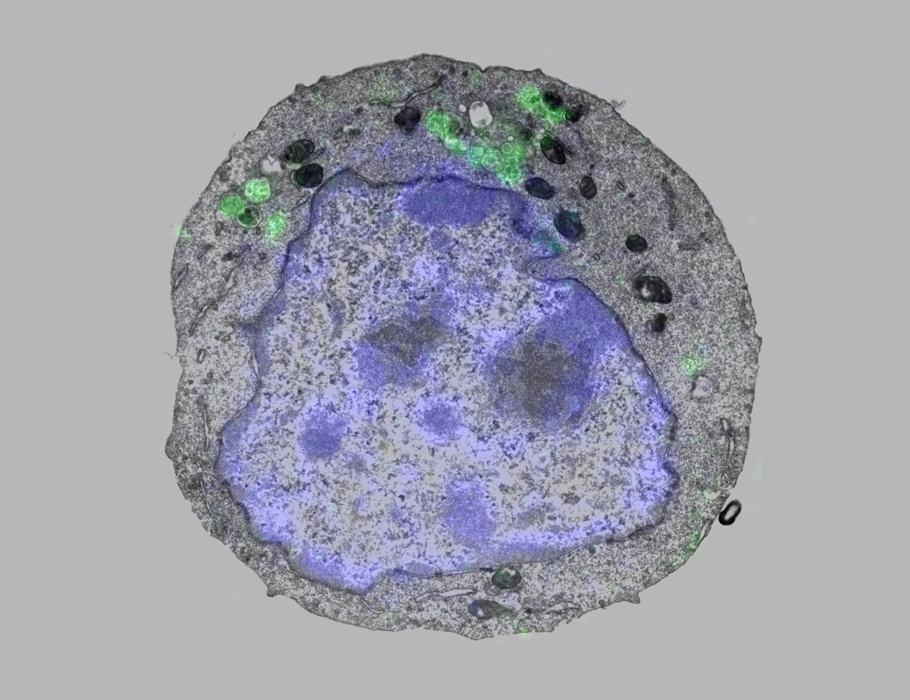
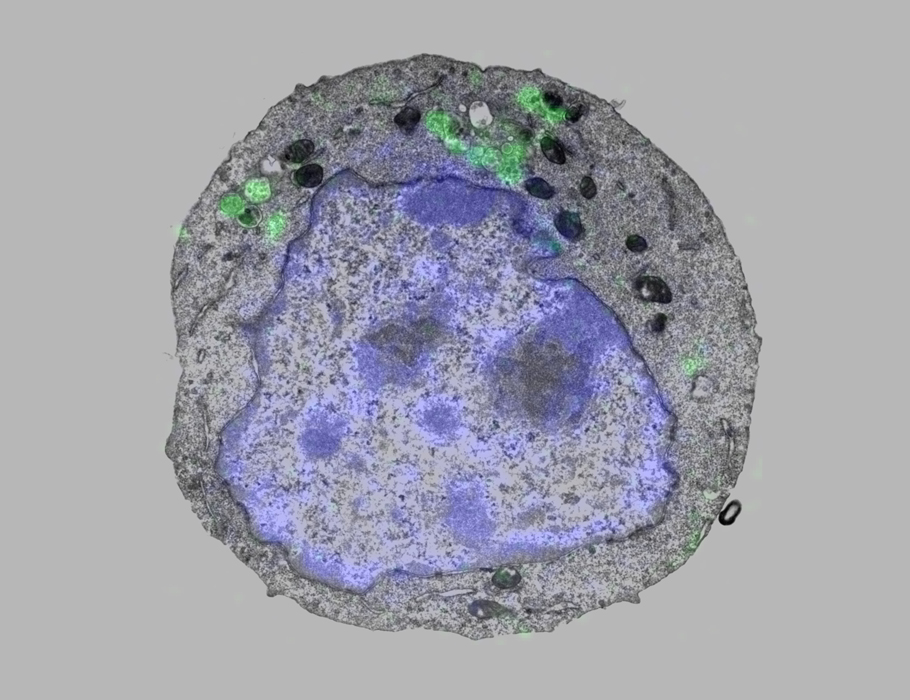
Un joli erythroblaste.
Un érythroblaste est une cellule jeune de la lignée des globules rouges, présente dans la moelle osseuse. Elle contient encore un noyau, ce qui la distingue des globules rouges matures (érythrocytes), qui en sont dépourvus.
@Interferon_G@DucheneJohan@JemimaBurden@GutjahrJulia@ScienceMagazine@scisignal Erythroblast enucleation is strictly a mammalian process, so e.g. chicken or fish RBC are nucleated. I suspect that these two (anabolic/catabolic) periods of maturation are more pronounced in mammals. Fish RBC e.g. have mitochondria. A comparison would be interesting to study.
In a new study, researchers find that the chemokine CXCL12 can support the production of red blood cells in mice, suggesting that this pathway could be investigated for the treatment of disorders related to red blood cells.
Learn more in @SciSignal: https://t.co/5HEMNfVX1F
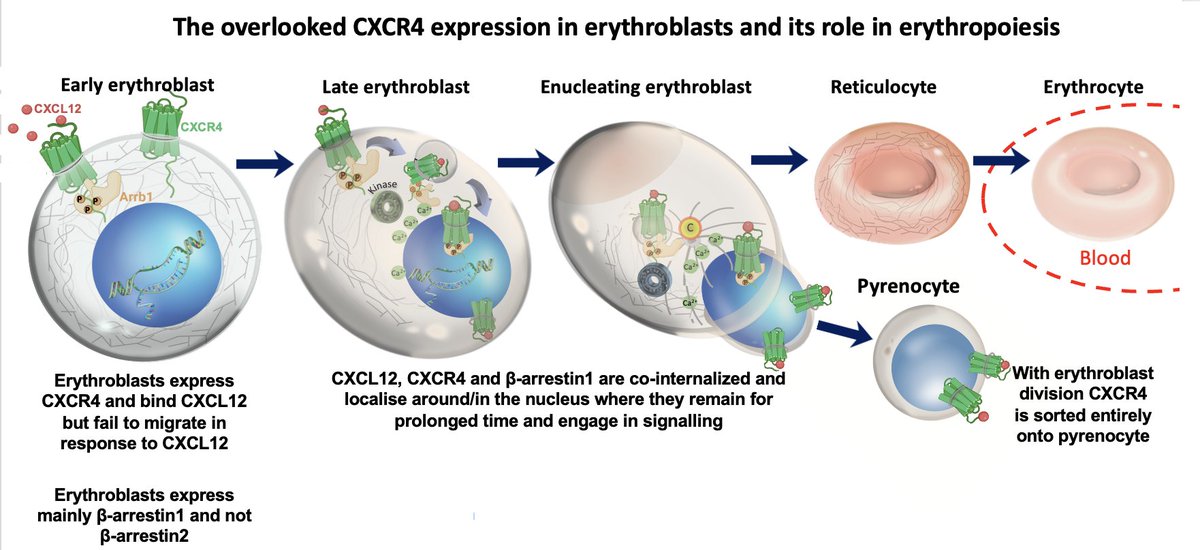
@ScienceMagazine@scisignal Mechanisms are remarkable: CXCL12 ligation of CXCR4 on cell membrane induces its endocytosis and endosomal targeting into the nucleus where the CXCL12/CXCR4 complex promotes erythroblast maturation and triggers enucleation, erythroblast division into reticulocyte and pyrenocyte
In a new study, researchers find that the chemokine CXCL12 can support the production of red blood cells in mice, suggesting that this pathway could be investigated for the treatment of disorders related to red blood cells.
Learn more in @SciSignal: https://t.co/5HEMNfVX1F
A team finds that the #chemokine CXCL12 can support the production of #RedBloodCells in mice, suggesting that this pathway could be investigated for the treatment of disorders related to red blood cells. @stevenduke@GutjahrJulia@QMULWHRI https://t.co/IH59m8o8nq
A preclinical study uncovers a metabolic pathway that offers a target in neuropathic pain, scientists discover how chemokines can support red blood cell production in mice, and more this week in #ScienceSignaling. https://t.co/ujJNEWxa5j
@Interferon_G@stevenduke@JemimaBurden@GutjahrJulia@jDalliLab@KathiArtinger@QMULWHRI@scisignal Postnatally only erythroblasts can enucleate, no other cell. Also, it is strictly a mammalian phenomenon, e.g. chicken rbc are nucleated. CXCR4 expression alone is not sufficient to explain why only erythroblasts enucleate, but its nuclear localisation and signalling possibly do
https://t.co/W1APRNAGlD We describe the hitherto overlooked expression of CXCR4 in erythroblasts, which do not migrate in response to CXCR4 ligation by CXCL12. Instead, CXCR4 localises to the nucleus and mediates alternative responses in erythroblast maturation and enucleation
Not all chemokine signaling is about cell migration!
In mouse erythroblasts, CXCL12-bound CXCR4 enters the nucleus to control gene transcription, trigger calcium bursts, and drive red blood cell formation—especially enucleation.
🔗 https://t.co/pEl4qc0BjX
#chemokine#CXCR4
Although chemokines are known for their role in cell migration, new work in mice shows that CXCL12 also promotes the differentiation of #erythroblasts by promoting CXCR4 signaling and activity in the nucleus. @stevenduke@GutjahrJulia@QMULWHRI https://t.co/IH59m8o8nq