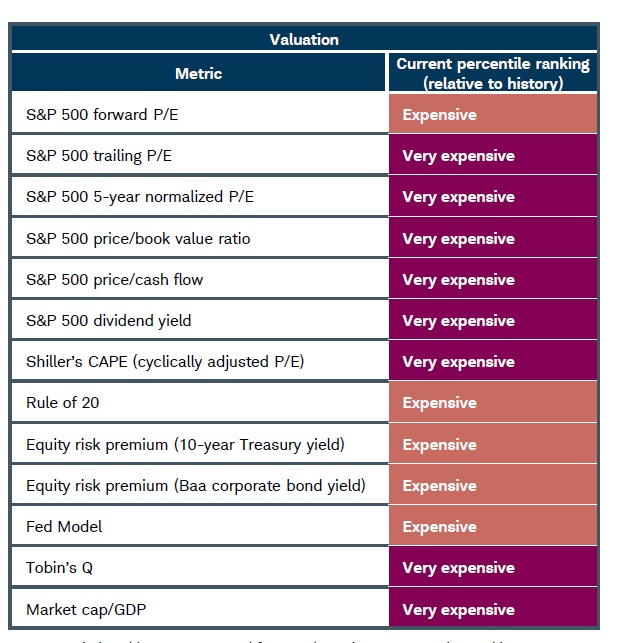
SPX is about 10% higher from when I argued that the market was setting up for a potential 20-35% decline. Many view that as evidence the thesis was “wrong”. I view it differently.
First, the market generated that 10% by going into further extremes by some measures than it ever has before. That does make it any safer in my view than when I first recognized the potential for serious decline.
Second, my objective has never been to capture every last percentage point of upside. Common experience is enough to know that is impossible and foolhardy. The objective instead is to preserve capital through periods when risk and reward become increasingly asymmetric. There is a profound difference between missing part of a rally and participating in what could easily become a major and potentially sudden drawdown.
Yes, this is one of the most fragile markets I have witnessed. Prices continue to rise even as many of the traditional signals of risk gravely deteriorate beneath the surface. Stocks appear to now be crashing upward, where the advance itself increases vulnerability rather than reduces it.
Patience can be difficult in times like these because markets reward urgency in the short run yet prudence in the long run. Patience is the free-est alpha available, yet hardest to grasp. It doesn’t respond to thousand dollar subscriptions nor can it be trained. It is not a skill or related to any specific acumen. It doesn’t require allegiance to a crowd, it’s not something that cares about being blocked or followed. It’s ultimately an expression of faith in oneself and one’s process. You either trust yourself, or you chase idols.
And so near major turning points, the pressure to abandon patience and discipline often becomes strongest precisely because the market is still rising.
To be clear, I remain more than comfortable letting someone else own what appears to be asymmetric upside exhaustion. Missing a top is a small concession if it means avoiding the bulk of decline that follows. Capital preservation is the recognition that surviving the cycle matters more than maximizing participation in its final phase.
Data can change, minds can change, evolution is the constant. The story never ends, there is no final chapter to write. Anchors are optional.
The market will always offer more opportunity. But replacing lost capital is far harder than resisting the temptation to chase it.
I’m not saying the info is or is not relevant - it’s likely just another of an insanely long list of items showing how frothy stock valuations are. That said, do you not believe that the “forecasts of future earnings” were equally rosy prior to valuations coming back to earth in the past?
Because ERA remains the absolute best metric of how valuable a pitcher is at his craft (I don’t care what anyone says). You’d be skewing negatively his abilities as a pitcher, rather than highlighting his inability to field his position (a different measure). That will get reflected in his fielding percentage where it belongs.
Trump just got exposed for running the biggest insider trading operation in American history.
Nancy Pelosi traded $5 million in stocks and Congress lost its mind.
Trump literally executed $750 MILLION worth of stock trades in ONE quarter while being President.
His ethics filing just dropped and the numbers are genuinely unprecedented in history:
Between January and March 2026, Donald Trump personally executed 3,700 individual stock transactions worth between $220 million and $750 million.
That's roughly 60 trades PER DAY.
While signing executive orders, meeting foreign leaders, and making policy decisions that directly impact the companies he's buying and selling.
Now here's where it gets really insane:
On February 10, Trump bought between $1 million and $5 million worth of Dell stock.
Three months later, on May 8, he stood at a Mother's Day event at the White House, thanked Michael Dell by name, and told Americans to "go out and buy a Dell."
Dell stock surged 14.6% that day to an all-time high of $263.99.
Since Trump's February purchase, Dell is up 96%.
And 5 months BEFORE Trump bought Dell stock, Michael and Susan Dell donated $6.25 billion to Trump Accounts, one of the largest philanthropic commitments to a sitting president's signature program in modern history.
So the timeline goes: Dell donates $6.25 billion to Trump's program -> Trump buys Dell stock ->Trump tells America to buy Dell from the White House podium -> Stock hits all-time high
And that's just ONE stock...
The same filing shows Trump bought Nvidia stock on February 10. One week later, Nvidia announced a massive chip deal with Meta.
He bought more Nvidia stock one week BEFORE his own Commerce Department approved the sale of Nvidia chips to Saudi Arabia.
He bought Intel stock starting in March 2026. The US government already owned a 9.9% stake in Intel worth over $41 billion. On April 30, Trump posted on Truth Social praising Intel, writing that "Intel Stock continues to rise."
Intel jumped 3% in after-hours and is now up 140% year-to-date.
He bought Palantir stock while his administration was actively handing them billion-dollar government contracts for immigration enforcement and defense.
He bought Robinhood stock while his own Trump Accounts program uses Robinhood as the broker.
He's currently sitting on over 100% profit on AMD, Intel, Bloom Energy, Marvell Technology, and at least 10 other positions.
Every single president since Lyndon B. Johnson has used a blind trust to avoid exactly this situation. But Trump didn't.
His assets sit in a trust controlled by his own children, and the filings show a broker acted as agent on several trades.
The White House says the portfolio is "independently managed."
But here's what independently managed looks like:
Buy Dell stock. Three months later, publicly endorse Dell from the White House. Stock hits all-time high.
Buy Nvidia stock. One week later, your own government approves their chip sales. Stock rips.
Buy Intel stock. Post about Intel on Truth Social. Stock jumps. The government you run already owns a 10% stake.
Buy Palantir. Hand them contracts. Buy Robinhood. Route a federal program through their platform.
Nancy Pelosi got absolutely destroyed for her husband's stock trades.
Her husband's total disclosed trades in his most controversial year were worth roughly $5 million.
Trump just disclosed up to $750 MILLION in a single quarter.
While making the actual policy decisions that move these stocks.
This isn't a left or right issue.
We're talking about the President of the United States averaging 60 stock trades per day in companies his own administration regulates, contracts with, and publicly endorses.
What do you think?
In New York, the subway is unsafe and unusable.
In London, endless tube delays have people shrugging in defeat.
In Tokyo, a train 2 minutes late triggers apologies, bows, and stamped delay certificates for your boss.
Civilization is a choice.
If you buy the top, 2 things will determine if you survive or ☠️—
1. Leveraged or not.
2. Forced to sell or not.
In the US history—
1. Bear market of 1929 did not recover its losses for 25 years.
2. Bear market of 1970 was negative returns for 16 years,
3. Dot com bust led to negative s&p500 returns for 10 years .
So in last 100 years, the markets have been flat for over 50 years.
This is more common than you think.
To avoid a similar fate for your self —
1. Either wait for crash.
2. DCA even when markets are crashing.
Going lump sum at top will get you. Sooner or later .
When Valuations Reach This Level The Correction Is Usually Brutal
The market is not just expensive. It is expensive, concentrated, late cycle, and now exposed to a massive energy shock that has not fully worked through the economy yet.
The Shiller PE compares the S&P 500 to the prior 10 years of inflation adjusted earnings. Around 41 today, it sits just below the dot com peak near 44, above the 2021 post covid extreme near 39, and far above the long term average near 17.
That is not normal expensive. That is perfection pricing.
The Historic Warning
CAPE is not a crash timer. It does not mean the market has to fall tomorrow. It means future returns have already been pulled forward.
The highest valuation periods usually come with powerful new era stories.
In 1929, it was autos, electricity, radio, margin credit, and industrial scale. The Dow later fell almost 90%.
In 1999, it was the internet. The S&P 500 later fell roughly 49% and the Nasdaq lost almost 78%.
In 2021, it was zero rates, QE, stimulus, crypto, software, and pandemic liquidity. The 2022 reset followed.
The lesson is not that every company was fake. It is that great stories can still become terrible prices.
The Concentration Problem
Today is more fragile because extreme valuation is paired with extreme concentration. The top 10 stocks are roughly 40% to 41% of the S&P 500 while producing a smaller share of total earnings. That means the index is less a broad measure of the economy and more a levered bet on a handful of mega cap AI and platform companies.
That works until leadership breaks.
Narrow leadership hides weakness. Passive flows reward the biggest names. Then, when the generals finally roll over, index strength turns into index fragility very quickly.
The Underbelly Is Cracking
The market still acts like the soft landing is intact, but the credit data is not clean.
Bankruptcies are rising. Subchapter V and Chapter 11 filings are climbing. Household debt is stretched. Credit card, auto, and student loan delinquencies are worsening. CRE refinancing stress remains buried inside the banking system.
That is classic late cycle behavior. The index stays strong because the top names stay strong, while weaker borrowers, employers, and consumers break first.
The Energy Shock Is Not Finished
The biggest mistake is confusing lower oil futures with economic relief. Oil can fall on a ceasefire headline, but the real economy still absorbs the damage through diesel, freight, fertilizer, food, insurance, shipping delays, and consumer cash flow.
Energy shocks move in waves.
• First prices
• Then margins
• Then earnings
• Then credit
• Then hiring
• Then defaults
That is why Q4 2026 into Q1 2027 is the danger window. The market is trading headlines. The economy is absorbing lagged damage.
My Take
I would not treat any single crash probability as scientific unless the model behind it is transparent. But directionally, the risk is clearly much higher than normal because the variables are stacking together.
• 80% odds of a 15% to 20% correction
• 65% odds of a 25% plus bear market
• 45% odds of a 35% to 45% drawdown
• 30% odds of a 45% plus crash if funding, Treasury, CRE, or Hormuz stress breaks open
• 20% odds the market avoids a major drawdown through Q1 2027
If the energy shock keeps feeding through inventories, diesel, freight, fertilizer, and margins into late 2026, I would put the conditional odds of a 40% plus drawdown closer to 55% to 65%.
This does not mean the market must crash tomorrow. It means perfection is priced as the world becomes less perfect.
Valuations are near dot com levels. Concentration is beyond dot com levels. Credit deterioration is visible. The consumer is weaker than the headline data suggests. The energy shock is still moving through the system.
Bubbles can melt up first. They often do.
But bulls need perfection to continue. Bears only need one major assumption to break.
🇺🇸BREAKING: Someone placed a $920 million crude oil short at 3:40 AM.
70 minutes later Axios reported the US and Iran were close to a deal.
Oil dropped 12%.
The trade made $125 million in profit.
Minutes after that Iran launched the “Persian Gulf Strait Authority” and oil surged 8%.
$760 million placed before Trump’s last announcement.
$920 million placed before this one.
Every major announcement in this war has been front-run by someone who knew it was coming.
What kind of war is this?
This is more like a trading desk with an army.
Never stop connecting the dots.