What most people already understand, even without the economic terminology, is that firms like BlackRock operate less like investors and more like modern feudal landlords.
They buy essential infrastructure,water networks, ports, energy grids, data centres, and other public necessities, often using vast amounts of borrowed money and paying prices that ordinary market participants cannot match.
Once the acquisition is complete, the debt is pushed onto the acquired company itself.
The result is simple: the public pays.
Consumers repay that debt through higher water bills, rising energy prices, increased fees, and declining service quality.
The infrastructure becomes a cash-extraction machine.
Profits flow upward to shareholders and executives, while the financial burden flows downward to households.
When the model inevitably breaks down, the consequences are socialised. Communities are left with crumbling infrastructure, polluted rivers, and failing services.
Thames Water's £14 billion debt mountain and repeated sewage scandals are a stark example of what happens when financial engineering takes precedence over public stewardship.
The executives who loaded the company with debt have already collected their bonuses.
The investors have already taken their returns.
And when the system finally reaches breaking point, taxpayers are expected to pick up the bill.
Privatise the gains.
Socialise the losses.
That is the business model.
𝐋𝐔𝐈𝐒 𝐄𝐍𝐑𝐈𝐐𝐔𝐄 à FoxSport:
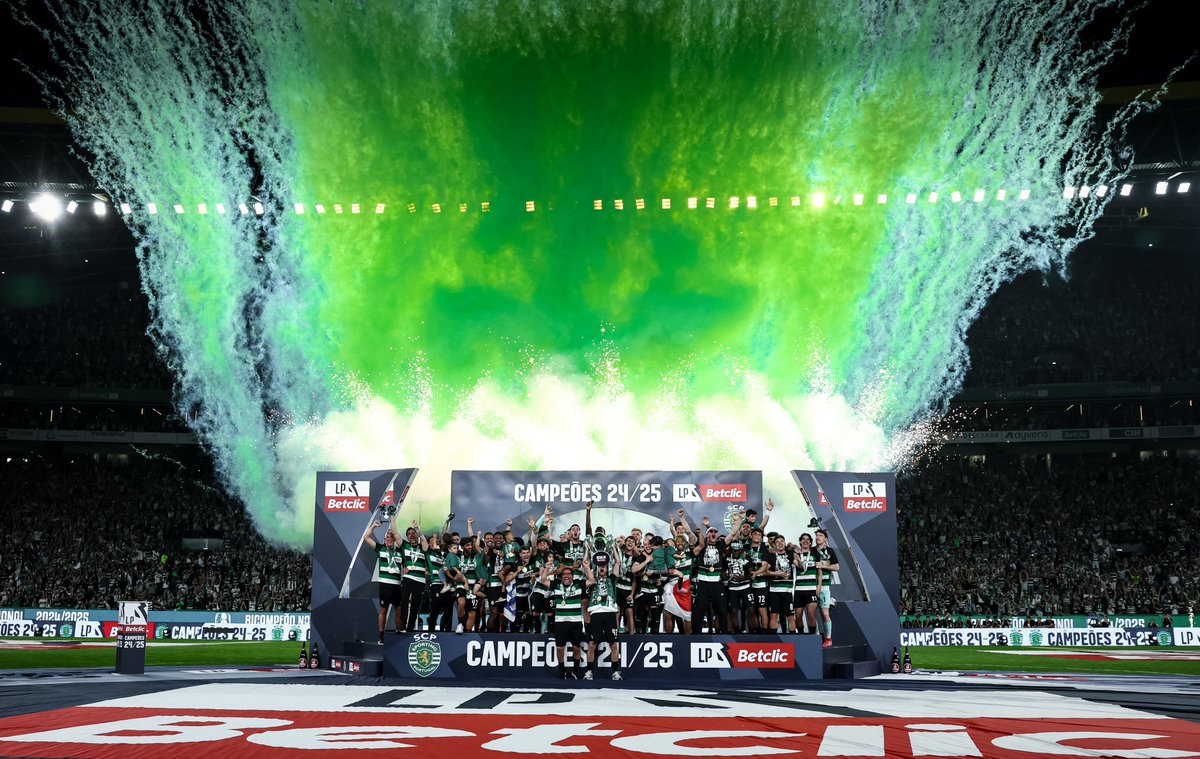
"Foi uma edição muito difícil de vencer. Só perdemos dois jogos, um deles contra a ex equipa do Nuno Mendes, o Sporting CP. Provavelmente a equipa que mais nos criou dificuldades.
Tudo Muito giro
Mas o que ficará mesmo para a história, é que a única equipa a derrotar o PSG bicampeão europeu este ano, tinha Matheus Reis e Mangas a titulares e teve o golo da vitória construído pelo Alisson do Leiria
"O Sporting perde aquela final por cansaço, por ausência de jogadores, por incapacidade técnica, por incapacidade tática? Não. O Sporting perde porque simplesmente não competiu"
"É um grupo que já ganhou muito, mas o Sporting quer um grupo que queira continuar a ganhar muito"
BREAKING 🚨
Donald Trump thought he ended Stephen Colbert. He didn’t. He amplified him.
After celebrating the end of The Late Show, Trump claimed Colbert was off TV for good. That victory lasted less than 24 hours.
By Friday night, Colbert was already back, this time on a tiny public-access station in Michigan. No big budget, no corporate backing, just a mic, a camera, and a voice that wouldn’t quit.
Then it got even better. Jack White, Eminem, Steve Buscemi, and Jeff Daniels showed up. Big names in a small studio, all sending the same message: you can’t silence someone who refuses to be quiet.
“It’s been an excruciating 23 hours without being on TV,” Colbert joked.
This wasn’t just a comeback, it was a statement. Platforms can disappear, studios can shrink, but a voice that won’t back down only gets louder.
Now Colbert isn’t off the air, he’s everywhere. Living rent-free in Trump’s head. And the more Trump pushes, the louder that little studio in Monroe becomes.
Ironically, Trump helped make it happen, boosting Colbert with every post and every attack. The more you try to silence someone, the bigger they become.
We love you, Stephen Colbert ❤️
#StephenColbert #LateNight #FreeSpeech