Dad, EM Doc, and Runner 🏃. All around fan of geekdom especially Disney (ex VIP host) , video games, movies, comics (especially Batman), and general randomness.
@suicidesquadRS Been loving the double xp this weekend. Would love more of this or rotating character xp bonuses. Been playing for months and it just is mindless fun that I really enjoy.
@CrocHolliday@SUEtheTrex@DisneyAnimalK Nice button! I think I still have mine as well. 4 years old posting here but I enjoyed my time spieling at the fossil prep lab. Still fun to think about all the cool things that dinoland had at the beginning.
I also want to thank @Wizards_DnD and specifically the DnD team for giving us carte blanche. I’m really sorry to hear so many of you were let go. It’s a sad thing to realize that of the people who were in the original meeting room, there’s almost nobody left. I hope you all end up well (12/16)
HAPPENING NOW!
Constable Deputies are responding to the Chuckie Cheese located in the 17700 block of Tomball Parkway in reference to an in-progress call. The caller advised there are over 30 people fighting at the location.
At the end of med school, my family ran out of money. I was embarrassed
In residency, I forbeared on loans and they went up by 150%
I was financially illiterate. The stress was real.
It shouldn’t be this way.
Here are 5 reasons financial literacy MUST be in medical training:
You certainly won't regret running into @CohhCarnage in Baldur's Gate 3! Why ever would you regret running into @CohhCarnage in Baldur's Gate 3? Meet Naaber.
*For legal reasons we do not condone pushing Cohh into a river
https://t.co/mz5Nsx5YaR
The movie Oppenheimer seems to have revived the debate about the role of the nukes in ending the Pacific War. They did, but not in the way people seem to imagine.
A thread.
1/14
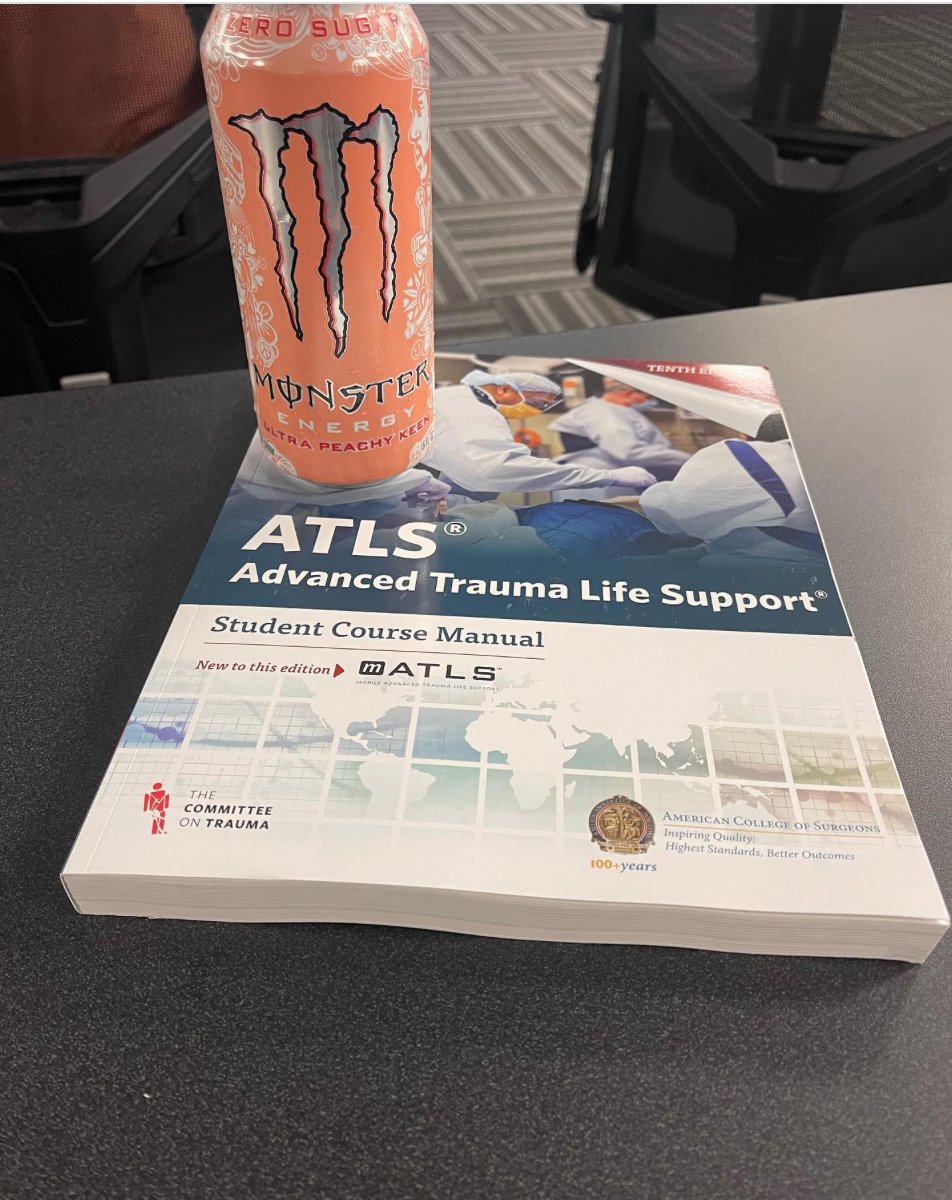
Yesterday I completed my once every four years refresher course of ATLS (Advanced Trauma Life Support System.)
I am one of over 1 million health care providers who have taken the course, a course borne of a tragic private plane crash almost 50 years ago.
ATLS is systematic approach to treating injured patients when they arrive in an emergency room, whether it’s a rural hospital in Haiti or a top trauma center in Houston. It has been taught in over 65 countries. It’s a common language, a universal protocol. A method to insure that severely injured patients get the same proper care wherever they are.
But care of the injured patient was not always systemized in a universal fashion. The origins of ATLS were born in Lincoln, Nebraska nearly 50 years ago.
In 1976, an orthopedic surgeon from Lincoln, Dr. James Styner, was piloting his small propeller plane carrying his wife and four children back from a wedding they attended in California. As they got closer to home on their long trek, the weather deteriorated over rural parts of Kansas.
With weather worsening and darkness approaching, Styner had to choose between turning around and flying away from home, landing in the middle of nowhere, or forging ahead. Styner pushed forward.
After flying over 1,000 miles and only 60 miles from home, tragedy struck. With decreased visibility due to clouds, fog, and darkness, James Styner become disoriented and crashed the plane. They flew through trees at around 160 miles per hours, shredding off both wings, and crashed into a corn field.
Styner survived the crash. His wife was ejected from the cockpit and died instantly when a piece of the propeller hit her head. His four children were in back of the plane and survived but three of them suffered head injuries and were unconscious. After waiting for help for hours in the desolate field, Styner decided he had to look for help. He left his oldest child behind to watch his three siblings, and walked in the direction of distantly appearing headlights from passing cars.
He eventually reached a nearby road, flagged down a car for help, and they returned to the field to retrieve his children.
Styner learned he had crashed near a small town called Hebron, Nebraska, a town he would soon learn which had a small hospital not well equipped to handle severely ill or injured patients. Only two doctors staffed the small hospital and they had little experience with severe trauma.
House after the crash and in the Emergency Room at Hebron with his 4 injured children, Styner was shocked at the care, or perhaps better said, lack of appropriate care given to his injured children.
Later he would say: “When I can provide better care in the field with limited resources than what my children and I received at the primary care facility, there is something wrong with the system, and the system has to be changed.”
He demanded the he and his children be transferred out of that hospital to the the large hospital at which he practiced, 60 miles away in Lincoln, Nebraska.
Over the course of time, Styner and his children had complete physical recoveries, but he remained troubled by his experience at the small hospital. Dr. Styner would vocally complain about the small town hospital.
One of his medical colleagues, an ER doc, grew tired of his complaining and told him to change the system. Well in this case there was no system. As Styner said: “You have to train them before you can blame them.”
So Styner together with the help of colleagues created a protocol for the treatment of severely injured patients with the goal of teaching it to health care providers in rural settings. Their system was called ATLS, and first debuted in Nebraska in 1978.
Their little course was picked up the University of Nebraska, and eventually the American College of Surgeons, and by global institutions.
Since it’s humble beginnings in a class in a small town in Nebraska, it was been taught in thousands of classes in over 60 countries to over 1 million providers.
From a personal tragedy to a global protocol which has saved countless lives over decades, James Styner proved several things.
• One person can change the world.
• Humble beginnings don’t reduce the chance of massive succes.
• The solution to complex problems is often to have a systemized protocol in place.
• You have to train them before you can blame them.
#ship30for30
Please do not check your temperature via your urethra. And if you do, don’t shove it so far that it goes into your bladder and you forget about it for 15 years.
This 2015 photo was taken by a paramedic in front of a hospital in California. It shows an ER doctor who stepped outside to cry for a moment after losing a 19-year-old patient. Minutes later, he walked back inside with his head held high, and continued on to his next patient.
@c_caines Warners is a jacked company. Their handling of DC was terrible, the write offs for completed projects never to be released is crap, and there there terrible stories of poor collaboration out there.