#OTD November 15, 1630:
Johannes Kepler, the German mathematician and astronomer known for formulating the laws of planetary motion, dies at age 58. A deeply Christian thinker, Kepler believed that studying the cosmos was a way of “thinking God’s thoughts after Him,” seeing the mathematical order of the universe as a reflection of its divine Creator.
The ultimate question is: Do enough Americans have the moral clarity and strength to stand up for our country, against our enemies both inside and outside the US, or are too many Americans weak, knee-bending sheep. It's not clear.
A part of the problem here is confusion about the terms male and masculine.
While it can be perfectly orthodox and biblical to refer to God in masculine terms and even to refer to Him as "masculine," it is unorthodox to refer to God as a male.
The term male refers to a creature whose physical body is organized for reproducing as a Father. God doesn't have a body (John 4:24), and it would be wrong to think or speak of Him as if He does.
The term masculine means "having a character befitting or regarded as appropriate to the male sex; vigorous, powerful" (Oxford English Dictionary). Thus masculine is the language of types or characteristics, without necessarily attributing reproductive function.
For example, when someone says, “That room is decorated in a masculine way,” that use of the term masculine does not signify a sexual reality but a kind of stereotype.
All the orthodox recognize that God does not have a body and is not a sexual being. But they also recognize that God’s Fatherhood is prior to and gives rise to creaturely Fatherhood (Eph. 3:14). Father properly names God's essence. Herman Bavinck says it this way:
"This name 'Father,' accordingly, is not a metaphor derived from the earth and attributed to God. Exactly the opposite is true: fatherhood on earth is but a distant and vague reflection of the fatherhood of God (Eph. 3:14-15). God is Father in the true and complete sense of the term… He is solely, purely, and totally Father. He is Father alone; he is Father by nature and Father eternally, without beginning or end" (Reformed Dogmatics, II:307-308).
When orthodox Christians describe God in masculine terms, they aren’t saying that God has a sexual body. Indeed, they reject that notion outright. They are simply recognizing that God’s non-sexual nature is truly imaged in creaturely masculinity, especially his Lordship and Kingship and, yes, his Fatherhood.
So can we rightly describe God as masculine? Yes. Can we rightly describe Him as male? No.
@ZacharyGarris Correct. If Christ intended for our reaction to His commands to be "well Christ kept it for me," then He wouldn't have put Ephesians 2:10 in His Word of the Gospel.
@ZacharyGarris Would practical antinomianism also include those who, while not outright denying the third use of the law, downplay or in various ways ignore or fail to apply the third use of the law?
#OTD November 2, 1533:
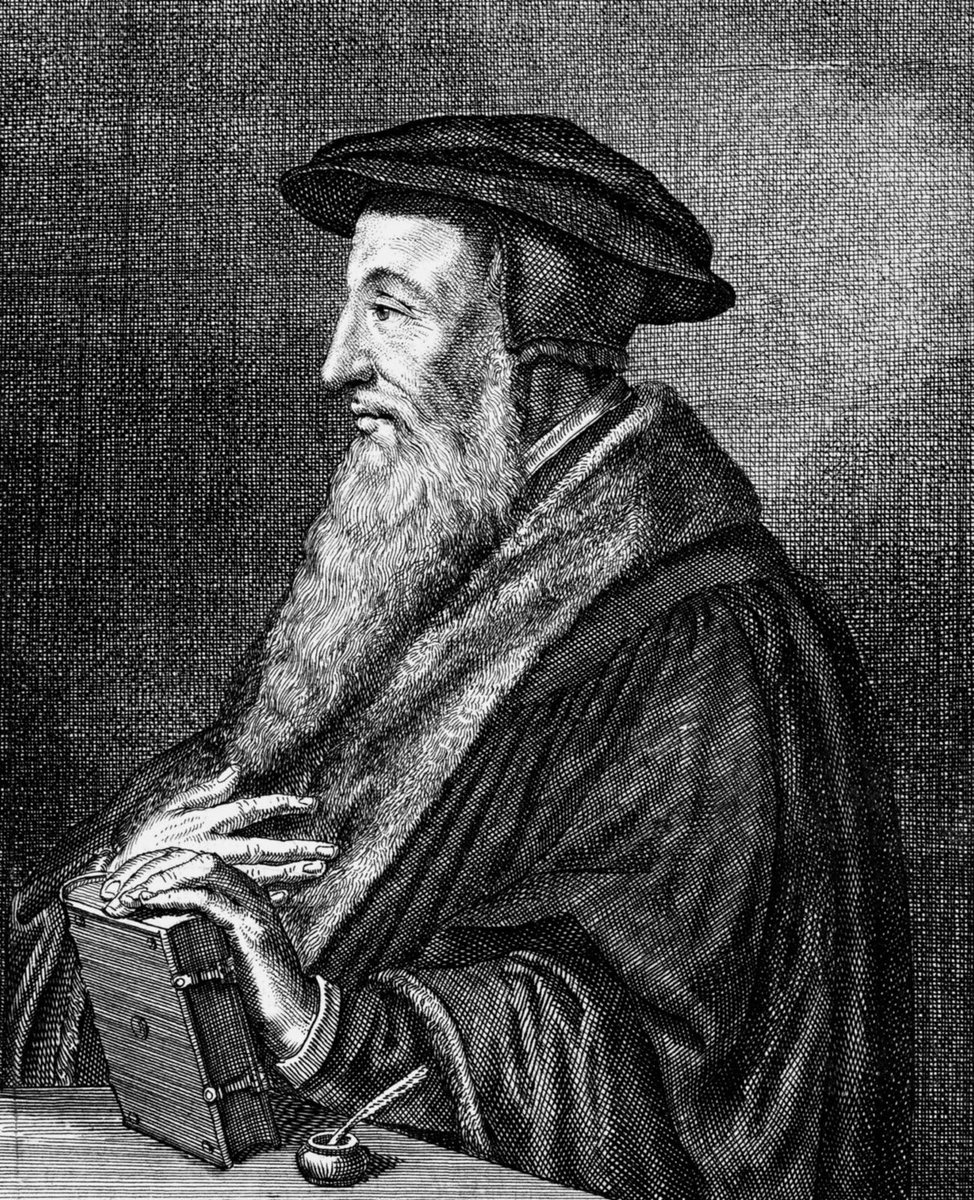
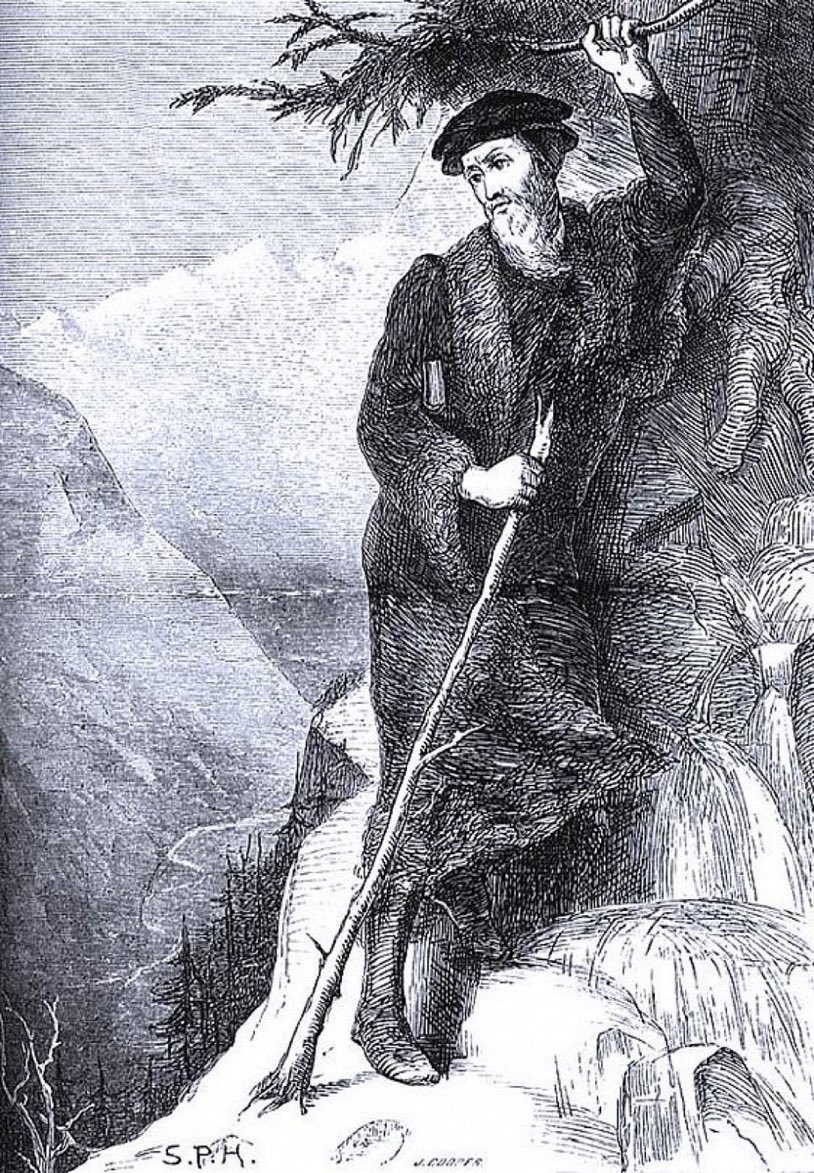
Fleeing the Catholic authorities in Paris, John Calvin is said to have lowered himself from a window on a rope of bedsheets and escaped disguised as a vine-dresser, a hoe over his shoulder. He sheltered first at Angoulême in southern France and wandered as a fugitive evangelist under assumed names, among them Martianus Lucanius. He reached Basel in January 1535, and nearly three years of wandering ended when he settled in Geneva in 1536.
#OTD November 1, 451:
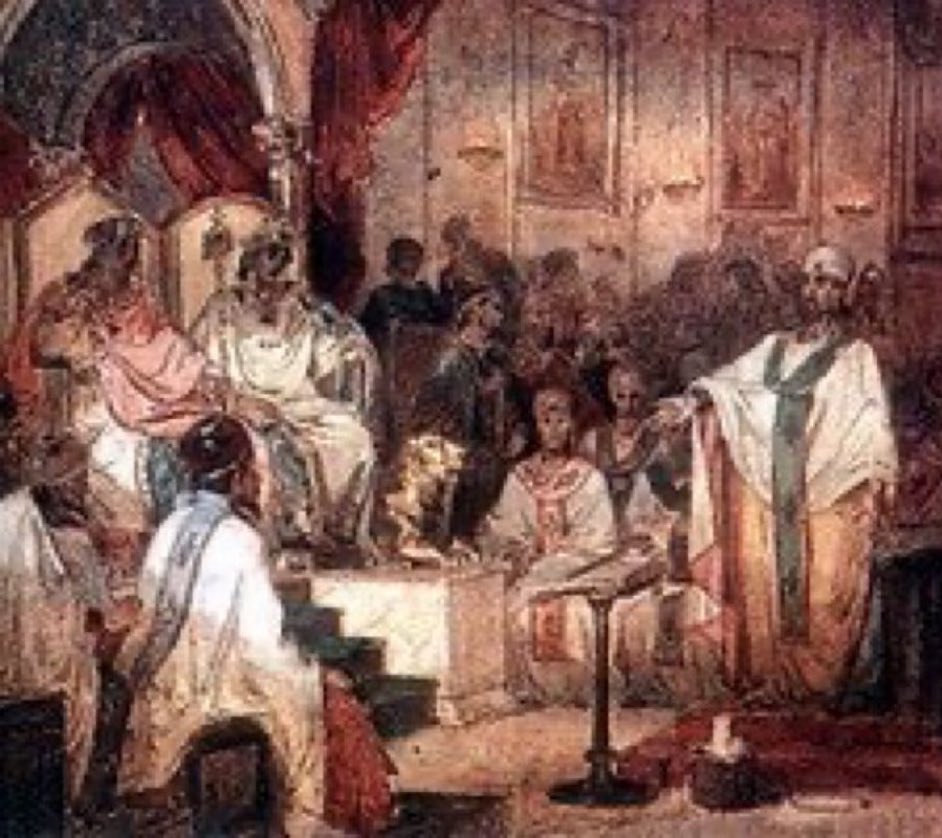
The Council of Chalcedon (in modern Turkey) adjourns. It was the fourth and largest of all the ancient councils, attended by between 500 and 600 bishops. The council repudiated the Eutychian heresy, which taught that Christ's humanity was absorbed into his divinity, leaving him with a single nature. In its place it drew up the Chalcedonian Creed, affirming Christ as one person in two natures, fully God and fully man.
Happy Reformation Day. Enjoy reading the first ever proclamation from a President of the United States celebrating this Protestant history.
https://t.co/mTSXOuq6dg
Happy Reformation Day!
Did you know that John Calvin helped establish the Reformed Protestant religion in the Americas more than SIXTY YEARS before the Pilgrims landed at Plymouth?
In the middle of the 16th century, as Protestants were being persecuted across Europe, a remarkable undertaking began under the patronage of the great French Huguenot leader, Admiral Gaspard de Coligny.
A French knight named Nicolas de Villegagnon sailed across the Atlantic with several ships and established a settlement on the shores of Brazil.
His vision was extraordinary: to establish a refuge in the New World where persecuted Protestants might find shelter and where Reformed churches might flourish.
But they needed ministers.
And so a request was sent across the ocean to Geneva, asking that pastors be supplied to establish the Reformed religion in America.
John Calvin answered the call.
Together with his colleagues, Calvin commissioned two ministers, Pierre Richier and Guillaume Chartier, to cross the Atlantic and assist in planting the Church of Christ in Brazil.
Others joined the expedition, including Jean de Léry, under the leadership of Philippe de Corguilleray.
Three ships carried these Protestants across the vast Atlantic to the shores of South America.
And there, in the New World, they established an evangelical church order, bringing the doctrines and worship of the Reformation into a land thousands of miles from Geneva.
Consider the significance!
While the fires of persecution burned against the Reformed churches of Europe, Calvin was helping to extend those very churches across the ocean.
Before Jamestown. Before Plymouth. Before the Puritan settlements of New England. The Reformed faith had already crossed the Atlantic under the direct influence of John Calvin himself.
Cotton Mather preserved this remarkable history in his Magnalia Christi Americana (1702), describing how these pioneers established Reformed worship in those distant regions of the earth.
509 years ago today (according to the traditional story), Luther challenged a Pope. The resultant cause and effect didn’t start a new church, it reformed the one true catholic church. As Calvin says in his letter to Cardinal Sadoleto:
"[N]ot only that our agreement with antiquity is far closer than yours, but that all we have attempted has been to renew that ancient form of the Church… Indeed, in attacking, breaking down, and destroying your kingdom, we are armed not only with the energy of the Divine Word, but with the aid of the holy Fathers also."
Orthodox, but not Eastern, catholic, but not Roman.
It’s Reformation Day.
Don’t celebrate the darkness of demonic forces and death.
But celebrate the light of the gospel of Christ recovered in the Protestant Reformation—October 31, 1517.