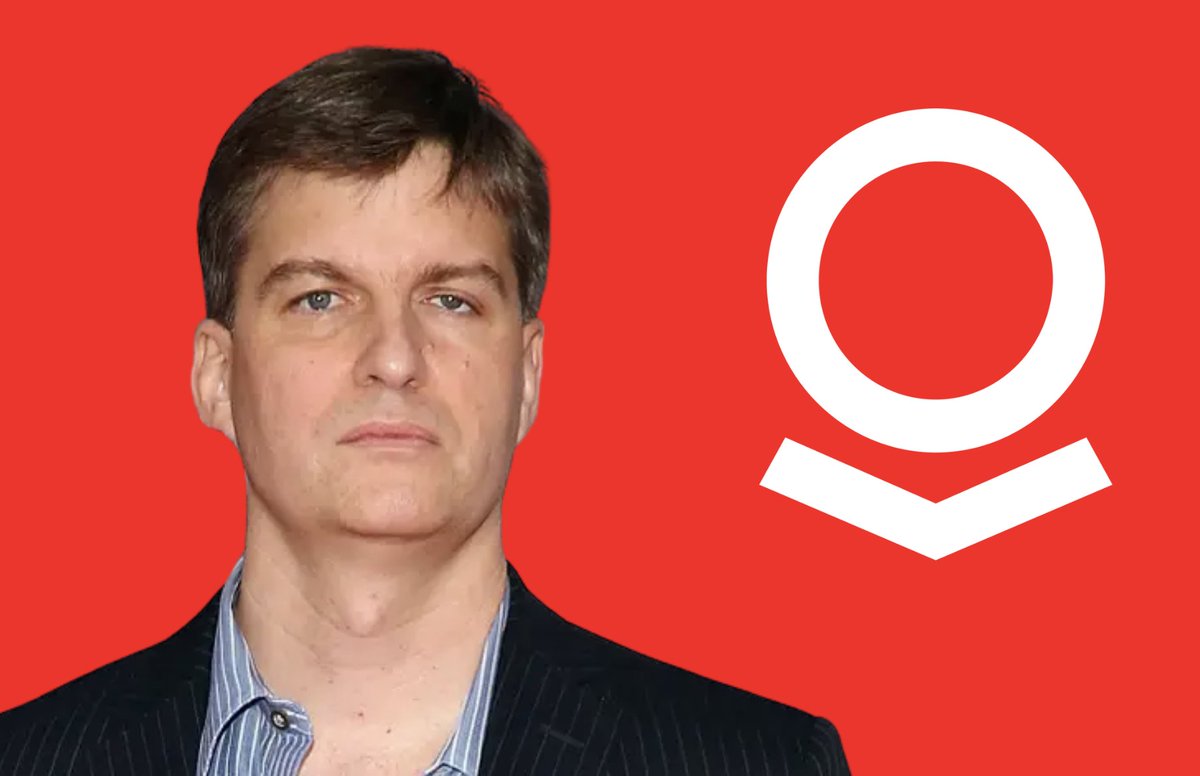
We believe the take that Anthropic is eating PLTR's lunch, (amplified by Michael Burry's now-deleted post on X earlier today), is the wrong take and fictional narrative (in our view) as Palantir is at the epicenter of leaders in the AI Revolution. Core AI winner and tech leader🐂
@Ashton_1nvests The one variable that’s hard to model is the Disney + Hulu Live TV combination. If they can scale subscribers and improve ARPU over time, the upside could be meaningful.
$PLTR
PALANTIR Q4 2025 EARNINGS:
- $1.4B Revenue, +70% YoY
- U.S. Revenue $1.71B, +93% YoY
- U.S. Comm Revenue $507M, +137%
- U.S. Gov Revenue $570M, +66%
- Rule of 40: 127%
- Guiding for 61% FY 26 growth
Palantir is becoming one of the greatest software companies in history.
“Palantir can remove up to 80% of operating costs while significantly boosting revenue. This used to take a year to achieve. Today, we can do it in a few days.”
$PLTR
Nvidia CEO Jensen Huang just made the boldest prediction of his career:
“AI will create more millionaires in 5 years than the internet did in 20.”
But he didn’t stop there.
He revealed exactly HOW it’ll happen
Here’s his framework for capitalizing before it’s too late:
TODAY IS WARREN BUFFETT’S FINAL DAY AS CEO OF BERKSHIRE HATHAWAY.
The simple reason for why he’s the GOAT:
Compounded Annual Gain from 1964–2024:
- Berkshire Hathaway: 19.9% per year
- S&P 500: 10.4% per year
Overall Gain from 1964–2024:
- Berkshire Hathaway: 5,500,000% return
- S&P 500: 39,000% return
Over roughly six decades, Berkshire compounded at nearly double the annual rate of the S&P 500.
Many managers got better yearly returns, but no one has been able to beat the S&P by 100% for over six decades.
The discipline that it takes to create that longevity is why he’s the GOAT.
Happy New Year.
Another year older. Another year wiser. Another year where people will panic, overtrade, chase noise, and somehow still be shocked when patience wins again.
If you stayed consistent, kept buying when it felt uncomfortable, and ignored the daily circus, you are already ahead of most people.
The market does not reward brilliance. It rewards discipline. Time. And the ability to do absolutely nothing when everyone else is losing their mind.
Here is to long term thinking, boring consistency, and letting compounding quietly do its thing.
Wishing you health, clarity, and strong returns in the year ahead.
Tom
" $PLTR WILL COLLAPSE IN 2 YEARS."
Legendary investor @michaeljburry just dropped a new interview with a legendary level of bullshit.
Let's bury him:
1. "It's the AI consulting thing."
Burry can't understand that a consulting business doesn't have an 80% gross margin at ~50% FCF margin, growing +60% while having fixed headcount.
Legendarily embarrassing.
2. "Palantir doesn't produce a product for AI. It was a lucky AI cover."
Seems Burry spent more time writing tweets on Palantir than actually studying it.
Palantir was doing AI before it was called "AI". The proof is in the old demos and the fact that it was perfectly positioned as the "AI grid" application for deploying n-models to deliver business value.
If Palantir's AI wasn't real:
• its business would have stalled like $AI
• its metrics would not have exploded
• all the clients presenting at AIPCon are liars
• USA Gov is deploying a massive scam at scale
3. "SBC wastes all the Income".
SBC is expensed as a cost in the Income Statement, but doesn't generate a cash outflow from the company.
Palantir GAAP metrics, so AFTER the SBC impact:
33% Operating Profit Margin
40% Net Income Margin (thanks to Net Interest)
= even if Palantir paid all the SBC in cash, it would still have above elite margins.
4. "Wall Street takes EPS per share and adds back SBC."
EBIT Adj is the best metric to assess the strength of the business because it's a proxy of the operating FCF.
EBIT Adj. = GAAP EBIT + SBC
NB: since the timing of customers' invoices can vary, EBIT adj. is a smoother and more representative measure of the value generated in the quarter.
5. "GAAP understates the real cost of SBC."
For each employee, SBC expenses from RSUs are recorded at the grant-date price of the shares and remain constant over the vesting period, which is ~4 years.
This means that if PLTR stock rises, the company will continue to record the initial related SBC cost for the vesting period. Still, the shares provided to the employee at the end of the 4 years are actually more valuable than the expenses recorded.
GAAP indeed understates the effective $ amount employees can receive once the shares vest, if the stock rises significantly after the grant date.
That's the bet employees take.
That's the bet investors take.
SBC negatively affects shareholders, as their % ownership of the company is reduced due to the issuance of additional shares, but the accounting value matters relatively little.
What truly matters to shareholders is the change in the number of shares (=dilution), which affects the per-share results and is a serious problem if the company doesn't grow.
Palantir:
+60% YoY Revenue
+90% YoY EBIT adj
+200% YoY EPS
+4.6% Diluted Num. of shares
As long as the business grows much more than the dilution, there is no issue.
I am a happy diluted shareholder :)
6. "Look how much the company pays in buyback to offset that level dilution."
Buybacks are stupid only if done at a stupid price.
Since Palantir began its buyback, the stock has risen more than 6x.
NB in Q3 PLTR bought back $20mn vs $600mn EBIT adj.
7. “Billionaires/Revenue ratio bigger than 1 has never been seen”.
Palantir has 5 billionaires from owning the stock vs $4b Revenue generated.
While surely that’s an anomaly, it doesn’t mean anything.
To get to $1bn you need to build a business for 20y, not rolling the portfolio every quarter or selling a newsletter.
@ssankar, Palantir's CTO, for instance, has built value in the company as the #13 employee since 2006.
Meanwhile, Burry called 20 of the past 2 recessions.
That's unprecedented.
In 5 minutes, Burry dropped 7 bad takes.
That's unprecedented.
Last week, I was told that Burry has literally coordinated a short attack involving institutional players in the trade.
While I can't verify the accuracy of this claim, I can verify that Burry looks more desperate than ever to preserve the little reputation left.
Yours,
@arny_trezzi
$GRAB Rule of 40 Calculation🧵
Yes, I consider $GRAB as an AI Software SuperApp.
Q3 Revenue: $873 million (up 22% YoY).
Q3 Adjusted EBITDA: $136 million (up 51% YoY from $90 million).
Adjusted EBITDA Margin: $136M ÷ $873M ≈ 15.6%.
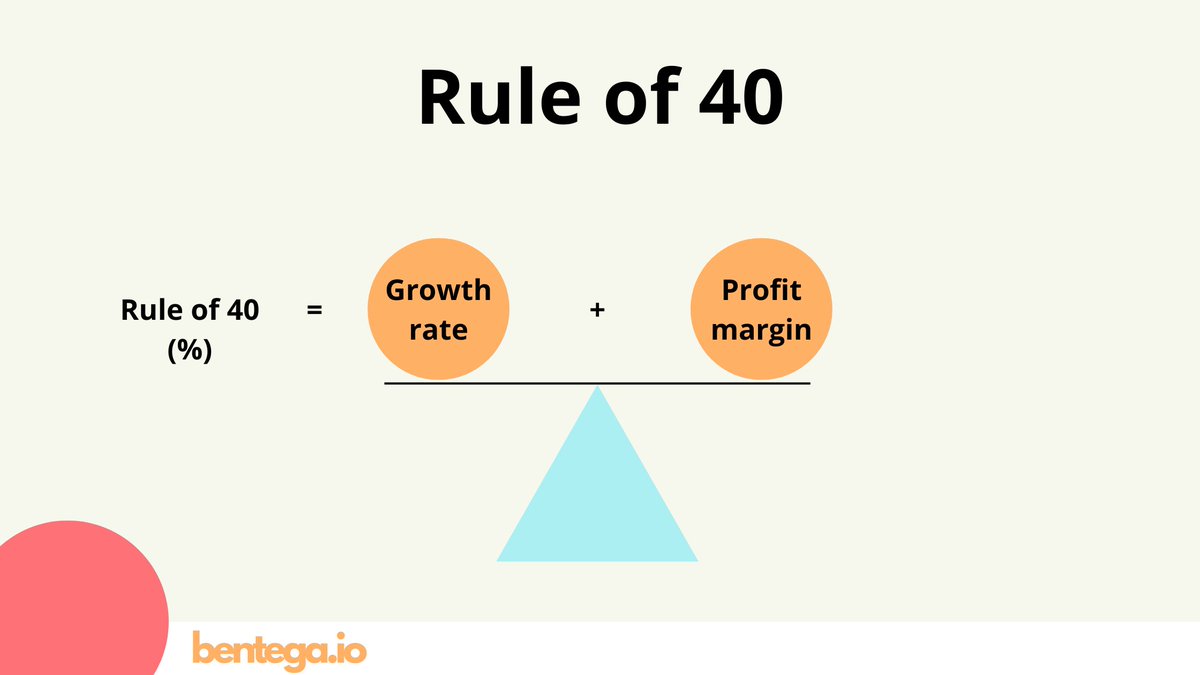
Quarterly Rule of 40
Rule of 40 = 22% (growth) + 15.6% (margin) = 37.6%.
Annual Rule of 40
TTM Revenue: ~$3.4 billion (up ~21.5% YoY).
Implied TTM Adjusted EBITDA (based on guidance trajectory toward $500M+ for full-year 2025):
Rule of 40 ≈ 21.5% + ~14.7% = ~36.2%
So from negative to now 36-38%. Should be above 40% in Q4 2025. And yes $GRAB Rule of 40 is higher than $UBER, but $GRAB is an AI SuperApp, and it has no comp. Tencent, owner of Wechat is 45-50%, or Wechat alone rule of 40 is estimated to be slightly above 40% for its Pay/Fintech core. $GRAB is a much much younger company than $UBER or @TencentGlobal.
Q2 Q3 executed "Secret Weapon"-Affordability much better than prior, hen we saw accelerated transaction growth of 27% while only 14% MTUs growth. @alexhungate also confirmed DTUs is outpacing MTUs, so at 20% MTUs growth in Q4 is expected. That would mean 33-34% of transactional growth, or above 30% revenue as Tourism is hot in Q4, with more cross-selling.
$GRAB Rule of 40 by 2026 should be inching toward 50% and lean toward 60%+ in 2027. This is going to be improved YoY. Hence Management is pushing GrabFin to breakeven quickly in 6 7 months or sooner, because GrabFin is going to fuel margin expansion as well as revenue growth. I will explain further in the ultimate roadmap to $500B in Dec 2025 for Subscibers and Release it in mid 2026.
And btw, the "Secret Weapon" is keeping monopoly legally, it makes it impossible to make money for new players. Especially when users sign up for GrabUnlimited, most cannot match the fare price due to heavy discount for GrabUnlimited Subscribers.
Not Financial Advice!