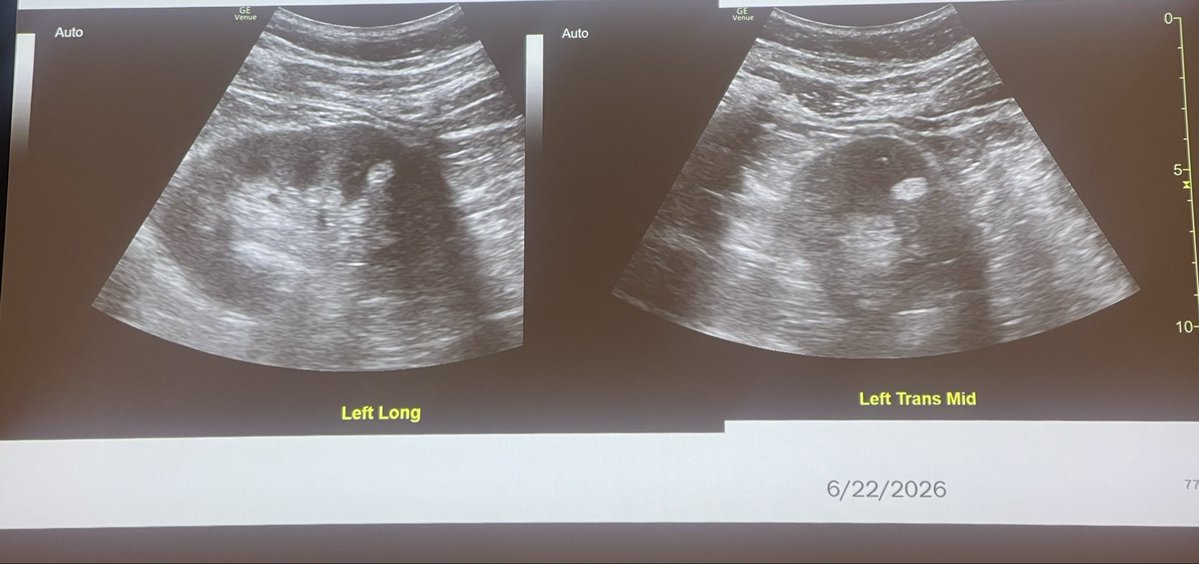
Definitely facilitates the assessment when some views are challenging which can be a surprisingly number of patients and generally that ICU pt all ‘gassed up , w tons of wires and turned to one side to prevent pressure ulcers
And in keeping with the House of Commons , another “discrete , usually but not always smaller, and can be +/-+/- round, not always, which has a shadow, NOT a rib since started in the kidney is a #POCUS#FOAM@PracticalPOCUS@POCUS101@RaphyRosen@cuimcmedcme is a STONE
Common things being common, it’s a must to go over them , & we say this it’s a “smooth, thin edges, with sort of ‘flashlight downwards’ which we call posterior enhancement , is a @WINFOCUS#POCUS#FOAM @ @CUIMCMedCME@RaphyRosen A Simple Cyst
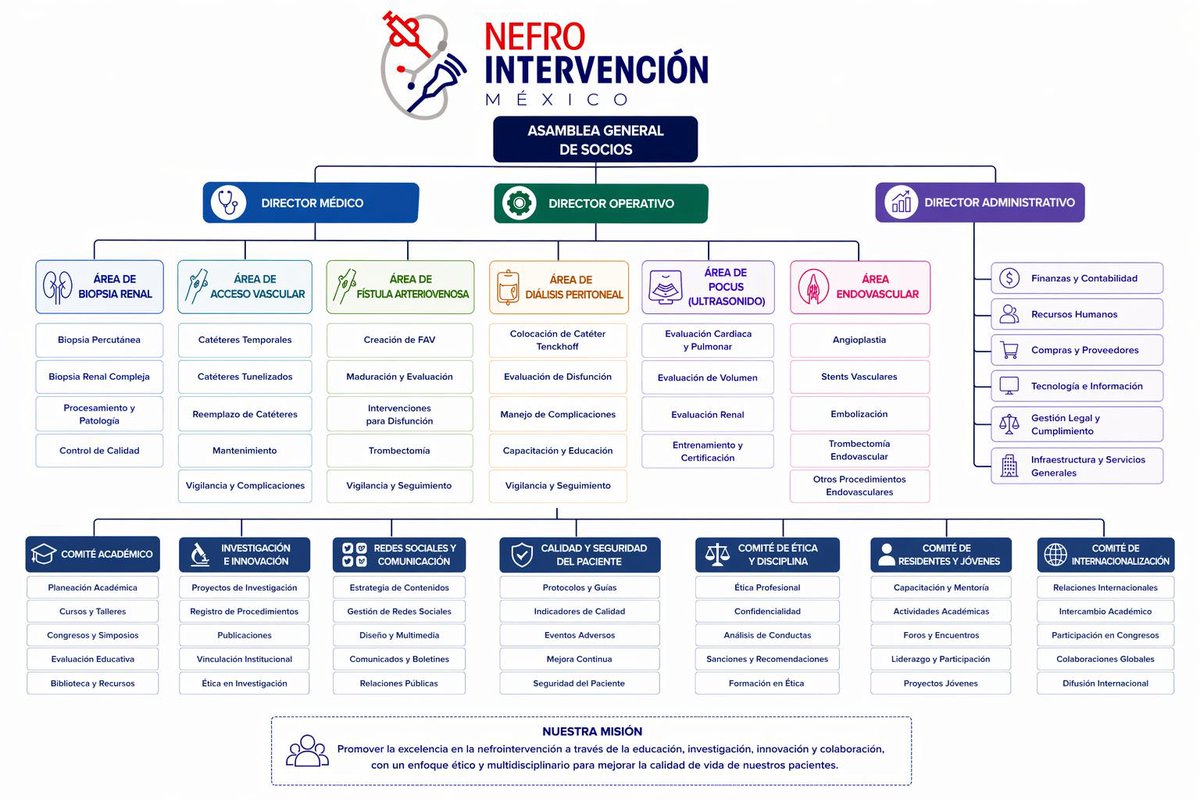
La nefrología del futuro 🩺🚀 se construye con equipo, innovación, formación continua y una visión multidisciplinaria centrada en el paciente.
Hoy nace una nueva generación de liderazgo en México 🇲🇽: Grupo NefroIntervención México, que integra a nefrólogos intervencionistas, nefrólogos, personal de enfermería, radiólogos, cirujanos vasculares y todas las especialidades comprometidas con el acceso vascular y peritoneal para la terapia renal y el cuidado integral del paciente renal.
Queremos invitar a las nuevas voces de la nefrología mexicana 🇲🇽 a formar parte de este movimiento académico y clínico que busca transformar la práctica de la nefrología intervencionista en nuestro país.
Este espacio está diseñado para:
🔹 Impulsar el aprendizaje práctico y la innovación.
🔹 Fortalecer la formación en procedimientos intervencionistas y POCUS.
🔹 Crear redes nacionales e internacionales de colaboración 🌎
🔹 Integrar la experiencia de enfermería especializada como pieza fundamental del éxito clínico.
🔹 Desarrollar investigación, docencia y liderazgo joven 📚
🔹 Promover una atención más segura, eficiente y humana para nuestros pacientes ❤️
Creemos en una nefrología moderna, dinámica y colaborativa 🤝, donde cada profesional aporta valor y donde las nuevas generaciones tienen la oportunidad de liderar el cambio.
Si eres un nefrólogo joven, nefrólogo no tan joven o nefrólogo intervencionista con pasión por aprender, enseñar, innovar y construir comunidad, este proyecto también es tuyo.
México necesita una nueva visión de la nefrología intervencionista. Y esa visión comienza contigo. ✨
Te invitamos a sumarte, participar y crecer junto a una comunidad que busca hacer historia en la nefrología mexicana 🇲🇽
¿Estás interesado? Regístrate aquí: ⬇️🔗
https://t.co/HADc5brni3
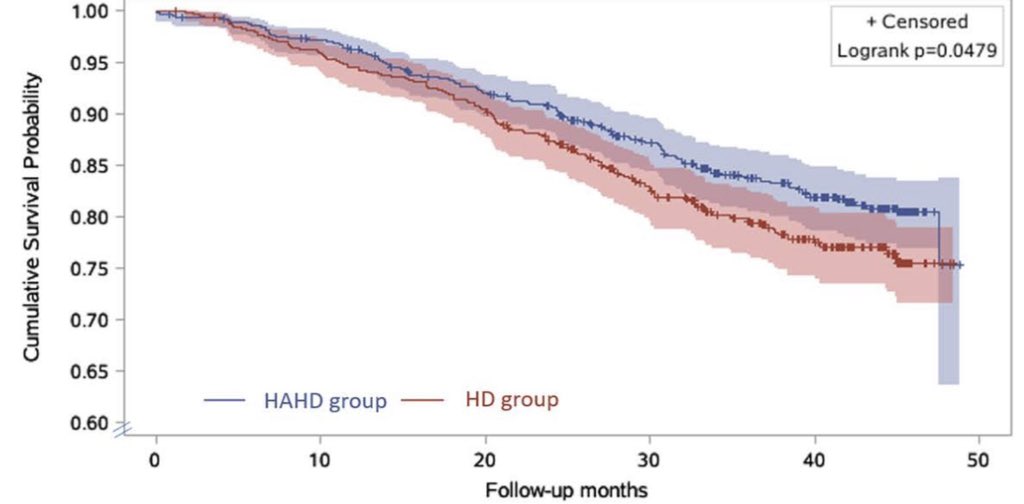
En hemodiálisis, añadir 1 vez cada 2 semanas el cartucho dé hemoadsorción Jafron HA130, comparado a no hacerlo; ↓23% riesgo de morir en seguimiento de 39 meses. Mayor protección en los que tenía >3 años en hemodiálisis
Ensayo clínico
Nature Commun 2026
https://t.co/hp1Dcum5mU
Interesante observar todos los beneficios que el ultrasonido con sus diferentes modalidades puede ofrecer durante el abordaje de la lesión renal aguda
CKJ 2026
https://t.co/wtUjorFdRj
#Nurse, #nursepractitioner , #hospitalist , #hospitalmedicine
Well, well, how should we digest the results of this review of 19 studies by the Cochrane Collarboration : No difference for care provided by MD's or RN's, not even NP's or PA's . Let's pack our bags
Sunday morning quiz
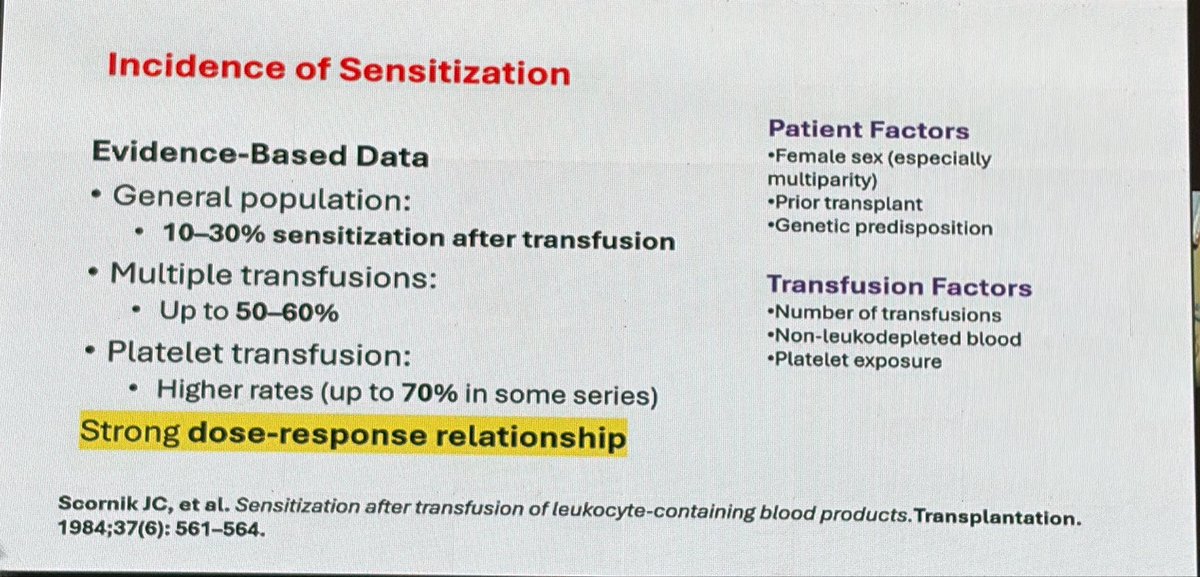
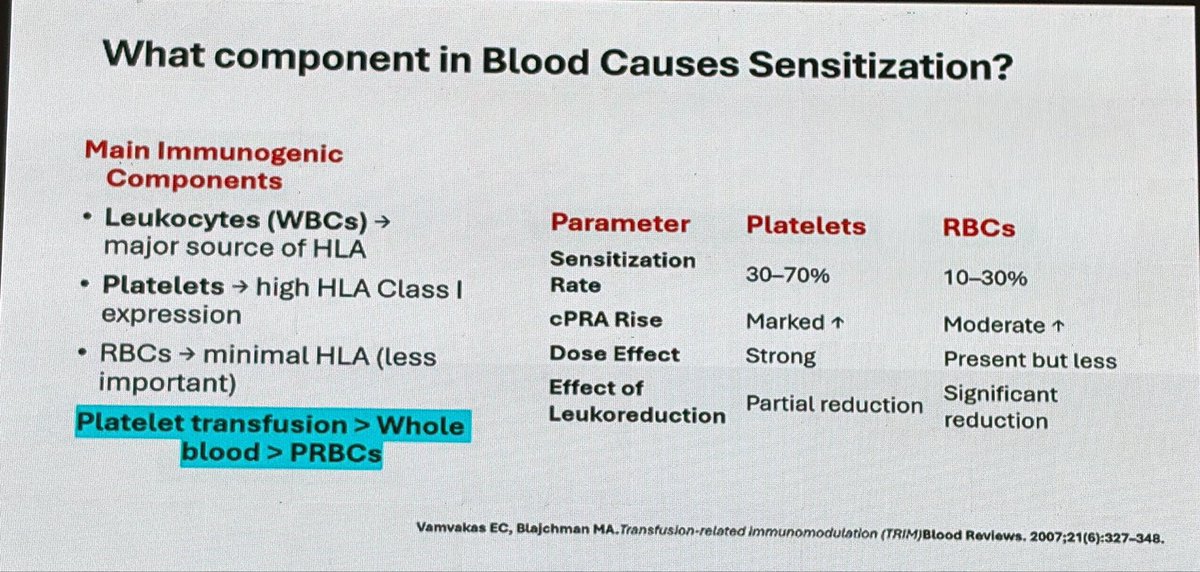
Which blood component has highest sensitizong event when given to kidney transplant recipients?🩸🩸
Is it
A. PACKED RED BLOOD CELLS
B. Whole blood
C. Leucodepleted PCV
D. Platelets
???
Platelets have upto 10* higher HLA expression 🩸🩸
Remember this next time you order SdP for ur patients
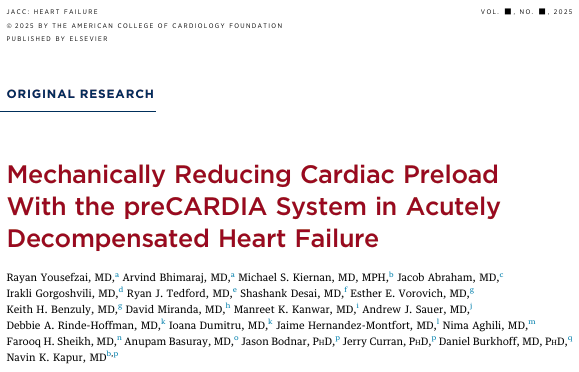
Our recent online publication in @JACCJournals is relevant for clinicians because it advances a distinct, mechanistically targeted paradigm for acute decompensated heart failure (ADHF): mechanical preload regulation rather than further pharmacologic escalation.
In the multicenter, prospective VENUS-HF early feasibility experience (n=60), the next-generation preCARDIA system, designed to intermittently regulate superior vena cava (SVC) flow (roughly ~30% of venous return), was deployed and removed successfully in 100% of treated patients, with 98.3% freedom from device/procedure-related major adverse events, supporting a credible safety and real-world technical feasibility signal across diverse operators and sites.
By design, SVC-based preload reduction aims to lower right- and left-sided filling pressures without the abrupt hypotension risk seen with inferior vena cava occlusion, and the study’s physiologic results align with that premise: among patients treated for approximately 24 hours, right atrial pressure and pulmonary capillary wedge pressure fell substantially (with paired reductions persisting shortly after device removal), while urine output and net fluid output increased during support, suggesting a potentially meaningful lever on venous congestion/cardiorenal physiology in a population already receiving high-dose diuretics.
Taken together, we propose systems like the preCARDIA approach as a scalable hemodynamic unloading platform with small-profile iterations (14F to 10F) and reproducible deployment that could fill a long-standing innovation gap between diuretic-centric care (often limited by diuretic resistance and renal dysfunction) and more invasive or mixed-evidence decongestive strategies (such as ultrafiltration), while providing the rationale and design foundation for larger trials to determine whether targeted mechanical preload reduction can translate physiologic unloading into improved clinical outcomes such as faster, more complete decongestion and fewer rehospitalizations.
Check out the paper here:
https://t.co/nht1rB1SGw