Multiple of my students are looking for internships. Junior researchers of all levels: undergrads, masters, and PhDs. Open to remote positions around the world and in person in the USA. Hello security companies, reach me out for recommendations.
Our @MarcusBotacin@gracesrm @MalFuzzer ACM DTRAP @acm_dtrap special issue on memory malware and other threats is out. https://t.co/pB83A2kTrq Thanks to all who collaborated!
Want to know more about how to detect memory injections with hardware-based memory monitoring? Access our poster: https://t.co/O69jMxlCZn
Access our summary: https://t.co/eIGT8oEKib
Computers are strange. When we want them to be random (e.g., random number generation), they are too deterministic (e.g., pseudo-RNG). When we want them to be deterministic (e.g., deterministic compilation), they are too random...
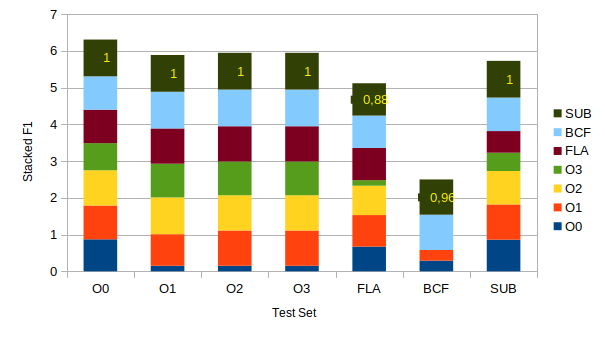
Among all possible obfuscations, we notice that Bogus Control Flow (BCF) is significally harder for the classifiers. We should invest more time researching how to deal with this type of obfuscation!
[Calling all malware analysts] Our research is trying to understand what the malware analysts think and which tools analysts would like to have. Could you take a few minutes to answer our anonymous survey? https://t.co/NGqHVNOFPQ #malware#reverseengineering#redteam#dfir
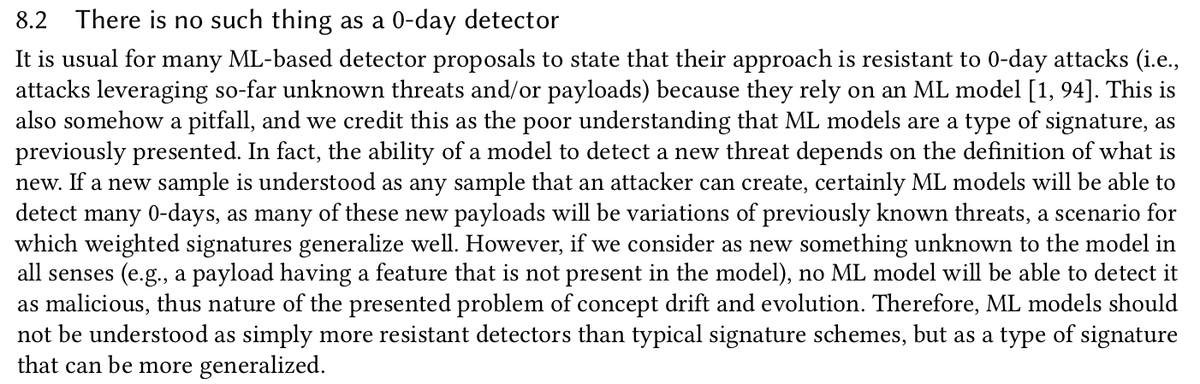
0-day detectors do not exist, at least not as an absolute definition. Once again, it is all about generalization limits. I prefer to talk about generalization measurements rather than 0-day detection capabilities.
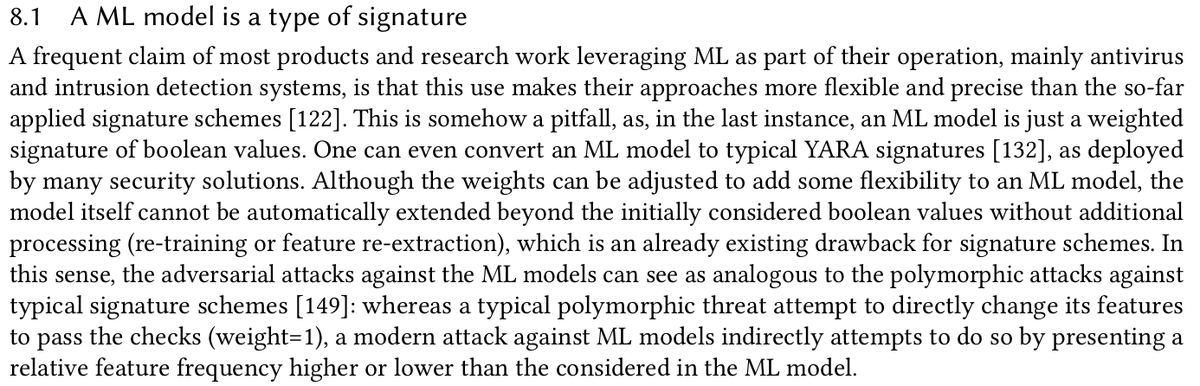
The discussion between signature vs. ML detectors is misleading. ML models are a type of signature, but that generalize more. We can convert ML models to rules. Stay tuned to see a bit more on this in one of my future papers.
One of the main contributions of the papers is a checklist that serves as a reminder and prevents researchers and practitioners from committing common mistakes or at least being aware of their existence while using ML in security. https://t.co/yBwEYb9ns8
ML for Cybersecurity is different from regular ML tasks. Attackers may create novel threats that are unknown to defense solutions. Our paper "Machine Learning (In) Security: A Stream of Problems" shows the main challenges in applying ML to security. https://t.co/LztK9sTmcV🧶
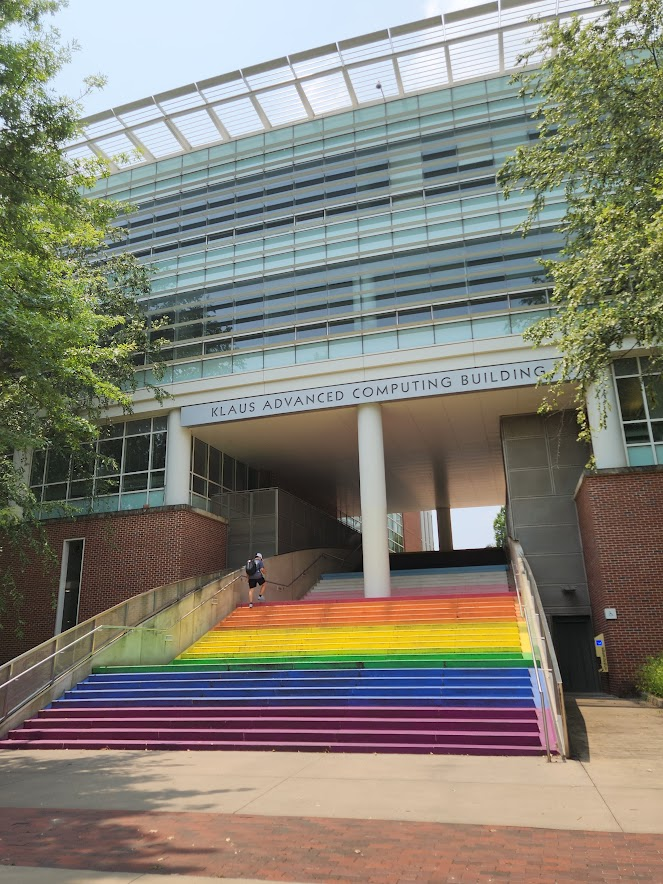
I’m happy to share that I’m starting a new position as a Postdoctoral Researcher at @GeorgiaTech! Thanks, @szonouz for the opportunity to join your amazing team.
First session!
"Reflections on Trusting Docker: Invisible Malware in Continuous Integration Systems"
"ROPfuscator: Robust Obfuscation with ROP" @peperunas
"GPThreats-3: Is Automatic Malware Generation a Threat?" @MarcusBotacin
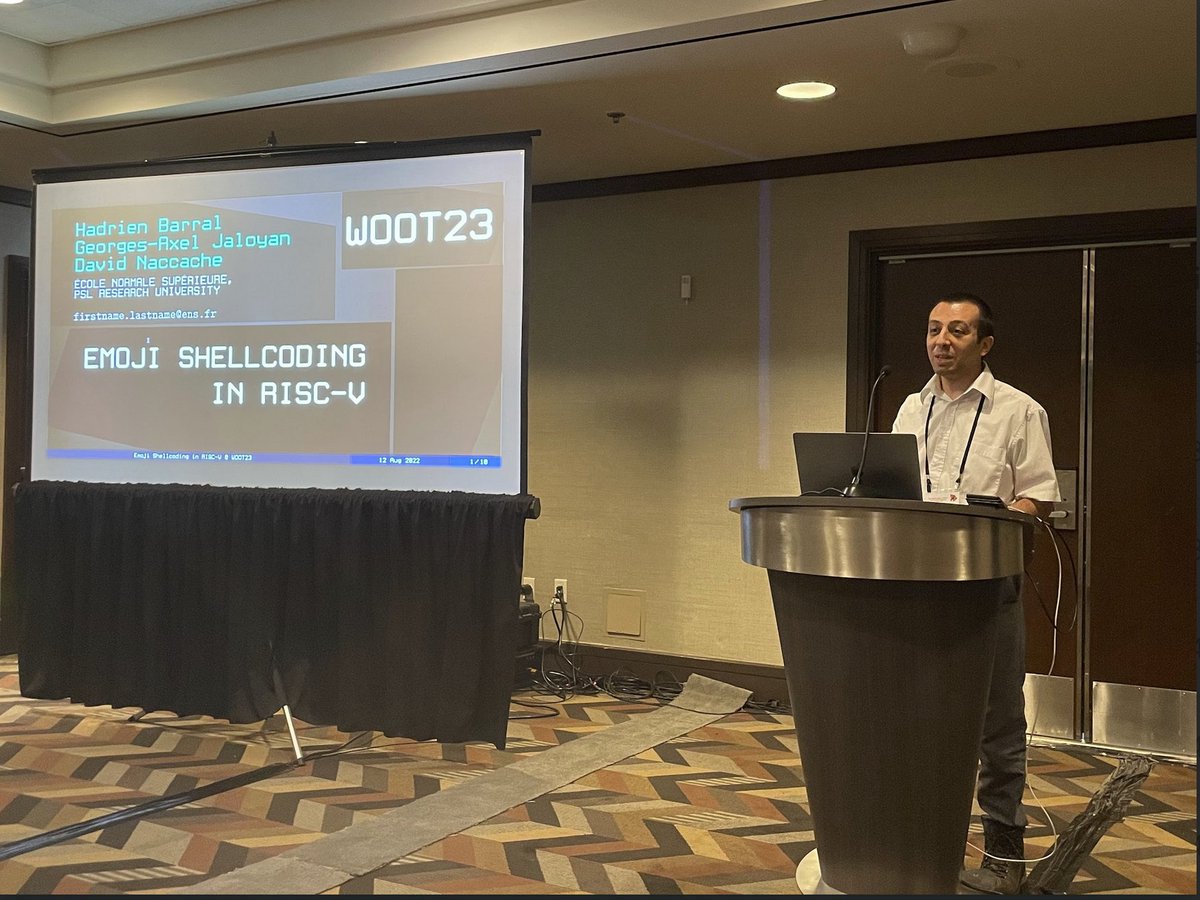
"Emoji shellcoding in RISC-V" @gajaloyan