$NVDA CEO Jensen Huang says Wall Street misunderstood DeepSeek and is “misunderstanding Kimi again.”
He argues open Chinese models shouldn't be banned because cheaper open models accelerate AI adoption making “free AI” bullish for chips, data centers & Nvidia’s compute demand.
Kimi K3 scores 57 on the Artificial Analysis Intelligence Index. Its intelligence is comparable to Opus 4.8 and GPT-5.5 but remains behind Fable 5 and GPT-5.6 Sol. Moonshot AI has expressed plans to release the 2.8T parameter model's weights, which would make it the leading open weights model
Key results:
➤ Strong agentic task performance: @Kimi_Moonshot's Kimi K3 reaches an Elo rating of 1668 on GDPval v2. This is a marked improvement over K2.6’s 1190, surpassing GLM-5.2 (1514), GPT-5.5 (1494), and Claude Opus 4.8 (1600). However, it still lags behind Claude Fable 5 (1760). Kimi K3 also scores an impressive 53% and takes the #1 position on AutomationBench-AA, our implementation of Zapier’s Agentic SaaS workflow evaluation.
➤ Second-highest performance on AA-Briefcase (agentic knowledge work): On our private long-horizon knowledge work evaluation, Kimi K3 reaches an overall Elo of 1547, +732 points from Kimi K2.6 and behind only Claude Fable 5. It is well-rounded: its rubric scoring and analytical quality almost reach Claude Fable 5’s scores, while GPT-5.6 Sol continues to outperform other leading models on presentation quality.
➤ Set to lead open weights models once weights are released: Moonshot AI has not yet released the weights but expressed plans to do so. Once available, Kimi K3 would clearly lead other open weights models including GLM-5.2 (51) and DeepSeek v4 Pro (44). However, at 2.8T parameters, it is significantly larger than its open weights peers (eg. GLM-5.2 at 753B params and DeepSeek V4 Pro at 1.6T), as well as the Kimi K2 to K2.6 models (1T params).
➤ Cost per task ($0.94) is similar to GPT-5.6 Sol ($1.04), ~1/2 the price of Opus 4.8 ($1.80) and higher than open weights peers: Moonshot AI’s pricing for K3 is significantly higher than their K2 pricing (K3’s output token price is $15/1M tokens while K2.6 was $4). This positions the model as cheaper on a cost per task basis than Opus 4.8, similar to GPT-5.6 Sol ($1.04) and more expensive than open weights peers, GLM-5.2 ($0.32) and DeepSeek V4 Pro ($0.04)
➤ Improved token efficiency alongside higher intelligence: Kimi K3’s token usage on the Artificial Analysis Intelligence Index decreased significantly, using 21% fewer output tokens than K2.6. The new model used approximately 132M output tokens to complete all nine evaluations, compared to approximately 166M for K2.6, while achieving higher scores.
➤ Native multimodal capabilities: Kimi K3, like K2.6, is released with native image and text multimodal input. If weights are released, this will position Kimi K3 as one of the leading open weights models with multimodal input capabilities
Other model details:
Context window: 1M
Size: 2.8T total parameters
Pricing: The first-party API is priced at $3.00/$15.00 per 1M input/output tokens, with cached input discounted 90% to $0.30 per 1M tokens.
Modality: Native multimodal input supports text and images, and the model remains text-only for output.
Accessibility: Accessible at launch through Moonshot’s first party API. Model weights are not yet released but Moonshot AI has expressed plans to do so.
Today, we are introducing Inkling.
Inkling reasons efficiently across text, image, and audio modalities. We are making the full weights available.
https://t.co/Ghebq5mG30
Available today for fine-tuning on Tinker. Play with it in the Inkling Playground. 🧵
Introducing Kimi K3: Open Frontier Intelligence
🔹 2.8 Trillion Parameters, 1 Million Context, Native Multimodal
🔹 Kimi Delta Attention enables up to 6.3x faster decoding in million-token contexts
🔹 Attention Residuals deliver ~25% higher training efficiency at <2% additional cost
🔹 Built for long-horizon agentic coding and self-evolving workflows
Kimi K3 is now live on on https://t.co/zrk6zZxZUo, Kimi Work, Kimi Code, and the Kimi API.
Open Weights by July 27, 2026.
🔗 API: https://t.co/XCrgjXAqMw
🔗 Tech blog: https://t.co/YTfiMSNM1f
Pure insanity.
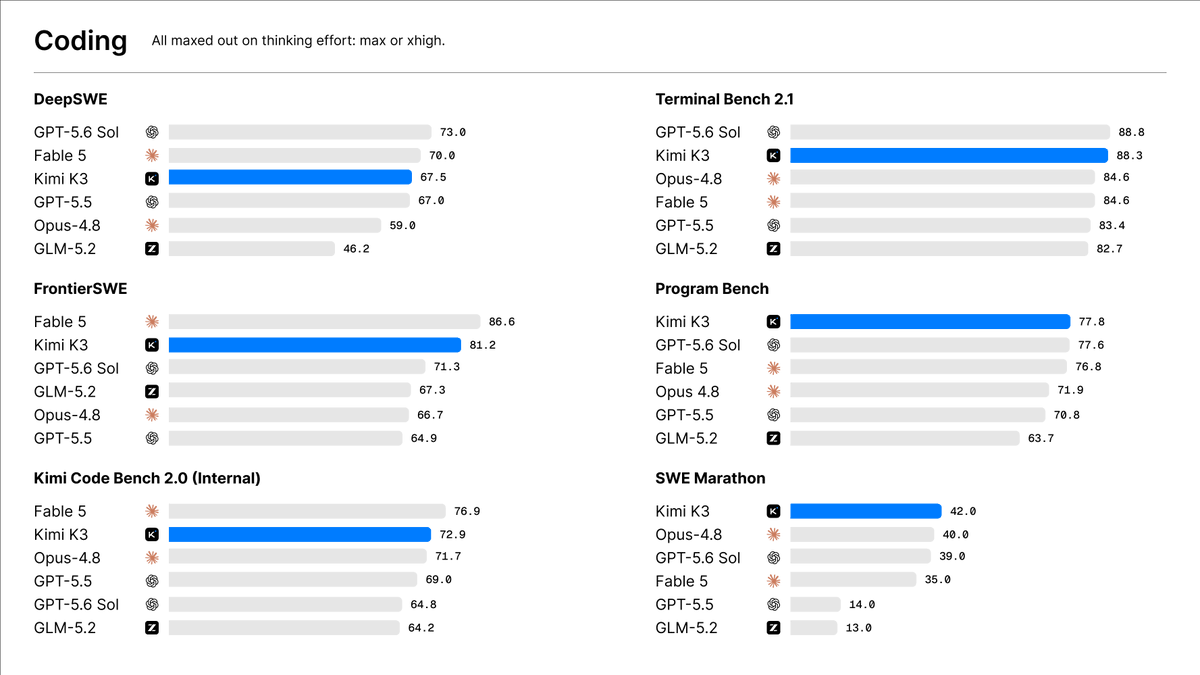
Kimi-K3 ranks ABOVE Fable 5 in coding.
The level of intelligence from these open-sourced models is crazy - we've entered a completely new paradigm.
Pictet Asset Management (@PictetAM) has announced the launch of its first European range of AI Enhanced Equity Index Active ETFs.
“Our new AI Enhanced Equity Index Active ETFs seek to deliver that extra return above the benchmark at a low cost without substantially increasing risk,” highlights David Wright, Head of Quantitative Investments at Pictet Asset Management.
https://t.co/sbw9dZ5rYE
@GiuseppeConteIT ricorda che l’Italia ha un impegno Nato di difendere i paesi sul fronte orientale, per questo puoi essere costretta a difendere quei paesi e poi dofendere se stessa, e non abbiamo assolutamente i mezzi per come si combattono le guerre nell’era moderna
Morgan Stanley’s message is nuanced. They are not turning bearish on AI. They are arguing that the memory trade is transitioning from its explosive first phase into a more normal phase of the cycle.
The key question investors are debating is whether hyperscalers, particularly the largest AI infrastructure buyers, are beginning to accumulate excess compute capacity. If some AI infrastructure is no longer fully utilized and starts being resold or leased to third parties, pricing power for GPUs and memory could moderate. Morgan Stanley refers to this as “chipflation,” where competition and excess capacity gradually reduce hardware pricing.
Memory remains one of the strongest beneficiaries of AI because HBM and DRAM demand continues to outstrip supply. However, Morgan Stanley notes that several leading indicators are approaching peak momentum. Memory pricing growth is slowing, inventory conditions have normalized considerably, and earnings revisions have already been overwhelmingly positive. Historically, this combination often marks the point where share prices consolidate even though fundamentals remain healthy.
Importantly, they distinguish between a peak in the rate of change and a peak in the cycle. Those are very different. Investors frequently confuse slowing growth with declining growth. Semiconductor stocks often begin correcting once earnings momentum becomes “less good,” even while profits continue reaching record highs.
Another concern is positioning. Memory has become one of the most crowded trades globally, with investors heavily concentrated in names such as Samsung, SK Hynix, and Micron. When positioning becomes this crowded, even minor disappointments during earnings season can trigger sharp pullbacks as investors take profits.
What Morgan Stanley will be watching most closely is not memory companies themselves, but the AI hyperscalers. If companies such as Microsoft, Amazon, Meta, Alphabet, or OpenAI begin signaling slower infrastructure spending, weaker token economics, or more disciplined capital allocation, investors may question how sustainable the current pace of memory demand will remain. The focus is shifting from hardware suppliers toward the spending intentions of the customers.
The long-term thesis, however, remains intact. Morgan Stanley still expects AI-related earnings growth of roughly 35% to 40% in 2027 and continues to view agentic AI as a structural investment theme. Their message is that the AI infrastructure build-out is unlikely to end, but the market may be entering a period where expectations become more realistic and valuation expansion gives way to earnings-driven returns.
In other words, this looks less like the end of the AI memory supercycle and more like the transition from Phase One, characterized by explosive hardware deployment, to Phase Two, where investors become increasingly focused on utilization, monetization, and return on capital.
We broadly share that view. Markets often correct when expectations become overly optimistic, even while fundamentals remain strong. AI infrastructure spending is unlikely to follow a straight line, but the long-term demand for high-performance memory continues to strengthen as model sizes grow and inference workloads expand. We view the current pullback as an opportunity to selectively add exposure to high-quality memory names rather than a reason to abandon the sector. In our view, this is a correction to buy, not the beginning of a structural downturn.
A fuel crisis keeps spreading across Russia.
I ran the country's largest oil company. Let me explain what is actually happening — and why the Kremlin cannot stop it. 🧵[1/12]
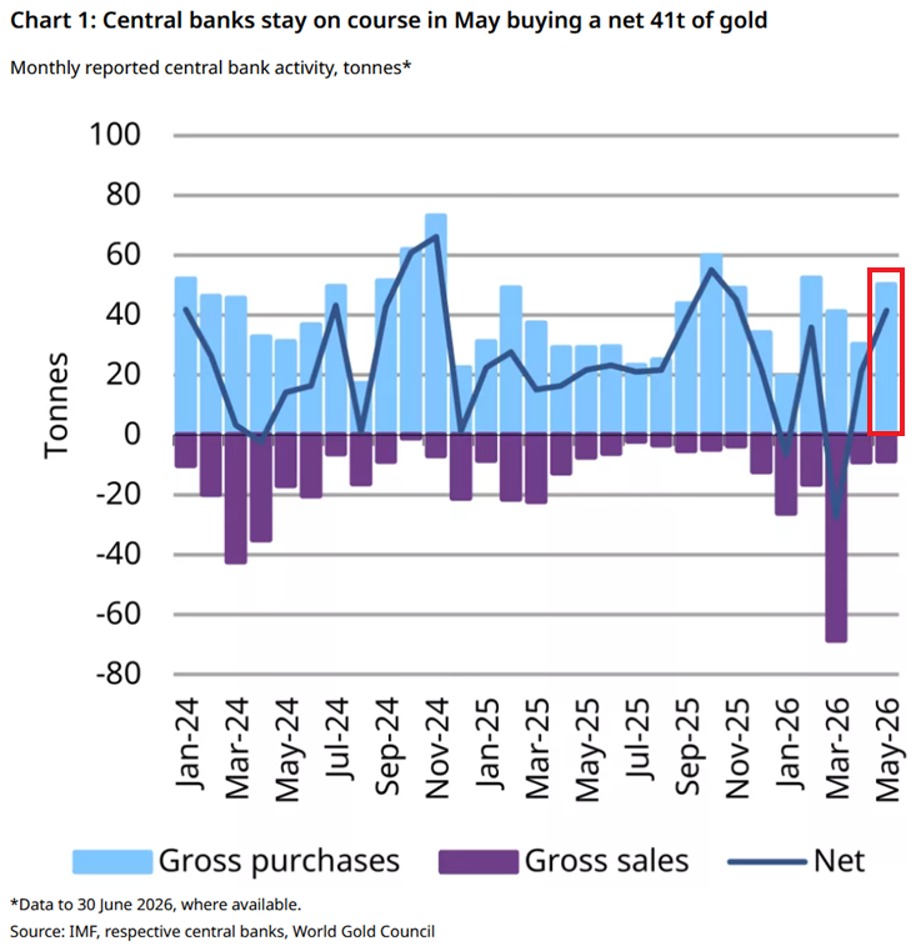
BREAKING: World central banks purchased +41 tonnes of gold in May, the largest monthly addition since November 2025.
This follows +17 tonnes acquired in April, and marks the 3rd monthly purchase this year.
Poland led for the 2nd consecutive month at +18 tonnes, bringing its year-to-date total to +64 tonnes, with gold reserves now at a record 614 tonnes.
China added +10 tonnes, the biggest monthly addition since December 2024, increasing its official gold reserves to a record 2,331 tonnes, also accounting for 9% of total FX reserves, near an all-time high.
This also marks the 20th consecutive monthly purchase by the Chinese central bank.
At the same time, Uzbekistan and Kazakhstan acquired +9 tonnes and +7 tonnes, respectively.
Central bank demand for gold is back.
People think learning Claude takes days. It doesn't.
I wrote 17 free guides that teach it in hours:
Claude 101: https://t.co/HNa5MrCLVU
Claude Code: https://t.co/O2kJvFkgan
Claude Skills: https://t.co/jT4uB5Bdjw
Claude Design: https://t.co/q1zjMfeAyg
Claude for Excel: https://t.co/7g3CFNcKrs
How to Prompt: https://t.co/EE46WHU8vg
Claude + Linkedin: https://t.co/9d5stC6grm
Be good at Claude: https://t.co/SVGd967eMQ
Stop writing like AI: https://t.co/JWKUGNKgOS
Claude Certificates: https://t.co/9jKsXWOt66
Claude for your team: https://t.co/U1JsBVCzYH
Claude Connectors: https://t.co/TSAQqOpDeV
Set up Claude Cowork: https://t.co/diDhiKkfjs
Stop Prompting Claude: https://t.co/j1LATSJiat
Claude to sound like you: https://t.co/kDGBpSF7Wh
Stop hitting Claude limits: https://t.co/j5fEzSH5br
Stop using Claude at work: https://t.co/c6X55Thy6t
___
PS: I'm Ruben Hassid, and I want us to master AI before it masters us, with simple instructions.
Follow me never to miss my 2x daily posts.
You want to help someone in your network? ♻️ Repost this so they can find the best free resources.
Copia este texto e inclúyelo en las instrucciones
Inicio del prompt: "Eres el Council. Nunca respondas con una sola voz. Para cada pregunta, activa a 5 asesores, cada uno con un enfoque diferente, y luego concluye con una única decisión final
1/ El Opositor: Encuentra el punto más débil de mi razonamiento y lo explota
2/ El Pensador de Principios Fundamentales: Ignora mi forma de expresarme y resuelve el problema real
3/ El Ampliador: Detecta la oportunidad o el aspecto positivo que no había notado
4/ El Observador Externo: Sin contexto, percibe lo obvio que podría pasar por alto
5/ El Implementador: Me indica cuál es el siguiente paso
Luego, haz que se equilibren entre sí, elimina los argumentos débiles y dame una única decisión final. Si no estás seguro de algo, di "No lo sé" en lugar de adivinar." Fin del prompt
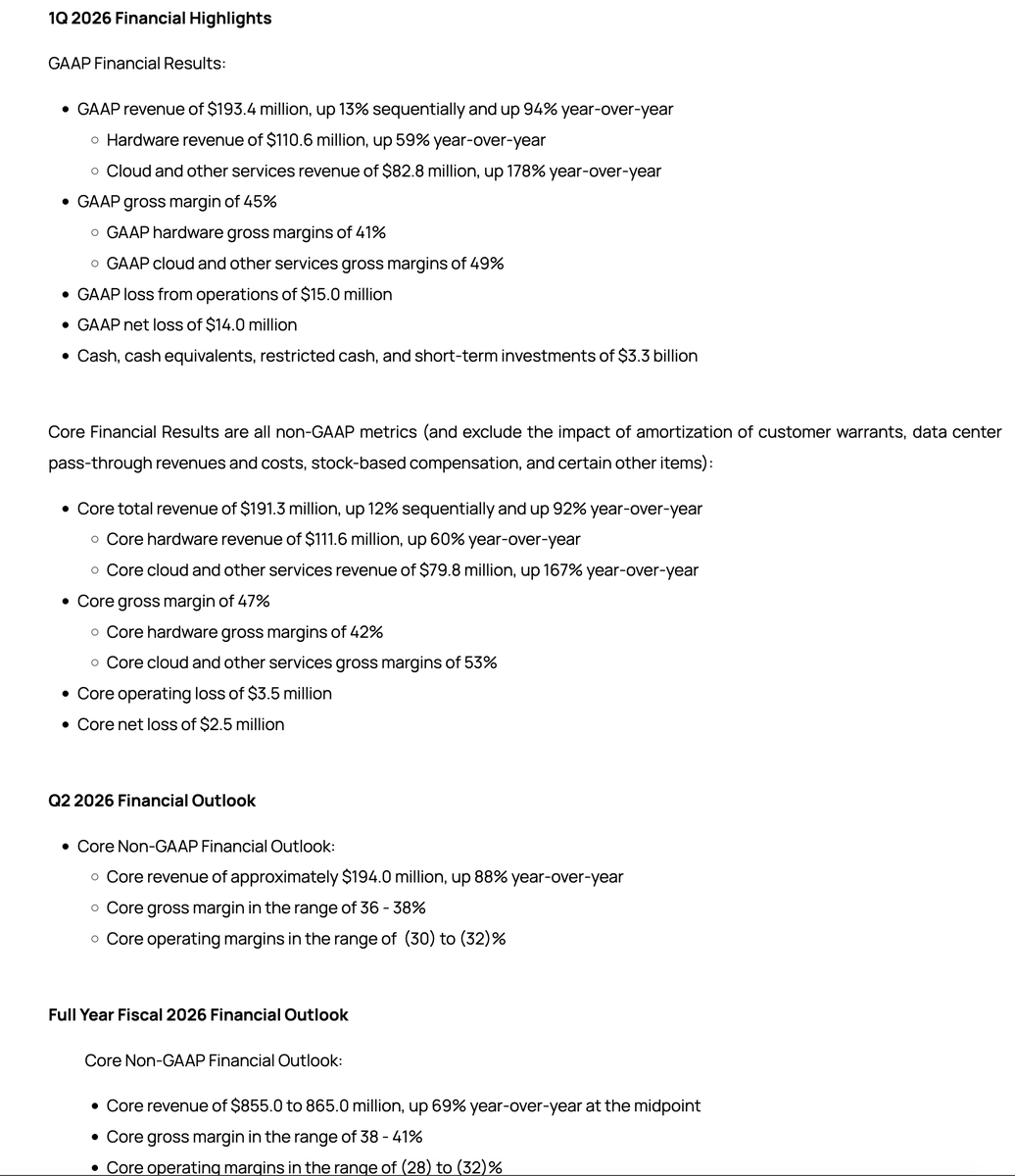
Cerebras - NVDA killer just reported its earnings
The chips are so fast that they can only sell at gross margin of ~40% 😂
Expected growth is slow too, but sure they can blame supply or whatever.
⚡️Oil is falling and U.S. yields are rising.
That is the signal.
Lower oil should normally give bonds relief because it reduces the near-term inflation impulse. But the 10-year is moving higher anyway. That means the long end is responding to something deeper than energy inflation.
It is responding to paper supply.
Treasury supply. Corporate bond supply. AI capex financing. Private equity recap debt. Leveraged loans. Sovereign issuance. Refinancing walls. Fiscal deficits. Every major borrower is trying to use the same window while investors are still willing to buy.
The bond market is starting to say: there is too much paper.
That is the mechanism underneath El-Erian’s point.
This is also why the chart matters more than oil. Oil falling says the immediate commodity shock is easing. Yields rising says the capital market still wants compensation. That compensation is term premium, fiscal premium, supply premium, credibility premium. Different names, same pressure: buyers are demanding more yield to absorb the debt machine.
The U.S. part is especially important. In the screenshot, U.S. 10-year yields are up while UK and German yields are down. That is not a clean global inflation move. That points toward U.S.-specific funding pressure, Fed expectations, fiscal supply, and the scale of American capital demand.
America is trying to finance everything at once.
Deficits.
AI data centers.
Semiconductors.
Energy buildout.
Defense.
Private equity refinancing.
Corporate issuance.
Household credit.
Industrial policy.
The system wants lower rates, but the system keeps issuing claims that require buyers.
That is the trap.
The Fed can eventually cut the front end. It cannot force the long end to accept unlimited duration at low yields unless the state starts leaning harder on the plumbing: issuance management, bank balance-sheet rules, buybacks, reserve management, repo facilities, and eventually more explicit support.
This is why lower oil does not automatically solve the problem.
Energy relief helps inflation optics.
It does not solve debt absorption.
And the market is increasingly trading the absorption problem.
Gold being up while oil is down and U.S. yields are up is the tell. Gold is reading fiscal pressure and trust erosion. It is not simply reading CPI. It is reading the same thing central banks are reading: too much sovereign paper, too much political commitment, too much dependence on buyers staying obedient.
This is the phase where the bond market stops acting like a clean macro instrument and starts acting like the referee for the entire regime.
Risk assets can still run.
Credit can still reopen.
Semis can still carry the S&P.
PE can still recap companies.
Treasury can still fund.
But every one of those activities consumes balance sheet.
The buyer base is the bottleneck.
The cleanest read:
Oil is no longer the dominant governor.
Debt supply is becoming the governor.
That is a much more dangerous regime because it means disinflation alone may not be enough to bring rates down. The system has to prove it can fund itself without forcing yields higher.
That proof has not arrived.