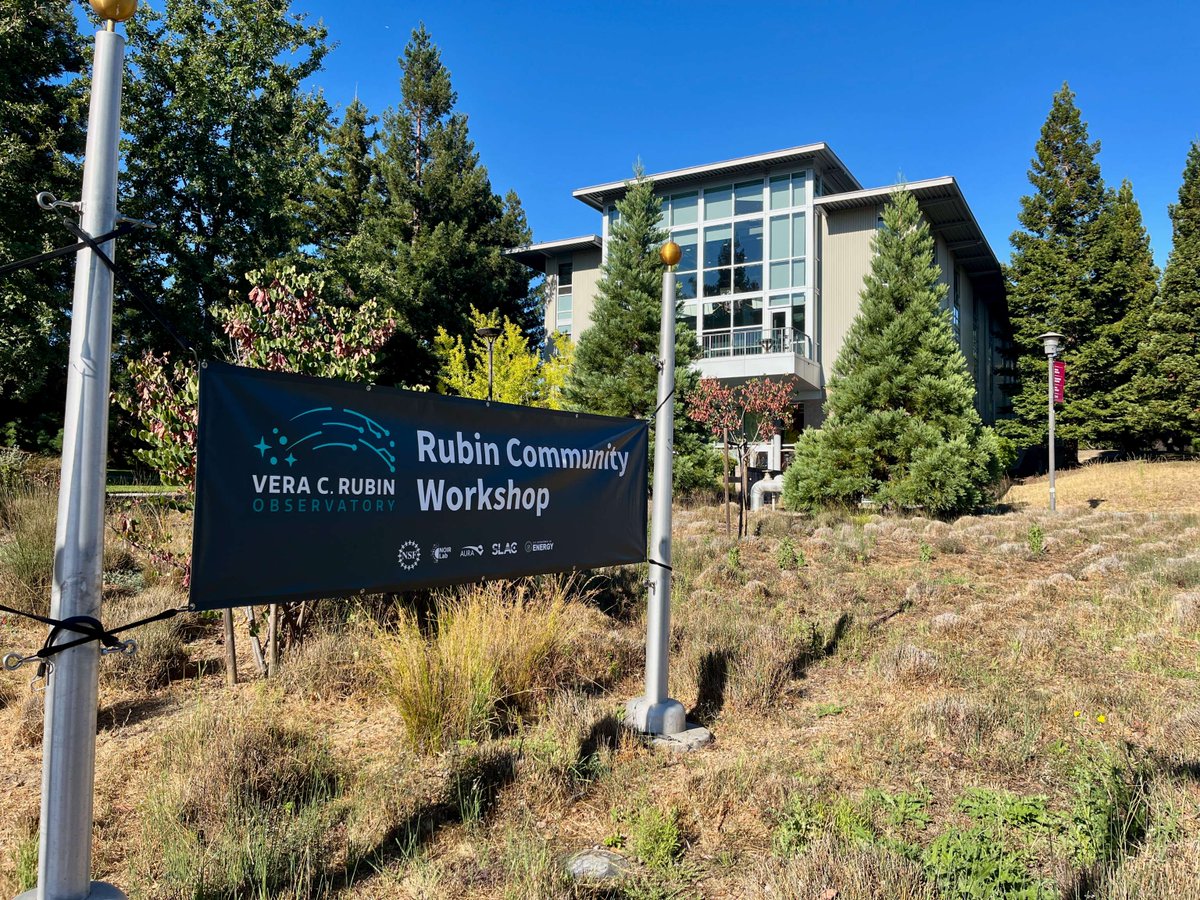
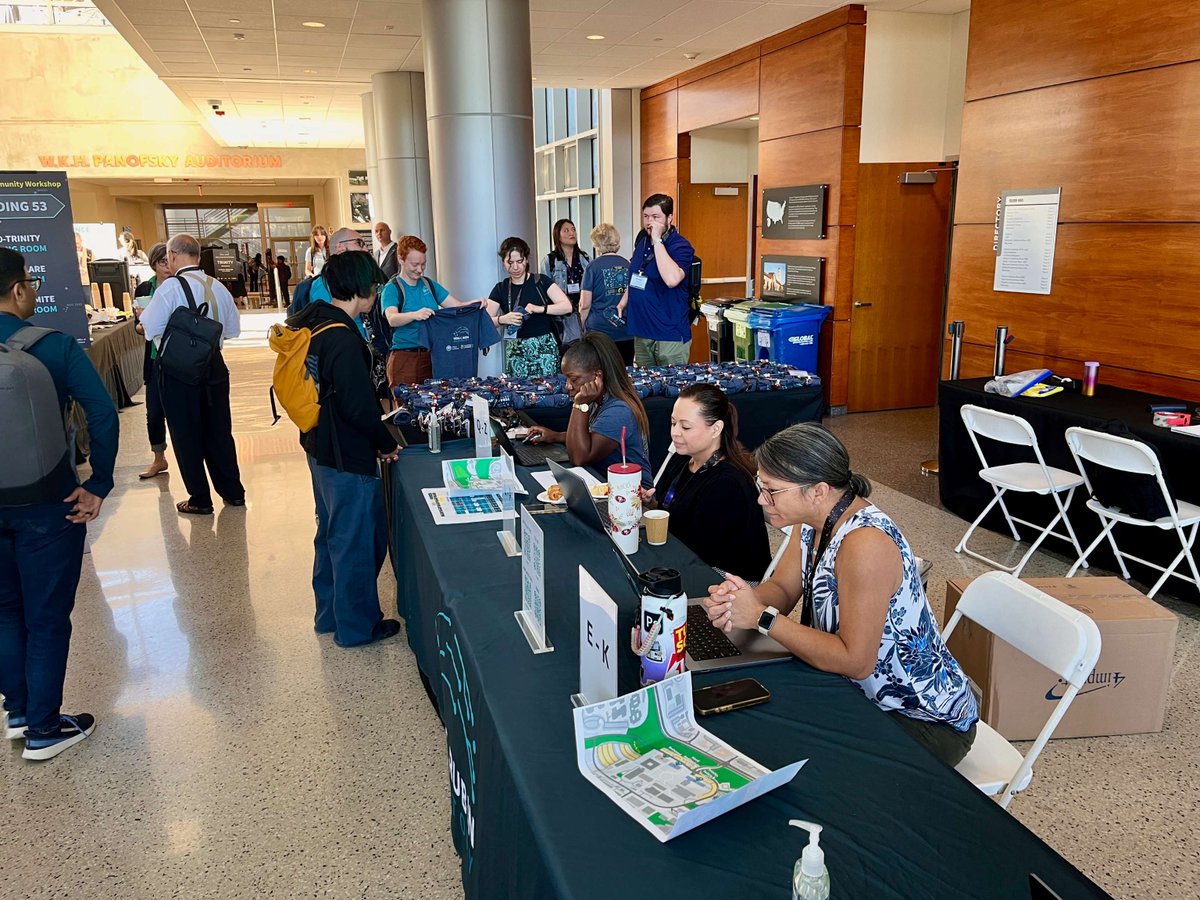
Today, we're kicking off the 2026 Rubin Community Workshop @SLAClab! #RCW2026
Over the next five days, hundreds of scientists and engineers will come together for collaboration and conversation about big-data astrophysics with Rubin.
Here's to a week of sharing ideas! 🔭💻
Last but not least... 🏗️
The final of 23 new cryomodules for our #HighEnergy upgrade to the world’s most powerful X-ray laser. Thanks to partner labs @Fermilab and @JLab_News, these can double the accelerator’s electron energy & deliver sharper, atomic-resolution imaging.
On this day in 1928, Dr. Vera C. Rubin was born 🔭
At 14, she built her first telescope out of a cardboard tube. Her work provided the first convincing evidence of dark matter, & scientists' quest to understand dark matter led to the idea that became NSF–DOE Rubin Observatory 🌌
Proud part of decades of @ENERGY innovation
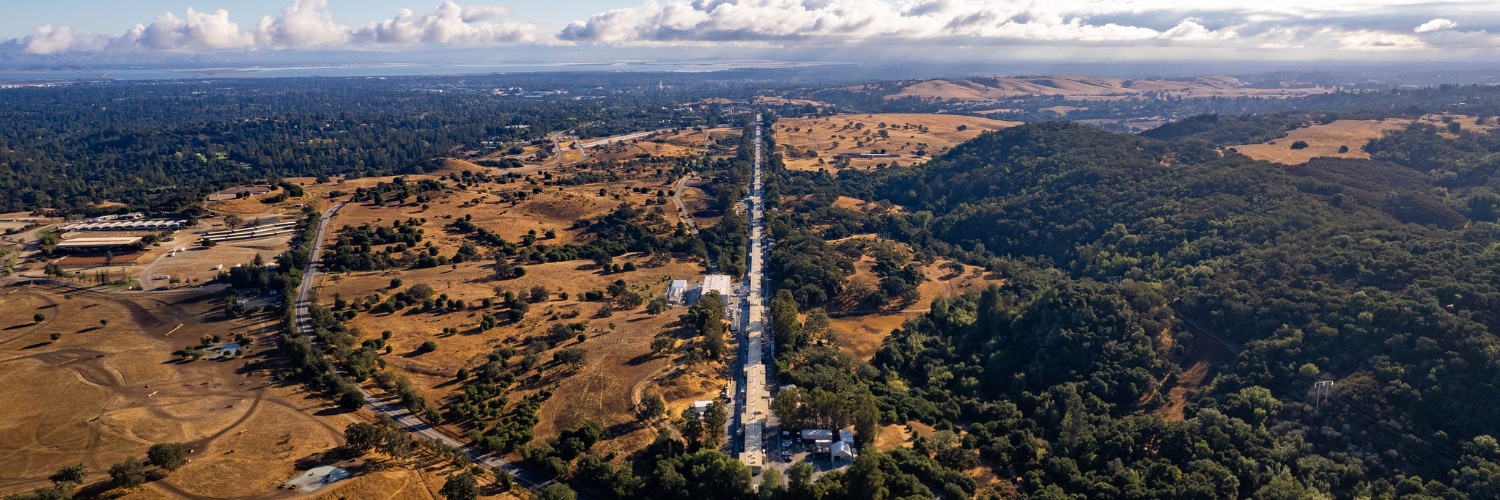
As one of the #DOE National Labs, SLAC is home to the world’s first X-ray Free-Electron Laser which helps us advance technologies of the future, develop life-saving drugs & innovate energy solutions. This is #Freedom250 and beyond.
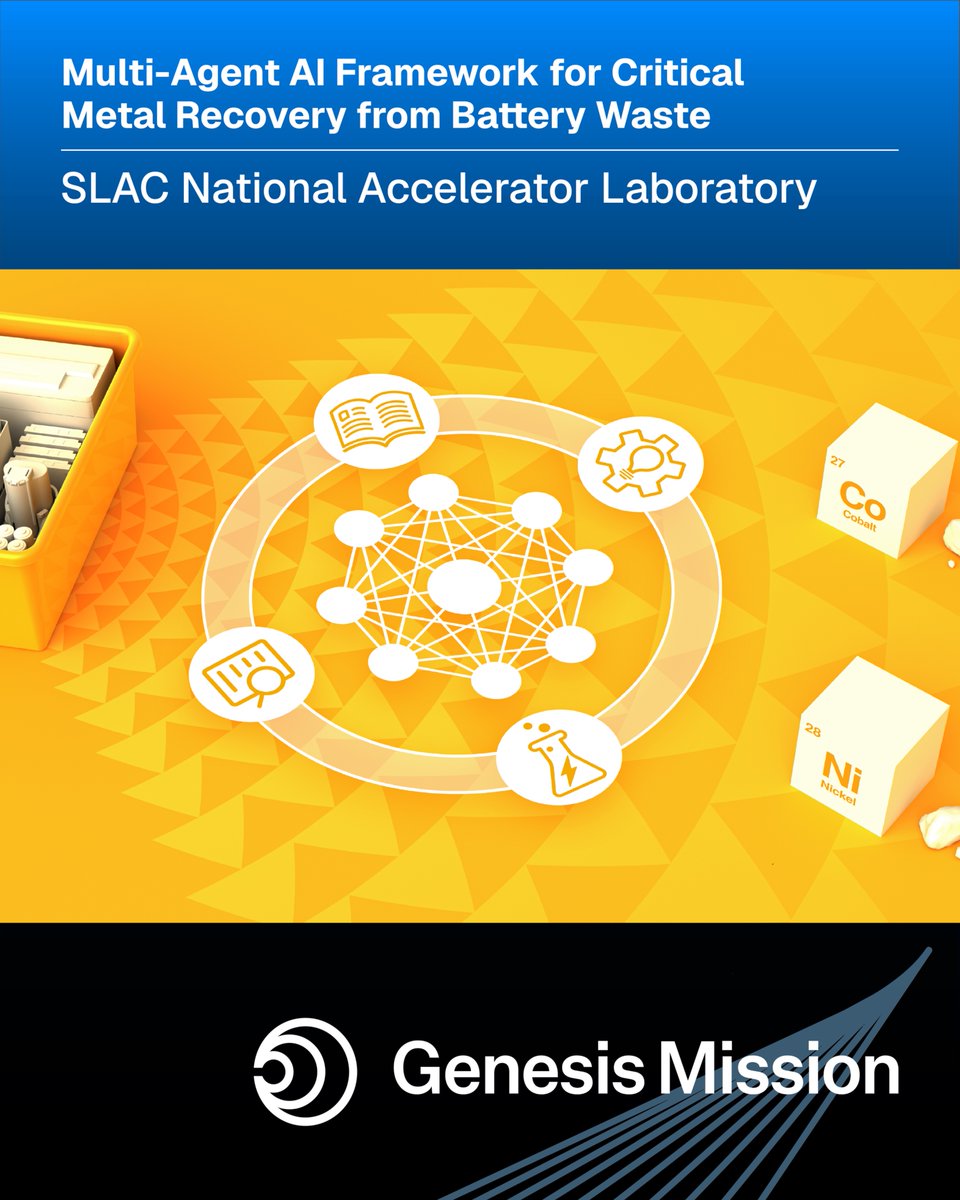
Stanford and the U.S. Department of Energy’s @SLAClab will lead six Genesis Mission projects that will harness AI to accelerate advances in critical areas including battery waste, understanding the evolution of the universe, and plant genetics.
https://t.co/OWoeE2Ri0I
Severe Storms Impacting NSF–DOE Rubin Observatory Operations in Chile
Chile has been impacted by an exceptionally powerful storm with heavy precipitation and widespread flooding affecting the communities where many of our colleagues live.
🧵
Recovering materials from batteries 🪫
SLAC is leading a U.S. Department of @ENERGY Genesis Mission project, in collaboration with @USC researchers, to develop AI tools that improve recovery of critical metals from spent lithium-ion batteries: https://t.co/66gldn42hm
Genesis Mission called, and America's scientific community answered.
Following the largest response to a funding opportunity in @ENERGY history, we've announced the first Genesis Mission teams who will accelerate breakthroughs in energy, discovery science & national security.
The Genesis Mission Summit is tomorrow.
Hear from leaders across government, industry, academia, and the National Labs as new funding awards, partnerships, focus areas, and priorities take shape for the future of AI‑enabled discovery.
Watch live: https://t.co/PeJtDIccSP
These stellar siblings brought the drama! Our Fermi telescope revealed that these two supernova remnants may be debris from a pair of once-orbiting massive stars that both exploded. The first blast kicked one star light-years away before its own blow-up: https://t.co/5YfqmeJXQL
Today is #InternationalMoonDay, commemorating the first lunar landing #OTD in 1969!
@VRubinObs doesn’t directly observe our Moon, but when the Moon is bright, one of its camera filters is swapped so it can keep collecting high-quality data from galaxies, comets & asteroids.
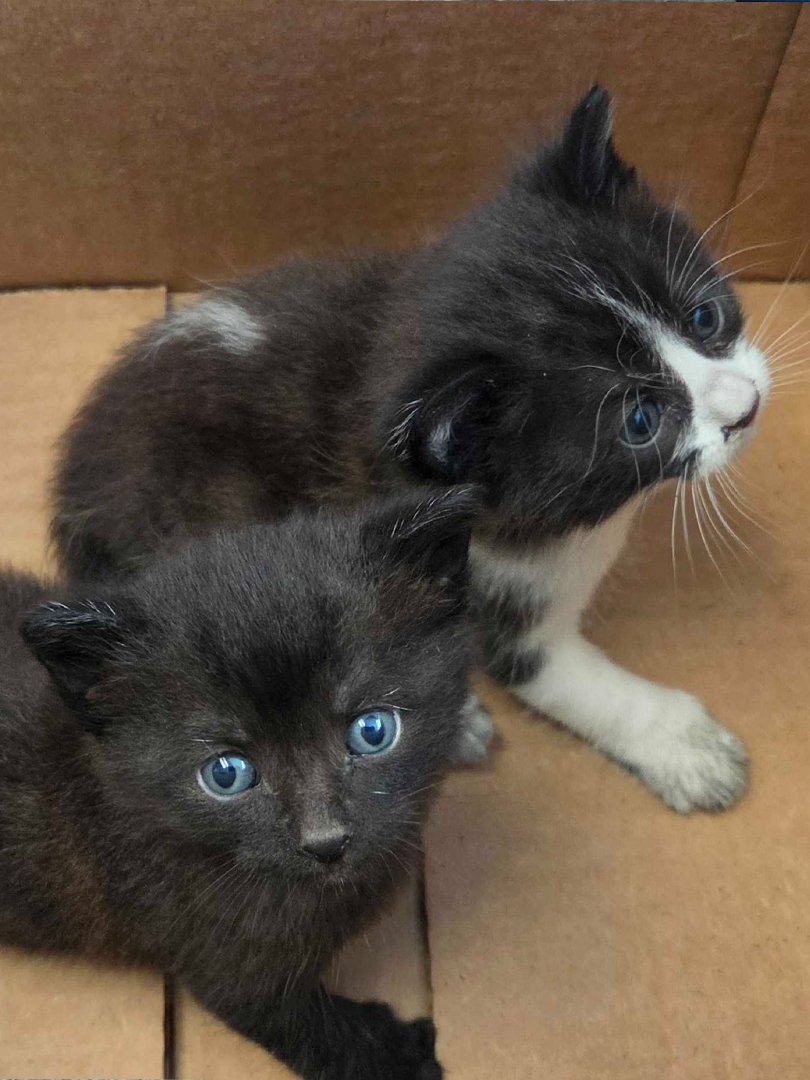
Discovery alert: Kittens!
We find more than just scientific breakthroughs here. A set of kittens were recently rescued from one of the SLAC parking lots and promptly adopted by members of our LCLS X-ray laser staff. Cats and lasers are a good match by any means.
Hidden writing within an ancient text might sound like something out of in a movie, but researchers @SLACLab are using tools to reveal just that.
With powerful X-rays, they recovered erased astronomical texts, including one of the first star maps: https://t.co/cM6nv9KD92
Sky survey progression 🌌
@VRubinObs has begun its 10 year timelapse to #CaptureTheCosmos! This sequence shows how the quality of ground-based sky surveys has improved over time, from the Digitized Sky Survey II in 1994 to Rubin today.
A new chapter in scientific discovery takes center stage July 22 at the Genesis Mission Summit!
We will unveil the first funding awardees, launch major strategic partnerships, and reveal what’s next for the Mission.
Watch Live on July 22: https://t.co/Mam6iBTJwh
Solar System reviews: ⭐️⭐️⭐️⭐️⭐️
☄️Comet 3I/ATLAS: "Nice place. Just passing through."
NSF–DOE Rubin Observatory captured this @NOIRLabAstro#ImageOfTheWeek on 19 Dec 2025. Rubin is expected to reveal more interstellar objects, helping compare our Solar System with others.