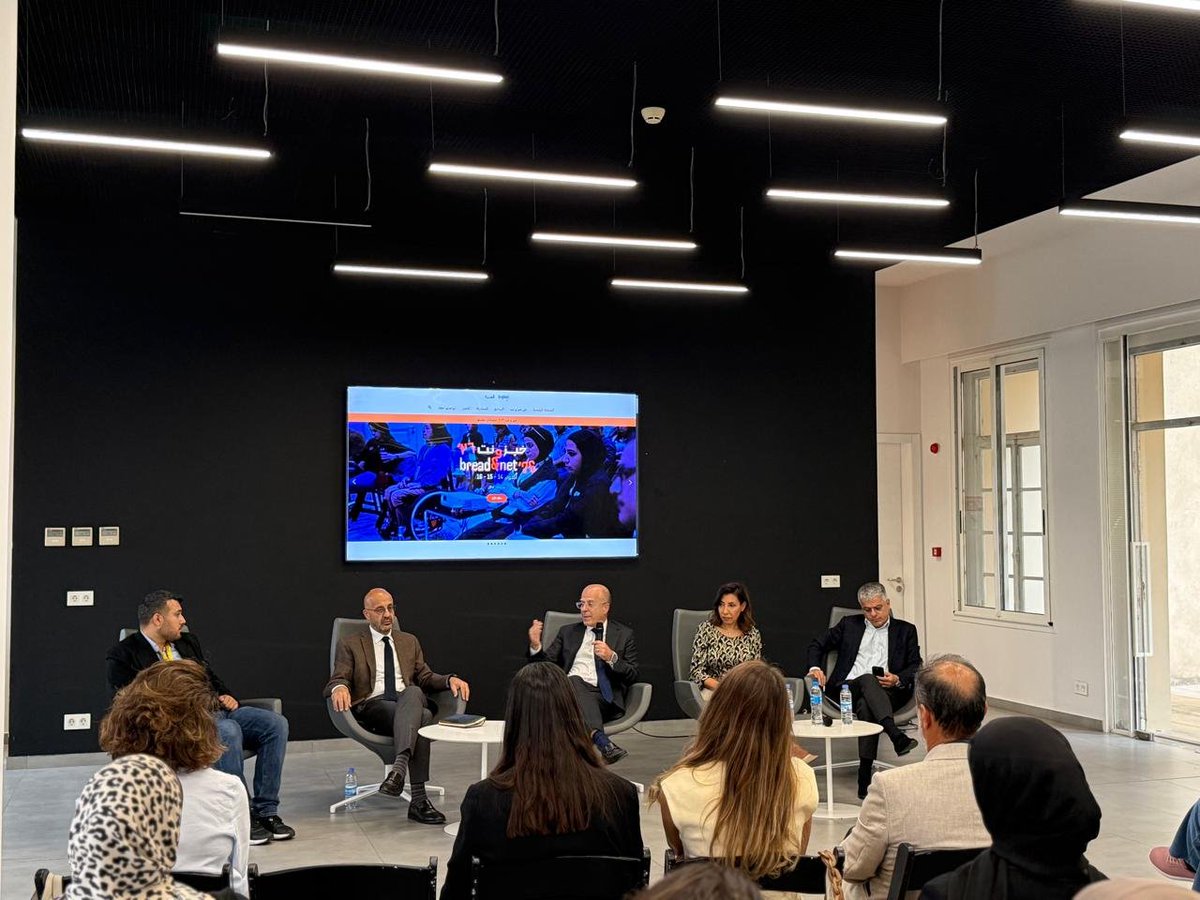
شارك الرئيس التنفيذي لمنظمة "سمكس"، محمد نجم، في جلسة حوارية بعنوان "الذكاء الاصطناعي والتكنولوجيا أدوات لمكافحة الفساد"، ضمن مؤتمر "GIRAF" الذي تنظّمه منظمة "غربال"، حيث تناول التحديات المرتبطة باستخدام الذكاء الاصطناعي، ولا سيما في ما يتعلق بحماية الخصوصية والبيانات الشخصية.
وأشار نجم، خلال مداخلته، إلى أن ملف الذكاء الاصطناعي يثير تساؤلات عديدة بشأن تداعيات استخدامه، مشدداً على أنه لا يمكن التعويل عليه لمعالجة المشكلات البنيوية في الإدارة العامة. وأوضح أن "الذكاء الاصطناعي يأتي كطبقة إضافية فوق البيروقراطية التقليدية، فإذا كانت هذه البيروقراطية غير فعّالة، أو تفتقر إلى الشفافية، أو تتيح المجال أمام الفساد، فإن المطلوب هو إصلاحها، لا إضافة الذكاء الاصطناعي إليها، إذ لا يمكن لهذه التكنولوجيا أن تحلّ مشكلات ذات طبيعة هيكلية".
وأكد نجم أن منظمة "سمكس" لا تعارض الاستفادة من تقنيات الذكاء الاصطناعي، بل تشدّد على ضرورة أن يترافق استخدامها مع إقرار قانون لحماية الخصوصية وتنظيم معالجة البيانات الشخصية وتداولها. ولفت إلى أن تطبيقات الذكاء الاصطناعي تعتمد على جمع كميات كبيرة من البيانات ومعالجتها، ما يستدعي وضع أطر قانونية واضحة تضمن حماية خصوصية المستخدمين وصون حقوقهم.
ووأضح نجم أن البنية التحتية التشريعية والتنفيذية في لبنان لا تزال تحتاج إلى مزيد من العمل لمواكبة هذه التحولات، مؤكداً أهمية معالجة الثغرات القانونية والتنظيمية المرتبطة بالبيانات والخدمات الرقمية.
وفي سياق متصل، أشار إلى المهام المطلوبة لتنظيم التحول الرقمي خارج الاطار التقني، كعنوان موحد و أيضاً اعطاء الافراد ملكية رقم الهاتف وليس علاقة تأجيرية مع الخط، لانه ارتباط رقم الهاتف في لبنان بالعديد من الخدمات الأساسية، من بينها السوشال ميديا والحسابات المصرفية وفي المستقبل العناوين والانتخابات وغيرها من الخدمات الشخصية، محذّراً من التداعيات التي قد تترتب على عدم قدرة المواطنين على ملكية خطوطهم الهاتفية، إذ قد يؤدي انقطاع الخدمة إلى فقدان الوصول إلى حساباتهم وخدماتهم المرتبطة بأرقام هواتفهم.
15 minute walk. 3 tables. 30 seats. Endless conversation.
On 28 October at 14:00, SMEX is opening a space for the digital rights community, especially those who represent the Arab-speaking region. It’s interactive, it’s small, and it’s a short walk from MozFest.
Join us and meet the people behind SMEX at SCE la Lira de Sant Andreu, 15 minutes’ walk from the MozFest venue, on 28 October, at 14:00
Most of the technologies we use in the WANA region are developed elsewhere. They overlook the complexities of the Arabic language, ignore our geo-political conditions, and often put us at risk of surveillance and censorship.
So what would it mean to build technologies by and for our communities?
At MozFest, SMEX is hosting “Tech Sovereignty in the WANA Region: Reimagining Our Realities.” Using examples from the wider WANA region, we’ll talk about Arabic AI models, open-source tools for digital rights work, and tech that strengthens emergency response and public services in times of crisis and political instability.
We’ll also share Bread&Net experiments, including a hackathon to develop secure, privacy-preserving, open-source tools for ministries, municipalities, and community responders in Lebanon during emergencies and post-war recovery. What is tech sovereignty? Where does your country stand? What stands in the way?
12:30 PM - 1:30 PM - B3 Room
غداً هو فرصتكم/ن الأخيرة لزيارة المعرض الفني في "خبز ونت 2026"، تفضلوا بزيارتنا وابقوا معنا لقضاء يوم حافل بالجلسات الملهمة والحوارات الثرية.
Tomorrow is your last chance to get to experience the art at Bread&Net, so drop by and stick around for a day full of inspiring sessions.
من «خبز ونت 2026» الذي تنظّمه «سمكس»، شدّد الوزير د. فادي مكي على أنّ احتياجات المواطن تحدّد أولويات التحوّل الرقمي، وأنّ تكامل الوزارات ضرورة لتفادي ازدواجية المشاريع وهدر الموارد. فالنجاح يُقاس بخدمات أفضل يلمس المواطن أثرها في حياته اليومية.
#MENA 🌍 @SMEX's new report, "Fear as a Form of Governance," finds that Egypt, Iraq, and Tunisia use vague laws on national security and public order to make almost any online activity punishable and calls for them to be repealed. https://t.co/ZrDUwgZJJx
#BreadandNet2026 🧵
Tomorrow ⏰
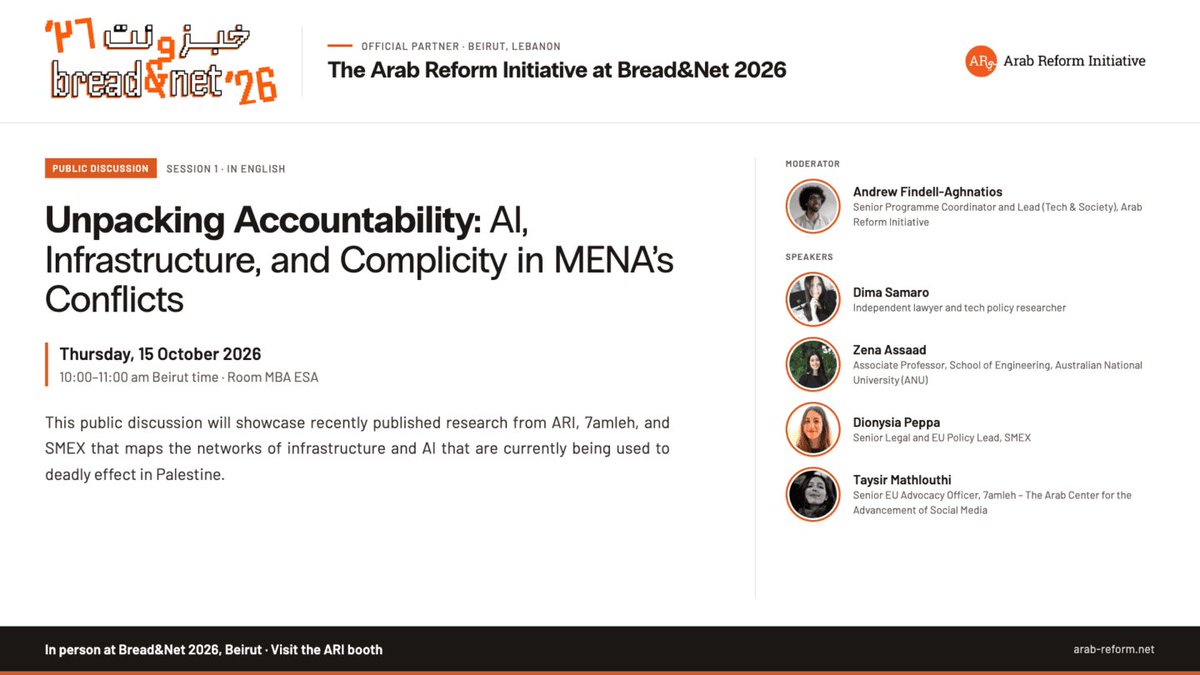
This public discussion will showcase recently published research from ARI, 7amleh, and SMEX that maps the networks of infrastructure and Al that are currently being used to deadly effect in Palestine.
If you are unable to be with us in the room, you can register to be part of the discussion on Zoom by clicking this link:
https://t.co/IOwx2U4xlF
The moderated discussion and Q&A will be held in English.
Speakers:
•Dima Samaro Independent lawyer and tech policy researcher
•Zena Assaad Associate Professor in the School of Engineering, Australian National University (ANU)
•Dionysia Peppa, Senior Legal and EU Policy Lead, SMEX
•Taysir Mathlouthi, Senior EU
Advocacy Officer, 7amleh
Moderator: Andrew Findell- Aghnatios Senior Programme Coordinator and Lead (Tech & Society)
Thrilled to be back in Beirut for @breadandnet, hosted by the good folks at @SMEX.
Truly one of the best convenings in the region and it's an absolute honor to have @TimepDC as a partner of the convening and organizing three sessions this year.
انضموا إلينا ابتداءً من الغد وحتى 16 تشرين الأول/أكتوبر في نسخة هذا العام تحت عنوان "فضاءات نتخيلها"، ولنستكشف معاً آفاقاً جديدة لما يمكن أن يكون عليه العالم الرقمي.
Walaa Al-Satri, a researcher at Sada Social Center for Digital Rights, joins Bread & Net 2026 in Beirut for a session on Palestine as a cyber testing ground for surveillance technologies and AI.
📍 Beirut, Lebanon | October 14, 2026
أصدقاءنا وزميلاتنا في بيروت! 👋
نلتقيكم الأسبوع المقبل في #خبز_ونت@breadandnet!
انضمّوا إلى جلستنا مع مصطفى @MostFouad من هيومينا وأسماء درجة، مؤسِّسة تحالف الذكاء الاصطناعي الأخلاقي، حيث نفتح «مرصد الفضاء المدني» للتدقيق، ونناقش الشفافية والمساءلة في استخدام الذكاء الاصطناعي بالعمل الحقوقي.
بانتظاركم! 🤝
#BreadandNet2026 @SMEX
What started as a simple question grew into a yearly meeting of minds that pushes envelopes, widens horizons, and changes the landscape of digital rights. Bread&Net is a place for seeds to be planted into conversations, and for those conversations to grow into collaborations that carry on long after the last session ends.
Join us at Bread&Net 2026, register now at https://t.co/wL3gPMDtcO
We spent the past year talking to journalists, lawyers, and digital rights activists in Egypt, Iraq, and Tunisia about what it's actually like to do this work right now. Across all three countries, our research revealed that laws are designed to be vague, so people end up censoring themselves before the government ever has to step in.
It's not just legal pressure, either. Online harassment and doxxing regularly spill into real-world consequences, from office raids to physical attacks. AI-generated disinformation is spreading faster than anyone can debunk it, in a region with no real rules for dealing with it. And the funding that used to support this work is drying up, thanks to 2025 US foreign aid cuts, leaving organizations stretched even thinner while the risks keep growing.
Swipe through to hear it in the words of the people who are actually living it, read more about their experiences through the link: https://t.co/62TcTl5WTM
لمحة عن جلسات "خبز ونت" لهذا العام:
١. قانون الإعلام الجديد في لبنان: هل يواكب التحولات الرقمية والذكاء الاصطناعي؟ 14 أكتوبر
٢. الحقوق الرقمية والعدالة الانتقالية في سوريا: 14 أكتوبر
Global Voices just published a piece by Jillian C. York on how the digital rights movement took shape in the region, and SMEX is part of that story.
Our executive director Mohamad Najem, who co-founded SMEX in 2008 and has led it to become the largest organization in the region, told her that, at the time, “Nobody gave [social media] a lot of attention in our region.” Our work was “a positive approach to social media, how we can democratize sharing information, how we can share more from civil society, change people’s minds, et cetera.”
Full piece here: https://t.co/Cxqj2eMAN2
📢 Catch TIMEP at @breadandnet next week in Beirut! We're proud to be a partner of the region’s leading digital rights convening hosted by @SMEX.
Register to join us here: https://t.co/Dyvwvrh8Z0
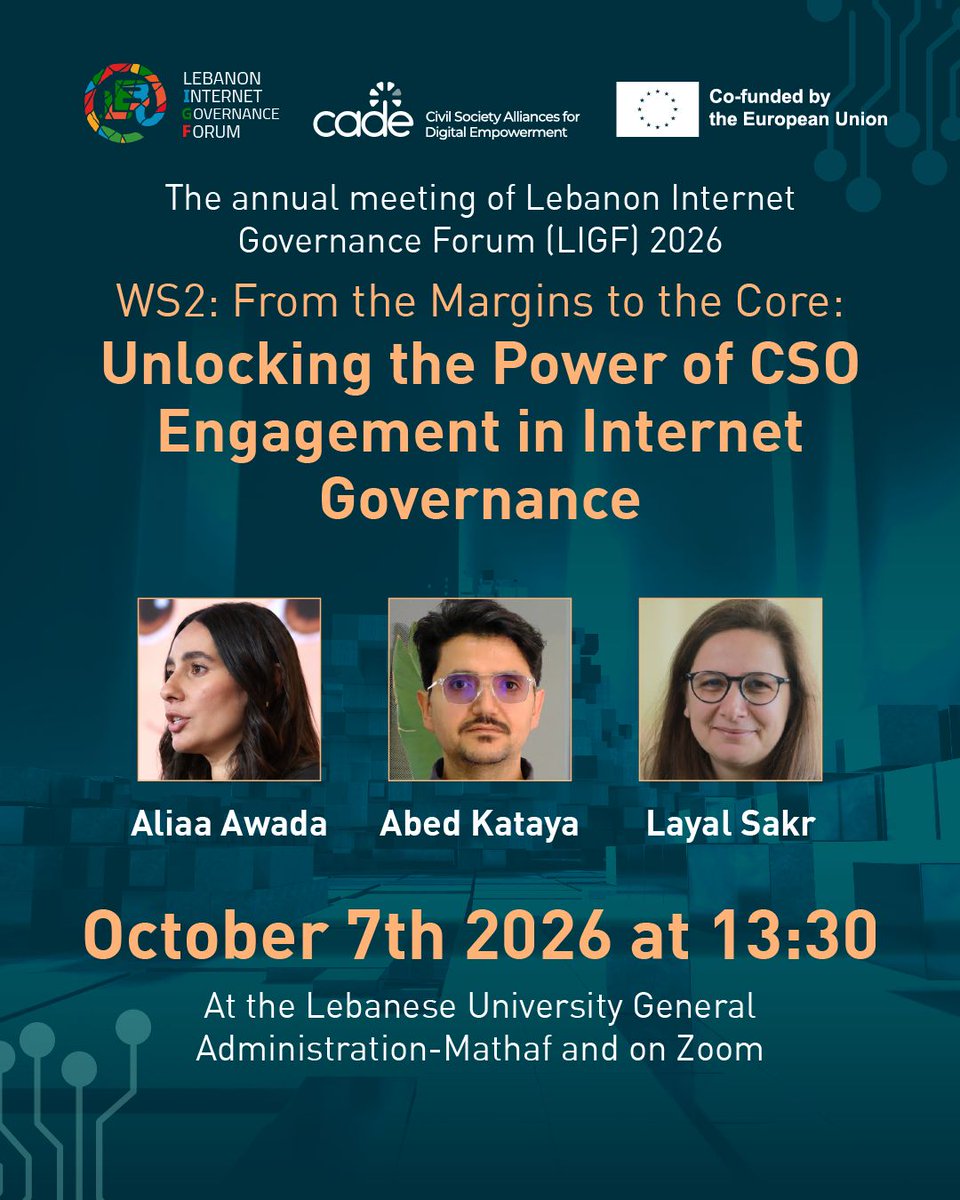
حوكمة الإنترنت مسألة حيوية للمجتمع المدني في قضايا حقوق النوع الاجتماعي، والمناصرة البيئية، وتمكين الشباب، وقطاع الإعلام.
انضموا إلى عبد قطايا من "سمكس" والمتحدثتين علياء عواضة من "نقطة" وليال صقر من "سيدز"، لاستكشاف بعض الطرق التي يمكن فيها لمنظمات المجتمع المدني أن تؤدي دوراً فاعلاً في صياغة سياسات الإنترنت وقضايا الحقوق الرقمية.
عنوان الجلسة: من الهامش إلى قلب الحدث: تفعيل دور منظمات المجتمع المدني في حوكمة الإنترنت
(هذه الجلسة تنظّم ضمن مشروع CADE المدعوم من الاتحاد الأووبي)
شاركونا النقاش في "منتدى حوكمة الإنترنت" اللبناني في يومه الثاني
المكان: المقر الرئيسي للجامعة اللبنانية، منطقة المتحف، بيروت.
الزمان: الأربعاء، 7 تشرين الأول، 2026 الساعة 1:30 ظهراً
سجلوا عبر موقع المنتدى: https://t.co/6DIqWHz7UU