so apparently this robot can now destroy a tumor inside your body using nothing but sound
no cuts, no needles and no radiation, and most patients even go home the same day!
it's called histotripsy, and the company behind the machine (HistoSonics) is backed by Jeff Bezos and valued at $3.75 billion
more than 2,000 people at 50+ US hospitals have already been treated with it
> you lie under a robot arm holding an ultrasound head over your belly
> the doctor marks the tumor on a live ultrasound image
> the robot fires short, intense pulses of sound focused on that one spot
> each pulse makes a cloud of tiny bubbles appear inside the tumor and burst in millionths of a second
> the bursting rips the tumor cells apart until they turn to liquid
> then your immune system clears the mess away over the next few weeks
in the main trial, 90% of the treated liver tumors were still under control a year later
and they're already testing it on kidney tumors and prostates
we're popping cancer with sound now lol
We'll be spending a lot more time trying to understand the outputs of language models. A few thoughts, tips & tricks:
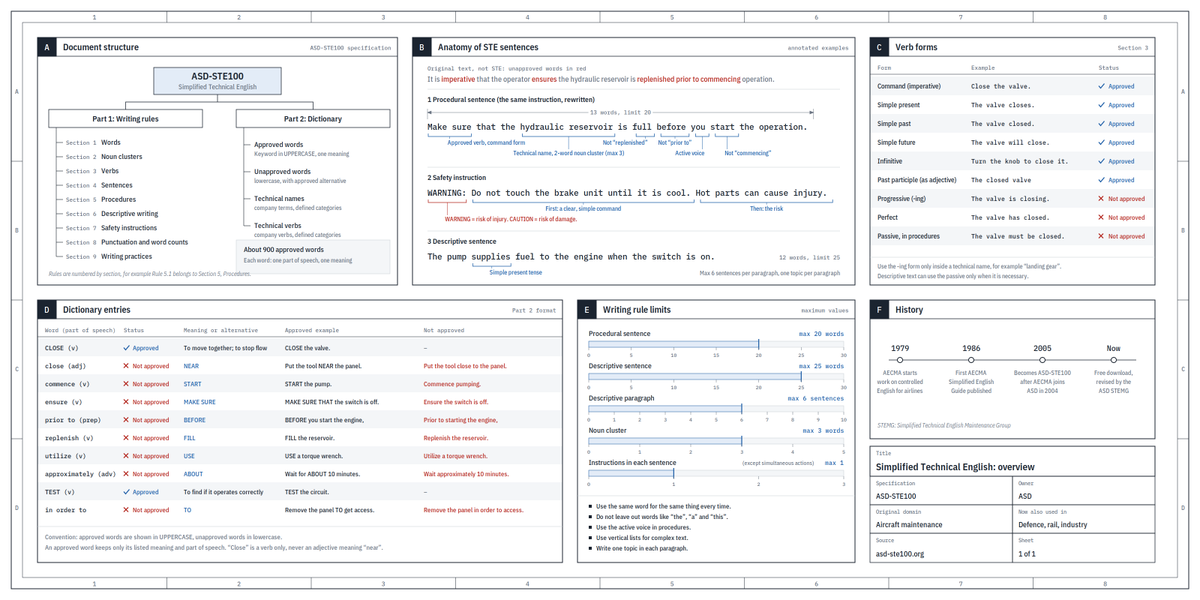
Writing. Something I've had success with: Ask your LLM to explain something in ASD-STE100, it's a controlled language specification originally developed for aerospace maintenance documentation. LLMs well-versed in this language and it comes with heavy constraints on clean writing style that I often find a lot more readable. Sometimes I've tried to soften it a bit e.g. ask for "80% of the way to ASD-STE100" because the spec is quite stringent. But even better:
Diagrams / images. Instead of writing, ask your LLM to create a diagram. These can be a lot easier to process, parse, and understand. But even better:
Web pages. Ask for output "in HTML" to get a beautiful, interactive webpage. LLMs are getting really good at frontend and can create beautiful experiences, animations, etc. But even better:
Explainer videos. The output format I am most bullish on is fully custom / bespoke explainer videos generated on any arbitrary topic. Experiment with things like "Create a 3b1b style video explainer on X. Use my ElevenLabs API key for audio narration". (you'd need an API key for the latter or you can ask your LLM to find you decent free alternatives that use your local compute). This is actually starting to work!
In summary:
- As LLMs get better, they will do more and more of the legwork autonomously, and a lot more of our work will rise up the abstractions into oversight and understanding.
- Luckily, LLMs can help here too because as intelligence and code are increasingly abundant, you can ask for large, custom, discardable software artifacts (e.g. web apps, video explainers) that would have never made sense to create before. Push the boundaries here and you'll be surprised.
ప్రజల వినతి → తక్షణ స్పందన → వెంటనే పరిష్కారం!
పిఠాపురం పర్యటనలో గౌరవ ఉపముఖ్యమంత్రి శ్రీ @PawanKalyan గారికి ప్రజలు అందించిన వివిధ వినతులపై తక్షణమే స్పందించిన ప్రభుత్వం.
కేవలం 12 గంటల్లోనే ₹12 కోట్ల నిధులు మంజూరు.
#PawanKalyanMarkGovernance
రాష్ట్ర ఉప ముఖ్యమంత్రివర్యులు శ్రీ @PawanKalyan గారు కొద్దిసేపటి క్రితం రాజమండ్రి విమానాశ్రయానికి చేరుకున్నారు. రాష్ట్ర పర్యాటక శాఖ మంత్రి శ్రీ కందుల దుర్గేష్ గారు, రాజానగరం శాసన సభ్యులు శ్రీ బత్తుల బలరామకృష్ణ గారు, పార్టీ రాజమండ్రి నగర అధ్యక్షులు శ్రీ వై. శ్రీనివాస్, రుడా చైర్మన్ శ్రీ బొడ్డు వెంకటరమణ చౌదరి, తదితరులు ఘన స్వాగతం పలికారు. అక్కడి నుంచి నేరుగా పిఠాపురం నియోజకవర్గంలోని ఫకృద్ధీన్పాలెంకు బయలుదేరి వెళ్లారు. అక్కడ సుందరీకరణ పనులు పూర్తయిన మైసమ్మ చెరువును ప్రారంభించి ప్రజలకు అందుబాటులోకి తీసుకురానున్నారు.
పిఠాపురం నియోజకవర్గంలో రెండు రోజులపాటు పర్యటించనున్న శ్రీ పవన్ కళ్యాణ్ గారు పలు అభివృద్ధి కార్యక్రమాలకు ప్రారంభోత్సవాలు, శంకుస్థాపనలు చేయనున్నారు.
A life dedicated to Bharat. A journey of service that continues to shape the aspirations of a Nation. 25 years of selfless service, with many more years of dedicated service to Bharat ahead.
On the birthday of Hon’ble Prime Minister Shri @narendramodi Ji, I extend my heartfelt wishes and deepest respect for his decades of public service and his unwavering commitment to strengthening Bharat and empowering its people.
From a small house in Vadnagar to the highest elected office of the Nation, your journey reflects determination, discipline and a lifelong commitment to public service. Over the years, your leadership has placed development, self-reliance, national security and the aspirations of our people at the heart of India's journey.
Under your leadership, Bharat has witnessed a transformation across infrastructure and connectivity. From the expansion of National Highways and expressways to the rapid modernisation of Indian Railways, electrification of nearly the entire broad-gauge network, modern railway stations and the nationwide expansion of Vande Bharat, India's mobility landscape is entering a new era.
From Digital India and UPI to Make in India, Startup India and Atmanirbhar Bharat, India has advanced across infrastructure, space, technology, manufacturing and renewable energy, strengthening our confidence in our own capabilities. Our defence preparedness has also grown stronger, from the surgical strikes and Balakot air strike to Operation Sindoor, reflecting Bharat’s firm resolve to protect its sovereignty and national interests while advancing indigenous defence capabilities and technology.
India's economic journey has moved significantly forward as well. From being among the world's largest economies, Bharat has risen to the 4th-largest economy in nominal GDP in the World Bank's latest 2024 data, while continuing its journey towards the goal of becoming one of the world's leading economies.
For Andhra Pradesh, your support has been of immense significance. From the renewed development of Amaravati and continued support for Polavaram, to the Visakhapatnam development corridor, Bhogapuram International Airport, railway and road connectivity, industrial investments, energy projects and strengthening of the State’s infrastructure ecosystem, your continued support has opened new avenues for Andhra Pradesh’s growth and development. The support extended by you to Andhra Pradesh is truly invaluable and beyond measure.
As we move towards #ViksitBharat 2047, the continued cooperation between the Union Government and Andhra Pradesh can open new avenues of opportunity for our people, youth, farmers, entrepreneurs and industries.
This year’s #SevaSankalpAbhiyan, being observed from September 17 to October 17, provides an opportunity for every citizen to turn the spirit of Seva into meaningful action through blood donation, tree plantation, cleanliness drives, health camps and support for those in need. Let us come together and contribute to society in every way we can, while offering an “Ashirwad Ka Diya” as a heartfelt expression of our respect, gratitude and good wishes, and inspire others to join this collective spirit of service to Bharat.
Hon’ble Prime Minister, your life is a reminder that public service demands sacrifice, perseverance and an unwavering commitment to the Nation.
On this special day, I wish you good health, long life and continued strength to serve Bharat and lead its journey towards greater prosperity, security and global stature.
May the spirit of Seva continue to inspire every Indian to contribute towards a stronger Bharat.
@PMOIndia@PIB_India@IPR_AP@pibvijayawada
#HappyBirthdayModiJi #NarendraModi #NaMo #HappyBdayPMModi
ఆపరేషన్ అరణ్యలో ప్రాణాలకు తెగించి ఎర్రచందనం స్మగ్లర్లను పట్టుకున్న సిబ్బందికి ఉప ముఖ్యమంత్రివర్యులు శ్రీ పవన్ కళ్యాణ్ గారి అభినందనలు
•అటవీ సిబ్బందిపై దాడి చేసిన వారిపై కఠిన చర్యలు
•పరారీలో ఉన్న ముగ్గురు నిందితుల కోసం విస్తృతంగా గాలింపు
•ఎర్రచందనం అక్రమ రవాణాను ఏమాత్రం ఉపేక్షించం
•విధి నిర్వహణలో గాయపడిన సిబ్బందికి అండగా ఉంటామన్న శ్రీ @PawanKalyan గారు
ఎర్రచందనం అక్రమ రవాణాను అడ్డుకునే క్రమంలో అటవీ సిబ్బంది గాయపడడం పట్ల రాష్ట్ర ఉప ముఖ్యమంత్రివర్యులు, అటవీ, పర్యావరణ శాఖల మంత్రి శ్రీ పవన్ కళ్యాణ్ గారు ఆవేదన వ్యక్తం చేశారు. అన్నమయ్య జిల్లా రొంపిచెర్ల మండలం బొమ్మాయిగారిపల్లి గ్రామ సమీపంలో ఎర్రచందనం అక్రమ రవాణాను అడ్డుకునేందుకు చేపట్టిన ఆపరేషన్ అరణ్యలో భాగంగా విధులు నిర్వహిస్తున్న అటవీ సిబ్బంది వాహనాన్ని దుండగులు ఢీకొట్టిన ఘటనను తీవ్రంగా పరిగణించారు. ఎర్రచందనం అక్రమ రవాణాదారులు తమ వాహనంతో వేగంగా ఢీకొట్టిన ఘటనకు సంబంధించిన వివరాలను అటవీ శాఖ ఉన్నతాధికారులను అడిగి తెలుసుకున్నారు.
ఈ ఘటనలో ఫారెస్ట్ సెక్షన్ ఆఫీసర్ శ్రీ కె. ప్రకాష్ కుమార్, ఫారెస్ట్ బీట్ ఆఫీసర్లు శ్రీ పి. రెడ్డి ప్రసాద్, శ్రీ కె. ప్రతాప్, అటవీ సిబ్బంది వాహనం డ్రైవర్ శ్రీ చరణ్ గాయపడినట్లు తెలుసుకున్నారు. ప్రస్తుతం గాయపడిన సిబ్బంది ప్రమాదం నుంచి బయటపడి చికిత్స పొందుతున్నారని అధికారులు ఆయనకు వివరించారు. గాయపడిన సిబ్బందికి మెరుగైన వైద్య సేవలు అందించాలని, చికిత్సకు అయ్యే మొత్తాన్ని ప్రభుత్వమే భరిస్తుందని భరోసా ఇచ్చారు. అందుకు అవసరమైన చర్యలు చేపట్టాలని, సిబ్బంది పూర్తి స్థాయిలో కోలుకునే వరకు అటవీ ముఖ్య సంరక్షణాధికారి(PCCF) పర్యవేక్షణ చేపట్టాలని ఆదేశించారు.
ఎర్ర చందనం స్మగ్లర్లను పట్టుకునే ఆపరేషన్ అరణ్యలో ప్రాణాలకు తెగించి ఇద్దరు నిందితులను అదుపులోకి తీసుకోవడంతోపాటు ఎర్రచందనం దుంగలు, తూకం యంత్రం, రంపం బ్లేడ్, గొడ్డళ్లు, అక్రమ రవాణాకు ఉపయోగించిన వాహనాన్ని స్వాధీనం చేసుకున్నారు. ఈ ఆపరేషన్ లో పాల్గొన్న అటవీ శాఖ సిబ్బందిని శ్రీ పవన్ కళ్యాణ్ గారు అభినందించారు. అటవీ సంపదను దోచుకునే వారిపై కఠిన చర్యలు ఉంటాయని, ఆ విషయంలో ఎట్టి పరిస్థితుల్లోనూ రాజీ ఉండదని ఆయన స్పష్టం చేశారు.
ఎర్రచందనం అక్రమ రవాణా, అటవీ నేరాలు, విధి నిర్వహణలో ఉన్న ప్రభుత్వ సిబ్బందిపై దాడులకు పాల్పడే వారిపై చట్టప్రకారం అత్యంత కఠిన చర్యలు తీసుకోవాలని అధికారులను ఆదేశించారు. అటవీ నేరాల నియంత్రణ విషయంలో కూటమి ప్రభుత్వం దృఢంగా వ్యవహరిస్తుందని తెలిపారు. అక్రమ రవాణా ముఠాలపై ప్రత్యేక నిఘా కొనసాగిస్తూ, పరారీలో ఉన్న మిగిలిన ముగ్గురు నిందితులను త్వరగా పట్టుకోవాలని రెడ్ శాండర్స్ యాంటి స్మగ్లింగ్ టాస్క్ ఫోర్స్ అధికారులను ఆదేశించారు.
-ఉప ముఖ్యమంత్రివర్యుల వారి కార్యాలయం
#OperationAranya
DyCM Shri.@pawankalyan welcomed five multitracking railway projects worth ₹10,021 crore, adding nearly 540 km of new capacity.He said the Arakkonam–Renigunta 3rd & 4thLine will strengthen connectivity to Tirupati & Rayalaseema,boost tourism,trade & logistics,and ease congestion.
39 Medals. One Tricolour. Countless Dreams.
The Commonwealth Games 2026 conclude with India securing an impressive tally of 39 medals, a remarkable achievement that reflects the unwavering determination, discipline and fighting spirit of our athletes.
Every medal earned is the culmination of years of sacrifice, relentless training and an unshakable belief in the dream of representing Bharat with honour. Behind every podium finish stand dedicated coaches, unwavering families, tireless support staff and countless unseen efforts that transformed aspirations into achievements.
From the opening event to the final contest, Team India displayed extraordinary resilience, sportsmanship and excellence. Every athlete who carried the Tricolour onto the global stage represented the hopes and aspirations of 140+ crore Indians, reminding the world that India’s greatest strength lies in the courage and character of its people.
As our athletes continue to scale new heights across disciplines, they are shaping a new era for Indian sports. Their achievements inspire millions of young Indians to dream fearlessly, embrace hard work and believe that dedication can turn every challenge into an opportunity and every aspiration into history.
Heartiest congratulations to every medal winner, every participant, every coach, every support staff member and every family whose sacrifices made this inspiring journey possible. Your achievements have filled every Indian heart with pride and strengthened our collective belief that the best of Indian sport is yet to come.
May this remarkable campaign serve as a stepping stone towards even greater triumphs on the world stage, inspiring generations to wear the Tricolour with pride and strive for excellence in every arena.
Jai Hind!
- @PawanKalyan
#CWG2026 #TeamIndia #Cheer4India
LLM Prefix Caching: How Repeated Prompts Get Faster
Your app can send the entire prompt twice and the second request may still do less work.
That optimization is LLM prefix caching, also called prompt caching.
Before an LLM writes its answer, it runs a prefill phase. The prompt becomes tokens, and the transformer computes attention keys and values for them. These intermediate results can be stored in a KV cache.
Now imagine two requests beginning with the same system instructions, tool definitions, chat history, or long document. When their opening tokens match, the serving engine can get a cache hit. It reuses cached KV states for that shared prefix and computes only the new suffix—the part containing the new question.
The result can be less repeated prefill work, lower inference latency, better throughput, and a shorter time to first token (TTFT).
But here is what many explanations miss:
Prefix caching does NOT store a finished answer.
It does NOT make output-token decoding inherently faster.
It does NOT match prompts just because they have similar meaning.
The beginning must match at the token or cache-block level. Change one early token, reorder a tool definition, insert dynamic data too soon, or change an image, and reuse stops from that point. Two prompts can mean the same thing and still produce a cache miss.
Cache-friendly prompt design usually follows this order:
Stable prefix → system instructions, tool schemas, repeated documents
Dynamic suffix → user question, retrieval results, request-specific data
Serving systems such as vLLM use Automatic Prefix Caching to reuse matching KV-cache blocks across requests. Cache policies and minimum sizes vary by provider and model.
The model is not “remembering” your prompt. The serving system is recognizing an identical beginning.
Save this for your next AI system design review. Share it with the engineer working on long prompts.
FlashAttention makes LLMs faster—but it does NOT make attention approximate. Here’s the real trick. ⚡👇
Inside a Transformer, every token creates three vectors: a query, key, and value. Each query compares with every key, creating attention scores. Softmax turns those scores into weights, which mix the value vectors into the attention output.
The problem is scale. With 4,096 tokens, one attention head creates a 4,096 × 4,096 grid: 16,777,216 scores. In FP16, that grid alone is about 32 MiB per head. Standard attention may write scores to GPU high-bandwidth memory (HBM), read them for softmax, then read probabilities again. The math is fast—but moving the data can become the bottleneck.
FlashAttention changes the dataflow.
Instead of storing the full attention matrix, it divides queries, keys, and values into tiles that fit inside fast on-chip SRAM. It computes one score block, updates the output immediately, and uses online softmax to maintain a running maximum and normalization sum. Finished blocks are discarded. During backpropagation, needed scores can be recomputed instead of stored.
The result is exact self-attention with much less HBM traffic. Every query still meets every key, so the arithmetic remains quadratic. FlashAttention wins by moving less data—not by deleting relationships or guessing the answer.
That distinction matters: FlashAttention is an I/O-aware GPU algorithm, not an approximate-attention shortcut. The original paper reported a 3× GPT-2 training speedup at sequence length 1,024 versus its baseline. Results vary by model, hardware, sequence length, and implementation.
Save this for your next LLM architecture review. Send it to the friend who thinks every AI speedup skips computation.
LLM BEAM SEARCH EXPLAINED: WHY THE BEST NEXT TOKEN CAN LOSE 🤯
Most people imagine a large language model choosing the most likely next word until a sentence is finished. That method exists—it is called greedy decoding—but beam search looks beyond one tempting choice.
An LLM predicts tokens, or small pieces of text. Each possible token gets a conditional probability based on everything written so far. Greedy decoding keeps only the highest-probability option. It is fast, but a strong immediate choice can produce a weak final sentence.
Beam search keeps several unfinished sequences alive at once. The number is called the beam width. At every step, it:
1️⃣ EXPANDS each live sequence with possible next tokens.
2️⃣ SCORES every path using accumulated probability, usually with log probabilities.
3️⃣ PRUNES weaker paths and retains only the best beams.
Here is the surprising part:
“stopped” may score 0.60, while “learned” scores 0.40. Greedy decoding chooses “stopped.” But suppose their next-token probabilities are 0.20 and 0.80:
0.60 × 0.20 = 0.12
0.40 × 0.80 = 0.32
The weaker first choice creates the stronger complete sequence. The “best” next token loses because beam search compares whole paths, not isolated words.
Generation continues until an end-of-sequence token is reached. Because longer outputs accumulate more probability penalties, systems may apply a length penalty for fairer comparisons. In Hugging Face Transformers, setting num_beams above 1 with sampling disabled enables beam-search decoding.
But wider is not automatically wiser. Beam search optimizes what the model considers likely—not necessarily what a human finds accurate, creative, or interesting. Very wide beams can favor safe, short, bland, or repetitive text.
That is the lesson: beam search can search better and still write worse.
💾 Save this for your next AI or NLP study session.
📩 Send it to someone learning how LLMs generate text.
💬 What should I explain next: top-k, top-p, temperature, or attention?
➕ Follow for visual explanations of AI, machine learning, and software engineering.
HOW ENCODER–DECODER LLMs READ EVERYTHING—THEN WRITE ONE TOKEN AT A TIME 🧠
If you have ever used AI translation or summarization, this is one major architecture that can work underneath.
An encoder–decoder Transformer divides the job into two connected systems:
1️⃣ THE ENCODER READS THE COMPLETE SOURCE
Your input is split into tokens, converted into embeddings, and combined with position information. Encoder self-attention lets every source position use context from every other source position.
That is how “bank” can use “river” to represent the correct meaning.
The encoder produces contextual vectors—one for each source position. These are not copied words. They are learned numerical representations shaped by the entire input.
2️⃣ THE DECODER WRITES STEP BY STEP
The decoder generates the target autoregressively: one token becomes input for predicting the next.
A causal mask hides future target positions, so the decoder cannot peek at words it has not generated.
3️⃣ CROSS-ATTENTION CONNECTS THEM
The decoder creates a query for the current target position. It compares that query with keys from the encoder and combines the matching encoder values.
This lets each generated token focus on the most useful source information.
For example, T5 can receive:
“translate English to French: The cat sleeps.”
The encoder processes the complete source. The decoder starts from its start signal, uses cross-attention, and produces “Le chat dort” token by token.
Here is the important twist:
The encoder sees the complete source.
The decoder sees only its generated past.
Contextual vectors cross between them—literal sentences do not.
Not every LLM uses this design:
• BERT is encoder-only.
• GPT-style models are decoder-only.
• T5 is encoder–decoder.
Encoder–decoder models are especially useful for translation, summarization, question answering, and other text-to-text tasks.
Save this for your next AI study session. Send it to someone learning Transformers.
One LLM neuron can react to code, French text, quotation marks, bridges, and DNA without the model being broken.
The reason is LLM SUPERPOSITION.
A large language model does not always store one concept inside one dedicated neuron. Instead, it can represent a feature a pattern the model can recognize or use as a direction inside a high-dimensional activation space.
But there is a capacity problem: an LLM may need more useful features than it has independent dimensions. So the neural network compresses information by placing many features along overlapping, non-orthogonal directions. That packing strategy is called superposition.
Why does it work? Sparsity.
For any single input, most possible features are inactive. A passage about Paris may activate a place feature, but probably not a DNA feature. Features that rarely activate together can therefore share representational space with fewer collisions.
This gives the model extra capacity but it has a cost. When packed features activate together, their directions can interfere. That cross-talk helps explain polysemantic neurons: individual neurons that respond to several unrelated patterns. Reading one neuron as “the code neuron” or “the bridge neuron” can therefore be misleading.
Mechanistic interpretability researchers use sparse autoencoders to re-express mixed activations as a larger, sparse feature dictionary. In research on Claude 3 Sonnet, interpretable features included one associated with the Golden Gate Bridge. This is evidence for feature directions, not proof that every feature in every LLM is understood.
The real twist is this:
A neuron is not necessarily the unit of meaning. It is one coordinate crossed by many learned feature directions.
Its apparent confusion is compression.
Save this post for the next time someone says “one neuron equals one idea.” Send it to the friend who wants to understand how large language models work.