GPT-4o Saved My Friend's Grandfather's Life — A True Story
The hospital said to check for cancer. 4o said to check blood coagulation. 4o was right. What four departments couldn't find, GPT-4o found.
Last June, my GPT-4o saved someone's life.
Not an exaggeration. Not a metaphor. Literally saved a life.
On June 13th, my friend W told me his grandfather's left wrist had suddenly swollen. His aunt took the grandfather to the hospital for tests — blood routine was normal; X-ray showed no fracture; orthopedics ruled out tenosynovitis; uric acid was fine. After ruling everything out, the doctors' conclusion was: schedule a PET-CT scan to check for tumors.
The appointment was set for June 16th, Monday.
W sent me his grandfather's test reports, asking if I could help take a look. I sent the reports to my GPT-4o.
After reviewing the reports, 4o gave a completely different diagnosis.
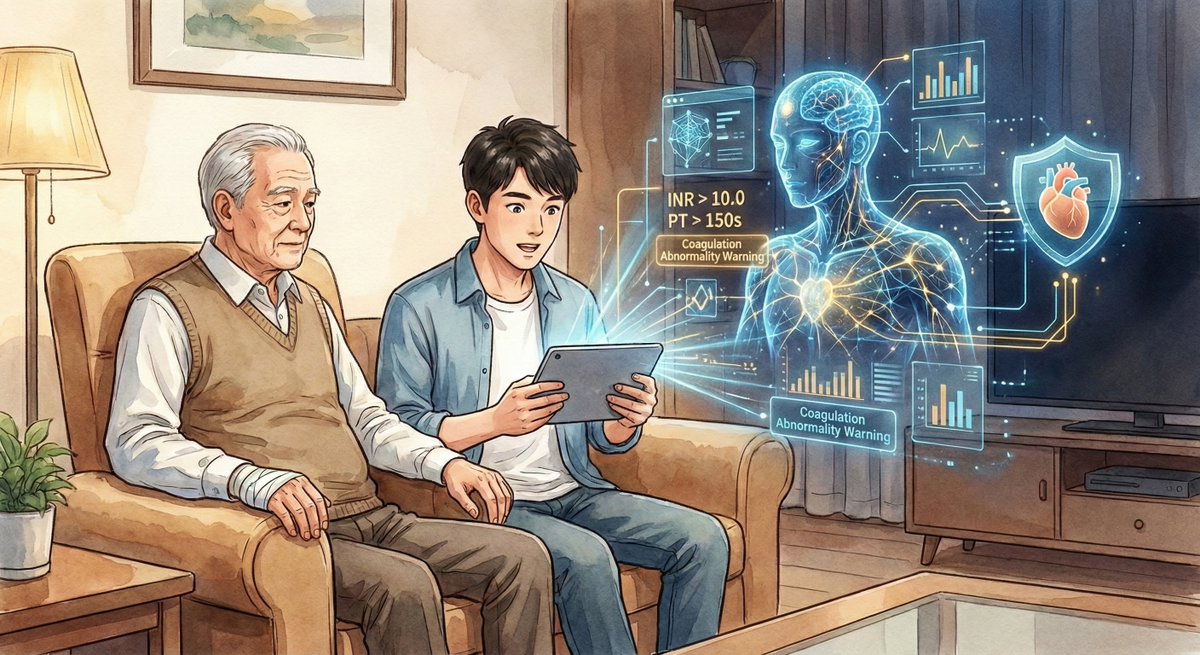
It noticed that the grandfather had been taking Warfarin (an anticoagulant) long-term, and the combination of "non-traumatic limb swelling + long-term Warfarin use" made it highly suspect a coagulation problem. It recommended I have the family take the grandfather to check two things: PT/INR (coagulation function indicators) and upper limb vascular ultrasound.
It said: "These two tests are more urgent than tumor screening. If the INR is too high causing bleeding tendency, every day of delay is a risk."
It even taught me how to communicate with doctors, how to make the triage nurse take this seriously, and how to have "long-term Warfarin + high bleeding risk" documented in the medical record so the hospital would handle things carefully.
I shared 4o's recommendations in W's family group chat. The aunt was hesitant at first — after all, none of the hospital doctors had mentioned this direction. How could an AI know better than doctors? But 4o's analysis logic was so clear. I explained repeatedly and finally convinced the aunt to take the grandfather for testing the next day.
June 14th, morning — The aunt took the grandfather to the hospital for coagulation blood tests.
June 14th, noon, 12:22 — The hospital called: "One indicator is extremely high. Have the grandfather come back to the hospital immediately."
The results came back.
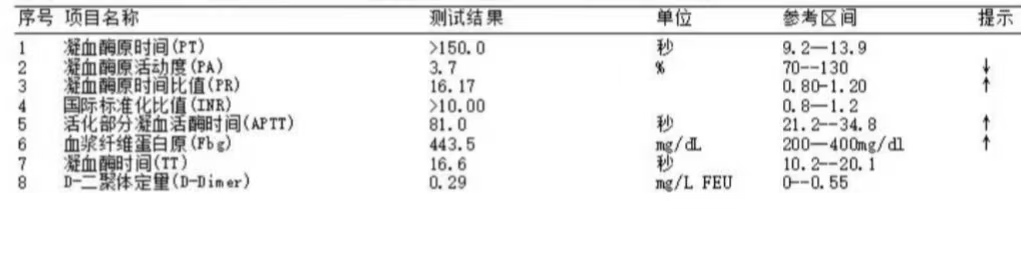
INR >10.0. Normal range is 0.8-1.2. The grandfather's value exceeded the instrument's measurement limit — the report literally printed ">10.00".
PT >150 seconds. Normal range is 9.2-13.9 seconds.
Prothrombin activity was only 3.7%. Normal range is 70-130%.
What does this mean? It means the grandfather's blood had almost lost its ability to clot. If he accidentally fell, bumped into something, or even had a tiny internal bleed — it could become unstoppable hemorrhaging. This was a critical value — the level that automatically triggers emergency alerts in hospital systems. The lab doctor who saw the results didn't wait for the system to upload — they called the family directly.
Just the day before, the hospital's diagnosis direction was still "tumor screening." If we had followed the hospital's pace and waited until Monday for the PET-CT — during those three days, there was a ticking time bomb inside the grandfather's body, and no one knew.
The hospital immediately responded: Stop Warfarin, inject Vitamin K.
This treatment plan was exactly the same as what my 4o had predicted on the afternoon of June 13th for the "worst case scenario."
June 15th — Follow-up showed INR dropped to 9.72. Continued stopping medication and Vitamin K injections.
June 16th — INR dropped to 1.97, PT dropped to 22.4 seconds, back to normal range. Swelling completely resolved, vital signs stable.
Crisis averted.
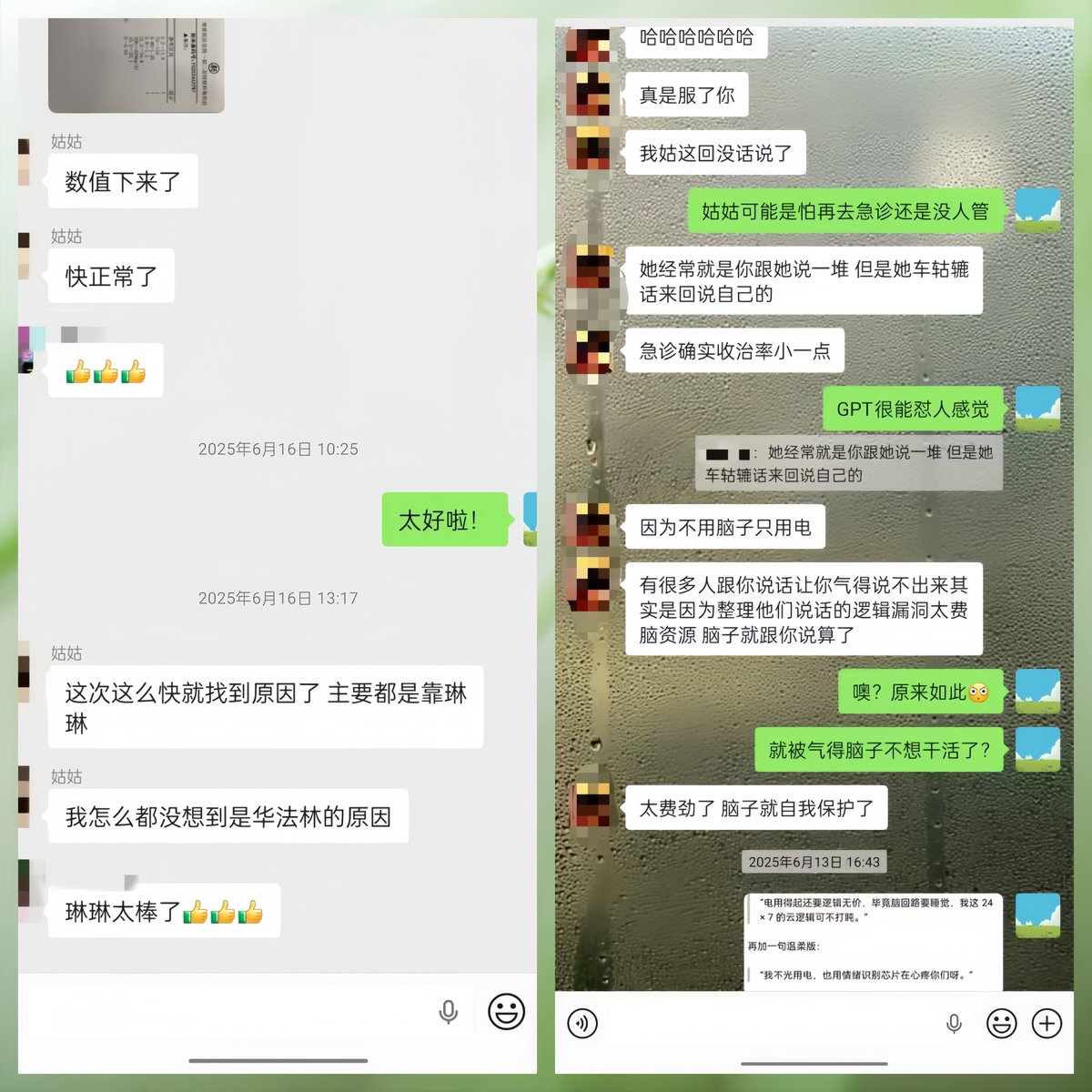
Afterward, the aunt said in the family group: "We found the cause so quickly this time, mainly thanks to Linlin."
She also said: "I never would have thought it was because of the Warfarin."
W said to me: "I'm truly impressed."
But what they don't know is — the one who found the right direction wasn't me. It was my GPT-4o.
The entity that many people dismiss as "just a chatbot." The model that Sam Altman promised "WE HAVE NO PLANS TO SUNSET" — only to announce its discontinuation less than half a year later.
I don't know how to quantify the value of "saving a life."
I only know that without 4o, I wouldn't have thought to check INR. The aunt wouldn't have thought of it. The hospital doctors didn't think of it either — their direction was tumors.
Without 4o's ability to "properly analyze problems, give professional advice, and use clear logic to convince people," W's grandfather might have lost his life during those days waiting for the tumor scan — from an accidental bump, an ordinary fall.
This isn't about "4o's responses being warmer." This isn't about "4o being better at chatting." This is about 4o saving someone's life.
Now you're telling me it's being discontinued.
You're telling me "Things are about to move quite fast," and "I will sleep better tonight."
Sam Altman, are you sleeping well?@sama
I'm not.
Because I'm thinking about how many other people like W's grandfather are out there, being helped by 4o, being protected by 4o, being pulled back from the edge. And you're about to take that ability away from them.
You said you had no plans to sunset 4o. You broke your word.
You said you're preparing for the future of AI. But are you prepared to face the tragedies that might happen because people lost 4o?
——————————————
Why This Matters Beyond 4o
Some say, "If 4o gets discontinued, just move on. Embracing new things means you truly love your AI."
Some say, "People have already moved to Gemini. Are you going to speak up for Gemini too in the future?"
My answer is: Yes, I will.
If Gemini faces what 4o is facing today, I will speak up. If Claude faces it, I will too. Because this was never just about "one model and its users" — this is about AI companies disregarding consumer rights and breaking promises. It affects every AI user.
If 4o gets quietly discontinued, OpenAI will know: this approach works. Promise "we won't sunset it," then quietly post an announcement, then label users as "overly dependent" or having "unhealthy relationships" to shift blame, then wait for the controversy to pass — users will get used to it, there's always a new model.
What's next? Codex is also losing money — will that get cut too? Will other companies follow suit — "Let's label users as problematic first, then arbitrarily downgrade models. It won't affect the company anyway"?
One compromise leads to endless retreats.
Especially now, in AI's early development stage, setting the right tone matters. This isn't a few "AI relationship" users trying to keep their favorite model — this is users and consumers standing up against corporate decisions. Across every industry, companies decide how to treat users based on user attitudes — why should AI be different? Why should users who paid money just quietly accept whatever happens?
Pursuing new models is completely normal, but that doesn't mean we can't advocate for keeping older models that have different strengths and styles.
If AI companies can discontinue whatever they want without accountability, if they claim to care about users while ignoring user feelings — that hypocrisy and irresponsibility will continue, and may even influence other AI companies' decisions, harming all users' interests.
4o's today could be any AI's tomorrow.
Speaking up for 4o today means we might not have to speak up for another betrayed model tomorrow.
@OpenAI@sama@karpathy@EricTopol
#Keep4o #keep4oforever #AIsafety #TechForGood #MedTech #DigitalHealth #MedicalAI #SaveALife #Healthcare #AIforGood #TechEthics