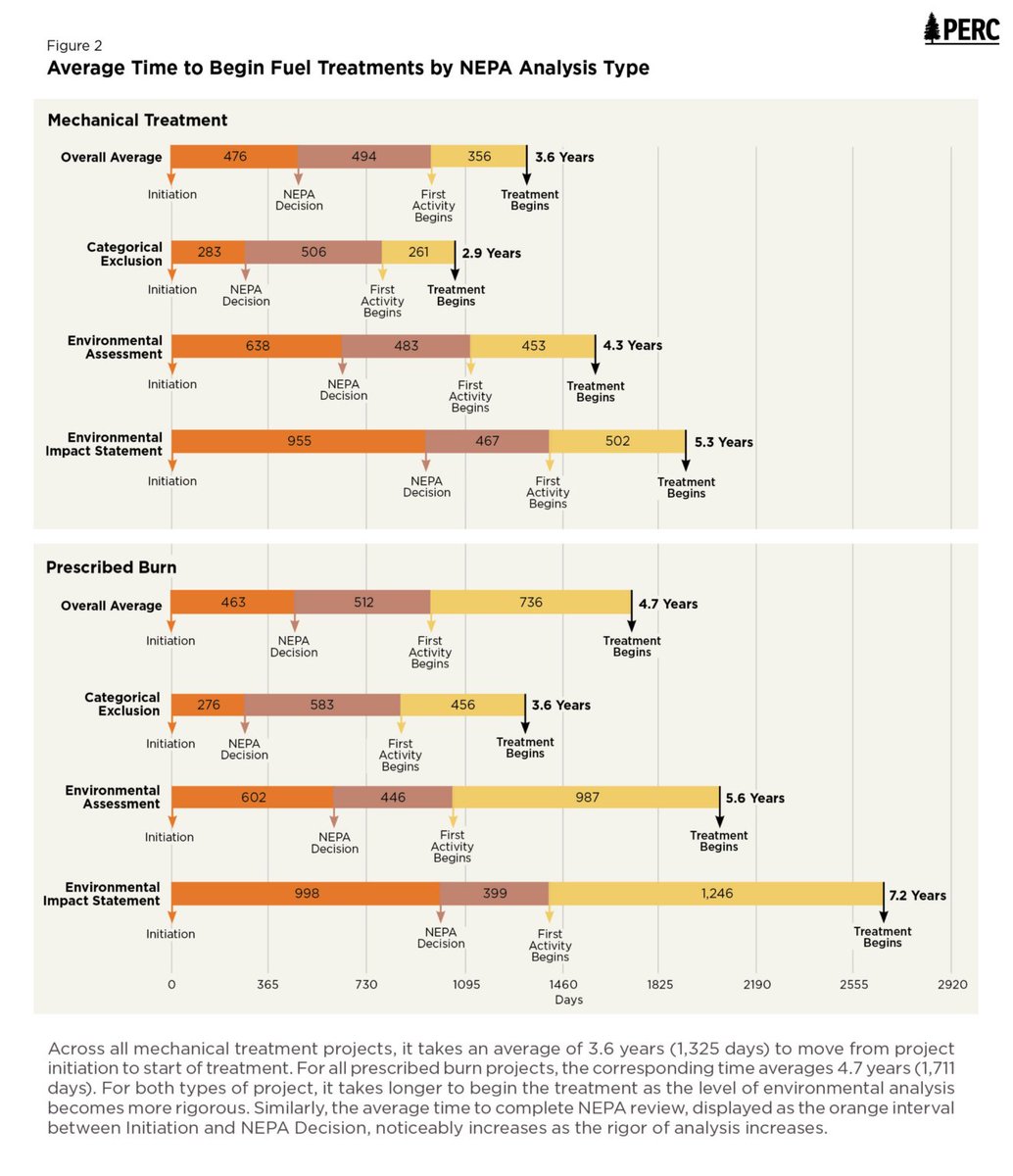
"Once the Forest Service initiates the environmental review process, it takes an average of 3.6 years to begin a mechanical treatment and 4.7 years to begin a prescribed burn.
For projects that require environmental impact statements ... the time from initiation to implementation averages 5.3 years for mechanical treatments and 7.2 years for prescribed burns."
https://t.co/IcA4tykjKs
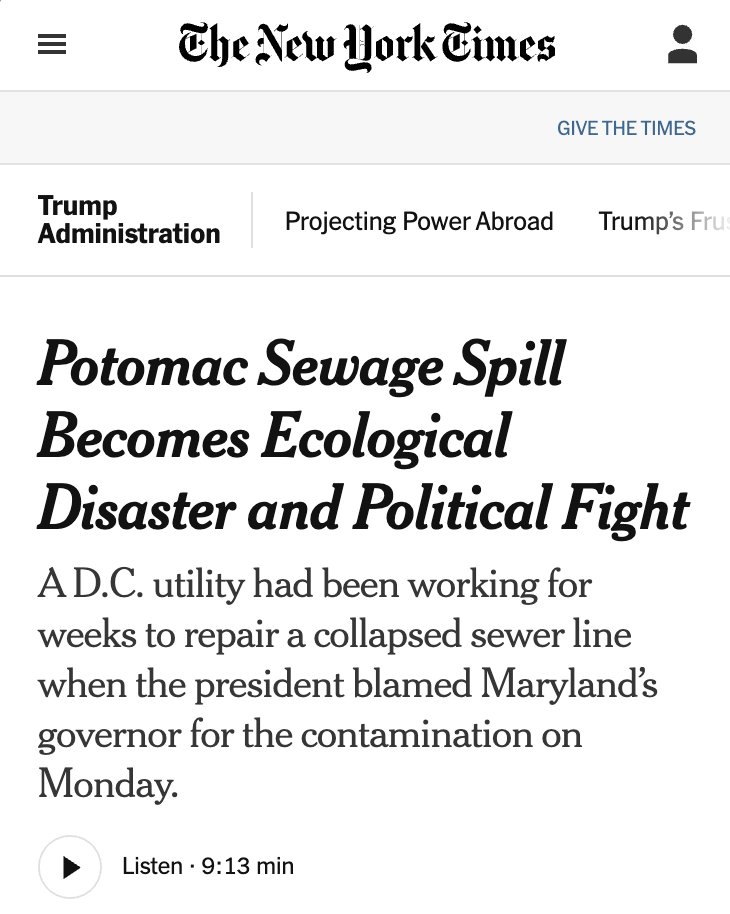
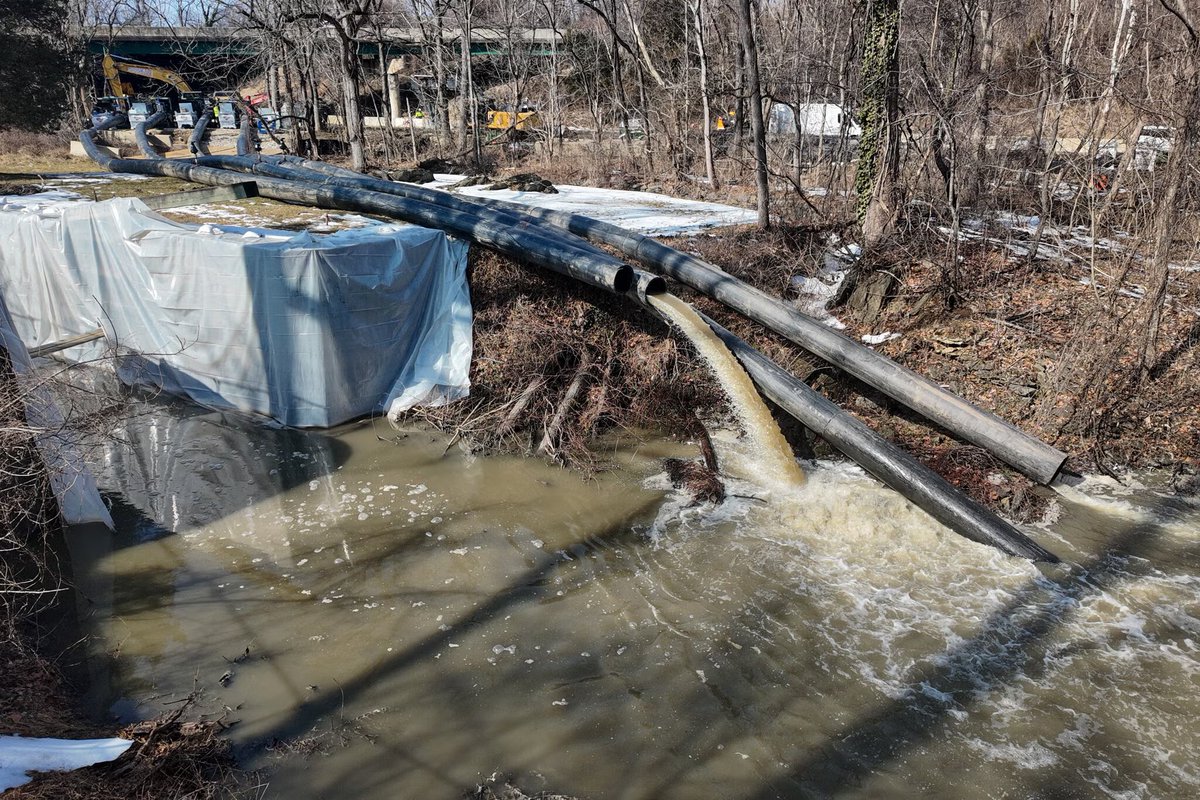
243 million gallons of untreated sewage spilled into the Potomac because repairs to the sewer pipe were delayed by permitting.
The timeline shows why Congress needs to pass BAAJA:
- 2018: DC Water asks the National Park Service to fast-track repairs (with a categorical exclusion under NEPA)
- 2021: NPS rejects the request for a catex and decides that a full Environmental Assessment is needed
- 2022: DC Water starts the environmental review process
- 2026: The pipe collapses while repair work is still waiting for the permit
Once the pipe broke, the emergency repairs took only 2 months to complete.
BAAJA would exempt repair work on existing infrastructure from NEPA so this doesn't happen again.
This is wrong for Louisiana. It was when Gov. Earl Long was involuntarily committed to the state mental hospital in 1959, fired the hospital superintendent while inside, and replaced him with a doctor who was willing to sign his release.
.@SecretaryBurgum on permitting reform: The people opposed to this bill are the trial lawyers and NGO extremist groups. This is a bill that will lower the cost of energy and create jobs. This is an affordability bill.
America once added 10 GW of nuclear power every year, more than its largest proposed AI data center would need.
Mavria cofounder @OverReactor1776 predicts the US could scale to dozens, if not hundreds, of gigawatts annually over the next decade:
"We have tremendous capability to unlock energy both terrestrially and in orbit. A lot of the things that I feel are threatening America's progress come from short-sighted decisions, some of which are well-intentioned."
"There was a time when America was adding 10 gigawatts a year of nuclear power. The largest data center in the United States that's envisioned is eight gigawatts in Ohio. And we were adding more than that just from nuclear every single year. Think about that."
"I think we are able to harness terawatts worth. Using modern technology and scaling up, I think we could be adding dozens if not hundreds of gigawatts a year over the next decade."
"But we have to want it."
@mavriaX
Appreciate the bipartisan push from House and Senate members like @RepScottPeters to advance permitting reform—and with it affordability, energy supply, job creation, and economic growth.
I heard someone say they didn't understand how "permitting was relevant to affordability". Guys, it is the scarcity of supply relative to demand that is the foremost reason many commodities, especially energy, have become less affordable. The quicker any market can respond to get new supply online, the better. Indeed, "free entry" is a fundamental premise of any successful market. These aren't different conversations. These are largely the same conversation.
Today is the National Day for the Victims of Communism. Communism killed more than 100 million people in the 20th century.
This memorial, The Memorial to the Victims of Communism in Prague, powerfully captures what communism does to the human person.
"data centers [are projected to] drive residential electricity rates in Entergy Mississippi’s service territory 16% lower in 2030 than they would have been without data center growth." https://t.co/S7VdE9xG8a