In the rocky heart of Hyderabad, @HydUniv isn’t just an academic space, it’s a living memory for every student who walked its tree lined paths. My friend @anudeepgujjeti and I write in @TelanganaToday how this campus breathes through its lakes, flora and fauna, and rocks !
The day you chase something and don’t get it, the day you beg and are ignored, the day you try to force things and still fail,that day, you are no longer the same as in the past. You either accept and grow or break and fall badly.
Told my girlfriend the stock market and crypto are crashing
She took me to the kitchen, showed me some small cakes she's having fun making and asked me to try them
Life is that simple sometimes
🚨🚨Jan24 Book Giveaway🚨🚨
Giving away 4 copies of “Why Bharat Matters” by Dr. S. Jaishankar
To win:
• Like & RT this tweet
• Follow @CseWhy
4 winners to be announced on Jan 28
ARR also worked with another maestro from the world of music @ilaiyaraaja!
When @ilaiyaraaja composed the music for the iconic film Punnagai Mannan, the music had one of earliest uses of the sequencer in Indian film music
In fact, the music was marketed as “computer music”! Listen to this!
🗒️CSIR-SO/ASO Exam Alert: Final Call🚨
I'm sharing Notes on these topics according to the Syllabus:
• Ethics & Human Interface
• Management Principles & Practices
• Decision Making & Problem Solving
❤️Like & Repost,DM 'Req' if interested!
✅Shared same Notes earlier also!
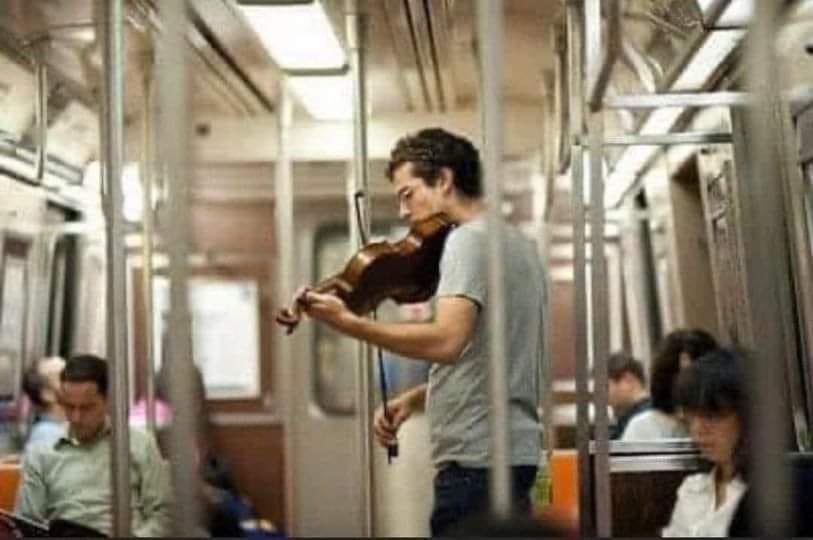
“ In Washington DC, at a Metro Station, on a cold January morning in 2007, a man with a violin played six Bach pieces for about 45 minutes. During that time, approximately 2000 people went through the station, most of them on their way to work.
After about four minutes, a middle-aged man noticed that there was a musician playing. He slowed his pace and stopped for a few seconds, and then he hurried on to meet his schedule.
About four minutes later, the violinist received his first dollar. A woman threw money in the hat and, without stopping, continued to walk.
At six minutes, a young man leaned against the wall to listen to him, then looked at his watch and started to walk again.
At ten minutes, a three-year old boy stopped, but his mother tugged him along hurriedly. The kid stopped to look at the violinist again, but the mother pushed hard and the child continued to walk, turning his head the whole time. This action was repeated by several other children, but every parent - without exception - forced their children to move on quickly.
At forty-five minutes: The musician played continuously. Only six people stopped and listened for a short while. About twenty gave money but continued to walk at their normal pace. The man collected a total of $32.
After one hour:
He finished playing and silence took over. No one noticed and no one applauded. There was no recognition at all.
No one knew this, but the violinist was Joshua Bell, one of the greatest musicians in the world. He played one of the most intricate pieces ever written, with a violin worth $3.5 million dollars. Two days before, Joshua Bell sold-out a theater in Boston where the seats averaged $100 each to sit and listen to him play the same music.
This is a true story. Joshua Bell, playing incognito in the D.C. Metro Station, was organized by the Washington Post as part of a social experiment about perception, taste and people’s priorities.
This experiment raised several questions:
In a common-place environment, at an inappropriate hour, do we perceive beauty?
If so, do we stop to appreciate it?
Do we recognize talent in an unexpected context?
One possible conclusion reached from this experiment could be this:
If we do not have a moment to stop and listen to one of the best musicians in the world, playing some of the finest music ever written, with one of the most beautiful instruments ever made…
How many other things are we missing as we rush through life?”
Yes.
Arguing is an act of respect -it means you acknowledge that the other person has both the intellect and integrity to engage in good faith debate in the shared pursuit of truth or at least a better understanding of each other's perspectives. The goal is not winning, but learning.
@heysinderellaa@pawnstars on History channel is a similar show in which people get antiques related to American cultural, political history.For me, another entertaining aspect of it’s telugu dubbed version is how a character “Chum” speaks. It’s funny & I, my brother imitate that style sometimes
🚨🚨December 2023 Book Giveaway🚨🚨
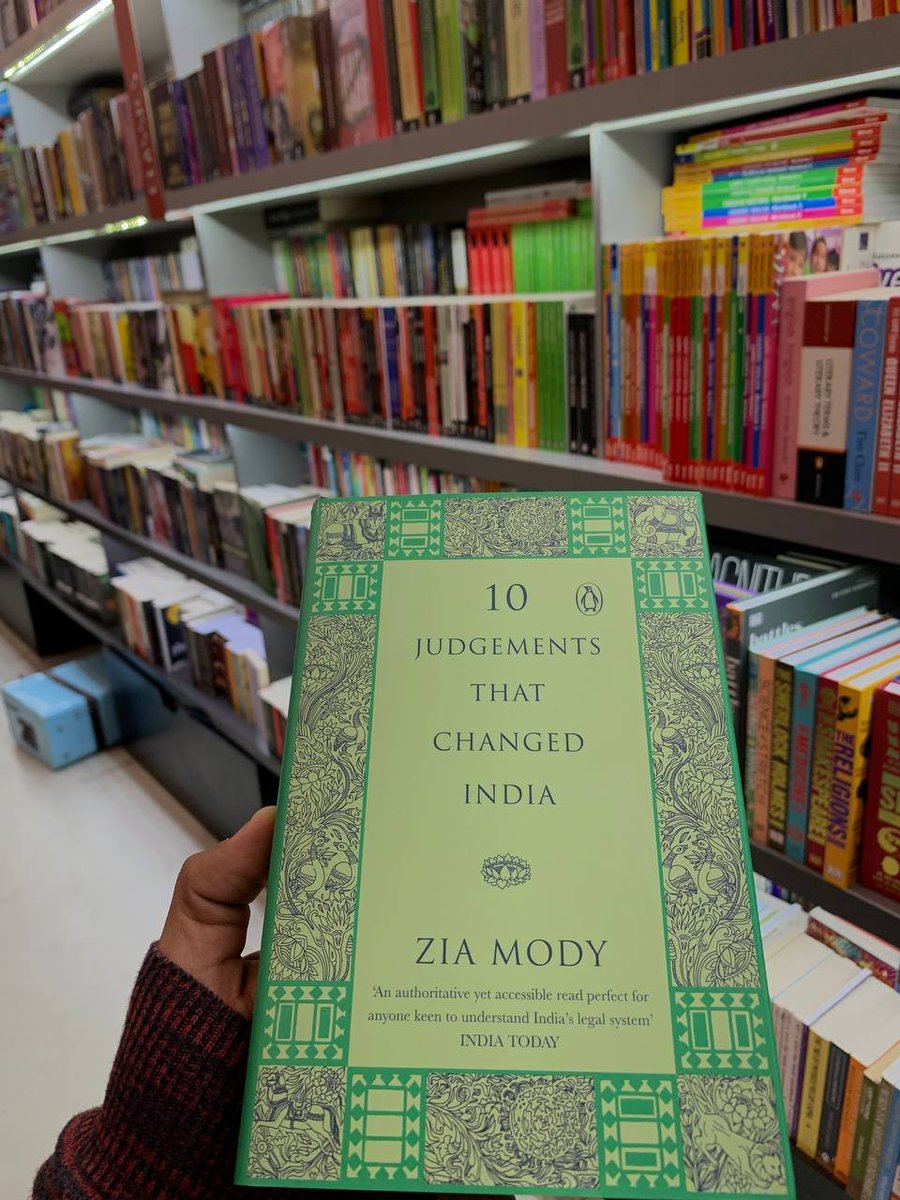
Giving away 15 copies of '10 Judgements That Changed India' for #UPSC aspirants sponsored by @aimocks😍
How to win?🤔
a) RT this tweet
b) Follow @CSEWhy & @aimocks
Result: 27 December 2023🫡
both industrially as well as agriculturally. It is a kind of historic tragedy that Telangana which was formed on the basis of regional imbalance engendered by neo-liberal development is now being paraded in the same neo-liberal dressing. (4/11)
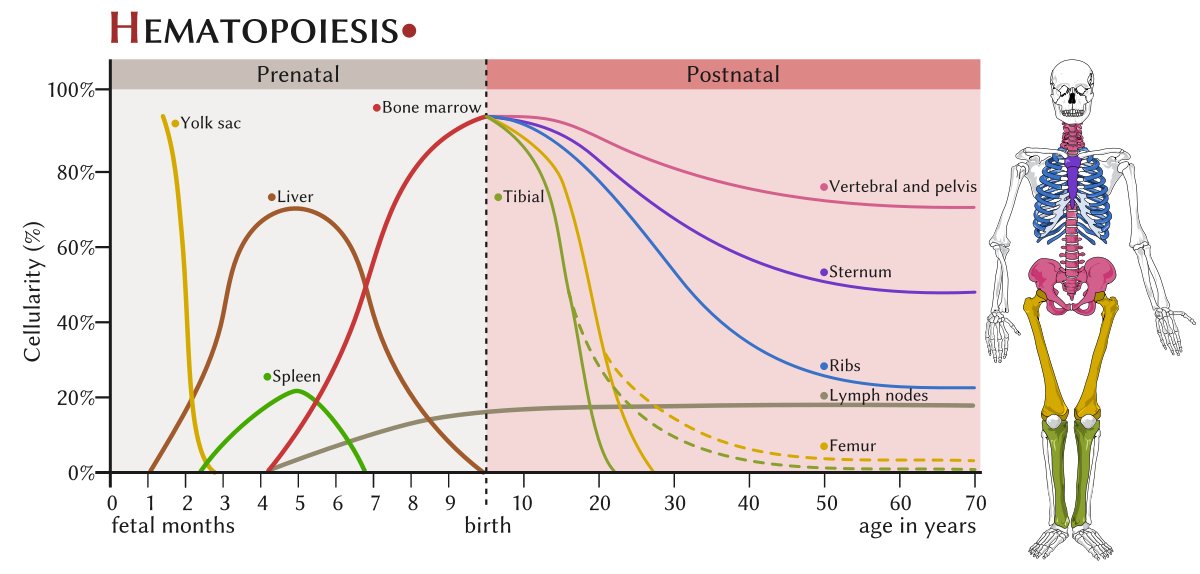
Did you ever wonder why our marrow is located inside of our *bones*, #MedTwitter? There’s no a priori anatomical reason it should be sited there. Blood cells could form in our spleens & livers, as they do during our fetal lives; or elsewhere, as in some animals. Let’s discuss! /1
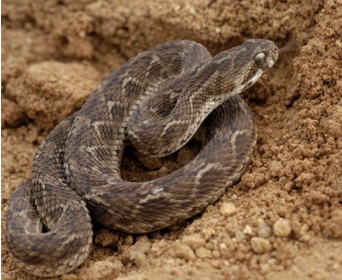
Q: What do🐍 snakes have to do with ICU pharmacology?
A: A lot! We use 💊medications derived from snake venom every day in fact!
Buckle up for a fun 🧵of #UnusualDrugDiscovery & #HistoryOfMedicine about medications derived from from 🐍☠️snake venom! #FOAMed#FridayFun
1/
Elixir of pomegranate juice in the streets of Baghdad, Iraq. The sight of the vintage equipment alone is enough to fascinate: the end result is a tantalizingly sweet and tangy beverage that captures the essence of this ancient fruit
[📹yassir.zubaidi]
https://t.co/cX7ReCErj1
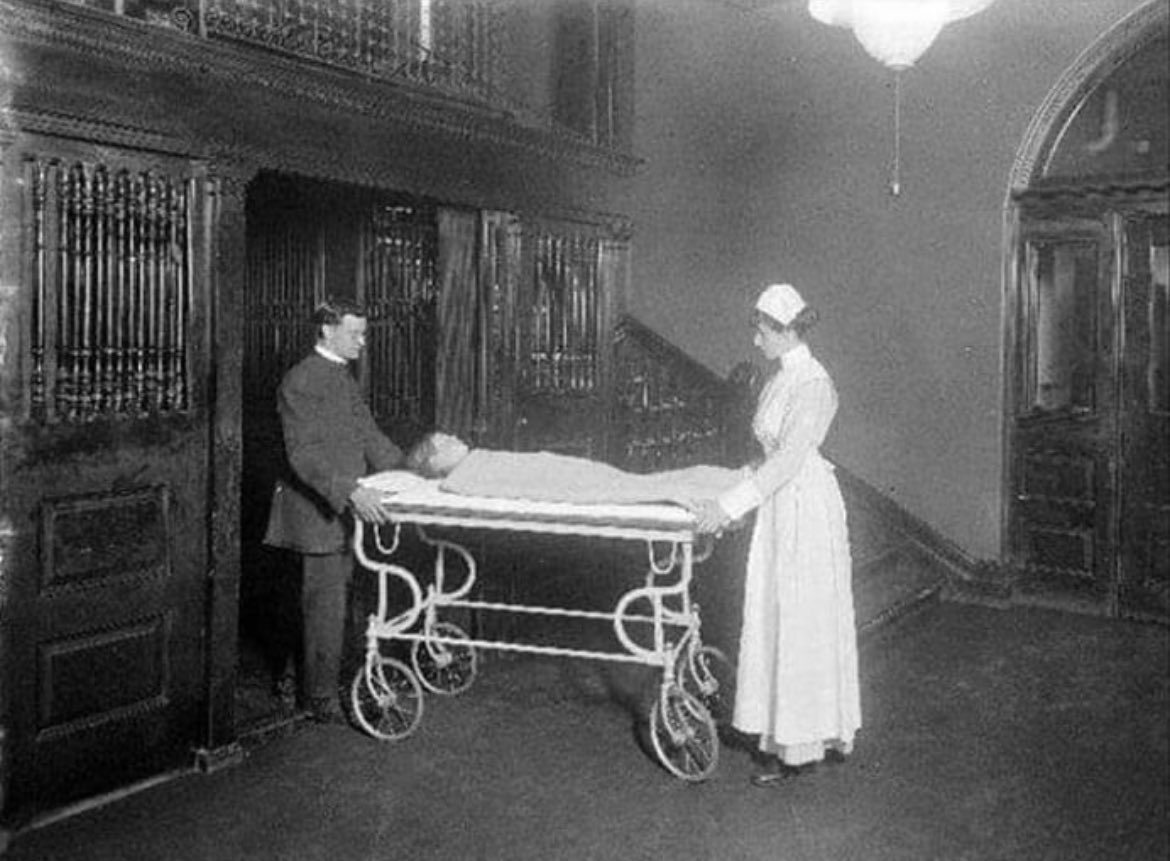
In 1922, a group of scientists went to the Toronto General Hospital where diabetic children were kept in wards, often 50 or more at a time. Most of them were comatose and dying from diabetic ketoacidosis.
These children were essentially in their death beds, awaiting what was at that time, certain death. The scientists moved swiftly and proceeded to inject the children with a new purified extract of insulin.
As they began to inject the last comatose child, the first one to be injected began to wake up. Then one by one, all the children awoke from their diabetic comas. A room that was full of death and gloom suddenly became a place of joy and hope.
In the early 1920s, Frederick Banting and Charles Best discovered insulin under John Macleod at the University of Toronto. With the help of James Collip, insulin was purified, making it available to successfully treat diabetes. Both Banting and Macleod earned Nobel Prizes for their work in 1923.
Banting was 32 when he received the Nobel Prize, and he chose to share half the prize money with Best, who was his assistant and just 24 years old at the time. Banting refused to put his name on the patent and instead sold it to the University of Toronto for $1. He thought it was unethical to profit from a discovery that would save millions of lives. "Insulin belongs to the world, not to me," he said.
10/10Eratosthenes’ experiment is a testament to the power of observation, curiosity, and logical reasoning. With minimal resources, he accurately deduced the size of our planet over 2,200 years ago.
#Stay_curious.
#Eratosthenes#EarthCurvature#ScienceHistory