One week from Opening Day at Wrigley Field.
So close to days/nights at the best ballpark on earth, the smell of grilled onions, Hall of Famer Pat Hughes on the radio, cold beers on the Murphy’s patio, and what shapes up to be a great season of Cubs baseball.
CAN’T WAIT.
There’s something serene about snowfall during the funeral procession of legendary Fighting Irish head coach Lou Holtz.
Holtz did anything for his players. Today, his players walked down Notre Dame Avenue for him in quintessential South Bend conditions.
Just feels right. RIP.
Spoke with legendary Indiana play-by-play voice Don Fisher after last night’s national championship.
He said all of the losing seasons were worth it for this.
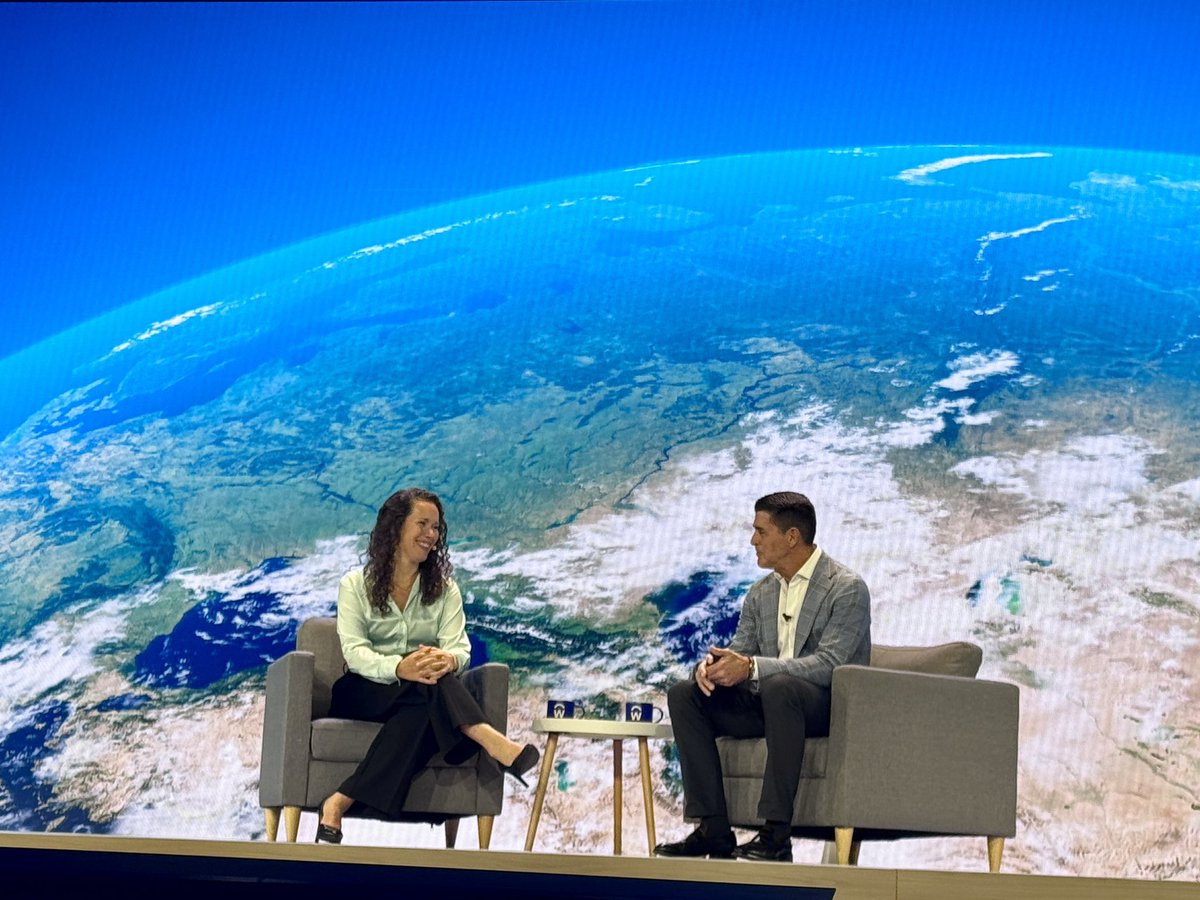
4 AI transformation lessons from Siemens that every enterprise needs to hear. Day 2 at #WDAYRisingEMEA delivered something rare: a leader discussing AI transformation without the script. Nanda Burke, Global Head of Talent at Siemens, sat down with @CarlEschenbach, CEO of @Workday to share what was working.
The results speak for themselves. Siemens employees have already built thousands of AI agents. Here's how they're making it happen:
1. Leadership culture enables experimentation. Burke's concept of "joyous performance" reframes what high-performance cultures need in the AI age. She's explicit about expecting excellence while maintaining lightness and joy within teams. Her principle: stand in front of your team when things go wrong, behind them when things go right. This isn't soft leadership, it's creating the psychological safety required for people to experiment with AI agents without fear of failure. Thousands of agents don't get built in risk-averse cultures.
2. Skills development requires navigation, not just training. Siemens created "AI Base Camp", a gamified experience solving a problem most companies face: overwhelm. Burke was candid about extensive AI training where people didn't know where to start. AI Base Camp helps employees find their entry point. Result: AI training tops organic learing, without mandates, because leadership models the behavior.
3. The right tech stack determines whether you scale or stall. Burke's assessment was direct: "Experimenting with AI is easy, scaling it is not easy." You need a robust infrastructure and strong data foundations. That’s why Siemens partners with organizations like Workday, which provides the trusted data and AI-ready platforms needed for enterprise-scale deployment.
4. Fundamental organizational rethinking is required. Burke's analogy resonates: when electricity arrived, factories initially just replaced steam engines with electric motors while keeping the same layouts and processes. It took years before someone reimagined how to design factories around electricity's capabilities. We're at that inflection point with AI. We're still using it to do what we've always done rather than reimagining what's possible. The companies that recognize this will separate from those that don't.
What struck me most was the absence of buzzwords and the presence of operational honesty. This wasn't a vendor case study, it was a leader sharing what's actually hard about transformation at scale.
The conversation reinforced something I've observed this year: companies making genuine progress with AI aren't the ones with the most aggressive deployment timelines. They're the ones being most honest about what the transformation requires, from leadership culture to technical infrastructure to organizational redesign.
#WorkdayPartnership #WDAYRisingEMEA
🔥🚨BREAKING: Marvel Avengers star Chris Pratt just randomly uploaded this video to pray for his followers and supporters because he felt like this was the right time to do so. Something powerful is happening in America right now.
President Trump shares a message on the assassination of Charlie Kirk.
“I ask all Americans to commit themselves to the American values for which Charlie Kirk lived & died. The values of free speech, citizenship, the rule of law & the patriotic devotion & love of God.”