The signal strength hitting Earth from Voyager 1 is less than one trillionth of a watt.
To put that in perspective, your phone’s WiFi signal is roughly 100 billion times stronger, and it drops a connection walking between rooms.
NASA picks up Voyager’s whisper using arrays of 70-meter antennas, then reconstructs coherent data from it at 160 bits per second. That’s slower than a 1990s modem. Downloading a single photograph at that rate would take weeks.
The spacecraft itself runs on 8.8 kg of decaying plutonium-238 that generated 470 watts at launch in 1977. Today it produces roughly 200 watts, losing about 4 watts per year. NASA has been shutting down instruments one by one since the 1980s to keep the math working. They turned off the cosmic ray sensor just this year.
And here’s the part nobody’s talking about: there is exactly one antenna on Earth that can send commands to Voyager. Deep Space Station 43 in Canberra. It went offline for major upgrades from May 2025 through early 2026. During that window, if Voyager had a critical fault, the team would have had to wait months to respond.
A 48-year-old spacecraft built on 1970s computing, running on a plutonium battery that’s lost 60% of its output, transmitting at a power level that barely qualifies as existing, from a distance where light itself takes 23 hours to arrive. And a German observatory just casually picked up its carrier signal on a live stream.
The engineering margin NASA built into this mission was designed for 4 years to Saturn. Everything after that is borrowed time the engineers keep extending by doing math with 200 watts.
Activist: "Your cattle are destroying the climate."
Farmer: "My 150 cattle?"
Activist: "Every little bit counts."
Farmer: "There were 60 million bison here 200 years ago."
Activist: "And look where we are now."
Farmer: "Where?"
Activist: "Climate crisis."
Farmer: "From 48 million cattle versus 60 million bison?"
Activist: "It's not just the numbers."
Farmer: "What else?"
Activist: "The system."
Farmer: "What system? Grass, cows, field?"
Activist: "Industrial agriculture."
Farmer: "Cattle eating grass is industrial?"
Activist: "If you're doing it commercially."
Farmer: "So if I give away beef for free, it's fine?"
Activist: "That's not the point."
Farmer: "What is the point?"
Activist: "You're part of the problem."
Farmer: "By being part of the biogenic carbon cycle?"
@joe__six@ChShersh Agreed! And it appears quite a natural trait of the language, considering that both the inventor @stroustrup and the people that know C++ the most, on a range of knowledge from 1 to 10, rate themselves at around 7-8.
C++ is a fascinating, humbling and stimulating experience 😁
Performance and clean design matter much more than it is widely perceived. Web* is the ultimate example as people have been used to click-and-wait since ever, along with developers used to opaque tools/frameworks that "make things easy"
A recurring anti-pattern in software goes as follows.
Folks decide to standardize an overly generic programming interface, based on a prototype. They don’t care about performance… why should they? They have no serious users yet. And few people really need the performance ever… because few people have lots of users…
You might as well throw the kitchen sink at it; it costs you little because your prototypal implementation doesn’t address performance, and it is all high-level code anyhow.
And then we get stuck with a poor design performance-wise and have to do our best with it. It can mean supporting it fully and discouraging its use, or only supporting a subset.
But why? Why does performance matter if, as I said, most projects hardly have users? Because the value of software depends on its performance. If you doubt that performance matters, go buy a used iPhone 7.
In theory, anything can be made fast… but in practice, the engineering cost to optimize a design that did not take performance into account can be too much for anyone to pay.
If you can rewrite your code using an interface that is potentially 10x or 100x faster, while being just as clean and maintainable… you are a much better engineer.
Do people notice? You bet they do.
So what should you do? Focus on simplicity. Do not make your interface more generic than it needs to. If your first version is missing features, you can easily add them during a revision. And, importantly, benchmark even your prototype: do not propose to replace existing code with some new much slower design.
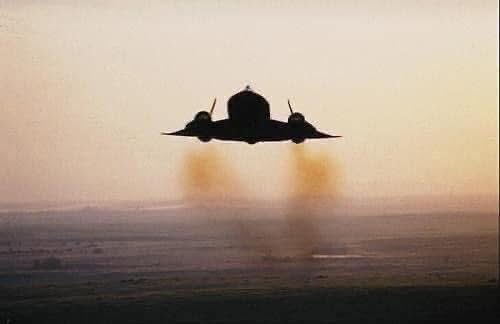
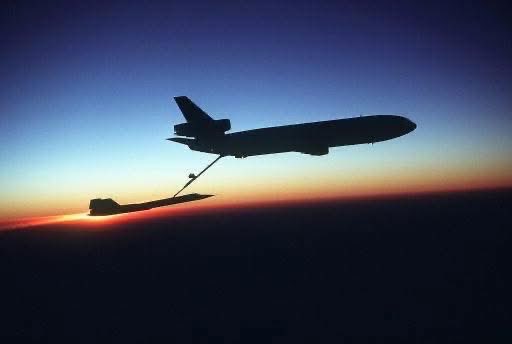
Many people believe we refueled after takeoff because the aircraft leaked fuel so profusely that we had to refuel quickly.
We had to refuel right after takeoff for only one reason, and it wasn’t because we leaked JP-7 fuel on the ground. Yes, the plane does leak fuel, but not enough to require refueling after takeoff.
The JP-7 fuel reaches temperatures well over 300 degrees F. during Mach 3 cruise, making the fumes in each of the six fuel tanks very volatile and potentially explosive. The aircraft's metal skin approaches 400 degrees F., further increasing the volatility of the fuel in the tanks. One of our aircraft's limitations was a maximum speed of Mach 2.6 without an inert atmosphere inside the fuel tanks.
INERT is a keyword.
The aircraft had three liquid nitrogen Dewar flasks containing 260 liters of liquid nitrogen, located in the nose wheel well. The only way to ensure a 100 percent inert atmosphere in each fuel tank was to refuel the plane in-flight completely full of JP-7, allowing ambient air in each fuel tank to vent overboard. Once full of fuel, gaseous nitrogen would now dominate each fuel tank’s empty space above as it burned off JP-7. The nitrogen gas pressurized each fuel tank to 1.5 psi above ambient pressure and inerted the space above the heated fuel to prevent autogenous ignition. This is why we refueled after takeoff. Then we could safely accelerate beyond Mach 2.6.
Rich  Graham
Post by L. Sheffield
@ChShersh Depending on the needed query(ies) that, as far as I understand, is solvable with decode+grep maybe changing the way such file is generated: have an index+recordType(+timrstamp?) companion binary file being generated along your one and use it for quickly grepping messages
"Our database won't scale".
Database:
- 40GB total data
- 12 queries per second
- 0 indexes on query columns
- N+1 queries everywhere
- 200ms average query time
Solution:
- Shard across 12 databases
- Add read replicas
- Implement caching layer
- Switch to "web scale" NoSQL
Actual solution:
- Add 3 indexes
- Fix the N+1 queries
- 5ms query time
- $40/month Postgres
You don't have a scaling problem.
You have a competence problem.
JUST IN: THE SUN JUST GROUNDED HALF THE WORLD’S MOST POPULAR AIRCRAFT
6,500 Airbus A320s. Grounded. Effective immediately.
Not terrorism. Not mechanical failure. Not human error.
Solar radiation.
The same star that sustains all life on Earth just exposed a fatal flaw in the computer that controls whether your plane pitches up or down.
October 30: JetBlue Flight 1230 drops 100 feet in 7 seconds over Florida. 15 passengers hospitalized. Investigators trace it to the Elevator Aileron Computer. The sun corrupted its data mid-flight.
November 28: Airbus issues the largest recall in its 55-year history. EASA Emergency Directive demands fixes before next flight.
The cascade:
American Airlines: 340 aircraft grounded
ANA Japan: 65 flights canceled, 9,400 stranded
Air France: 35 flights scrapped
India: 250 aircraft affected
Avianca: Ticket sales halted for 10 days
This is 60% of the global A320 fleet. The aircraft that just overtook Boeing’s 737 as humanity’s most-delivered jet. Over 11,000 in service. 8 million seats departing daily. 2,000 takeoffs every hour.
The brutal truth: 2025 is peak solar cycle. NOAA confirmed it. And we just learned our fly-by-wire civilization has a single point of failure nobody stress-tested against space weather.
Most aircraft need a 2-4 hour software rollback. But 1,000 older jets require hardware replacement. They stay grounded for weeks.
The fix exists. The question that should terrify every systems thinker: What else haven’t we tested against the sun?
We built global aviation on the assumption that our star would behave. It didn’t ask permission.
Check your flight status. Now.
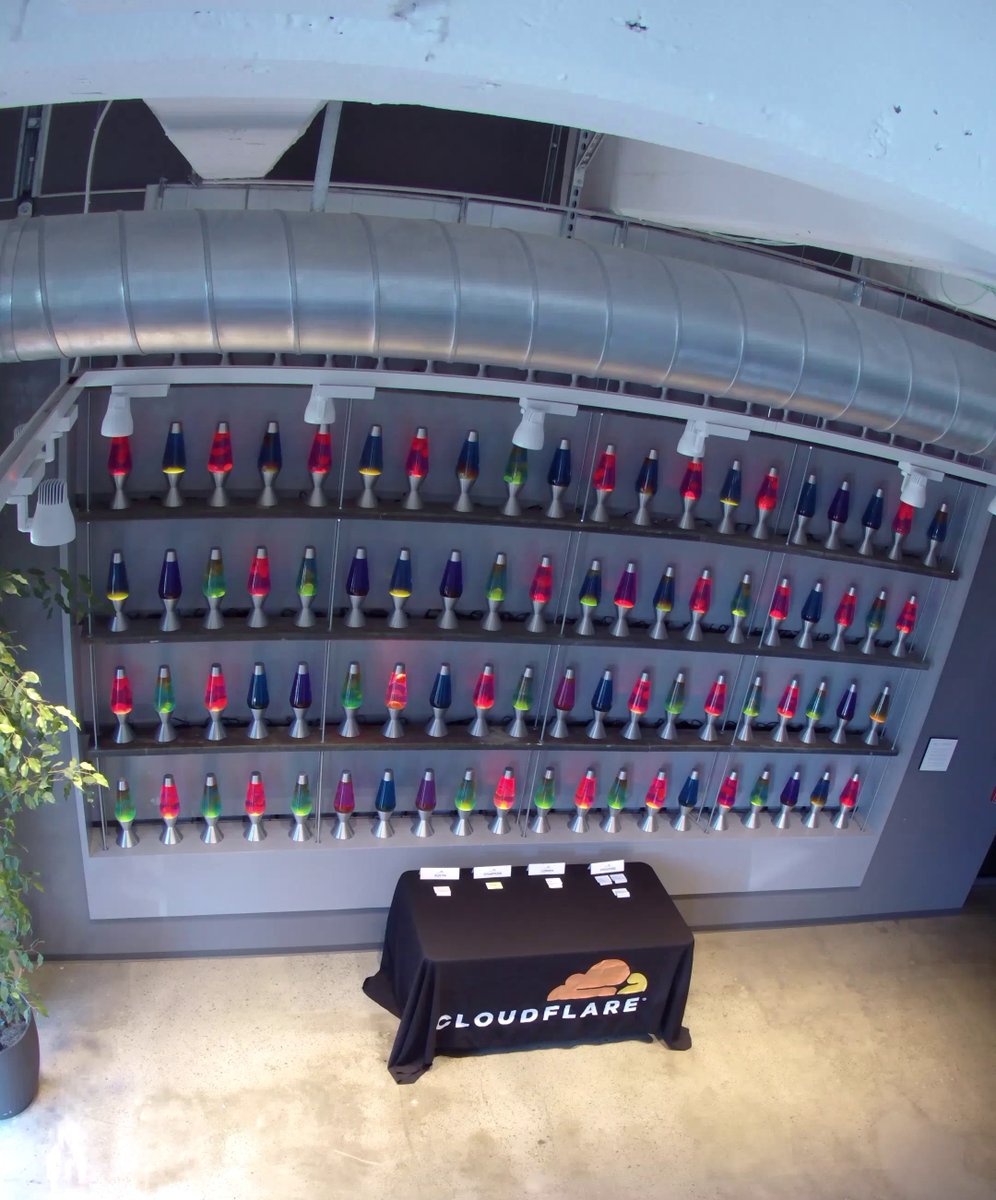
Cloudflare uses lava lamps for their encryption.
No, I am not kidding.
In their San Francisco office, Cloudflare has a wall filled with lava lamps with cameras pointed at them 24/7. At random intervals, a picture is taken, and that image is sent to the Cloudflare servers.
That is then turned into a series of numbers that is then turned into an encryption key.
You're probably wondering "Why not just have a computer do it." Well, computers are actually really bad at making things random.
They follow patterns, and those patterns are easy for hackers to figure out. Thus making Cloudflare susceptible.
So the solution is the real world.
Nature is random. Wild, dare I say.
If these giant tech companies see the value in the wild and natural and random, you should too. ;)
Wait, so the reason 115200 baud is a common bit rate for UART is because its a multiple of 9600 (x12=115200).
And 9600 baud was commonly used because its 32*300 baud.
And 300 baud was used because its the lowest common denominator of 50Hz and 60Hz.
And that was used because telecom signals used to be clocked to the mains frequency?
So many examples of engineers just adapting around legacy systems because its easier to build upon stuff than reinvent stuff lol
Madre fa vedere solo cartoni degli anni ’90 ai figli per una settimana: “Sorpresa dai loro miglioramenti”
Una mamma americana ha fatto guardare ai suoi quattro figli solo cartoni anni ’90 per una settimana, riscontrando subito inasepttati effetti positivi: meno capricci, più interazioni tra fratelli e maggiore propositività nel gioco
Un altro effetto positivo notato dalla mamma è stato il cambiamento nel rapporto con lo schermo: niente più insistenze per vedere "ancora un episodio" e soprattutto meno crisi al termine del tempo concesso. I bambini, racconta, sembravano meno incollati allo schermo e più inclini a interagire tra loro anche mentre il cartone era in onda. E non perché i cartoni non fossero di loro gradimento. La differenza, secondo Ariel, risiede infatti proprio nella natura dei vecchi programmi, costruiti per intrattenere senza sopraffare, con narrazioni semplici e uno stile visivo meno aggressivo.
Secondo i ricercatori, bastano appena nove minuti di un cartone animato con ritmi accelerati per compromettere temporaneamente le funzioni esecutive dei bambini di quattro anni come concentrazione, autocontrollo e capacità di risolvere problemi. Prodotti dai ritmi meno serrati e con stili narrativi più "soft" possono dunque intrattenere i bimbi pur senza inibirne ogni altra facoltà.
https://t.co/9xNqb6Z3nL
https://t.co/yMcgu80oRj
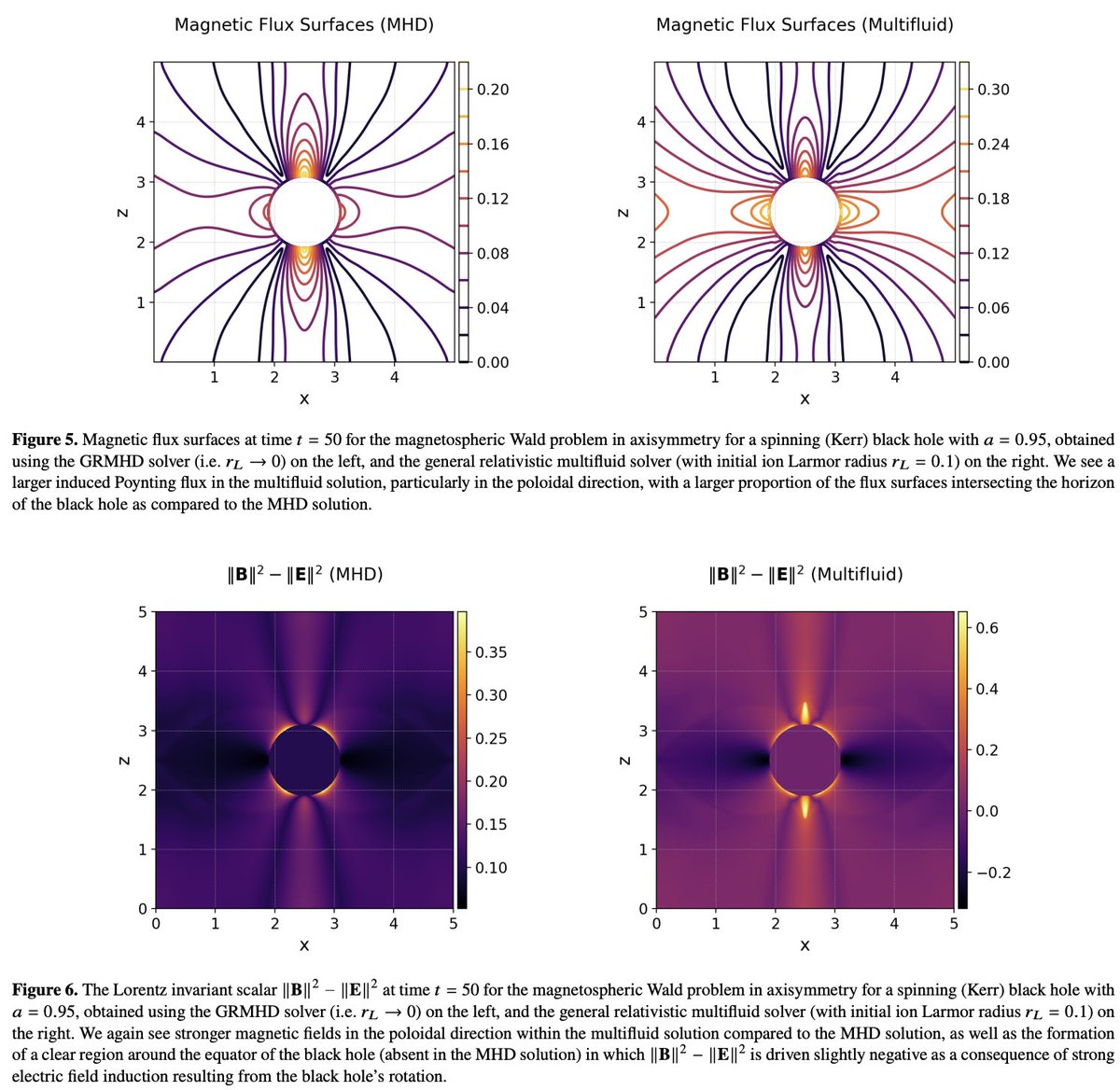
New paper!
How do matter and electromagnetic fields interact with curved spacetimes in general relativity? For a long time, there have been two basic models: GR kinetics, and GRMHD. Neither entirely satisfactory.
In this paper, we show a third way. arXiv link below... (1/10)
The mind-blowing tech behind microchip manufacturing.
Lasers fire 50,000 times per second at tin droplets moving 100 m/s, creating extreme ultraviolet light plasma — and that’s just one step inside ASML’s chip-making machine.
AWS Outage (US-EAST-1): Explained Simply
1️⃣ Started with a DNS issue - AWS services couldn’t talk to each other.
2️⃣ This broke DynamoDB, which many other services depend on.
3️⃣ EC2 launches & Lambda jobs started failing due to the chain effect.
4️⃣ AWS fixed the DNS issue, but some services are still catching up.
It’s a reminder of how one small issue can impact half the internet. ⚙️
Full read: https://t.co/OOajEBbj9K
Possible Space Object Hits 737 at 36,000 Feet
On October 16, a United Flight 1093 737 MAX 8 at ~36,000 ft was hit in the windshield, cracked mid‑air, and the pilot was injured.
The captain reported seeing “something from space,” but investigators with the NTSB are also weighing hail, high‑altitude debris, or a meteorite.
If confirmed as space debris or a meteorite impact, this could be one of the rarest aviation hazard events.