🚨New pub in @polcommjournal🚨Beyond algorithmic amplification, I identified two influence pathways addressing how YouTube algorithms redirect users away from news in the latest study w/@tianyangyt . More details🧵
https://t.co/hslifXSUGl
Deadline extended! We will begin reviewing applications on January 30. Please consider applying, or feel free to forward this opportunity to anyone you think would be a good fit!
JOB alert!!! My department has two prestigious President's Young Professor positions this year. One is in computational comm and one is in critical AI. Deadline is very close - Sept 30, 2025. Apply now!
https://t.co/DBjlZKotCI
🚨 We’re hiring!
NTU invites applications for Lecturer in Digital Journalism. We’re looking for expertise at the intersection of journalism & new tech. Candidates should bring strong professional newsroom experience + a passion for teaching. https://t.co/wrI5gY5FzX
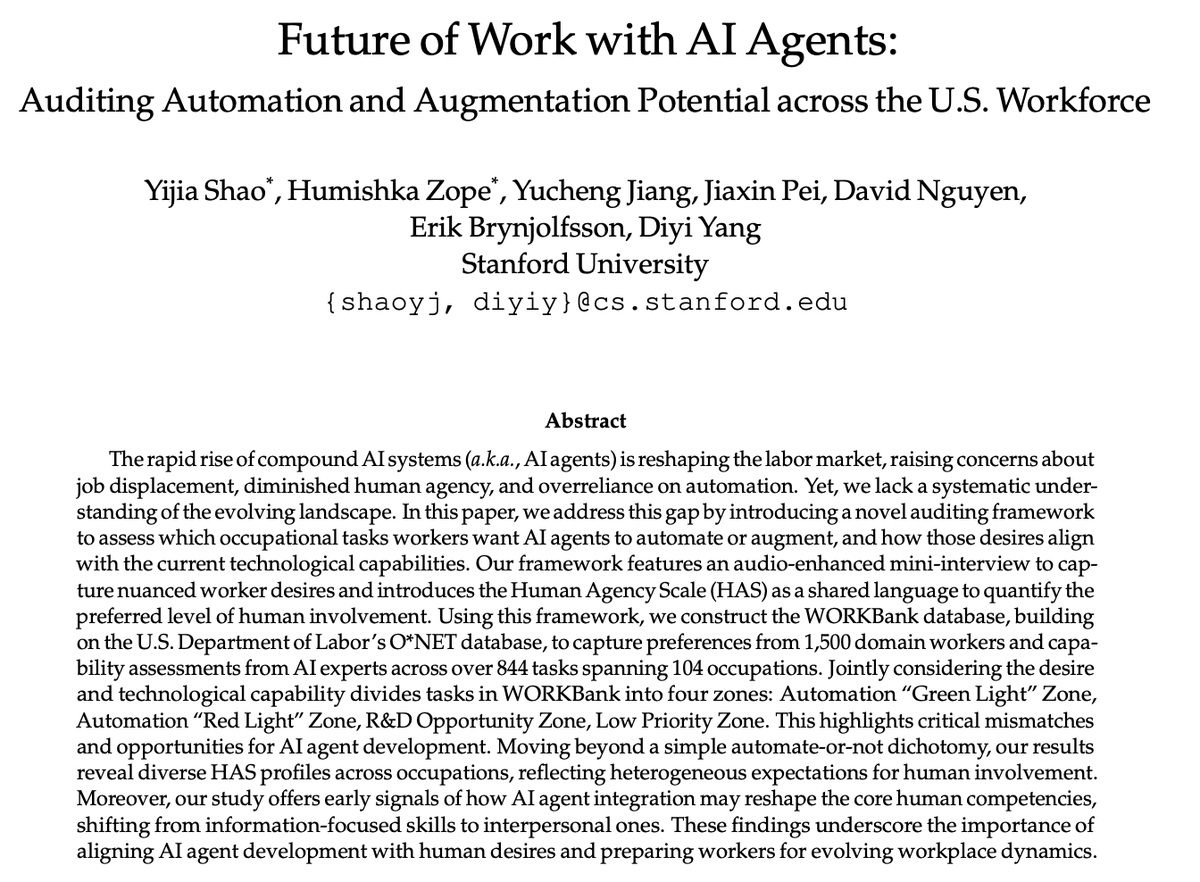
This paper presents a nice methodology to audit automation by AI.
By collecting data from 1,500 workers, 104 occupations, and 844 tasks they document mismatched expectations.
This paper is a nice take on the thinking beyond AI risk = job loss.
https://t.co/UYjhbTQ7jI
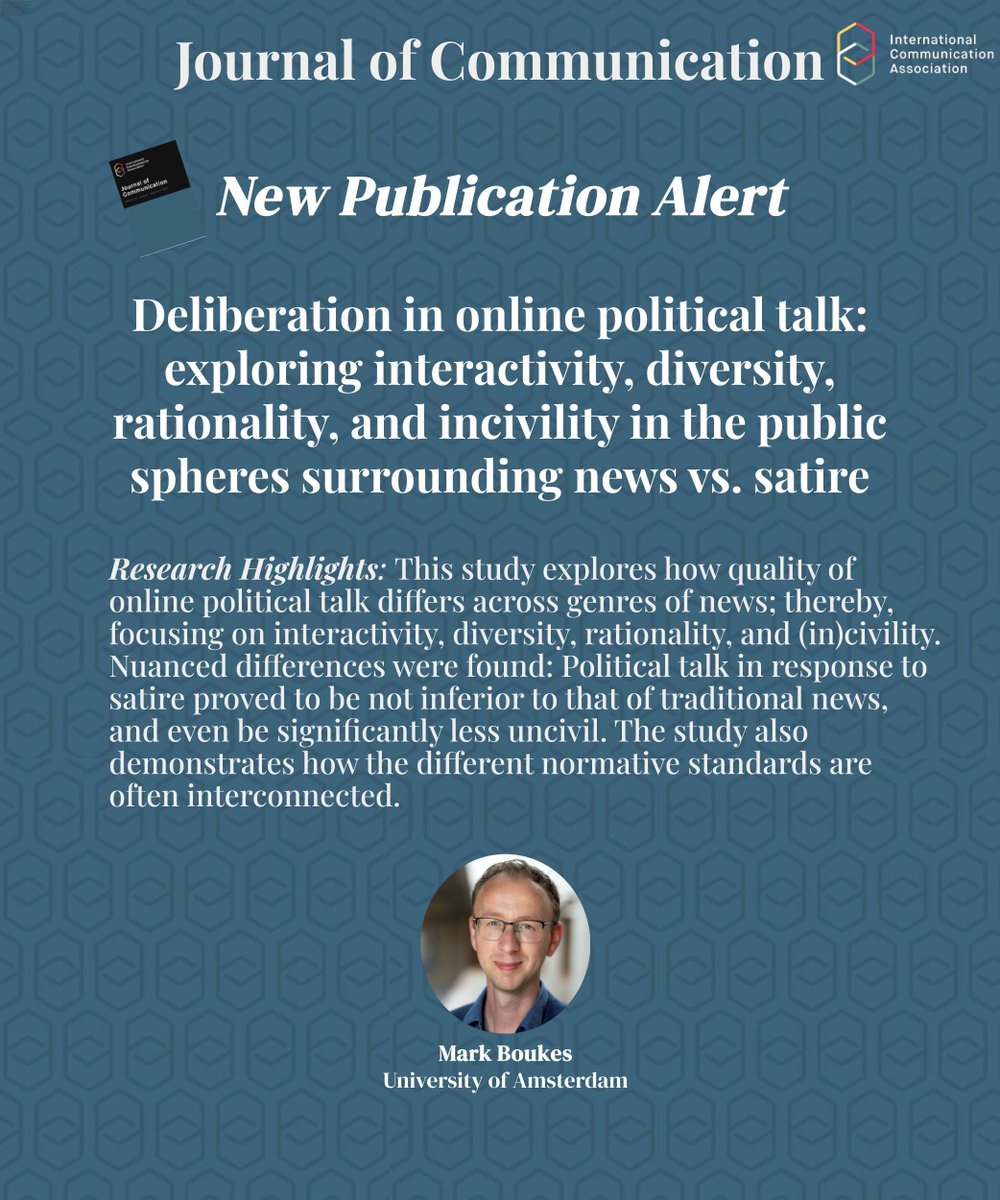
Pub Alert! Introducing new @Journal_of_Comm publication: “Deliberation in online political talk: exploring interactivity, diversity, rationality, and incivility in the public spheres surrounding news vs. satire”, by Mark Boukes @markboukes
Read here: https://t.co/pma705EvRj
Our work presents a proof-of-concept for using LLMs to generate experimental stimuli. Qijia will share lessons we learned and best practices we’ve identified. If you’re around, come check out @Qijia_Ye’s presentation- we’d love to see you there!
🚀 Everyone’s using LLMs to generate message stimuli—but how well do they *actually* perform? Can they manipulate better than humans? Control confounds? We put them to the test—and the results are more surprising than you'd expect.
Check out our framework + evaluation here👇
🤖I am going to share our work on how LLMs can generate stimuli for experimental research #ICA25 Across 4 experiments, we tested whether GPT-generated stimuli could manipulate variables while avoiding confounders.
The results? Promising, but complicated!
Catch us👇Let’s talk!
For @icahdq friends: Join us next Friday (June 13) for our second consecutive panel on “#GenerativeAI for Computational Communication Research”! A fantastic group of scholars will share insights & lessons on bringing LLMs into #CCR research practices. Thanks @ica_cm for hosting!
We have a vacancy for "Postdoctoral Researcher on the Topics of Journalism and Infotainment" with affinity for quantitative methods. Work includes projects on media trust, pluralism, media effects, and satire.
Link: https://t.co/8YAzYUIopb...
Please help me share it 🙏
🚨New paper out in jqd:dm! 🚨
How do different social media platforms connect to each other? In our latest study, we propose that social media can be understood as a system made up of differentiated yet interconnected platforms, shaped by how users share information.