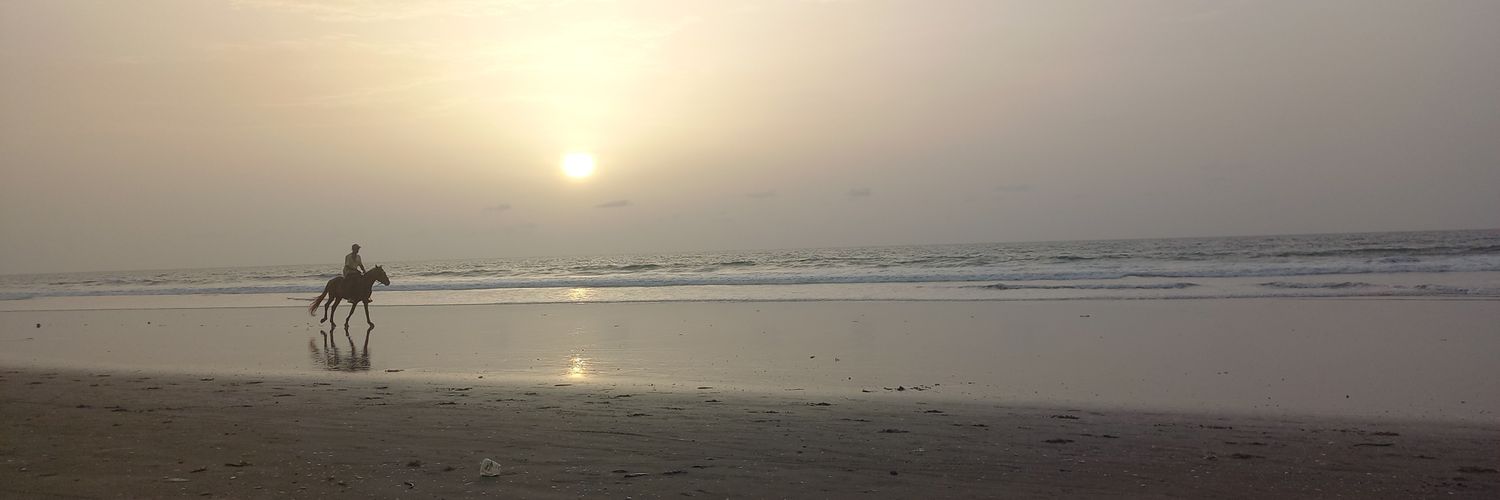
Data is hard to come by, so it is difficult to kind of confirm whether it is actually tiny or a little more than tiny. What is evident is that it is having significant impact on leisure travel on the continent. In fact, more than two experts told me the challenge was more of perception than money/poverty really, and that’s what the young people are changing to great effect
I question the substance because we are talking of such a tiny group of people on a continent where (although poverty rate has dropped slightly), in absolute numbers more Africans are poor today than in 1990. It makes very little difference to anyone but a tiny group of people.
@elnathan_john You're right about traveling within the continent being the default. Data supports this: contrary to what the rhetorics about African migration suggest, you have way more more Africans moving within than outside of the continent. But those are mainly for travel, displacement issues, family visits among others. So, the focus of this is leisure travel. Which may still be small, but it is a growing rapidly new phenomenon. And I am not sure it lacks substance. Beyond the vloggers, there are many young people whose travels are not as documented. Experts and policymakers I spoke to have recognized this growth, and devising new strategies to respond to it.
The framing of “Africans discovering travel within Africa” as a new phenomenon only holds if you look at one narrow class of Africans, usually the urban middle class with disposable income and Instagram and TikTok accounts. Zoom out and there’s nothing new here. Intra-African travel is the historical default. Africans have been moving across the continent for trade, pilgrimage, scholarship, and survival for over a thousand years. In fact if anything there is now less travel and engagement between Africans no thanks to bad travel connections. Sometimes it is easier to travel out of the continent than within.
The Sokoto Caliphate sent traders and scholars north to Cairo, Tunis, and Tripoli along trans-Saharan routes well-worn since the medieval period. Caravans moved the other direction too. North African merchants came south into Hausaland and the wider West African Sahel carrying salt, textiles, and books, returning with gold, kola nuts, and enslaved people. Add the Hajj routes that funneled West African pilgrims like Mansa Musa and later waves of Sokoto-era travelers east across the Sahel to Mecca, often settling for years in Sudan or Hijaz along the way. this is centuries of continental circulation, not a 2020s discovery.
Even today’s displacement numbers tell the same story. most African refugees and IDPs stay on the continent, within their region or country, not flying off to Europe or the Gulf. Look at the UNHCR data and you will see that Africa hosts the large majority of its own displaced people.
So before calling something “new,” the question should be: new for whom? A growing African travel-influencer class discovering a continent their ancestors never stopped moving through is a class lagging behind a much older much richer reality. I will even go as far as saying that this new Instagram travel is of much lower quality and substance than what intra-African travel used to be.
Africans are starting to explore Africa in earnest.
Nigerians in Benin for long weekends.
Ivorians in Dakar on holiday.
Ghanaians touring Victoria Falls.
The continent is becoming aspirational — to those who live on it.
When that happens at scale, everything changes — from integration to investment to identity.
This @NYTimes write-up from Gambian journalist @Saiks2 offers an early signal worth paying attention to.
Archived version here ➜ https://t.co/UTquw9xADj
Great and tragic news at once.
Emmanuel, the 5-year old featured in this report, has since recovered and left the Ebola ward, his father told me.
But the lab technician I met in the next ward deteriorated and died last night. His name was Bienfaits.
https://t.co/ggpolsFgAY
Grateful to the U.S. Embassy for this incredible opportunity. As a journalist focused on cross-border & transnational issues, this experience will strengthen my reporting on trafficking, irregular migration, timber smuggling, & drug trade in The Gambia
Scores Killed in Nigerian Military Strikes as Clashes With Militants Intensify
Nigerian officials said they attacked a terrorist enclave, but locals and rights groups said the airstrikes hit a popular market, killing many civilians.
https://t.co/SqpeUXQahz via @NYTimes
The Hit Erotica Writers Outwitting Nigeria’s Religious Censors
Zealous officials burned their predecessors’ romance novels. Now, young Muslim women in northern Nigeria publish their erotic books in installments on WhatsApp. #Nigeria
https://t.co/BzA8c3KyAB via @NYTimes
2) Today, we will beat them and become African champions. That’s the rule in Our Arena. He who beats the champion becomes the champion regardless of the competition. #SenegalvsGambia
1) #Senegal is #Afcon champs only when #Gambia is not in the competition. And you know why we’re not there most of the time? Because they cheat us, take our players. #Jackson is ours. Half of Sadio Mane is ours.
He Led Congo for 18 Years. Now, He’s a Hunted Man.
Mr. Kabila, 54, was president of Congo for 18 years. Now, the country wants him dead, after a spectacular falling-out with his successor, Félix Tshisekedi. He was convicted of treason and sentenced to death in absentia last year, accused of covertly leading M23, the militia now occupying Goma. @justinmakangara #Congo #Kabila #M23
https://t.co/L2NNZOHDts via @NYTimes
Thousands of African migrants hoping to reach Europe have flocked to a remote island in Gambia that local villagers say is protected by a curse #Gambia
https://t.co/4IiCBfqyTo via @NYTimes
Sports Fans, Doctors, Musicians: Africans Lament U.S. Travel Ban
The restrictions on half the continent have been called racist and unfair. “We don’t come to the United States because we’re running away,” one N.B.A. fan said.
https://t.co/PgOXGjAGxz via @NYTimes
There’s a call out here, at the end of the story. We would be happy to hear from you if you have any information that could lead to further investigations #Nigeria
Nigeria's authorities were warned of gunmen arriving in large numbers, and terrorists' threats. Yet they failed to prevent the two biggest massacres of the past year – in Yelwata and Woro.
with @saiks2@ismaaga6 and Dickson Adama.
https://t.co/iZ7U7EWPE6