There's a line in a democracy that, once crossed, changes everything: when elections cease to be an obligation and become a variable. That line has now been crossed in Britain, and it's the state's own elections watchdog saying so.
The Electoral Commission has been explicit: Labour's justification for delaying local elections is not legitimate. Not unwise. Not clumsy. Illegitimate. Extending mandates damages public confidence, undermines local legitimacy, and creates a clear conflict of interest by letting councils decide how long they can avoid voters. In any functioning democracy, that would end the matter. Here, the government presses on regardless.
That's the scandal. This is no longer a party political dispute or a row between Reform and Labour. The referee has intervened and said the game is being rigged, and the players have decided to ignore the whistle. When a government continues with election delays after being told by the independent authority charged with protecting electoral integrity that its reasoning does not hold, the issue stops being reform and becomes power protecting itself.
The language Labour uses is revealing. Elections are framed as an inconvenience. Voters are framed as an administrative burden. Democracy is reduced to a cost-saving exercise, something to be postponed if the spreadsheets look untidy or the reorganisation plans are mid-flow. Ministers speak of "capacity constraints" as if the right to vote is a luxury item that must wait until the filing cabinets are rearranged. In a democracy, administration exists to serve elections. Elections do not exist to suit administration.
The conflict of interest identified by the Electoral Commission should alarm anyone who still believes in democratic norms. Councils are being asked whether they would like to delay the moment they must answer to voters. That's not consultation. It's self-dealing. No serious system allows those in power to decide how long they may remain there without consent. Yet this is now presented as a "locally led approach," as though outsourcing democratic suspension makes it virtuous.
Worse still is the uncertainty. Candidates have been selected. Campaigns have begun. Money has been spent. And with months to go before polling day, the government is still dangling the possibility of cancellation. The watchdog describes this uncertainty as unprecedented. That word matters. Democracies rely on predictability. Once elections become provisional, subject to last-minute ministerial approval, the entire process is degraded.
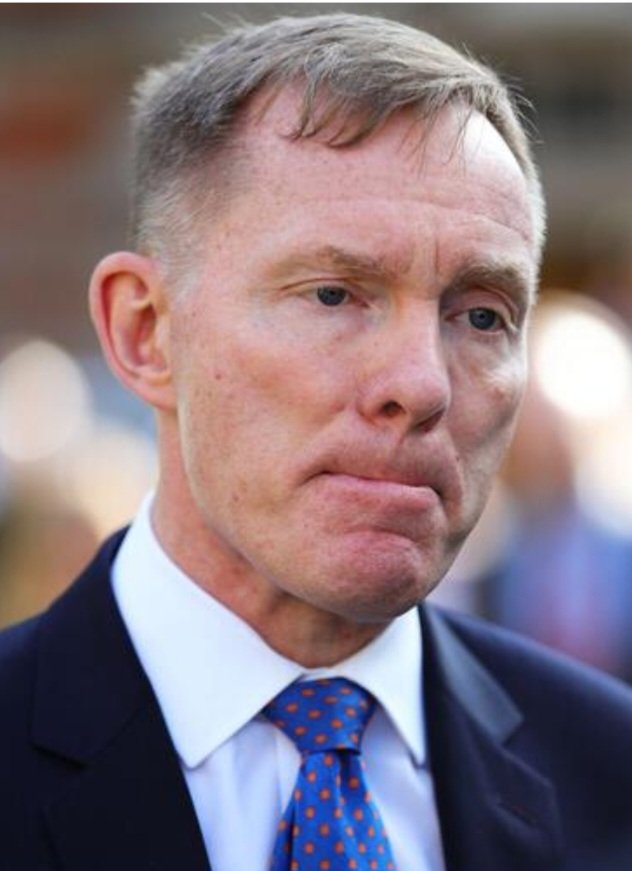
When challenged, ministers retreat into condescension. Chris Bryant waves away concerns as conspiracy and insists that "ordinary people" would think elections are "a bit daft." This is a familiar trick: speak for the public while denying them a voice. Redefine democratic rights as common-sense nuisances that sensible adults should stop fussing over. It's the rhetoric of managed democracy, where participation is tolerated only when it produces the correct outcome.
None of this is happening in isolation. Mayoral elections have already been postponed. Now council elections are being pushed back again. The pattern is clear. When the polls turn hostile, the timetable moves. When voters become unpredictable, the vote is delayed. Governments confident in their mandate do not need to buy time. They face the electorate and take their chances. Labour is not doing that because it knows what the numbers say.
The danger is not just that millions of people may be denied a vote next year. It's the precedent now being set. Once a government learns it can delay elections after the watchdog objects, after campaigns have begun and candidates are in place, the principle is broken. Elections become conditional. Democracy becomes something you are granted when those in power feel safe enough to allow it.
"Chris Bryant waves away concerns as conspiracy and insists that "ordinary people" would think elections are "a bit daft.""
Masonic advancement takes commitment. You cannot properly appreciate or contemplate the meaning of what we do unless you commit to taking part.
It's through this learning that we appreciate the beauty of the ritual and what it is meant to inspire in us through self contemplation.
The most rewarding time in masonry for me was after I came out of the chair, and every meeting I sit and see ceremonies with which I am already familiar, I 'see' increasing depth and meaning.
As a single piece of advice - commit to learn, advance through offices, and it will pay you back in every aspect of life.
I understand that some may need some, or lots of support in that journey. But that's the point. We are there to offer each other that support, strength and Brotherly love.
If you want it to be handed to you on a plate, you've chosen the wrong path.
Freemasonry rewards those who are willing to build, and who accept that they will never achieve perfection, but their labours will nevertheless generate their own priceless reward.
@glo_worm001@DreyfusJames Maybe the second advert will show a cat stalking in and tearing them limb from limb. That would make it one of the most incredible campaigns ever.
But somehow, I doubt it...
@Jaguar This 'statement' is from a company that has entirely lost its way. Like a rebellious 6th former who shaves their head and joins a Marxist protest group just to provoke a reaction from a wealthy, discerning father.
The father drives a Jag.
At least, he used to.
Grow up Jaguar.
For 700 years of history, the tallest building on Earth was a church.
But do you ever wonder how medieval society built them ��� with no power tools or modern machines?
The answer may surprise you... (thread) 🧵
@donnie_ballsack@SeeDaneRun@JamesLucasIT I am uplifted by the music of the great composers, but I'll never write a symphony. I am also in awe of Elon Musk's ambition in space travel, but I'm not building myself a rocket.
Horses for courses I guess.
The Cathedrals were not built by slaves. The builders were the most skilled and well paid of their time.
I read that you scorn the reason they were constructed - yes, the church had awesome and even corrupting power, but was it that different to modern taxation?
Where would we find such inspiration today?
@TomABacon@elonmusk is expressing an observation that the government, elected by under a third of votes cast is restricting our movement, our right to protest, even to voice concern about the destruction of our way of life.
So many now afraid to speak, let alone march. We should thank him