@oyorooms today I am facing wrost experience of my life i have book a room through oyoapp but when i reached hotel the manager refused to give the room and the customer still hasn't resolved the problem who is responsible????
It’s #SunDay! This week’s (Nov. 28 - Dec. 4) space weather report includes:
· 1 X-class flare
· 9 M-class flares
· 44 coronal mass ejections
· 1 geomagnetic storm
This video from NASA’s Solar Dynamics Observatory (SDO) shows the week’s activity.
This week’s X-class flare, at about 1:23 in the video below, is particularly photogenic because of its location on the Sun’s limb, or edge. This positioning gave SDO a clear view of a suspended strand of solar plasma, known as a prominence, against the blackness of space as it erupted with the flare.
More imagery and information about that flare: https://t.co/ynWd2xuzaU
Our accounts may have been quiet, but the Sun sure hasn’t! ☀️💥
So far, November has already seen six X-class solar flares and the strongest geomagnetic storm of 2025.
All but one of these flares — the X1.1 flare on Nov. 4, shown here at the lower left — erupted from the same active region on the Sun: AR14274. This composite image from NASA’s Solar Dynamics Observatory, or SDO, helps us visualize how AR14274 has moved across the Sun during that time. This composite image is created by overlaying SDO’s images from each flare onto each other.
Solar flares, which are intense flashes of light, do not themselves cause geomagnetic storms — but they are often associated with coronal mass ejections, giant eruptions of solar particles, that do. The three back-to-back flares in the middle of this image, erupting on Nov. 9, 10 and 11, were accompanied by coronal mass ejections that triggered the intense geomagnetic storm of Nov. 11-13, which led to aurora sightings as far south as Florida.
📸 credit: NASA/SDO/Scott Wiessinger
SHOCK analysis for the coronal mass ejection launched from the 1.8 X-flare. BOOM! If this model is correct, this CME is coming in hard and fast just after the Full Supermoon.
That was an Earth directed CME that I spied! I think that we are going to see more than a glancing blow... the timing is about right though... arrival on the 16th #Aurora#Auroraborealis#Northernlights
Past 90 days (07/13-10/11/25) of coronal holes on the Sun and global seismic activity rhythms. Mid-latitude coronal hole high-speed-stream impacts and the subsequent extended periods of very low solar wind plasma density (<1 particle/cm^3) that follow match up the best with high-magnitude earthquake rhythms
A C9.6 flare from AR 4146 produced a coronal dimming suggesting a CME left the Sun's atmosphere... from preliminary STEREO-A COR2 imagery, it looks like the CME is slow but partially heading towards Earth. We now wait for LASCO/CCOR and models to give us more information.
The large (-) coronal hole, which brought G3 storming last month has come back around to the east side of the sun. This rotation, it is much smaller due to AR development in its northwest side. It will be interesting to see how this affects the CIR, which is working against RM.
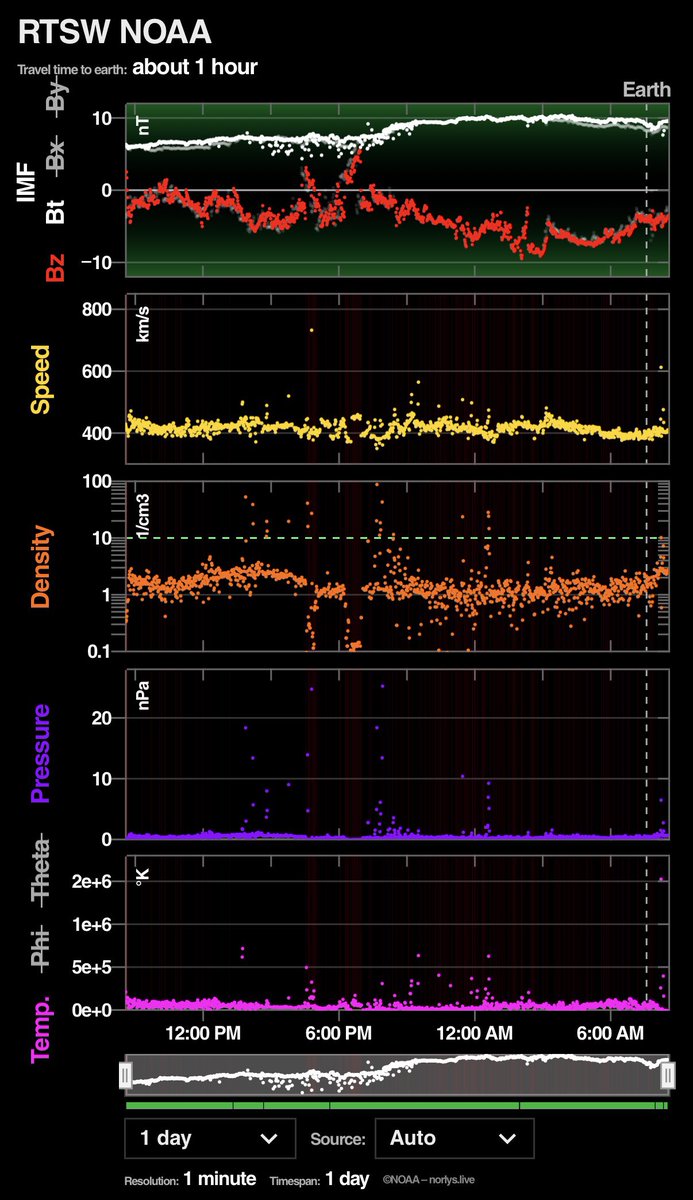
It looks like we are under the influence of the first CME, still. You see in Bt that nice smooth rounding which is a sign of a CME flux rope or magnetic core. The bz has been almost completely south for the last 24 hours. Effects may be waning soon, but we’ll see!
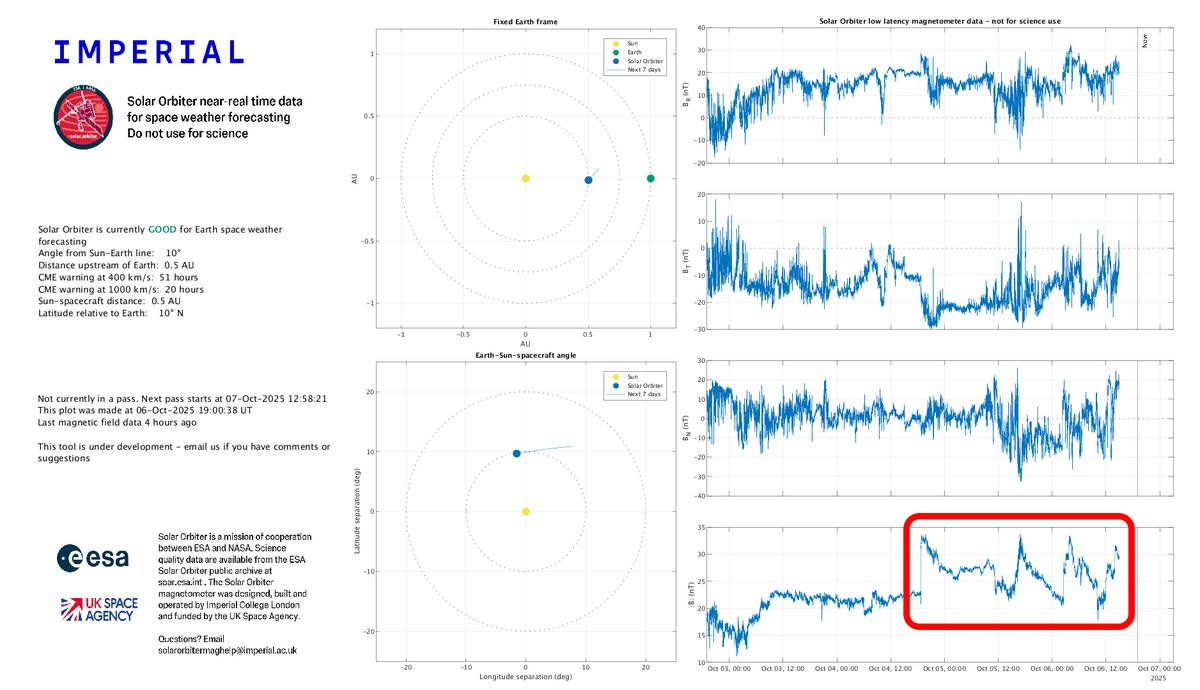
We don't have three plasma waves coming but FOUR! Each jump in the Interplanetary Magnetic Field (Bt) is about 10 nT, so not massive, but the cumulative effect on the Earth geomagnetically may be significant and take us beyond active/G1 conditions. Aurora coming! #spaceweather