Conservation Technology Technical Project Manager of Instant Detect 2.0 at ZSL. Ex-Army Reconnaissance and Surveillance Officer. Zoologist. Views are my own.
📸Camera traps have revolutionised how conservationists monitor and understand the natural world.
#InstantDetect2 will revolutionise camera traps.
🌍 The Challenge
Climate change and human activity have pushed our precious planet to its limit causing devastating habitat and species loss.
Landscapes requiring urgent conservation action are often unconnected, with no cellular or WiFi connectivity.
Monitoring and protecting these remote unconnected landscapes is hard, risky and slow.
💡 The Solution
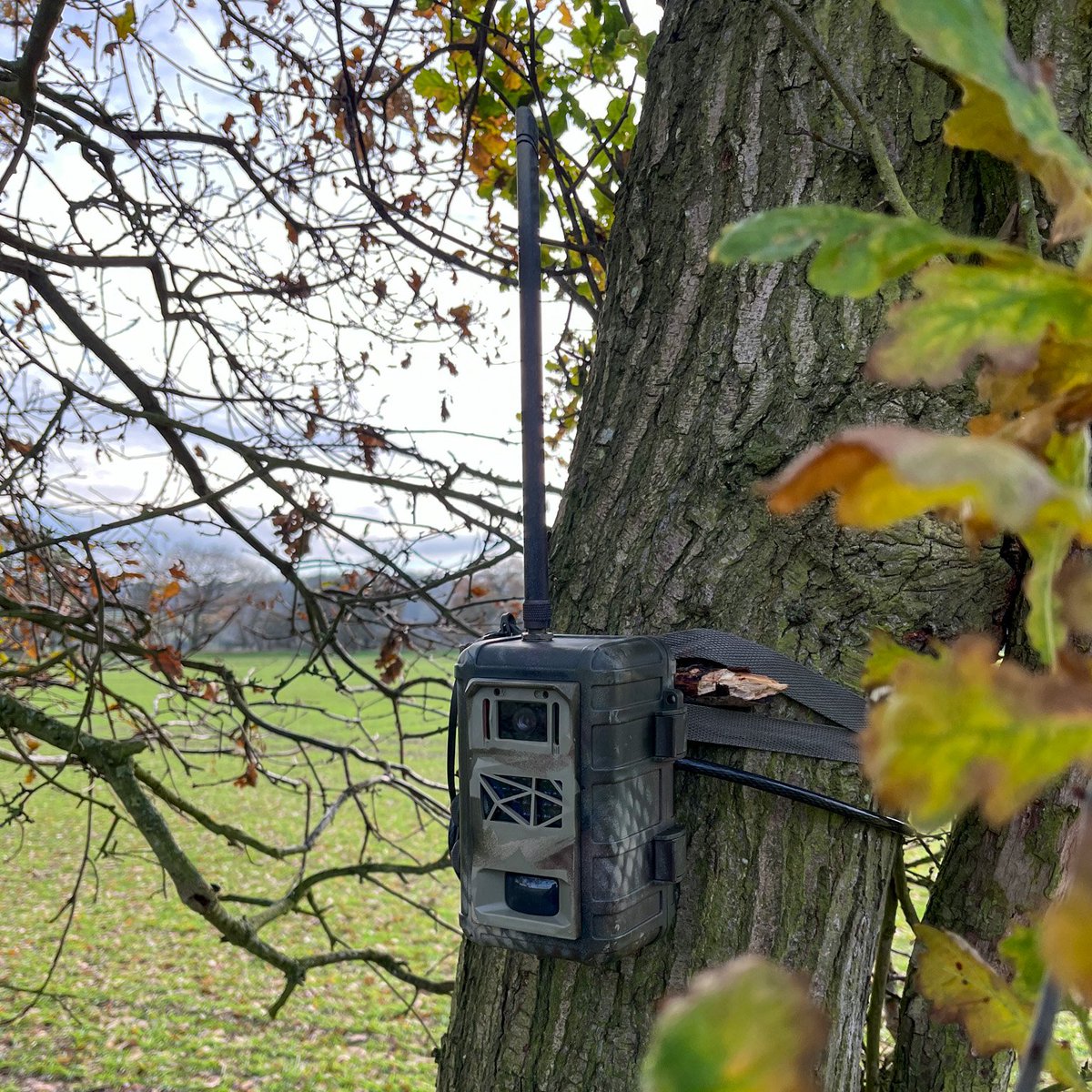
#InstantDetect2 is the world’s first affordable satellite-connected camera trap system.
Its camera traps and sensors transmit their images and data to the Cloud in near real-time using affordable satellite connectivity.
Developed by the Zoological Society of London, #InstantDetect2 has been designed by conservationists, for conservationists.
🗝 Key Features
🏝 Light-weight and foot-portable, #InstantDetect2 can get to the most inaccessible landscapes.
⚡ Running off batteries and using satellite connectivity, it works anywhere in the world without any additional infrastructure.
📲 As a complete out-of-the-box solution with simple controls, it can be set-up and maintained by non-technical users.
💰 Low-cost hardware, coupled with an unbeatable @IridiumComm satellite airtime package, provides unrivaled cost of coverage.
💪 Built for the most harsh and remote landscapes, the system is robust, reliable and long-lasting.
Stay tuned for my next post to see how #InstantDetect2 will be made accessible to the conservation community...
Imagine if those working to protect our Earth’s environment and wildlife could place a camera or sensor anywhere in the world and see the images and data being captured in near real-time.
With ZSL's #InstantDetect2, now they can...
#InstantDetect2 has the potential to have wide ranging conservation impact:
Conservationists could get real-time insights about wildlife and the environment.
Is the waterhole dry?
How many offspring were born today?
Where is the herd feeding now?
This would speed up decision making and lead to more effective conservation responses.
Wildlife rangers working in the vast and unconnected protected areas could use the system to detect and prevent wildlife poachers or illegal loggers from causing irreversible death and destruction.
#InstantDetect2 would act as a force multiplier, enabling small teams to patrol and monitor large areas more safely and effectively.
Communities living alongside wildlife could use #InstantDetect2 to provide advanced warning of wayward elephants or big cats and thereby prevent human-wildlife conflict.
This could save both human and animal lives.
All going well 🤞, 2024 to be the year that sees #InstantDetect2 scale and launch!
So ask yourself this,
Where would you put yours?
What might you discover?
Could it change the world?
we use off-the-shelf enclosures which then need specialist gluing (including UV curing glue) to turn them into robust waterproof cameras. A big thank you to our manufacturing partner NHT Electronics! Learn more at https://t.co/UsRmxiqdVr 2/2
#Tech4Wildlife#InstantDetect2 is ready for Beta testing! Our Beta testers will shortly deploy #ID2 in a range of unconnected environments for real conservation uses. We are so excited to see how the systems perform. To make the system as low cost as possible, 1/2
@Carly_Batist@WILDLABSNET We’re looking into ways to add acoustic detection into the Sensor Endpoint but that’s not ready yet. For now we have the metal detecting sensor that can be used with the camera or completely buried covertly with the Sensor Endpoint for threat detection. See my other thread!
#Tech4Wildlife#InstantDetect2 is looking for Beta testers. Learn more about the system and apply to be a Beta tester at our new website https://t.co/m9cQLO6jzx Where will you put yours?
What might you discover?
Could it change the world?
#InstantDetect2 is #Tech4Wildlife built by conservationists, for conservationists. The system is in the latter stages of Alpha testing @ZSLWhipsnadeZoo and we hope to release more information about our testing in the next few months. End of🧵. 13/
Illegal human activity in protected areas is causing irreversible biodiversity loss and habitat destruction, sometimes on an industrial scale. To stop this conservationists are using #Tech4Wildlife and #cameratraps. But how can a camera trap detect only human activity?🧵 1/
For a connected camera trap like the #LoRa and @Iridium connected #InstantDetect2 cameras, this would result in significantly less battery consumption and airtime usage, while also reducing the time spent by the system's operators checking on, or responding to, false alerts. 12/