Webb's mosaic is its largest image to date, covering an area of the sky 1/5 of the Moon’s diameter (as seen from Earth). It contains more than 150 million pixels and is constructed from about 1,000 image files. Compare the new image to @NASAHubble’s 2009 view, shown here!
Galaxies collide in Stephan’s Quintet, pulling and stretching each other in a gravitational dance. In the mid-infrared view here, see how Webb pierces through dust, giving new insight into how interactions like these may have driven galaxy evolution in the early universe.
🌟 A star is born!
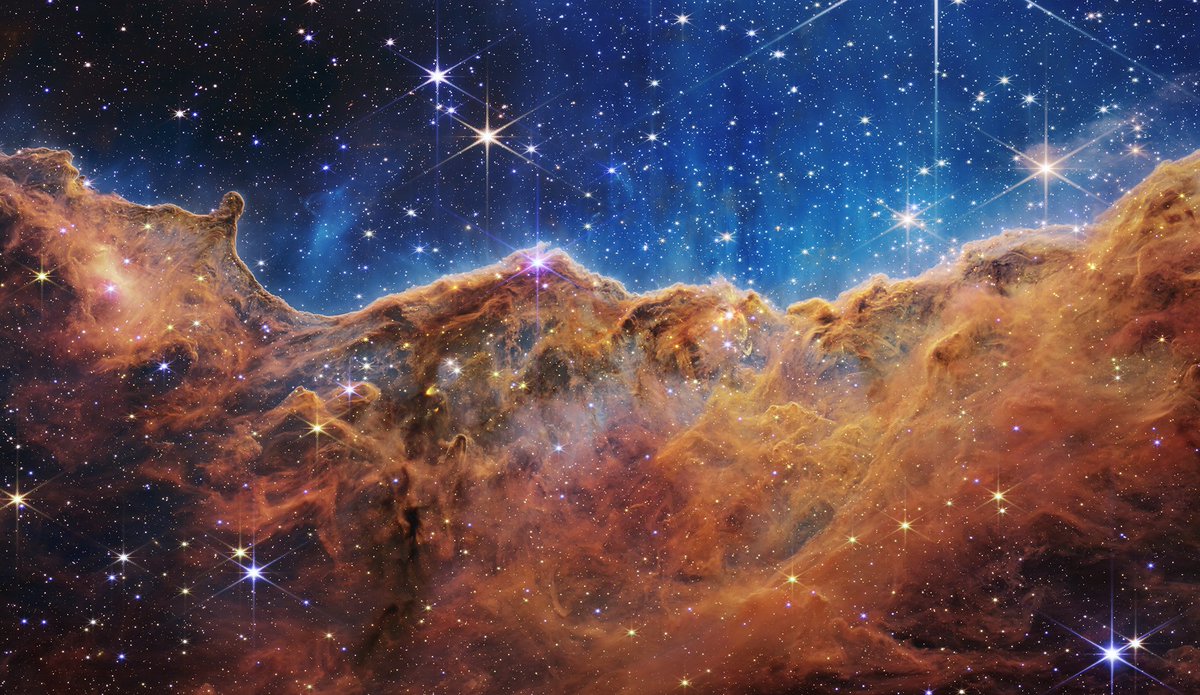
Behind the curtain of dust and gas in these “Cosmic Cliffs” are previously hidden baby stars, now uncovered by Webb. We know — this is a show-stopper. Just take a second to admire the Carina Nebula in all its glory: https://t.co/tlougFWg8B #UnfoldTheUniverse
Time travel is possible now it's proven.
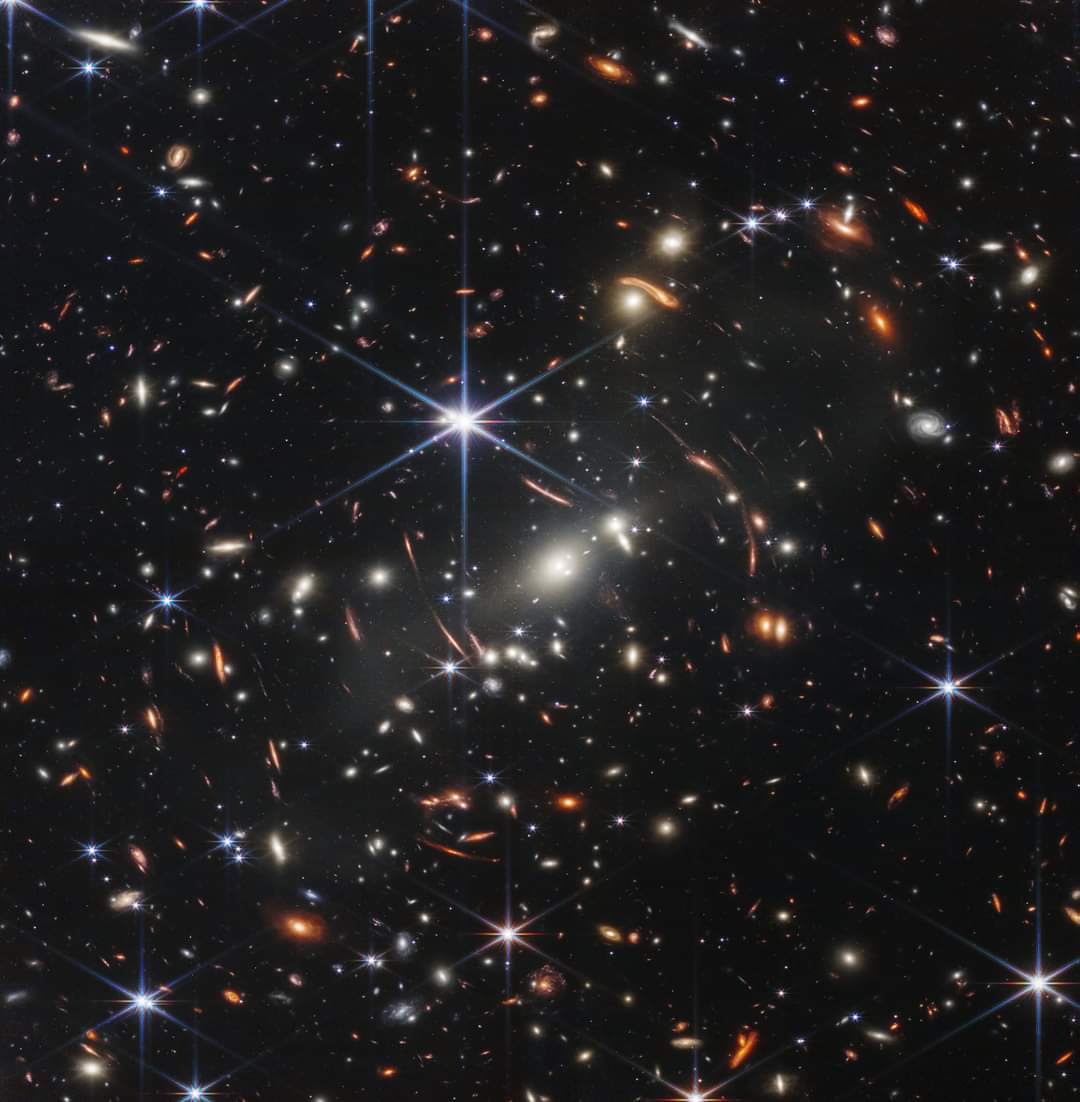
An image of over 13 billion years old.
What we are watching in that pic shining like stars r galaxies & nebula and other giant stars, isn't cool!
Wow!
#JamesWebbSpaceTelescope