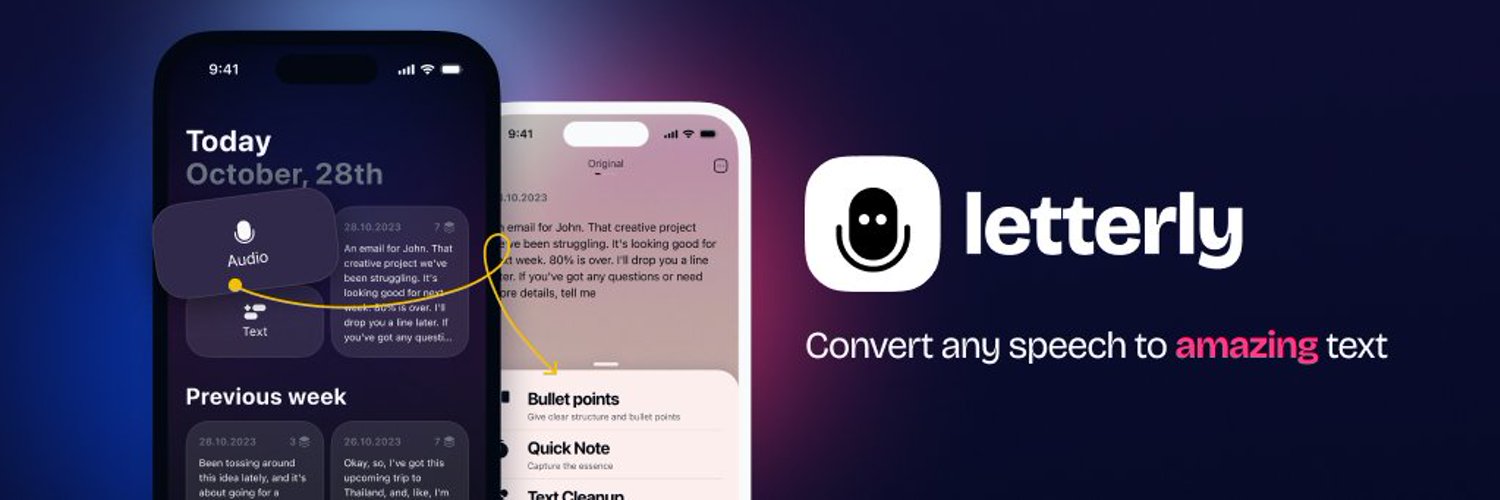
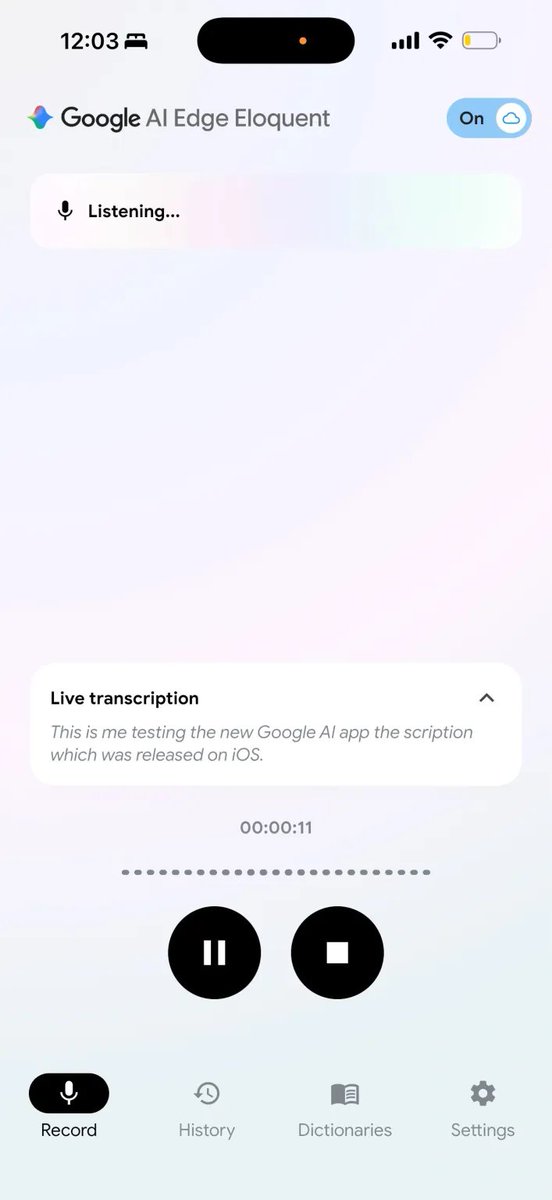
Google launched an AI dictation app. 5 minutes in, it is clear why @letterlyai has nothing to worry about. Why does Google keep winning at research and losing at consumer apps?
@FightyAI@starter_story Thanks! I get distracted too — you see everyone shipping everything and feel like you need to do more to keep up. But it's actually the opposite. Do fewer things, do them really well. That's what works.
@franbmacedo@starter_story Yes, we reinvest everything. Profit is basically zero on purpose — all goes back into growth. We pay ourselves enough to live comfortably, but that's it. Not optimizing for profit right now, optimizing for scale.
@thejeneshnapit@starter_story $250K is pre-cuts, but most revenue comes through Stripe, not app stores — so platform fees are much lower. Profit is zero on purpose. We reinvest everything into growth.
@LeCodeBusiness@starter_story You can clone the UI in 48 hours. But it'll feel like a cheap knockoff — slow, buggy, no polish. Users notice and leave. The moat is the whole system: acquisition channels, community, and retention data built over years. That's not cloneable and that's what makes it sustainable.
@RobinAndTheDog@starter_story If your app gets flagged as spam — maybe it's worth asking what makes it different. You don't need more features. You need a clear angle — simplify, improve the design, or bring something new.
If you can't explain "why mine?" — that's the real problem.
@skar_connect@starter_story The profit is zero — everything is reinvested back into growth. We pay ourselves enough to keep a comfortable life, but we're definitely not rich yet.
Here are more details on how we spend it: https://t.co/UYAFffhpP0
We spend $200k/month on ads.
This money comes entirely from revenue. We’re 100% bootstrapped.
Why not just take profit now?
For the first 1.5 years, Letterly grew with $0 ad spend: word of mouth + a few viral moments. It worked — but it was random.
To make growth predictable, we now reinvest almost everything into paid ads. Sometimes we even lose money in month 1 — but LTV pays it back later.
Small salaries. Long-term focus.
Goal: millions per month, not quick profit.
Guy makes $250,000 per month with a VERY simple app.
Keep. it. simple. stupid!
@Samarsky and I talked for a few hours. Here’s the top 4% of our chat:
> His simple app that generates $3m/year (1:30)
> The ONE thing $0 MRR founders ignore (3:44)
> How to build simple apps in 2026 (7:20)
> The tools that power his $250k MRR app (10:55)
> The steps he would take if he had to start over today (12:08)
@bygregorr@starter_story You actually need extreme clarity on the user's goal to build a simple UI.
Making an app feel "simple" often requires complex logic behind the scenes to handle the friction.
We choose to optimize for the user's experience, not the simplicity of the code.
@ciprian__b@starter_story It's not about the number of features, but whether you can make them intuitive.
If you can make them all obvious to the user? Great.
But that takes time. Usually, you have to choose: a few features that are crystal clear, or many features that risk confusing the user.
@andreyiscoding@starter_story I still fight that temptation every day. It actually gets harder as you grow
More users -> more requests. More competitors -> pressure to keep up
It takes a lot of discipline to say no and focus on UX instead of just shipping new buttons