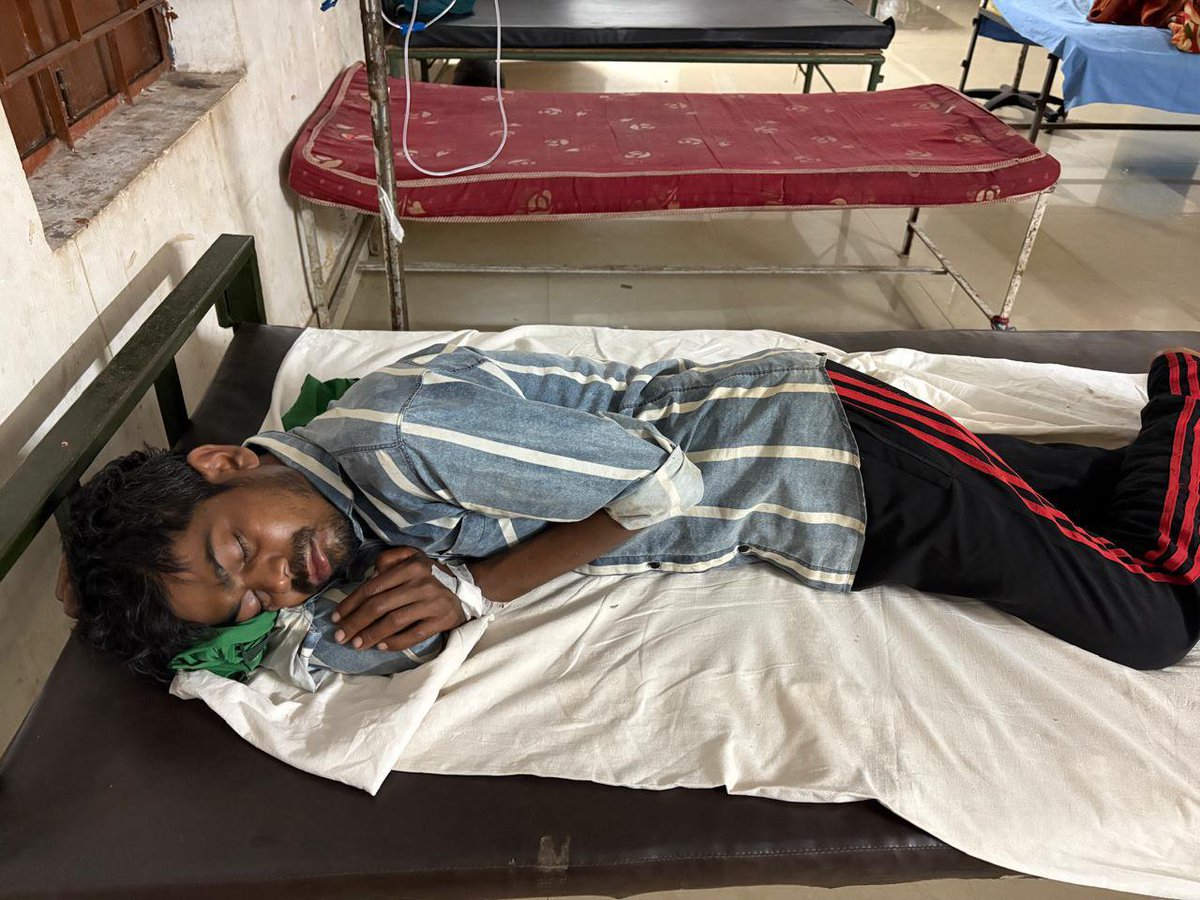
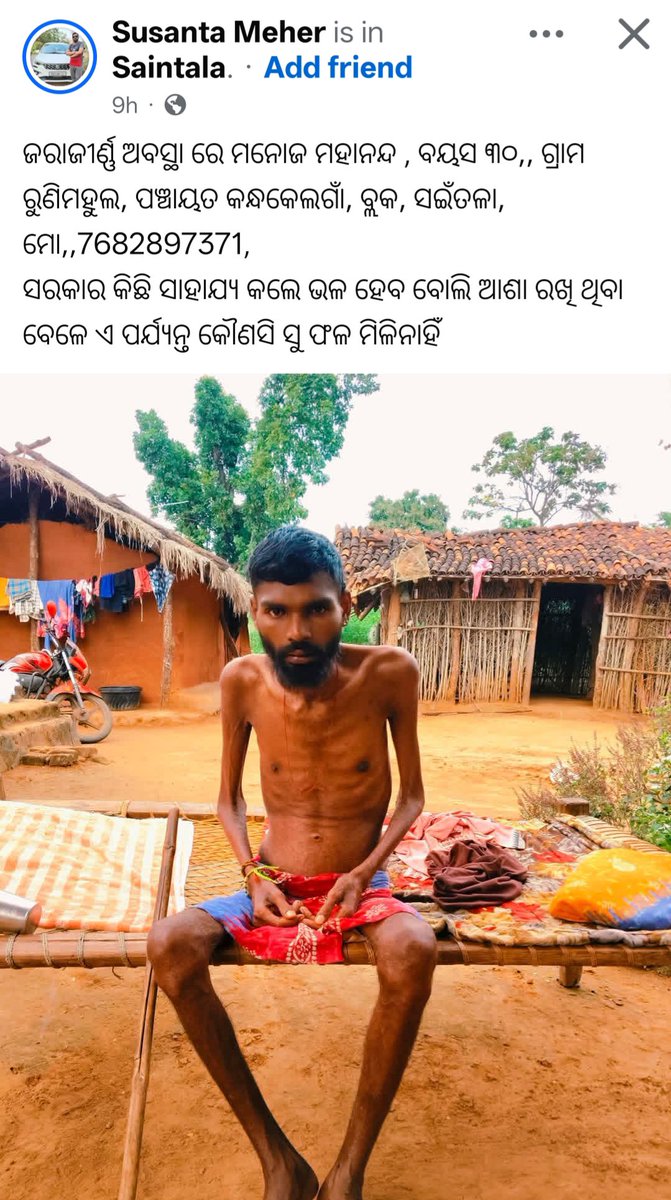
13.86 lakhs ration card applications pending in #Odisha for years. In this article I have discussed how the @Food_Odisha could easily cover them under the #PDS and the never ending #EKYC process should not be a reason for the delay https://t.co/xtl8NGTkkJ @CMO_Odisha
#Sijimali#BauxiteMining#DrRandallSequiera
Now that the illegal arrest of #DrRandallSequiera, largely ignored by the local media, has received some national attention, a full scale vilification campaign has been launched by the boot-lickers of the current dispensation to paint the Good Samaritan doctor as part of the conversion mafia (without a shred of evidence to back the preposterous claim, one may add). Had he been a Hindu, I am sure these people would have branded him a leftist, a member of the tukde tukde gang, an anti-national propped up by foreign funding or - as is the fashion these days - a Dimagi Naxal. The irony is: those making the charge sit hundreds of miles away and know nothing about the ground realities. They will never take the trouble of visiting Dr Sequiera's operational area and ask the people there what they think of the doctor. Nor will they offer any proof to back their claim. In the New India that we live in, it's so easy to make a villain out of anyone who doesn't toe the line or - at the very least - keep his/her mouth shut against the rapacity of the corporate sharks and their political godfathers !!
@pradeepbaisakh@Sulochana_Apa Everything boils down to politics, so without progressive politics andn politicians, we many not have a green clean city for all not only limited for the rich localities
Do read Sandeep Sahu's report on arrests made on fabricated cases to pave way for a big corporate to capture the minerals. This is how the Odisha's 'People's government" (it calls itself as!) is dealing with the tribal people. @geminianguddu
Doctor Randal who chose to work with tribal communities in remote tribal villages in Odisha is languishing in jail in false case. #ReleaseRandal and other environmental activists
Thousands of students at Allen Career Institute protested across its centres in Kota after the coaching institute allegedly failed to fulfil its promise of providing six laddus to each student before the Diwali break. Angry students took to the streets, created an Instagram page named ‘Laddu Janta Party’ and flooded social media with reels and memes over the issue. The protests reportedly escalated to the extent that the coaching management had to call the police to control the situation.
Meanwhile, some rival coaching institutes organised bhandaras offering unlimited sweets on Sunday, adding to the buzz around the controversy. Allen founder Brajesh Maheshwari reportedly made last-minute arrangements for laddus in an attempt to contain the situation.
Video: NCMIndiaa/X
#Kota #LadduProtest #StudentProtests #Diwali2026 #AllenCareerInstitute
Randall Sequeira, a physician who has been working in community healthcare in the tribal areas of SW Odisha and supported groups opposed to the clearing of hills and forests of the region for bauxite mining, was arrested on 16 October https://t.co/1C4SSwp0XE
Sang 2 lines of the Hindi song 'Chingari koi bhadke' from the film Amar Prem. The entire song has striking parallels with how our supposedly independent institutions, the Election Commission & Judiciary, appear to favour the BJP and not Indian citizens whom it's meant to protect
I declare that henceforth all the protests we conduct will take place without seeking permission and wherever we wish. I refuse to accept administration, police or judiciary’s right to regulate protests. Inquilab Zindabad!
https://t.co/X7ipfsWjp2 strongly objects to the takedown requests targeting its X handle and posts documenting instances of online censorship in India.
On 3 November 2026 at 3:18 AM and 4:33 AM, https://t.co/X7ipfsWjp2 received an email from X’s Legal Department informing us that it had received takedown requests from the Delhi Police concerning 42 URLs. These include the handles of https://t.co/X7ipfsWjp2, @internetfreedom, @geoblockedindia, and posts from the said organisations and other users. A separate notification identified five (5) URLs concerning https://t.co/X7ipfsWjp2’s X account and our posts.
The requests relate to posts discussing legal notices received by https://t.co/X7ipfsWjp2, IFF and @geoblockedindia from an advocate purportedly acting on behalf of the Rashtriya Swayamsevak Sangh (RSS). They also include posts by users who commented on or reshared these posts, as well as other posts by @geoblockedindia documenting instances of digital censorship.
Chain of Events
1. On 29 October 2026, when https://t.co/X7ipfsWjp2, IFF and @geoblockedindia (collectively “Organisations”) received a legal notice from an advocate purportedly acting on behalf of the RSS. The notice took objection to https://t.co/X7ipfsWjp2's Free Speech Tracker, which documents instances of censorship and online content restrictions and account takedowns in India. https://t.co/X7ipfsWjp2 and IFF raised concerns about the authenticity of the notice, which did not carry an official letterhead or identify an authorised signatory.
2. On 1 November 2026, the Organisations received another notice from the same advocate. This notice stated that the matter had been transferred to the RSS's legal and advocacy wing, the Akhil Bharatiya Adhivakta Parishad, and referred to complaints allegedly filed in different states.
3. On the same day, X informed https://t.co/X7ipfsWjp2 that it had received a request from the “Indian Police” alleging that a post discussing the legal notice violated Indian law. However, this notification did not identify the requesting law enforcement agency, statutory provisions invoked, or provide a copy of the underlying order or request. The post remains accessible on X at the time of writing.
4. On 3 November 2026, X communicated further directions from Delhi Police covering 42 URLs, including the URL for https://t.co/X7ipfsWjp2’s account itself. In the attached notices, the first notice refers to Section 356 of the Bharatiya Nyaya Sanhita (BNS), 2023 which deals with the offence of criminal defamation as the legal basis. The second notice refers to Section 356 of BNS and Section 79(3)(b) of the Information Technology Act, read with Rule 3(1)(b) of the Information Technology Rules 2021, which deal with intermediary liability and due diligence of intermediaries as the legal basis. The grounds cited for the takedown requests concerning https://t.co/X7ipfsWjp2’s X handle and posts include hate speech, defamation of RSS, and safety/security.
Takedown requests targeting https://t.co/X7ipfsWjp2's handle threaten its public service work
https://t.co/X7ipfsWjp2's X handle is an important public-facing channel through which it disseminates the organisation's ongoing work to the general public. It is through https://t.co/X7ipfsWjp2 social media handles that users who face digital rights violation and online harms reach out to us for pro bono legal services. Through the handle we publish legal and policy analysis, document instances of censorship, raise awareness about digital rights violations, and communicate such information with the public including journalists, researchers, civil society organisations among others. It also serves as a channel for sharing developments concerning internet shutdowns, content restrictions, account takedowns and other violations of digital rights and for providing important assistance, through RightsLine, to citizens facing online harms ranging from gender based violence and harassment to cyberfraud.
A direction seeking the takedown of an organisation’s entire account, rather than addressing specific content through a transparent and legally established process, would have consequences far beyond the posts that have been identified. It would also deprive the public of an established and credible source of information on digital rights and the exercise of fundamental freedoms online.
The request to restrict https://t.co/X7ipfsWjp2’s entire X handle, rather than identifying and seeking the removal of specific allegedly unlawful content does not meet the necessity and proportionality standards. The right to freedom of expression under Article 19(1)(a) of the Constitution extends to disseminate information, circulate ideas and reach an audience. Restrictions on fundamental freedoms must not be arbitrary or excessive and must not go beyond what is necessary to achieve their legitimate objective (Chintaman Rao v. State of Madhya Pradesh, AIR 1951 SC 118). Any restriction on an organisation's established channel of communication must therefore be assessed in light of its wider impact on the organisation's ability to exercise its rights and the public's corresponding right to receive information.
Further, the reliance on Section 79(3)(b) of the Information Technology Act, 2000, read with Rule 3(1)(d) of the IT Rules, 2021, raises questions to whether intermediary liability provisions are being used as an independent mechanism for restricting online speech, potentially bypassing the procedural safeguards prescribed under Section 69A of the IT Act and the Blocking Rules, 2009. In Shreya Singhal v. Union of India, (2015) 5 SCC 1, the Supreme Court read down Section 79(3)(b), clarifying that an intermediary's obligation to remove or disable access to content must arise from a court order or notification by the appropriate government or its agency, and that such orders or notifications must strictly conform to the grounds enumerated under Article 19(2) of the Constitution. Section 79(3)(b), which forms part of the intermediary safe-harbour framework, cannot be treated as an unrestricted or independent source of blocking power or used to circumvent the safeguards governing restrictions on online information.
It is also pertinent to note that https://t.co/X7ipfsWjp2 in Software Freedom Law Center, India v. State of NCT of Delhi & Ors, W.P.(C) 7650/2025 has also challenged the constitutional legality of the notification issued by Lieutenant Governor (LG) which empowers the Delhi Police to issue takedown orders for removal of online content from social media. The matter is currently pending in the Delhi High Court.
Documenting censorship is not facilitating circumvention
The Free Speech Tracker is an initiative to document instances of censorship in India. Its purpose is to make censorship visible, identify patterns in content moderation and provide the public with information about restrictions affecting online expression.
Documenting a restriction does not amount to endorsing the restricted content, facilitating access to it or encouraging circumvention of the law. Over the last few months, we have seen an unprecedented number of online content restrictions happening in India, and in the absence of adequate transparency from the government and platforms about the nature, extent and legal basis of these restrictions, we wanted to document these instances in a manner that is informative to the general public. Freedom of expression encompasses not only the right to publish and disseminate information but also the right to question restrictions on speech, seek accountability and scrutinise decisions affecting public discourse.
Independent civil society organisations like ours play an important role in documenting these developments and ensuring that restrictions on online expression do not go unnoticed. Such takedown requests risk creating a chilling effect on public-interest advocacy and may discourage individuals from discussing or questioning instances of censorship.
Irregularities in notice received
The first notice received by https://t.co/X7ipfsWjp2 from X, pertains to this post. The notice states that the content in question is being reported on the grounds of ‘safety/security; defamation; and other’. Furthermore, the notice states that the post is “defamatory towards the Rashtriya Swayamsevak Sangh under the Section 356 of the Bharatiya Nyaya Sanhita, 2023 (BNS).” Criminal defamation under Section 356 of the BNS, 2023, is a non-cognizable offence and therefore, requires a court order for the police to initiate action.
The second notice received, pertains to a list of 42 posts and accounts. The notice states that the content in question is being reported on the grounds of “Hate speech; safety/security; defamation; enforcement of court order; and other’. The posts published by https://t.co/X7ipfsWjp2 did not contain any defamatory statements or allegations against RSS, as it was purely factual reporting based on information relating to the notice received by the Organisations on 29 October 2026.
Furthermore, criminal defamation is a non-cognizable offence which requires a court order for the police to initiate action. The Delhi Police is not empowered to issue a content takedown order for such offence via the Sahyog Portal in the absence of such an order. While the notice mentions enforcement of a court order as one of the grounds, no such court order is cited or made available in the notice. Additionally, the notice does not identify a legal basis or statutory provision for the offences of hate speech or safety/security. The notice also relies on Rule 3(1)(d) of the Information Technology (Intermediary Guidelines and Digital Media Ethics Code) Rules, 2021 read with Section 79(3)(b) of the Information Technology Act, 2000 and states that action must be taken by X within 3 hours.
Therefore, in light of the above, https://t.co/X7ipfsWjp2 condemns the takedown request issued by the Delhi Police and maintains that they are unlawful, disproportionate and violative of the fundamental rights to freedom of speech and expression under Article 19(1)(a). https://t.co/X7ipfsWjp2 calls upon the Delhi Police and the concerned authorities to immediately withdraw these requests. If there exists any relevant court order directing the removal of the content, https://t.co/X7ipfsWjp2 calls upon the Delhi Police to provide copies of said order to the Organisations (https://t.co/X7ipfsWjp2, IFF, and @geoblockedindia) posthaste.
We stand in solidarity with all individuals and organisations affected by these takedown requests and reaffirm our commitment to defending their right to speak, document and question restrictions on online expression. Transparency, accountability and access to remedies must remain central to any process that seeks to restrict online expression.