Together Towards the New Nigeria That Is Possible
On this June 12, Democracy Day, I had useful meetings with my partners in the building of the New Nigeria that is Possible: our great party’s National Leader, H.E. Senator Seriake Dickson, and our party’s Vice Presidential candidate, H.E. Senator Rabiu Kwankwaso. The NDC, as a party that is barely four months old, despite the challenges, remains the party of the future, and the fruitful discussions at the meetings clearly underscore this fact.
The leaders and members of a committed political family must be willing to make sacrifices and show tolerance and accommodation, even in difficult circumstances. This shared understanding is essential for building trust, strengthening unity, and sustaining the vision we collectively hold for national transformation.
We are all committed to this goal. The NDC remains the vehicle that will convey Nigeria through purposeful, compassionate leadership, with firm commitment to productivity and democratic ideals towards the New Nigeria that is POssible. -PO
The abduction of the Chibok girls in 2014 triggered a global movement. One school abduction was enough to unite Nigerians, attract international attention, and place enormous pressure on the government through the #BringBackOurGirls campaign.
Yet, what has happened since then should trouble every Nigerian.
Under President Buhari's eight years in office, Nigeria witnessed about ten school abductions. Under President Tinubu's administration, in just three years, we have already recorded over ten school abductions.
Despite these repeated tragedies, there has been neither sustained national outrage nor significant international attention comparable to what followed Chibok.
This raises an important question: have we become so accustomed to insecurity that what once shocked our national conscience is now treated as normal?
At a time when millions of Nigerians are grappling with insecurity, poverty, and hardship, it is deeply troubling that those in power appear more focused on political calculations and preparations for the next election than on addressing the urgent challenges confronting our people.
It is, therefore, no surprise that some observers have labelled us a "Now Disgraced Nation". While we do not agree with any attempt to define our great country by its present difficulties, we must acknowledge that persistent insecurity, economic hardship, and leadership failure have damaged our reputation and standing among nations.
The answer is not denial, propaganda, or political distraction. The answer is leadership that is competent, compassionate, accountable, and genuinely committed to the welfare and security of the Nigerian people.
The Nigerian youth must not become indifferent. We must all refuse to normalise failure.
Young Nigerians - Take back your country!
A New Nigeria is Possible. -PO
Peter Obi gives a scholarship worth 5 million naira to students of Intashara Islamic school in Bauchi. Pledges to take care of the medical expenses of the female student who spoke on behalf of the school.
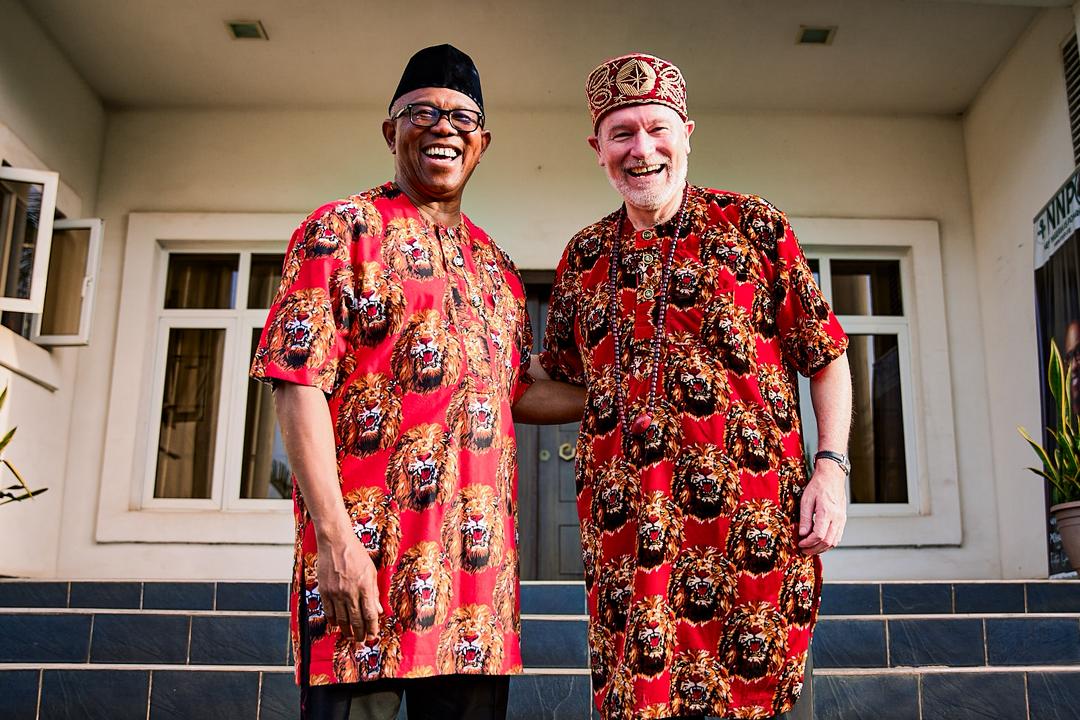
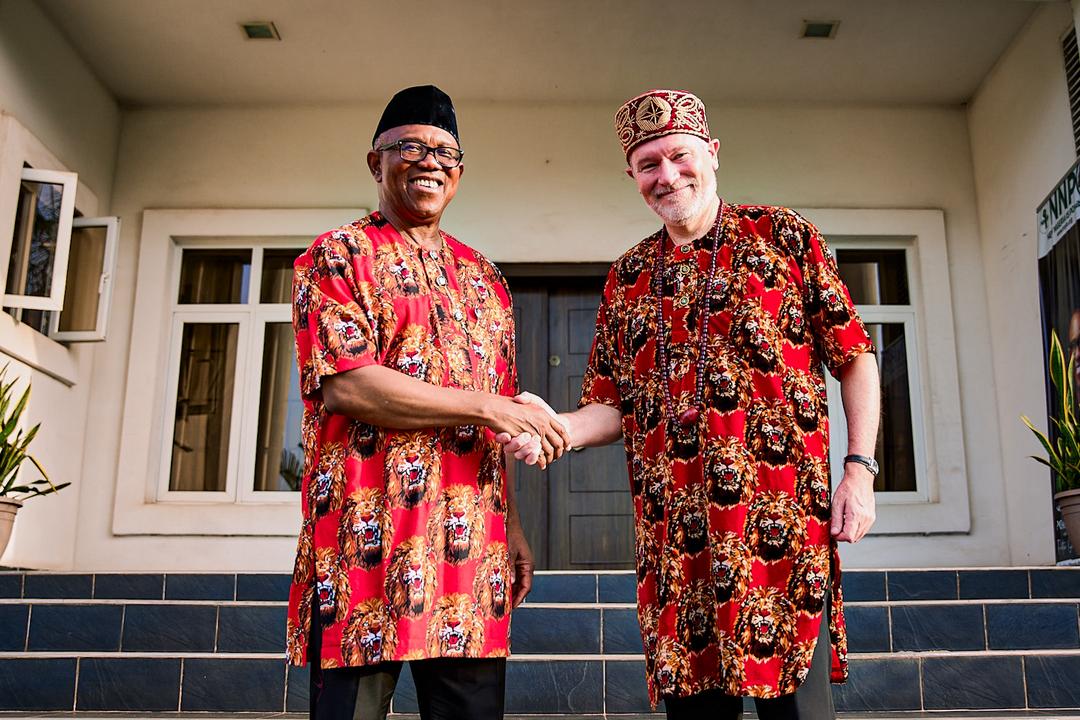
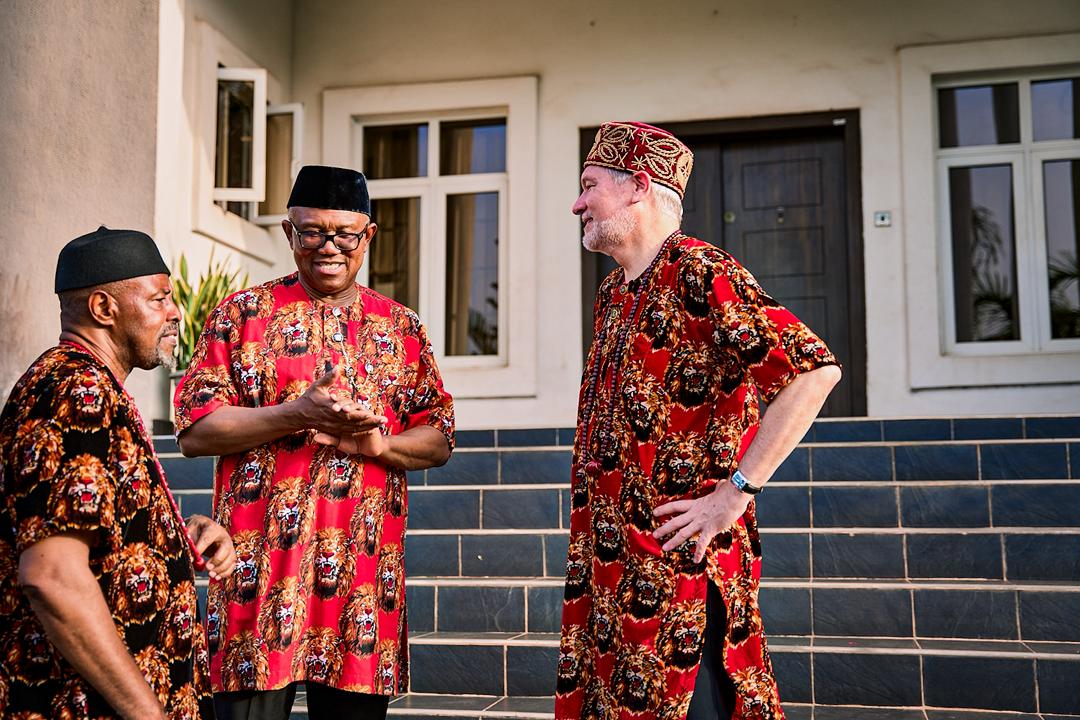
Today, Wednesday, I had the honour and privilege of hosting the European Union Ambassador to Nigeria, His Excellency, Mr. Gautier Mignot at my residence in Onitsha. It was an enriching meeting as we shared some useful conversations. -PO
I won the 2023 election and it was stolen from me. I will still win in 2027 but this time around they can't steal again — Peter Obi reassures in an interview today 18th April, 2026.
Thank you, Mr. Daniel Bwala, SA to President Tinubu, for helping Nigerians understand exactly why Tinubu should not be voted for in 2027.
If you come across this video please repost🔄 let's appreciate Mr Bwala for speaking.
Beyond Tribe and Tongue
Nigeria is not the only nation shaped by a mosaic of tribes, languages, and religions. Around the world, several countries with similar diversity are striving—often successfully—to turn it into a source of strength rather than division. India serves as a classic example.
Despite a landmass nearly three and a half times larger than Nigeria's and being home to many religions and cultures, India has evolved into a global benchmark for democracy. With a population exceeding one billion people and close to one billion registered voters—of whom about 700 million typically participate in elections—it has established a system widely regarded as free, fair, and credible. Its electoral processes are conducted with remarkable efficiency, often recorded in real-time and largely free of glitches.
Beyond the ballot, India has emerged as a global leader in STEM—science, technology, engineering, and mathematics—while also transforming its healthcare system, extending medical insurance to over 50% of its vast population. These achievements are not accidental; they result from deliberate efforts to strengthen the centripetal forces—those elements that bind a nation together—rather than amplify the centrifugal impulses of division that continue to challenge us.
When I advocate for the unity of Nigeria, I do so with deep sincerity and conviction. Our cohesion is an indispensable foundation for peaceful coexistence, sustainable development, and enduring national stability. I urge my fellow Nigerians to reflect on the example of India—a nation with a far larger population and an even more intricate web of ethnic and religious diversity—yet one that continues to forge unity from complexity.
Ultimately, the true fault lines in our national life are neither tribal nor religious. No tribe or religion enjoys cheaper food in the market, nor is any group more secure than another. Our real challenge lies in competence, capacity, compassion, and the commitment to build a better country. Only then can we move beyond tribe and tongue and create a nation that truly works for all.
With the right leadership, a new Nigeria is POssible. -PO
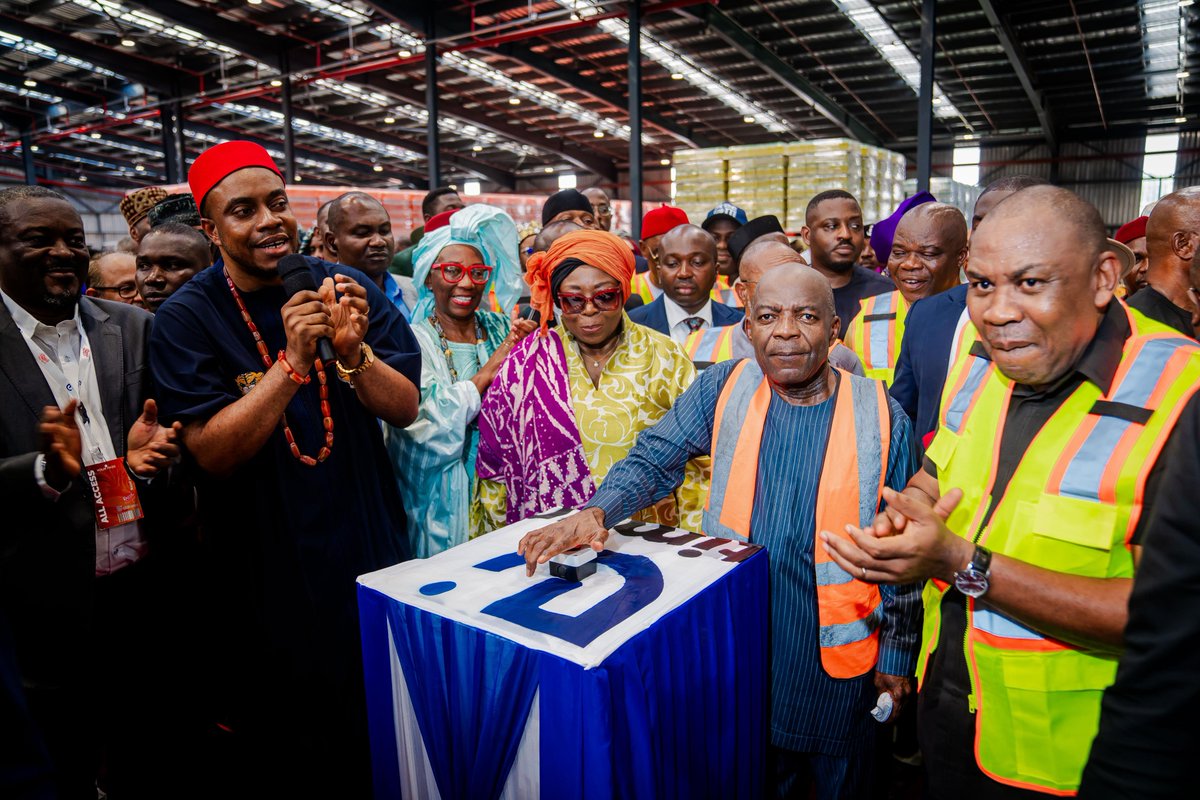
Yesterday, we commissioned Ultimum Beverages’ multimillion-dollar production facility in Aba, a landmark investment that reaffirms Abia State as a thriving hub for industry and innovation.
This state-of-the-art plant, built by the Kadji Group, represents a bold commitment of over $35 million, with plans to scale up to $100 million. Beyond the impressive figures, this project is proof that Abia is back as an investment haven, a place where ideas flourish, businesses thrive, and opportunities abound.
Since May 2023, our administration has worked tirelessly to reset the business ecosystem: strengthening infrastructure, restoring security, and creating a clean, supportive environment for investors. The confidence shown by Ultimum Beverages is a validation of these efforts, and a reminder that serious-minded investors always recognize where growth is assured.
I extend my heartfelt gratitude to the Kadji Group for believing in Aba’s entrepreneurial spirit and for choosing Abia as their home for this transformative project. Together, we will protect and nurture every investment that brings prosperity to our people.
Abia is rising. Abia is ready. Abia is open for business.
@PeterObi Barely2 years in power, what’s more important to them is how to grab power again meanwhile there’s nothing to show that people are in power.
Nigeria is a joke
When Countries Fail to Plan
Many people wonder why any adverse development in the global economy quickly impacts Nigeria. A recent example is the tension involving Iran, which led to an increase in global oil prices and, subsequently, a rise in petroleum prices in Nigeria.
A few weeks ago, petrol was selling for less than ₦1,000 per litre, but today it costs over ₦1,200 per litre. Diesel, which was also priced below ₦1,000 per litre, is now over ₦1,500 per litre. These rapid increases illustrate how quickly external shocks can affect the Nigerian economy.
The reason for this is straightforward: most countries, whether they are oil-producing or non-oil-producing, maintain strategic petroleum reserves to cushion against supply or price shocks. This means that when there is a disruption in the global oil market, they can release part of these reserves to stabilize supply. However, Nigeria lacks such a buffer, so the impact is felt almost immediately.
The underlying issue is a lack of planning. Countries that engage in planning create buffers against shocks, while those that do not remain vulnerable to them. The old maxim remains true: when a country fails to plan, it has already planned to fail.
A New Nigeria is POssible. -PO