Implemented in 9 months. Global from day one.
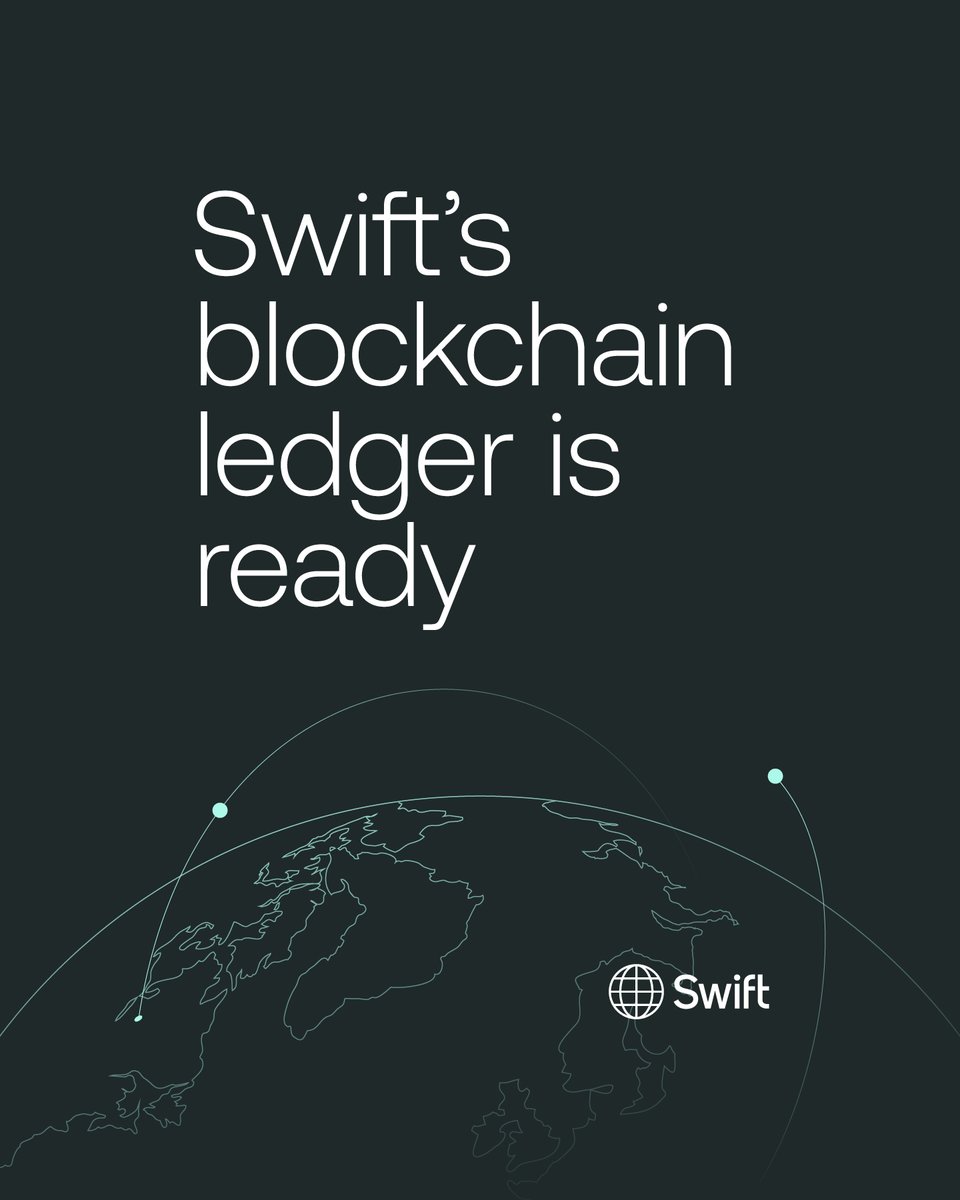
Swift's blockchain-based ledger is ready for use, with ANZ, BNP Paribas, BNY, Citi, DBS Bank, First Abu Dhabi Bank (FAB), FirstRand, HSBC, Itaú Unibanco, Lloyds Banking Group, Mashreq, MUFG, OCBC, Standard Chartered, UBS, UOB and Wells Fargo preparing to pilot 24/7 tokenised cross-border payments.
This is a significant step towards scaling tokenised finance powered by the standards, security and global reach the industry relies on. By combining distributed ledger technology with Swift’s secure messaging network, the ledger:
-Enhances liquidity efficiency
-Improves cash flow visibility
-Enables seamless token recognition
What’s next? This is the first use case. The ledger creates a foundation for future innovation in areas like programmable money and agentic commerce, and we're continuing to explore more use cases with our community - helping to take tokenised money closer to scalable, real-world adoption.
Find out more: https://t.co/wZvKKpB2q8
#Ledger #Tokenisation #CrossBorderPayments
Giannis says he showed up EARLY to work out with Kobe, and the Black Mamba made him pay for it
“Working out with Kobe, I showed up before him. I love that I did it, but it was a mistake”
“Kobe came and said, ‘What are we gonna do?’ I said, ‘Whatever you tell me to do.’ He said, ‘Go right, make 25.’ I usually make four or five. I said, ‘Yeah… make 25.’ I made 25. ‘Okay, go left, 25.’ Then, ‘Go right, two dribbles’”
“We worked out for two hours, intense, and I’m thinking, I shouldn’t have shot before this, I’m tired, I wanted to show him my best version”
“But here’s what players won’t do today: they won’t be vulnerable. They won’t show weakness, or show appreciation to somebody better. If you always think you’re the best, you can never learn”
“I had my notebook, I asked a lot of questions, he answered every single one, and never made me feel like we were running out of time. It was one of the best experience in my career”
NEW: $XRP becomes the first cryptocurrency to appear on the jersey of a major college athletics program.
@Ripple CEO @bgarlinghouse announces a partnership with his alma mater, the Kansas Jayhawks.
THE MOST DANGEROUS MARKET IN THE WORLD RIGHT NOW IS JAPAN.
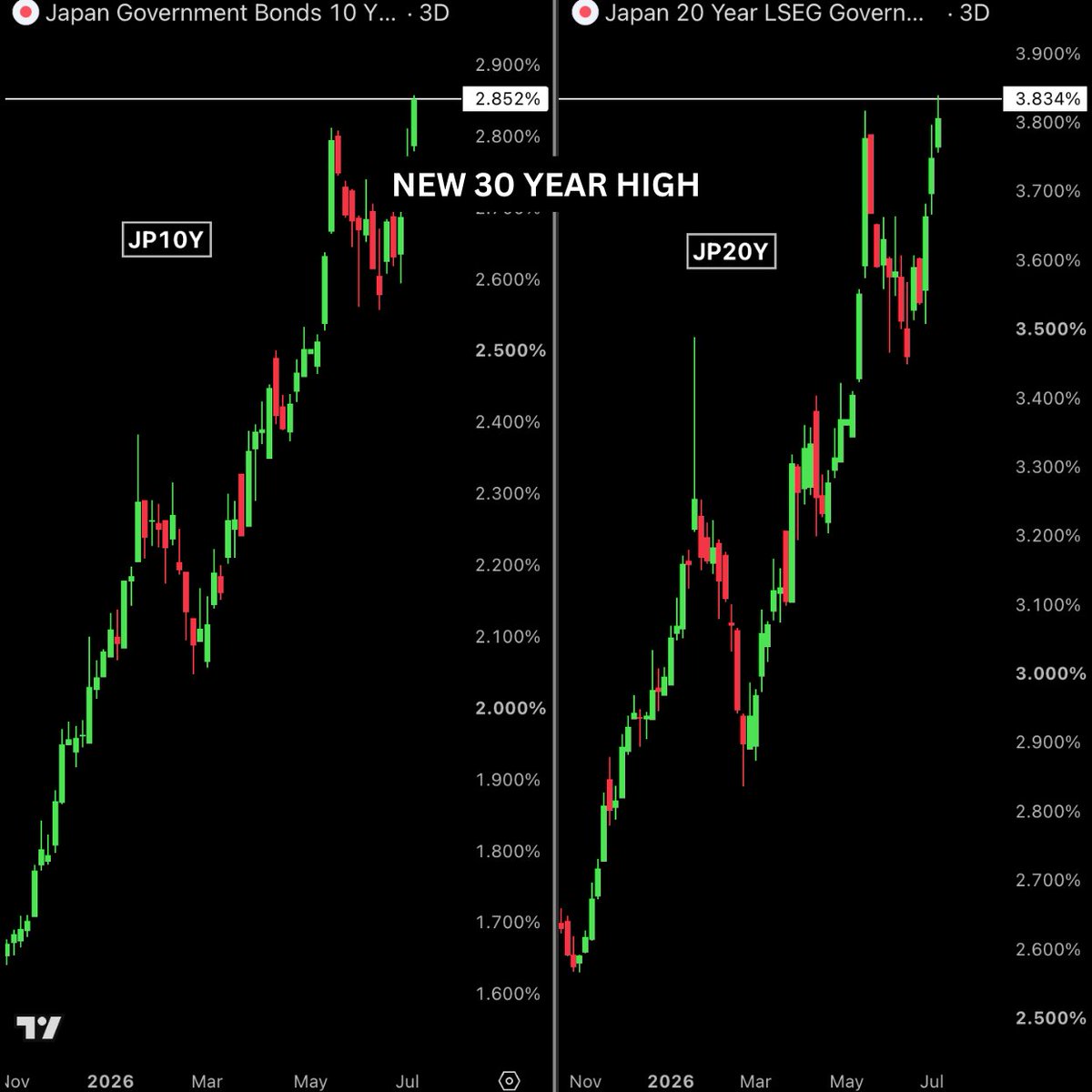
Japan's 10 year and 20 year bond yields just hit 30 year highs.
Both moved to their highest levels in three decades.
The 10 year yield is up 137 basis points over the past 12 months, and up another 9.1 basis points in just the last 4 weeks. The move is accelerating, not slowing down.
1. 10 year JGB yield: 30 year high
2. 20 year JGB yield: 30 year high
3. 10 year yield: +137bps over 12 months, +9.1bps over 4 weeks
4. 20 year auction demand: weakest since the May 2025 rout
5. Yen: trading near 40 year lows
6. Japan debt to GDP: over 200%
7. Japan foreign reserves: over $1 trillion, 2nd largest in the world
Two things are happening on the supply and demand side at the same time.
On supply, Tokyo just announced a plan to mobilize over ¥370 trillion ($2.29 trillion) in public and private investment through fiscal 2040. That means more bond issuance ahead.
On demand, the Bank of Japan is the buyer stepping back. The BOJ is tapering its JGB holdings, targeting a reduction to about ¥480 trillion by March 2027, roughly 17% below its June 2024 level. That's the largest buyer of Japanese debt pulling back exactly when new issuance is rising.
Private banks can't fully absorb the gap.
Japanese megabanks run an average bond duration under 2 years, well short of the 9.5 year average maturity of outstanding JGBs. That mismatch is a structural reason the 20 year auction just saw its weakest demand in over a year.
Less demand at auction plus more supply plus a smaller BOJ bid means yields get pushed higher mechanically, not just sentimentally.
At the same time, the yen near 40 year lows is pushing the BOJ toward higher rates to defend the currency, which conflicts with keeping borrowing costs low for the government's spending plan.
Japan holds the largest foreign reserve stockpile in the world and has funded cheap borrowing globally for years through near zero rates. If Japanese yields keep climbing, capital funded by cheap yen borrowing and parked in higher yielding assets abroad has more reason to come home.
That's the yen carry trade unwinding, and it's one of the direct channels through which Japanese bond stress spreads into global risk assets.
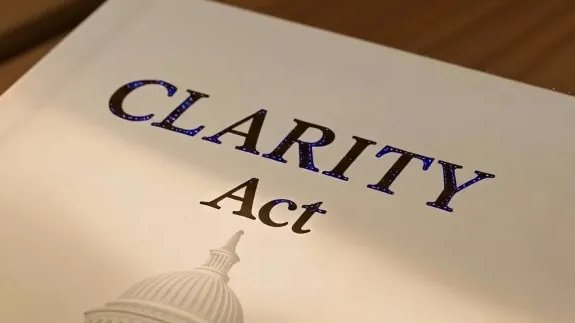
BREAKING: US law enforcement just stopped blocking the crypto CLARITY ACT.
Two major law enforcement developments happened in the last 24 hours.
Yesterday, the National Organization of Black Law Enforcement Executives (NOBLE) became the first major law enforcement organization to publicly endorse the Clarity Act, saying the bill "contains several provisions that would provide law enforcement with meaningful new capabilities while preserving longstanding criminal enforcement authorities."
Today, the Major County Sheriffs of America, representing law enforcement across the country's largest counties, shifted from opposing to neutral on the same bill after direct discussions with the Administration about Section 604.
NOBLE specifically addressed concerns from other law enforcement groups, confirming the bill does not alter existing federal criminal authorities investigators rely on, including statutes governing money laundering and unlicensed money transmitting businesses.
MCSA still wants state and local law enforcement included in the Treasury study required under the bill, and wants Congress to fund training and technology needed to investigate crypto crime.
The Clarity Act now has one remaining major hurdle: Democratic concerns about ethics language tied to Trump's crypto businesses.
If that gets resolved, the bill has a clear path to a floor vote before the August recess.
BREAKING: 🇯🇵 Ripple $XRP USD-backed stablecoin RLUSD has received regulatory approval in Japan.
122 million people in Japan can now use stablecoin as form of new electronic payment.
Another big win for crypto.
I Love and Endorse the Bipartisan 3 % of GDP Budget Deficit Solution
In the House of Representatives there is now a bipartisan bill in the works to enact, and a growing agreement that we need, a 3% cap on the budget deficit. The bill was introduced by Representatives Bill Huizenga (R) and Scott Peters (D) to reduce and maintain the federal budget deficit at or below 3% of GDP. While most responsible members of both parties don't agree on much, they agree on this, which is also urged by the Committee for a Responsible Federal Budget and almost all knowledgeable investors, economists, and business leaders beyond them.
Treasury Secretary @SecScottBessent has long been a supporter of this path, publicly saying, “I would urge [President Trump] to make public his desire to get the deficit down to 3% by the end of his term.” In my book How Countries Go Broke: The Big Cycle, I described the mechanics of how the United States will go broke unless it gets the budget deficit down to 3% of GDP, which I describe as my "3% 3-Part Solution." All leaders from both parties I spoke with in private agree. The only impediment is their fear of the political consequences of being in favor of raising taxes and cutting benefits if that is required to reach the 3% GDP budget deficit. Passing this bill would be a step toward overcoming that objection as it would help legislators argue for fiscal responsibility. A stated 3% GDP ceiling goal would become a benchmark for accountability across administrations, providing both a rule and a report card. With it in mind, each year we would naturally ask, “Is the nation moving toward or away from sustainability?” That stated goal and progress toward fiscal responsibility would strengthens markets, bolster investor confidence, and reduce the risks of the U.S. experiencing a sovereign debt/currency crisis.
It’s official: The current world order has broken down.
In my parlance, we are in the Stage 6 part of the Big Cycle in which there is great disorder arising from being in a period in which there are no rules, might is right, and there is a clash of great powers.
How Stage 6 works is explained in detail in Chapter 6, “The Big Cycle of External Order and Disorder,” in my book Principles for Dealing with the Changing World Order.
If you can, I think it would be worth your time to read.