arXiv -> alphaXiv
Students at Stanford have built alphaXiv, an open discussion forum for arXiv papers. @askalphaxiv
You can post questions and comments directly on top of any arXiv paper by changing arXiv to alphaXiv in any URL!
Very happy that this is out! 🥳🥳
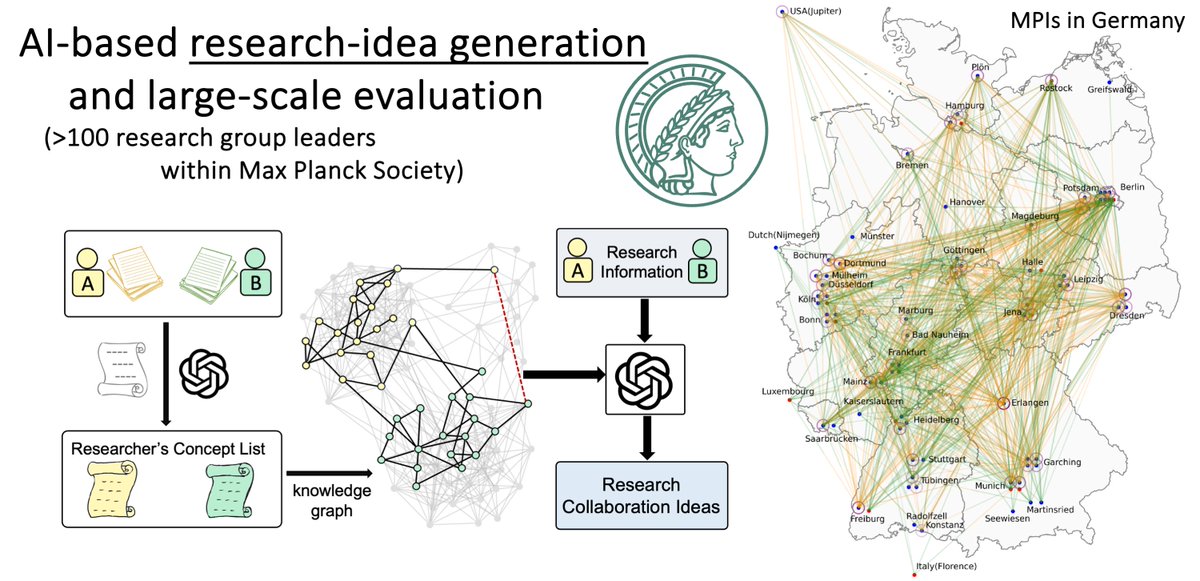
Towards an Artificial Muse for Science, we want to know how interesting AI-generated research ideas are: https://t.co/fqXuRPcQzG
100+ Research Group Leaders (!) from 50+ Max Planck Institutes helped us evaluate! Spearheaded by @GuXuemei
Fields of research: All topics studied in the Max Planck Society, including biology, chemistry, physics, math, computer science, medicine, social sciences, humanities.
Method: We used 50+ million papers to create a knowledge graph. Selected pairs of researchers -> subgraphs. Find possible good connections between them. Use it as a prompt for GPT.
My favorite conclusion: We can predict the interest-level from pure knowledge graph data! Thus can generate much more targeted suggestions in the future.
Massive THANKS to the more than 100 experienced researchers who spent time on our AI-generated proposals. Thanks to the many scientists who helped us by analysing the outcomes, before we started evaluating the proposals (especially the RGs at @MPI_Light).
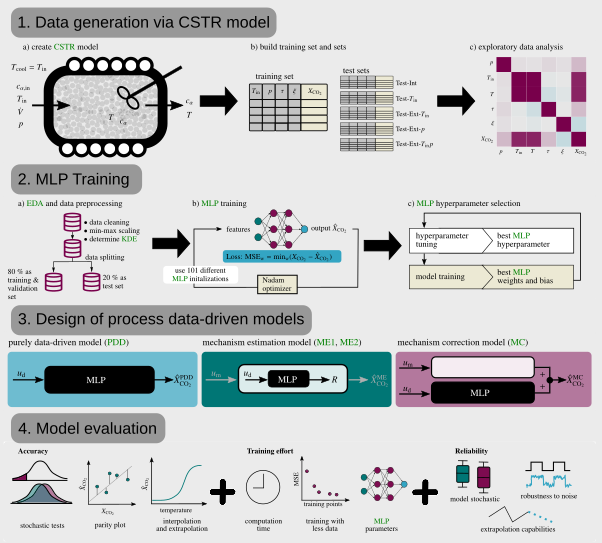
New paper out: 'Challenges in data-based reactor modeling: A critical analysis of purely data-driven and hybrid models for a CSTR case study'. Surprisingly, hybrid models didn't always outperform purely data-driven models. Curious? Check it out here:
https://t.co/0gU9RnbBJH
this video of the president of guyana tearing this pretentious bbc journalist a new one is probably the most satisfying video i’ve watched in recent memory
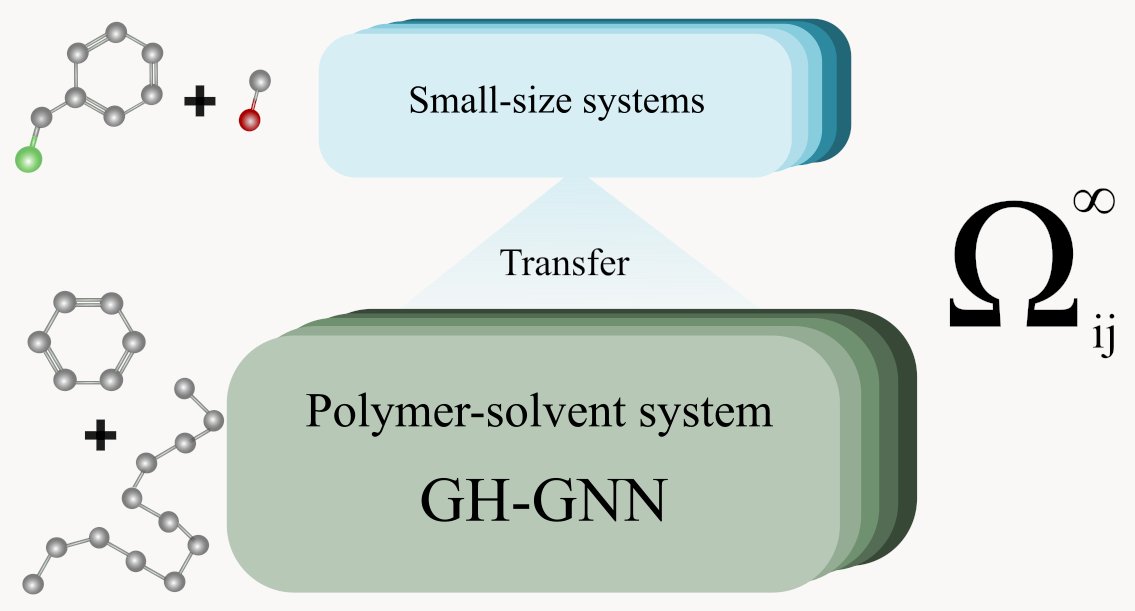
.@SanchezEdgarM & @SundmacherLab explore applicability of GH-GNNs for predicting infinite dilution activity coefficients in polymer solutions. They show promising results compared to established methods marking a pivotal move for industrial thermodynamics
https://t.co/7cgGN9grxG
🎉 Check out our new article on using GNNs for predicting activity coefficients of #Polymer solutions. Available code and data on GitHub! https://t.co/7lCMwbBiRl 🧪🔍 #MachineLearning#GNNs#OpenAccess
This is the way to unlock the next trillion high-quality tokens, currently frozen in textbook pixels that are not LLM-ready.
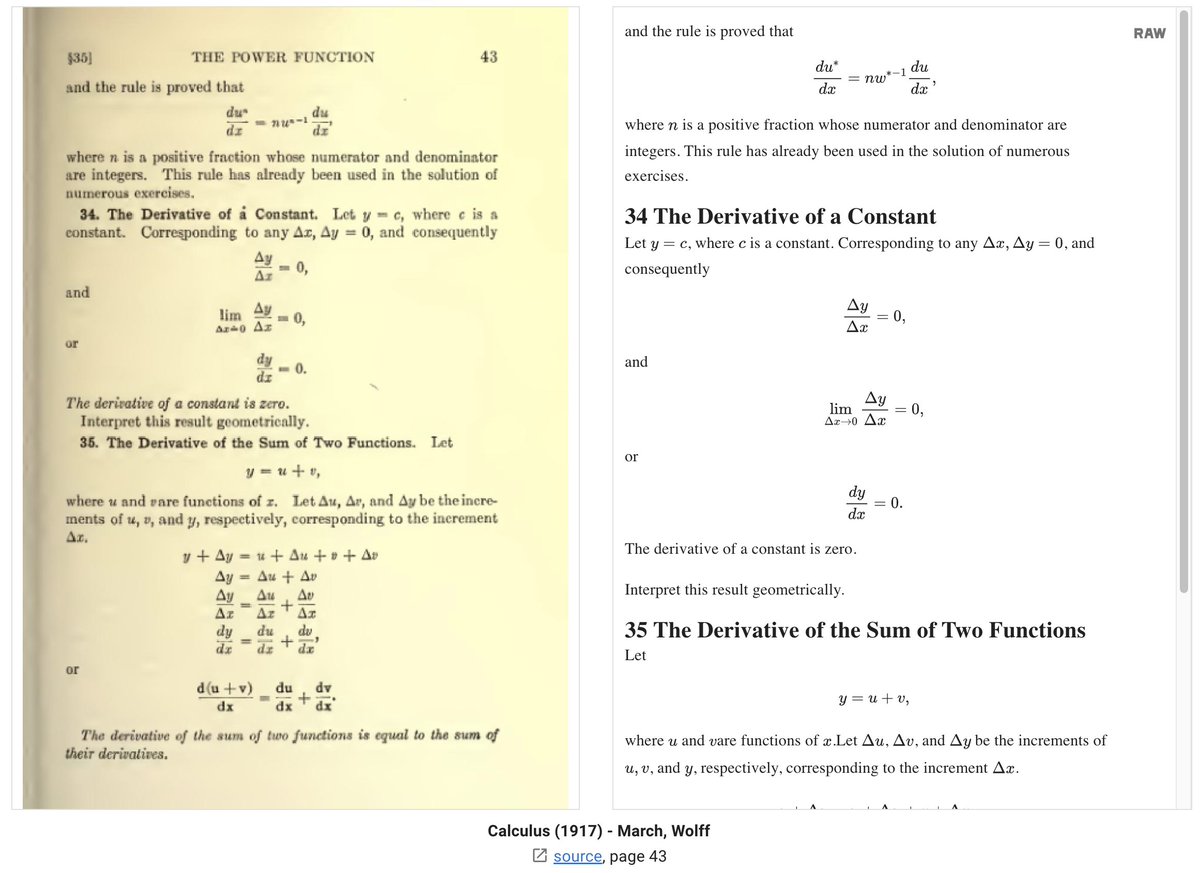
Nougat: an open-source OCR model that accurately scans books with heavy math/scientific notations. It's ages ahead of other open OCR options. Meta is doing extraordinary open-source AI, sometimes without as much fanfare as Llama.
My first serious AI research project (back @Columbia, 2012) was to convert chemical engineering PDFs into NLP-ready corpus. I still remember the immense pain of Tesseract, a much older OCR system (https://t.co/1wsKiVaP8f).
Now Nougat runs a powerful Swin Transformer backbone and blows the benchmarks out of the water. We're talking about double-digit improvements across all metrics.
Now, textbooks are all we need for the next GPT!
Website: https://t.co/bzW8XeNfYB
Open-source code: https://t.co/MY3ZhmCbX1
Paper "Nougat: Neural Optical Understanding for Academic Documents": https://t.co/3kuDICdEVE
Mark your calendars! RIIAA is back in Quito Feb 19-25, 2024 with AI courses, keynotes & a hackathon! Thrilled to have @sirbayes, @sarahookr, @RubenEVillegas, and Felipe Ovideo join, and more to be announced soon!
Register & apply for travel grants: https://t.co/d8XY5mNdgt
Congratulations to @johnkitchin, who will receive the Award for Innovation in Chemical Engineering Education at the @ChEnected annual meeting in November!
https://t.co/tqhntKIzRR
Today, we are excited to introduce Graphium into the https://t.co/V1RU6QWReZ ecosystem!
Graphium is a powerful and flexible Python library for training molecular GNNs at scale.🚀♾️
Try it out today: https://t.co/EJXEzP8mEP
For everybody who missed it, here is the GitHub repo with codes and practices: https://t.co/J19BG4bjTO 😊 I will be continuously improving and updating it for next versions of the course #compchem ❤️ RTs appreciated and ⭐️ on GH are very welcome.