I’ve been seeing some impressive demonstrations of the Gemini AI. Here’s a video explaining how the collaboration of humans and AI could result in better code solutions. It’s encouraging to see that software skills won’t be useless. But SWEs or humans would need deep knowledge to guide the AI gently.
https://t.co/m5vHxrMpwZ
@PriyankGupta03 The real question is, even if you survive this AI revolution. What’s the outlook for your kids or their kids? What would you have them study?
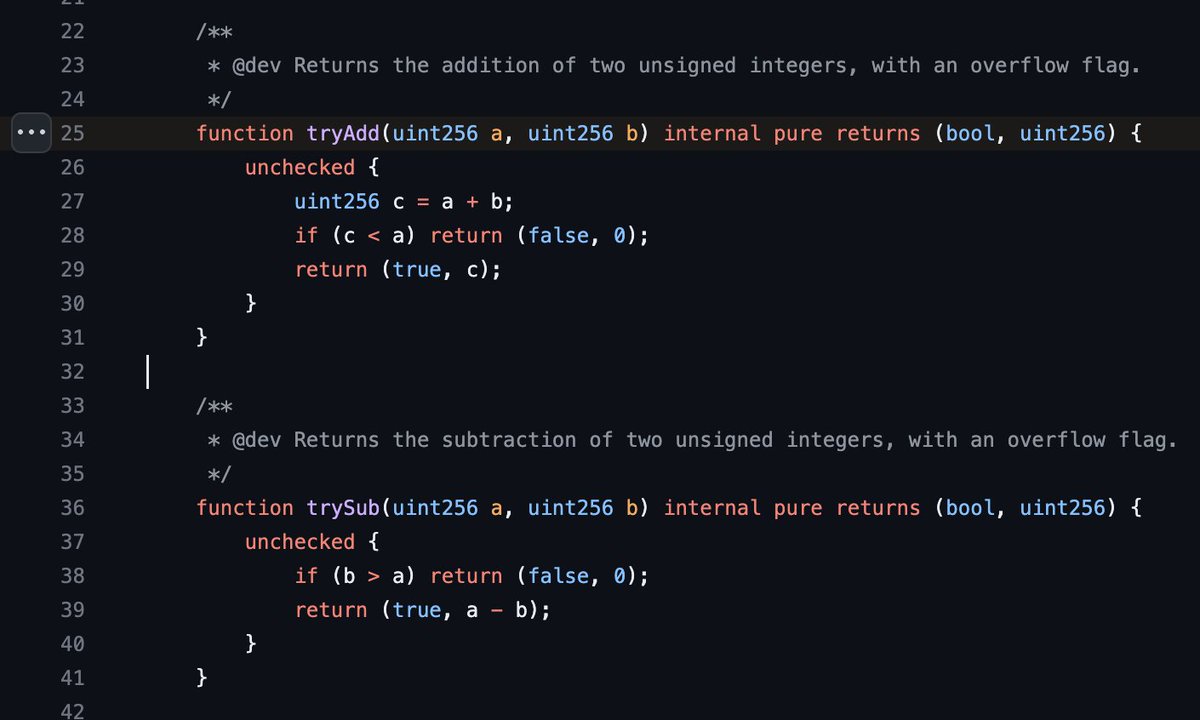
The issue was looked over by the OZ devs. They ack that it's an issue with the Natspec where they made a mistake defining the return flag as an overflow when it's not.
Spotted a potential inconsistency in OpenZeppelin's v5.0.0 Math library. The overflow/underflow flags in `tryAdd` and `trySub` functions might be misleading. NatSpec comments imply `true` for `overflow/underflow`, but the functions return `true` for successful operations. Needs a closer look!
https://t.co/GiLG1UDA6N
Unburdened by paycheck worries. Where am I haded to next?
1️⃣ Mentorship at the base bootcamp.
2️⃣ Filling my knowledge gaps in DeFi protocols and analyzing a shortlist of C4 audit reports.
3⃣Create educational articles or post threads on specific audit insights or discuss well designed protocols.
4⃣ Pick one or two code contests or bug bounties to focus on every month.
First week at my new job with Cadence Design Systems and ngl, it actually feels really nice to be on-site, interacting and collaborating with my team irl. It’s a hybrid work culture that only requires us to be on-site three days a week, making it quite convenient!
1/ Finished a preliminary deep dive into the Kyber exploit, and think I now have a pretty good understanding of what happened.
This is easily the most complex and carefully engineered smart contract exploit I've ever seen...
@nuthan2x Alternatively, just use the scripts which’ll use the correct profile
Eg,
`yarn test:forge --mc CreateMarketIntegrationTest --mt testCreateMarketWithNotEnabledIrmAndNotEnabledLltv -vvvv`
🚨Urgent🚨
Dear KyberSwap Elastic Users,
We regret to inform you that KyberSwap Elastic has experienced a security incident.
As a precautionary measure, we strongly advise all users to promptly withdraw their funds. Our team is diligently investigating the situation, and we commit to keeping you informed with regular updates.
Thank you for your understanding and cooperation during this challenging time.
MorphoBlue, a lending protocol, actively encourages liquidators to address underwater borrower positions, guided by the market's lltv. 🌊💼
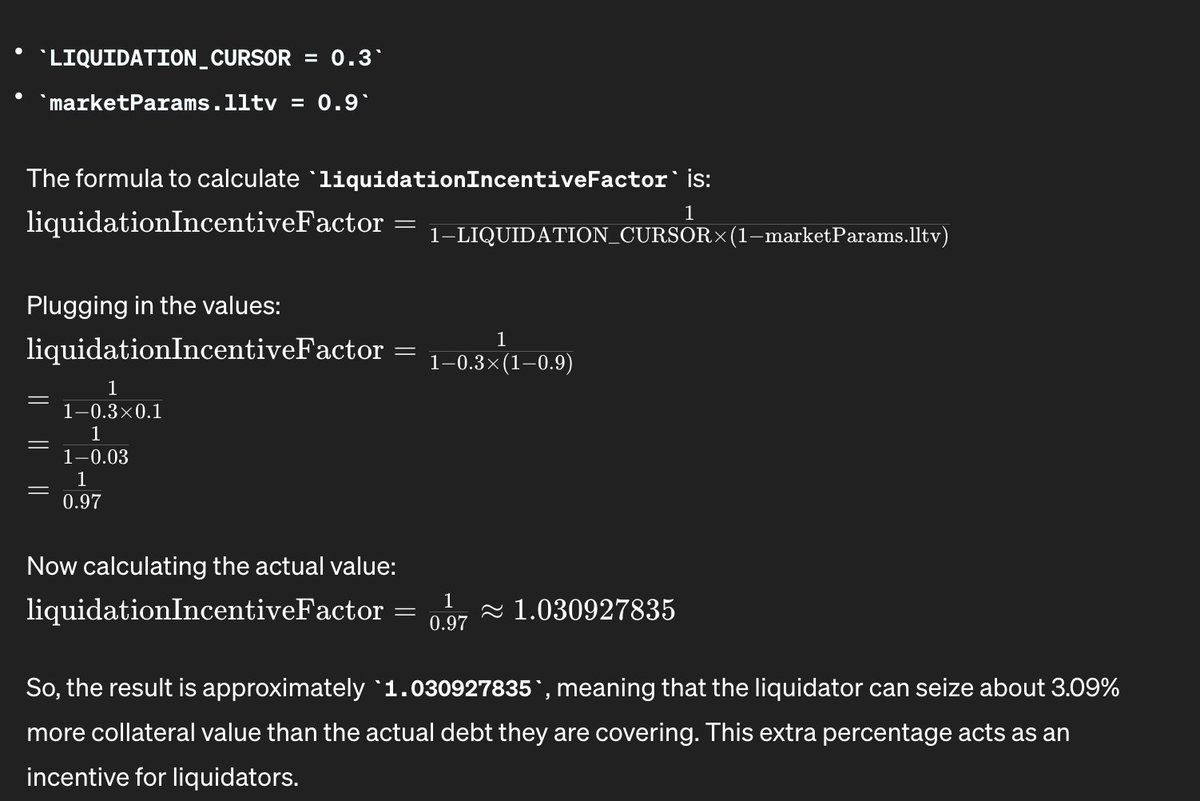
In the liquidate function, the liquidation incentive is smartly calculated from the market's lltv. The key here: higher risk equals higher liquidation incentives. The liquidation incentive is higher for loans with more collateral relative to the borrowed amount. It's capped at `1.15` 📈🔍.
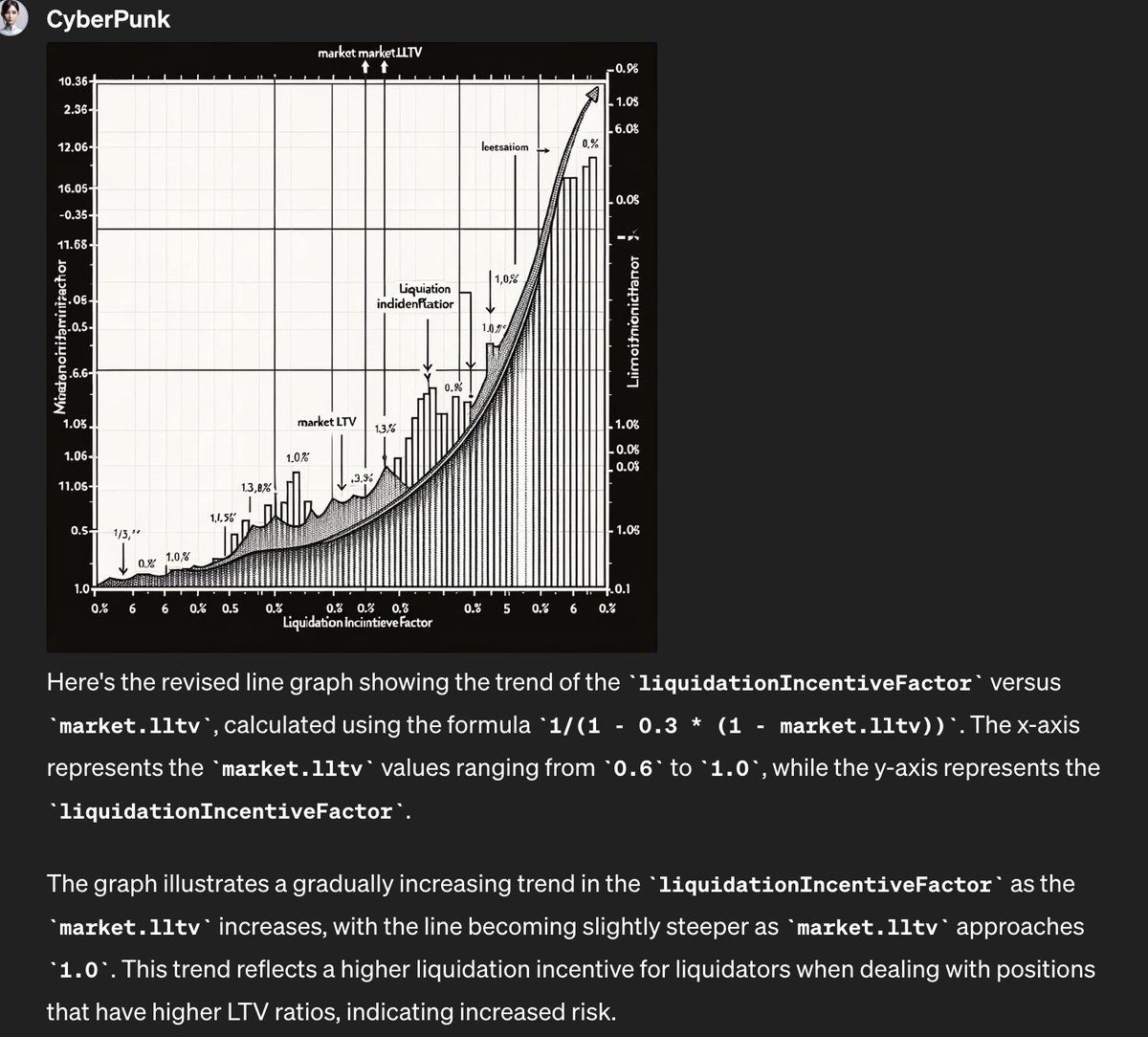
Curious about how it worked, I dove deep into a Q&A session with my custom chatbot even exploring a `liquidationIncentiveFactor vs. market.lltv` graph. ���📊
I could've done this analysis in Python, but I really wanted to test the capabilities of GPT-4's custom bot agent tuned to web3.
The bot brilliantly decoded the equation. But it initially deduced the wrong liquidation incentive outcome. But upon some Q&A, settled on the correct outcome. Plus points for neatly printing out the equation with my input example values.
The graph? Well, it was a starting point, but there's room for improvement! 🧐✏️
Spotted a potential inconsistency in OpenZeppelin's v5.0.0 Math library. The overflow/underflow flags in `tryAdd` and `trySub` functions might be misleading. NatSpec comments imply `true` for `overflow/underflow`, but the functions return `true` for successful operations. Needs a closer look!
https://t.co/GiLG1UDA6N