@rutger_kok@MariaRodrColman Bonus: The neural networks trained on our intestinal organoid data exhibit strong out-of-sample capabilities. For instance, we recently used them to track a blastocyst imaged by @JunyentSergi at the Zernicka-Goetz lab from the 16 to 64-cell stage.
Today our (me+Jeroen van Zon's lab) new 3D cell tracking software is out on biorXiv (https://t.co/Lt16U51thN). Our student @MaxBetjes presents, what we think, is a fundamental advance in cell tracking: An algorithm that accurately quantifies the uncertainty of its results. 1/10
Our software is available, with lots of documentation and manuals on https://t.co/34BwIzZjRU, we maintain the software together with the indispensable @rutger_kok at @MariaRodrColman 's lab. 10/10
We just opened several positions (PhD and postdoc) on ribosome cooperation - studied with advanced single-molecule techniques. You will also work with Genome-wide profiling and Cryo-EM through a fun international collaboration! Check out: https://t.co/ycZb1AJV66
Looking for a PhD or Postdoc position on AI methods and experiments on organoids at the cellular level? The Tans and Van Zon labs @ AMOLF Amsterdam now have multiple openings on this topic at the interface between biology and physics. Interested? https://t.co/ycZb1AJV66
Many thanks to our (all this work was in joint collaboration with Jeroen van Zon @_amolf) co-authors and collaborators; @MaxBetjes @PascalEnder Guizela Huelsz-Prince @HansClevers (8/8)
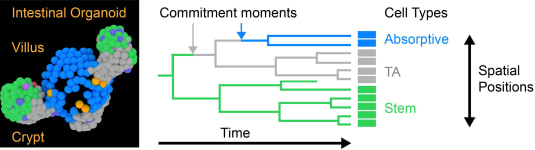
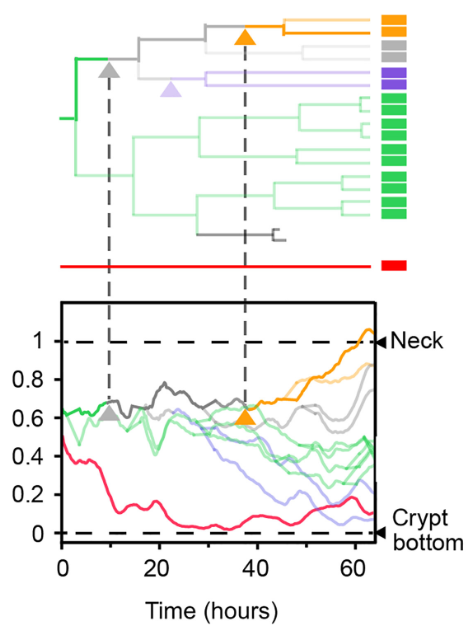
Our TypeTracker paper is now out in @ScienceAdvances: https://t.co/GuS7QKHahi. Super proud on the truly excellent work of our former PhD-student @XuanZheng2016, that shows early fate commitment preceding cell cycle exit and spatial patterning in intestinal organoids (1/8):