This story is in 2 parts, and this is the 1st.
Aryabhata was the master everyone followed. In 628 CE, a 30 year old in Bhillamala, a town in southern Marwad, said his numbers were as accidental as the marks weevils leave in wood.
Brahmagupta's Brahmasphutasiddhanta, written under King Vyaghramukha, is a landmark of world mathematics. It is also a takedown.
One entire chapter, the Tantrapariksha, "an examination of other treatises", exists to examine and demolish rival schools of astronomy, above all the school of one man: Aryabhata.
Aryabhata (Aryabhatiya, 499 CE) was the towering master. Bhaskara I, the finest astronomer of the next generation, followed him line by line. As Brahmagupta's modern editor puts it: "Bhaskara closely followed Aryabhata, but Brahmagupta had the guts to oppose the views expressed by this great master."
Guts is one word for it. Here is what Brahmagupta actually wrote.
On Aryabhata's eclipse mathematics:
"Aryabhata made the apogee of the Moon as moving more quickly and the node as moving more slowly than their actual motions; if his constants give correct results in relation to the end of tithis or eclipses, they must be considered as accidental as are the letters cut into wood by weevils."
Weevils. The greatest astronomer of the age before him had, in Brahmagupta's telling, the predictive power of bug scratches in wood.
On his own genius:
"On seeing me, who possess the most accurate knowledge of mean motions, men who have learnt from the works of Srisena, Visnucandra and Aryabhata cannot face me in any meeting just like deer on seeing a lion."
Deer before a lion. In a mathematics book. About himself.
And the verdict on the entire school:
"As the apparent planets beginning with Mars as derived from the works of Srisena, Aryabhata and Visnucandra are far deviated from their true places, the works of these authors are therefore not valued among the learned."
Now the twist.
37 years later, in 665 CE, Brahmagupta wrote a second, gentler book. He named it Khandakhadyaka, literally "food prepared from sugar-candy".
And in its main text, the man who had called Aryabhata's astronomy weevil scratches quietly built his planetary calculations on Aryabhata's own midnight system.
His modern editor is openly baffled: "The question why Brahmagupta who was so bitter an opponent of Aryabhata in his younger days (628 CE) climbed down to describe and teach one of the systems of Aryabhata's astronomy in his sixty-seventh year (665 CE) is difficult to explain."
And in the sugar candy's appendix, the weevil verse, the lion verse and the verdict are reprinted word for word.
The lion came back to graze with the deer. He just never stopped roaring.
Part 2 follows: the one attack in that book that went too far, and the scholar who answered it 230 years later.
Sources: R.S. Sharma (ed.), Brahmasphutasiddhanta of Brahmagupta, Vol. 1 (INSA, 1966), Introduction, pp. 47, 53-54, 73, 79-81. Verses: BrSpSi I.62-63, II.47 (= Khandakhadyaka Uttara IX.1-3).
Photo 1: Brahmagupta on Aryabhata's eclipse constants: "accidental as are the letters cut into wood by weevils" (BrSpSi I.62). On himself: rivals "cannot face me in any meeting just like deer on seeing a lion" (I.63). Verdict: their works "are therefore not valued among the learned" (II.47). From R.S. Sharma's edition of the Brahmasphutasiddhanta, Vol. 1 (INSA 1966), Intro p. 53.
Photo 2: The twist, on the page: the Khandakhadyaka is "literally meaning food prepared from sugar-candy", and his modern editor cannot explain why "Brahmagupta who was so bitter an opponent of Aryabhata in his younger days climbed down to describe and teach one of the systems of Aryabhata's astronomy in his 67th year (665 A.D.)". Same edition, Intro p. 80.
“ 𝗧𝗵𝗲 𝗠𝗮𝗵𝗮𝗿𝗮𝗻𝗮 (𝗼𝗳 𝗠𝗲𝘄𝗮𝗿) 𝗶𝘀 𝘁𝗵𝗲 𝗳𝗼𝗿𝗲𝗺𝗼𝘀𝘁 𝗮𝗺𝗼𝗻𝗴 𝗮𝗹𝗹 𝗸𝗶𝗻𝗴𝘀 𝗼𝗳 𝗘𝗮𝗿𝘁𝗵! ” 🛐👑
— Jayaram Pindye, court poet of Shahji Bhonsle (Shivaji’s father), while describing his Sisodiya lineage.
I openly challenged this रखैल की पैदाइश to prove that Bhonsles did not claim Sisodiya ancestry. Instead, he is still coping with irrelevant crap.
[1/4] 🪡🧵
Our deities are real.
Intuition is real.
Telepathy is real.
Reincarnation is real.
Magic is real.
Manifestation is real.
Energy is real.
It’s all very real,
When you decolonize yourself
From what is unreal.
Growth Mindset versus Scarcity Mindset
The Indian Clown Service (UPSC babus) operates with a scarcity mindset, where it imposes all limits on citizens while enjoying everything without paying for anything. Classic parasite behaviour
A shoemaker's son who left school at 16 wrote a book in 1854 that nobody knew what to do with, and 83 years later a 21-year-old at MIT opened it and found the blueprint for every computer chip on Earth.
I went down this rabbit hole at 1am and I still can't get over how thin the thread is.
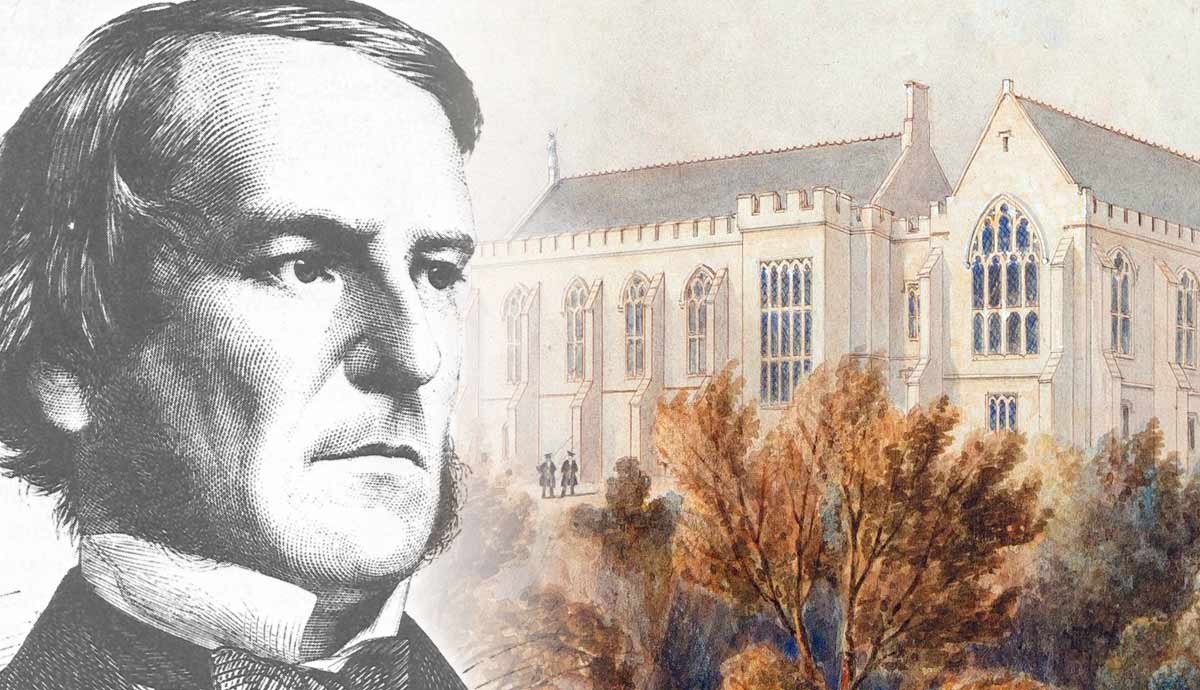
His name was George Boole. The book is called The Laws of Thought.
Boole never went to university. Not for a single day.
His father fixed shoes in Lincoln, England, and spent his spare money on telescopes and math books instead of the shop. The shop failed. At 16, George started teaching just to feed the family.
So he taught himself everything else at night.
At 14 he translated an ancient Greek poem into English. A local paper printed it. A schoolmaster wrote in to say no boy that age could have done it.
By 1849, a university in Ireland made him its first professor of mathematics. A man with no degree, now handing them out.
Then he asked a strange question. What if thinking follows rules, the same way numbers do?
Every argument you've ever had is built from statements that are either true or false. "It's raining." "I have an umbrella." Boole wanted to do math on those, the way you do math on 2 and 3.
So he built an algebra with only two numbers.
- 1 means true
- 0 means false
- AND works like multiplying
- OR joins two ideas together
- NOT flips one into the other
The whole system rested on one odd little equation. x times x equals x.
Try it with any normal number and it breaks. 5 times 5 is not 5. It only works for two numbers in the entire universe. Zero and one.
"Let us conceive, then, of an Algebra in which the symbols x, y, z, &c. admit indifferently of the values 0 and 1, and of these values alone."
That's Boole, in 1854.
Mathematicians found it clever. Philosophers argued about it. Nobody built a single thing with it.
Boole died ten years later at 49, after walking two miles to a lecture in pouring rain. He never saw his idea do anything useful.
Jump to 1936.
A 20-year-old named Claude Shannon is working on a giant calculating machine at MIT. It's packed with relays, little electrical switches that click open and shut. Wiring them together is mostly guesswork.
But Shannon had taken a philosophy class back at the University of Michigan. It covered Boole.
He looked at the switches and saw the 1s and 0s.
- A closed switch lets current through. That's 1.
- An open switch blocks it. That's 0.
- Two switches in a row only pass current if both are closed. That's AND.
- Two switches side by side pass current if either one is closed. That's OR.
Boole's algebra of thought was also an algebra of electricity. Same rules. Same two numbers.
Shannon wrote it up as his master's thesis in 1937. The psychologist Howard Gardner later called it possibly the most important master's thesis of the century.
Shannon just shrugged.
"It just happened that no one else was familiar with both fields at the same time."
Sit with that for a second. The idea was sitting in a library for 83 years. It only needed one person who happened to be standing in two rooms at once.
The phone in your hand holds billions of those switches. Every photo, every text, every AI answer is them flipping between 1 and 0, following rules a self-taught teacher wrote down before the light bulb existed.
Boole thought he was writing down how the human mind works.
He ended up writing down how machines would think.
The year is 1956. A titanic intellectual clash shakes India. It isn't fought with weapons, but with sociological philosophy. The duelists? Dr. B.R. Ambedkar and Veer Savarkar. The battlefield? The very definition of faith, identity, and the destiny of Dalits. (1/n)
Other People's Money and How the Bankers Use It Louis D. Brandeis 1914
Part 1
In 1914, as Europe approached a war that would destroy empires and transform the international financial order, an American lawyer published a book that challenged one of the most powerful institutions in modern society: the concentration of financial control in the hands of a remarkably small group of men.
These men did not need to own every factory, railroad, insurance company, or bank in the United States. They did not need to hold political office or command an army. Their influence came from something far less visible but potentially more consequential: the ability to control how other people's money was collected, invested, loaned, and distributed throughout the economy.
The author was Louis Dembitz Brandeis, a Boston attorney who would become a justice of the United States Supreme Court in 1916. His book, Other People's Money and How the Bankers Use It, was not written decades after the events it described.
Brandeis was examining the financial establishment of his own time, using contemporary congressional investigations, banking records, corporate relationships, and publicly documented transactions.
His central accusation was that American finance had developed a system in which a relatively small circle of investment bankers exercised extraordinary influence over businesses they did not personally own, using capital supplied by depositors, shareholders, insurance policyholders, and the investing public.
Brandeis called this concentration of power the Money Trust.
The term did not refer to one legally incorporated organization or a secret society with a formal membership.
It described an interconnected financial structure through which leading bankers and their associates occupied positions of influence across major corporations and financial institutions.
The same men could sit on the boards of banks, railroads, insurance companies, and industrial enterprises, creating relationships through which decisions about credit, investment, securities, and corporate management became concentrated.
Brandeis believed this system threatened not only economic competition but also the independence of American business and the functioning of democratic government.
His argument was disturbing because it challenged the assumption that ownership and control were the same thing. A financier might own only a small portion of an enterprise while exercising substantial influence over its management, access to credit, and ability to raise capital.
A banking house could help determine which companies received financing, which corporations merged, and which securities were offered to the public. The money used to exercise that influence often belonged to people who had little understanding of how their savings and investments were being deployed.
Brandeis believed this separation between those who supplied the capital and those who controlled it had become one of the defining dangers of modern finance.
The Money Trust: How a Small Circle Could Influence an Enormous Economy
To understand Brandeis's investigation, it is necessary to return to the United States during the decades following the Civil War. Industrialization transformed the country at extraordinary speed.
Railroads connected distant markets, steel production expanded, petroleum became indispensable, electricity reshaped cities, and large corporations accumulated assets on a scale previously unimaginable.
These enterprises required enormous amounts of capital to construct factories, purchase equipment, acquire competitors, and expand transportation networks.
Banks and investment houses became essential intermediaries between the people who possessed savings and the corporations seeking money.
https://t.co/uvvC1UO3ka
He's starting a fight he can't win. Rahul Gandhi's family dynasty kept India in the 19th century for decades. They're the reason Indians no longer trust foreign nationals.
@elonmusk You're making a massive mistake here. Rahul Gandhi's family dynasty kept India in the 19th century for decades. They're the reason Indians no longer trust foreign nationals.
B. R. Ambedkar stated that “the fight for freedom was carried out mostly by Hindus; Muslims and untouchables never took part in it.” Kindly read what B. R. Ambedkar actually stated:
“This fight for freedom has been carried on mostly by Hindus. It is only once that the Mussalmans took part in it and that was during the short-lived Khilafat agitation. They soon got out of it. The other communities, particularly the Untouchables, never took part in it. A few stray individuals may have joined it, and they did so for personal gain. But the community as such has stood out.”
Source:
Dr. B.R. Ambedkar, What Congress and Gandhi Have Done to the Untouchables (1945)
Chapter IX: "A Plea to the Foreigners"