She persisted and her dreams came true 😭
Somebody pinch this girl from the 100x35 island as she matches in her dream subspecialty 🥹🥹🥹🥹🥹 so so excited and humbled!!
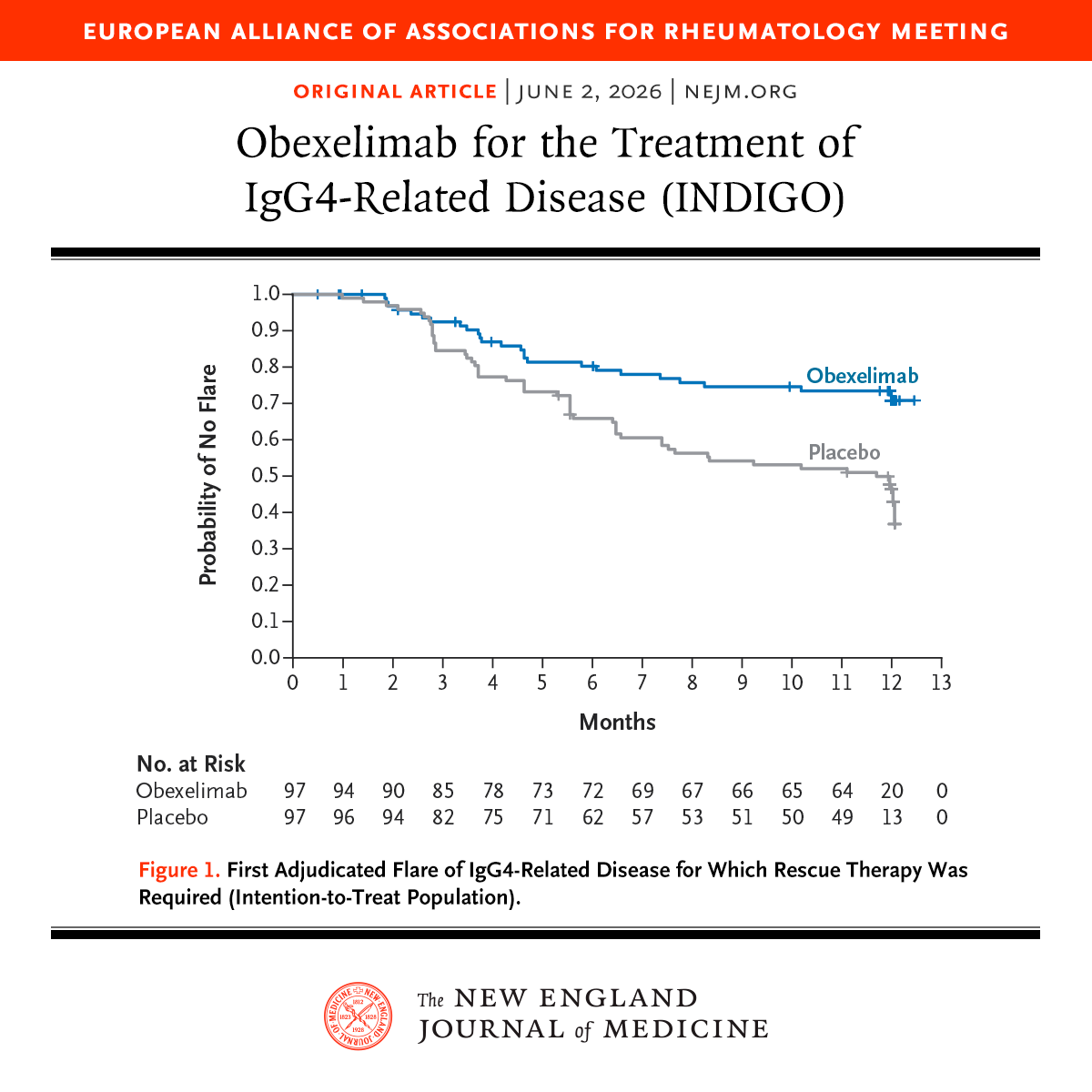
Presented at #EULAR2026:
In a phase 3 trial, obexelimab led to a lower risk of disease flares than placebo among patients with IgG4-related disease. Glucocorticoid use was lower and the incidence of remission was higher with obexelimab than with placebo. Full INDIGO trial results: https://t.co/Lynf6nmA9N
Editorial: Obexelimab and the Promise of Nondepleting B-Cell Therapy in IgG4-Related Disease https://t.co/BUQ7r8jVWz
@eular_org
Cheers, chills, and a standing ovation when RASolute 302 showed unprecedented survival on daraxonrasib for patients with progressive pancreatic cancer
Seldom do you sense you’re witnessing a historic moment in cancer care but this feels like ras targeting has arrived
#ASCO26
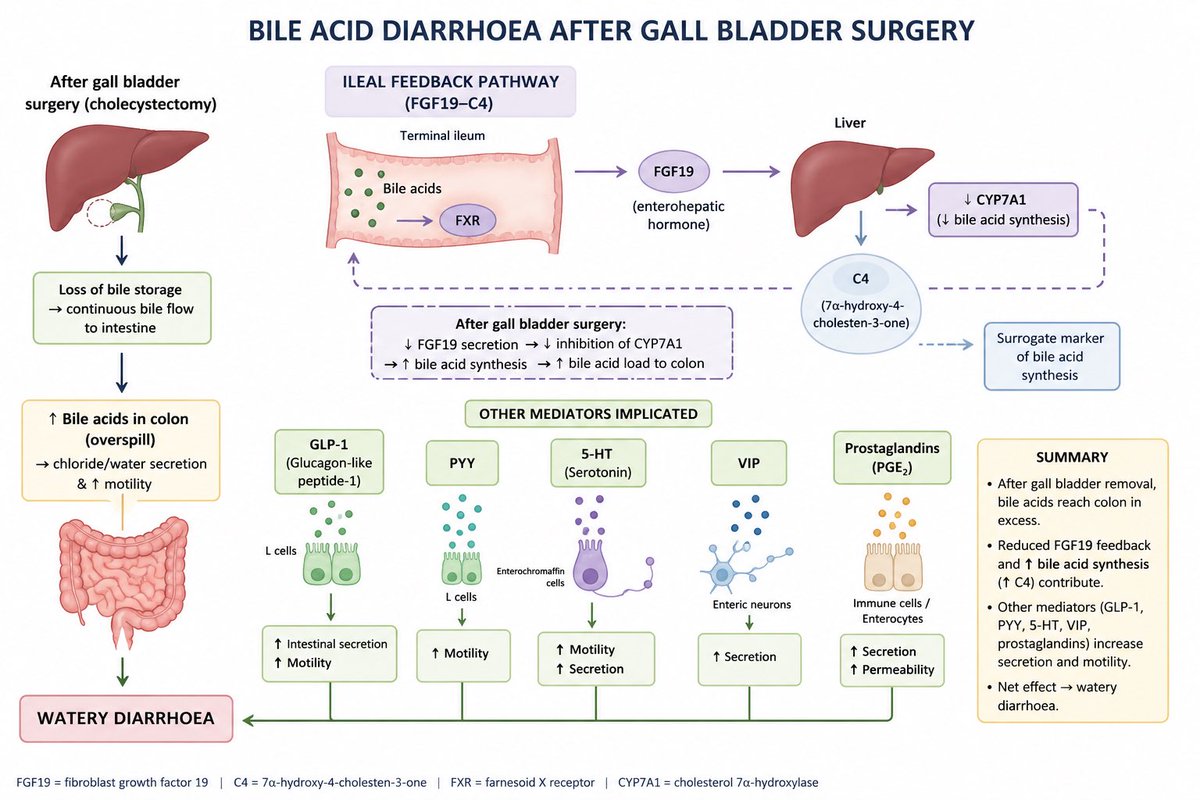
Is it possible to get diarrhoea symptoms after gallbladder surgery?
The answer is yes - it’s called bile acid diarrhoea (BAD) and it’s more common than we think.
🚨 IMPORTANT ANNOUNCEMENT 🚨
🔥 BLOCKBUSTER multilingual collab from our GI fellows for Colorectal Cancer Awareness Month 🫱🏻🫲🏾🎬
🇺🇸🇱🇧🇫🇷🇪🇸🇮🇳🇵🇰🇨🇳🇳🇬
‼️ Colorectal Cancer Screening Saves Lives ‼️
Send this to family and friends 📲 Stay on top of your health! 🫵
🔥 Most endoscopists start their biopsies in the wrong place.
(And the AGA guidelines might be leading you astray...)
The full 19-minute lecture reveals:
→ The Prague Classification secret that changes how you measure Barrett's
→ Why palisade veins matter MORE than gastric folds for finding the true GE junction
→ The "pseudo-fold" trap that makes esophagus look like stomach → Where dysplasia REALLY hides (hint: it's not evenly distributed) → The Seattle Protocol modification that doubled detection sensitivity
You don't want to be the endoscopist sending the pathologist gastric mucosa when you're hunting for Barrett's dysplasia.
Full lecture here: https://t.co/JYrfDWkkbH
(19 minutes that could change how you approach every Barrett's case)
8/9 Caution
⚠️ Population was mostly older M veterans, limiting applicability to other populations
⚠️Measurement of mucosa is subjective
⚠️Absolute # of dysplasia events in the USBE subgroup was modest, causing wide CIs
⚠️Retrospective data collection can introduce bias
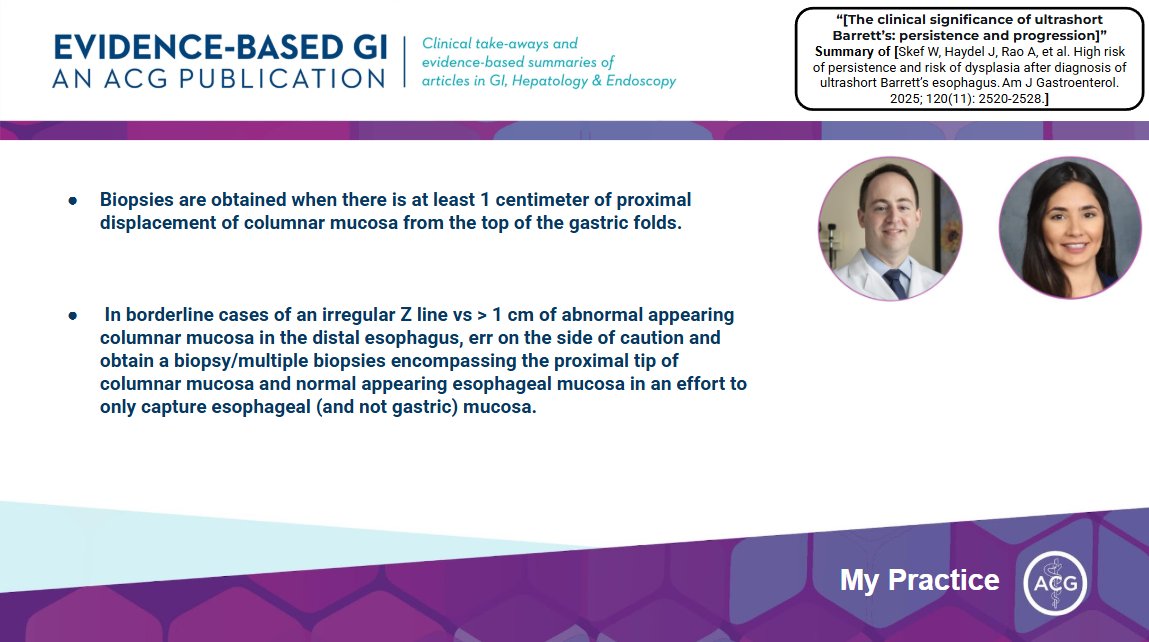
7/9 My Practice🩺🩺
💠For @RomyChamoun & @SamSchuelerMD their biopsy approach remains consistent with guidelines from the ACG and most other national/international guidelines
6/9 Results🧪
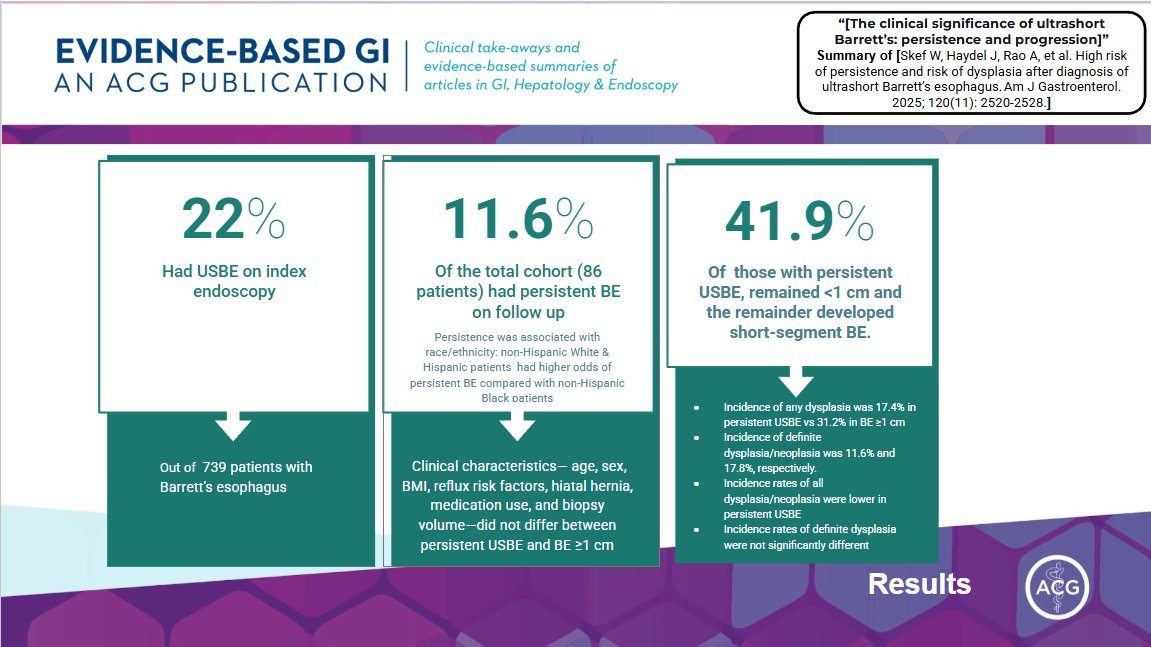
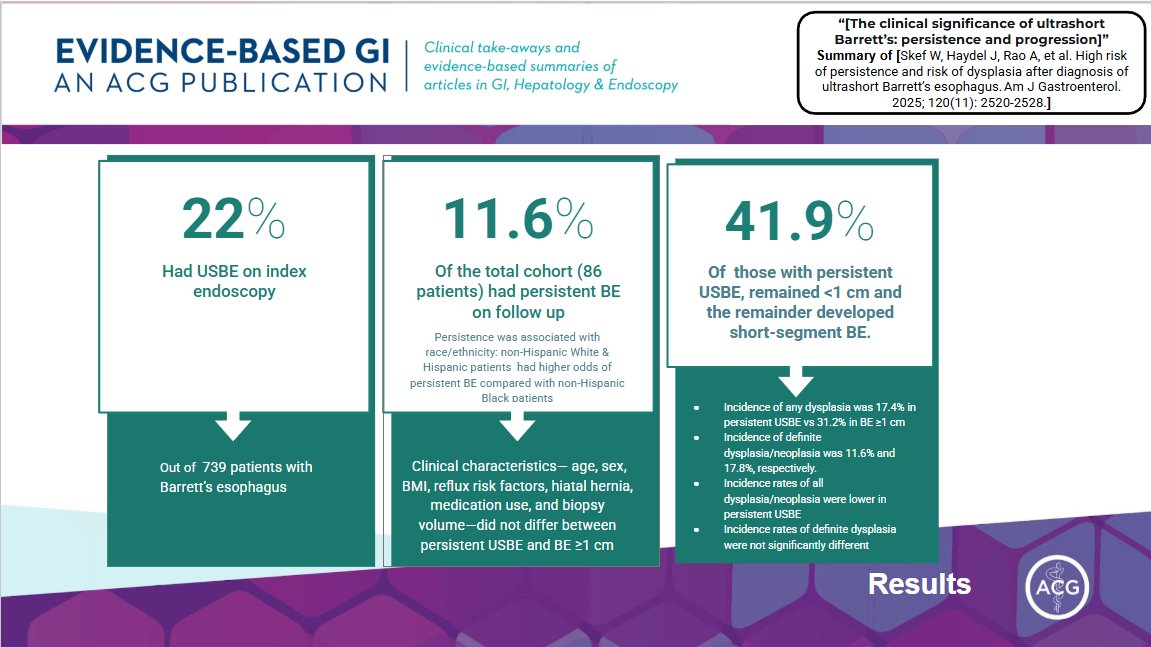
💠Persistence was notable: >½ of USBE cases had BE/intestinal metaplasia on follow up➡️ many of these represent true metaplasia vs sampling artifact or inflammation.
💠Race & ethnicity influence outcomes➡️White &Hispanics having⬆️ risk of persistence vs Black pts
5/9 Results🧪
💠USBE was nearly 1/4 of new Barrett’s cases
💠Persistent USBE was associated with 11.6% cumulative dysplasia risk
💠Dysplasia incidence rate didn't differ significantly from ≥1 cm BE.
📍USBE may carry more prognostic weight than previously thought‼️
4/9 Design
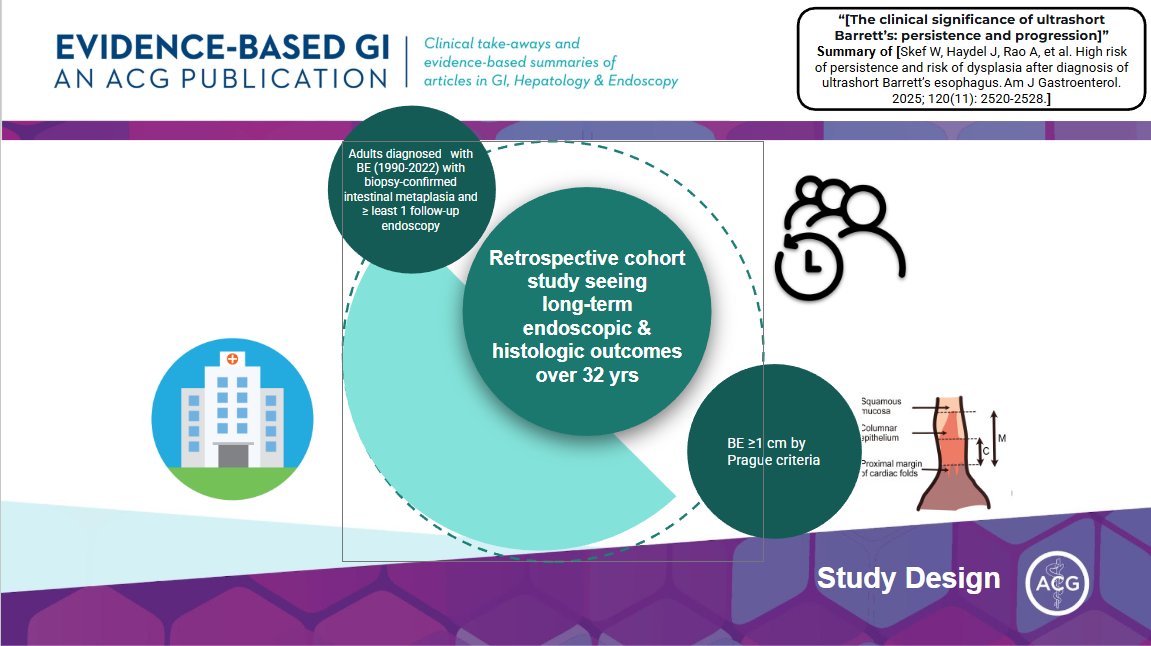
💠A Retrospective cohort seeing long-term endoscopic & histologic outcomes over 32 years @ a VAH in TX
💠Patients diagnosed with BE from 1990-2022 with 🔬-confirmed intestinal metaplasia and at least 1 follow-up endoscopy, compared to BE ≥1 cm by Prague criteria.
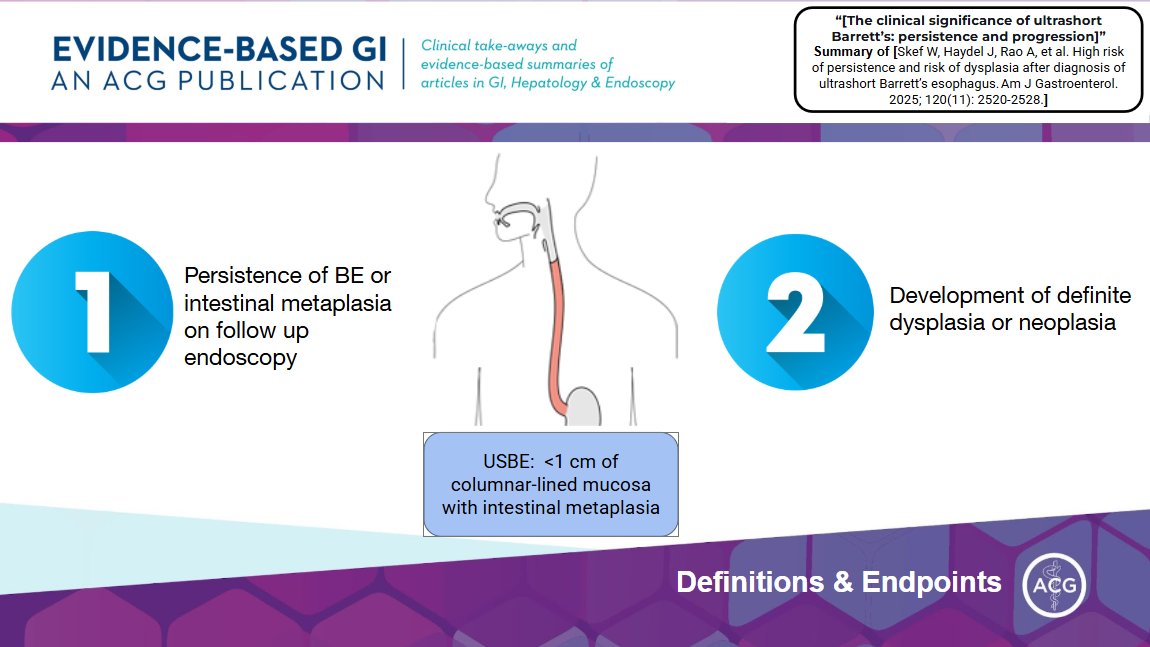
3/9 Definitions & Primary Endpoints
💠Ultrashort Barrett’s esophagus (USBE): <1 cm of columnar-lined mucosa w/ intestinal metaplasia
💠1∘ endpoint: persistence of BE/intestinal metaplasia on follow-up endoscopy.
💠2∘ endpoint: development of definite dysplasia/neoplasia
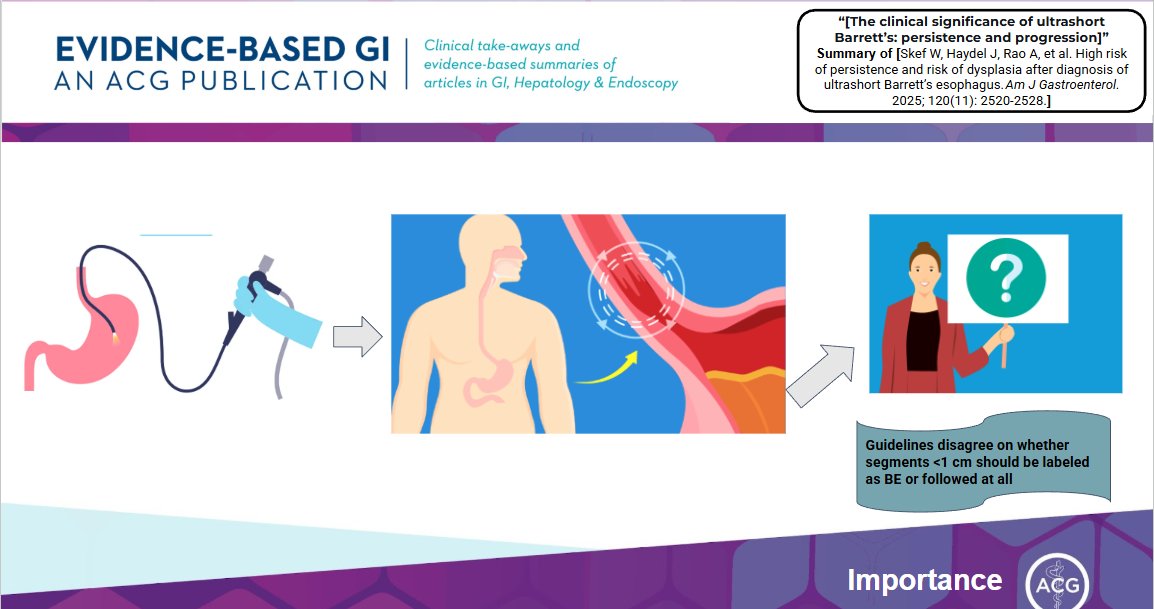
2/9 Importance🌟
This study 🔍 provides long-term outcome data 🖥️ to help 👩⚕️understand if USBE is clinically meaningful
It challenges the assumption that short segments are benign and transient.
The Difficult Colonoscopy is humbling to all endoscopists.
My Pearls :
#1 Female Patients
If hysterectomy or diverticulitis, use pedi colonoscope + water immersion. (Angulated colon)
If chronic idiopathic constipation or visceral obese, use adult colonoscope (redundant colon)