New review out in Current Opinion in Biotechnology! We discuss how recent progress on enzymatic recycling and microbial upcycling can contribute to a circular #bioeconomy for #plastics ♻️
https://t.co/PLBomn2FZi
Europe made a colossal mistake:
They banned genetically modified organisms (GMOs) while the rest of the world embraced them.
Now we rely on imports, pay more for food, and miss out on sustainable agriculture.
Here’s the story of Europe’s GMO debacle 🧵:
We should build an Our World in Data, but for biotechnology.
Let me explain.
In 2011, while working in Brazil, @MaxCRoser began formulating the idea for Our World in Data. He initially planned to publish “data and research on global change,” possibly as a book. Before long, that modest blueprint morphed into something far more ambitious.
Our World in Data went live in May 2014 and, according to Roser, attracted an average of 20,000 visitors per month in its first six months.
But today, by publishing numbers and charts about global change on the internet, Our World in Data has played a key role in everything from tracking COVID-19 infections and vaccinations to finding aspects of global development — like malaria cases over time, for example — that are particularly stubborn and, therefore, ripe for philanthropic interventions. In essence, OWID has shown how numbers, displayed in accessible forms, can illuminate which issues deserve urgent attention and where efforts can accelerate progress.
We should build a similar initiative for biotechnology. @SchmidtFutures has forecasted that the bioeconomy (encompassing everything from medicines to microbe-made materials) “could be a $30 trillion global industry.” If we intend to realize that potential, we first need to benchmark where biotechnology has been, assess where it stands now, and identify the most pressing challenges ahead.
I’m imagining a website that aggregates data on everything from the computational costs of protein design to the efficiency of gene-editing tools across cell lines. Such a resource would help researchers, investors, and policymakers figure out which areas demand attention and which breakthroughs are worth scaling, all while helping prevent misuse.
Pieces of this puzzle already exist, but it seems only in scattered or ad-hoc formats. Rob Carlson has famously published data on DNA sequencing and synthesis costs. His charts became so popular that people eventually dubbed them “Carlson Curves.” Meanwhile, @EpochAIResearch, a research institute that monitors the computational demands and scaling of AI models, among other things, is building the benchmarks and datasets needed to track the AI field’s progress. They could serve as a model for this biotechnology effort.
A “Biotech Data” effort could systematically track metrics like:
• Cloning times over the last several decades. How long does it take to synthesize DNA, stitch it together, and make sure everything works as intended? Bottlenecks in cloning slow scientific progress as a whole; the speed of experiments is a key driver of scientific speed overall.
• Resolution and speed of cryo-EM. How rapidly have improvements in cryo-electron microscopy accelerated, both in terms of resolution and throughput?
• Bioscience PhDs awarded per year. How many new doctorates emerge from academia, and where do they end up across industry, startups, and research labs?
Note that these datasets span both technical and societal issues. This is deliberate; to scale biotechnology, we have to understand both scientific breakthroughs and the workforce dynamics behind them. Tools are useless without a workforce to wield them. Many of these numbers already exist on the internet, but are buried in unwieldy government PDFs or tucked away in a patchwork of scientific articles. Others may require painstaking curation by combing through decades of research articles.
If this vision appeals to you, send me an email ([email protected]), and I’ll help you get started. We briefly considered launching this venture at @AsimovPress, but we only have two full-time employees and so don’t have the bandwidth. We might be keen to fund this project.
MSEE strongly represented on Finland’s new national roadmap for research infrastructures:
Operando research infrastructure for energy materials and systems (OperaRI)
The Finnish BioFoundry for synthetic biology and biomanufacturing (FIN-BioFoundry)
https://t.co/TCWBqLtK29
Congratulations to Changshuo on his second PhD thesis paper! Our latest study highlights the lignocellulose hydrolysate detoxification potential of ADP1 for bioprocess applications. https://t.co/qzThJmPTZN
📢Thrilled to introduce the #VirtualLab: a team of AI scientist agents (AI chemist, AI reviewer...). Virtual Lab is led by an AI professor w/ feedback from human scientist.
The Lab created new nanobodies that we experimentally validated to bind to recent #covid variants🚀🧵
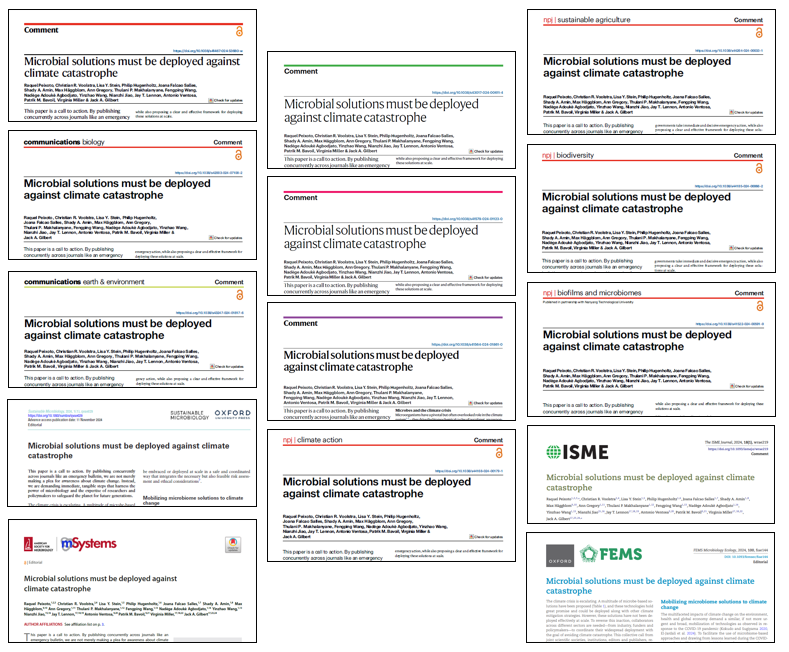
Emergency bulletin! 14 journals have co-published an urgent call for the deployment of microbial solutions against climate catastrophe, by @peixotors et al.
https://t.co/yYQZO4Gm6b
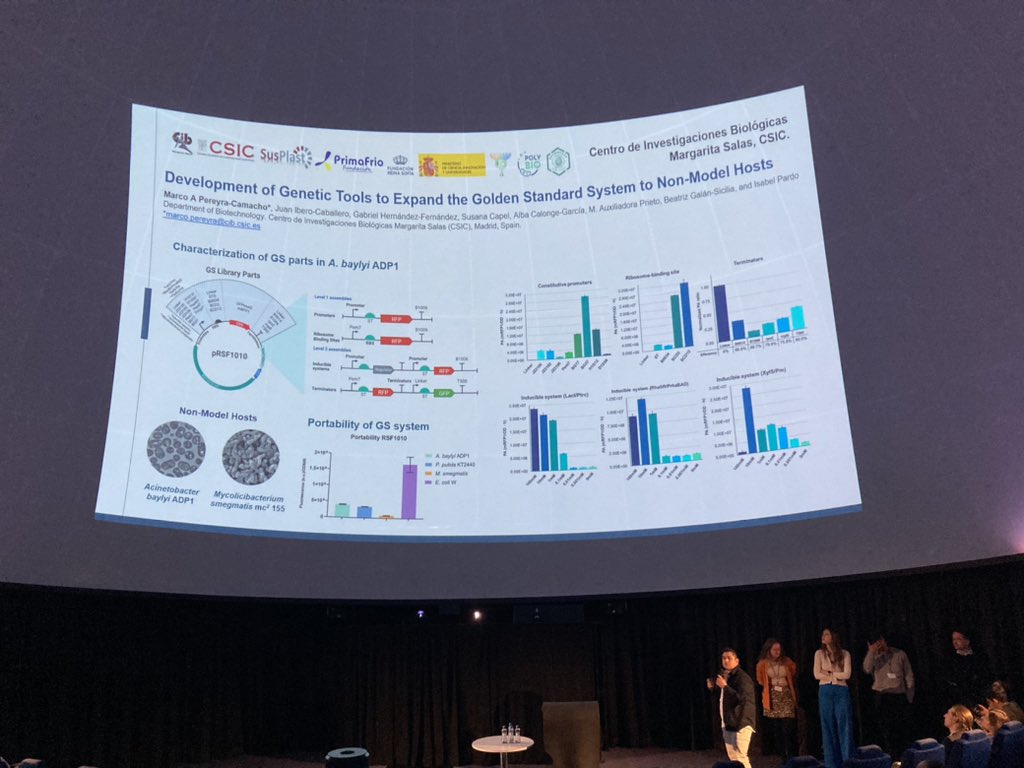
That’s a wrap for #ASBE7! Truly enjoyed all the wonderful oral and poster presentations, and so thankful to have had the opportunity to present the work from the #ReCREA lab in such a cool venue 🔭✨
Just published! Excited to share the work of @kesikurnia@SantalaLab on Metabolic engineering of Acinetobacter baylyi ADP1 for naringenin production. Great work Kesi! 👏 https://t.co/cdRwk1erUS
Biohackathon just dropped! November 8-10 online. Join and develop a biotech idea for a chance to win1500, 1000, 500 EUR! Apply here: https://t.co/03yH4aOjk8
Hadn't had the time (busy with https://t.co/6ZVKDCrm7g) to communicate my latest collaboration...but here it goes!
It's a significant contribution to our understanding of bacterial evolutionary processes.
In sum: you cut out their DNA and they recover.
https://t.co/jIyOi4bmPj
Imagine bacteria mining cryptocurrencies. We moved a step closer by encoding a 2-bit MD5 cryptographic hash algorithm – a precursor of SH256 used for Bitcoin - across 66 E. coli strains. It required over 1 megabase of DNA, the size of a small genome. https://t.co/CyjhE88JwZ
Haemme ympäristö- ja energiatekniikan yliopisto-opettajaa ympäristö-, energia- ja biotekniikan koulutuksen monipuoliseen kokonaisuuteen @ENS_TampereUni
https://t.co/VjpYMFyKpf












![PabloINik's tweet photo. Harnessing noncanonical #redox #cofactors to advance synthetic assimilation of one-carbon #feedstocks—by @Javi_HernanSan & @enricoorsi @LabNikel w/@Caroline_E_Paul @NicoC_MicSynBio @RWeusthuis et al. ["Taking control of microbial metabolism" consortium]
https://t.co/4AX4htlpPl https://t.co/VAASg8uKwd](https://pbs.twimg.com/media/GXnyuo2WwAAPtV5.jpg)


