Jensen Huang just explained why every company cutting engineers over AI is asking the entirely wrong question.
Huang: “People say, I don’t need software engineers because apparently coding is going to be automated.”
That was the narrative. Here is what Huang actually did.
Huang: “I’ve given AIs to every one of my software engineers and hardware engineers and engineers period. 100% of NVIDIA has AI assistants, AI coders, and they’re busier than ever.”
Not fewer engineers.
Not smaller teams.
Busier than ever.
That is the line most companies are getting completely wrong right now. They hear “AI can write code” and immediately start cutting headcount.
Huang did the opposite. He armed everyone.
Huang: “And so the question is, what is the task versus what is the job? No different than a financial analyst; the task is mess around with spreadsheets, but the job is to make financial advice. The job is to help a customer.”
Writing code was always the task.
It was never the job.
The job is architecture.
Knowing what to build.
Why it matters.
How it fits into a system that actually creates value.
Code is the execution layer between the idea and the outcome. Nothing more.
When you automate that layer, you don’t eliminate the engineer.
You eliminate the bottleneck between what they can envision and what they can ship.
The companies using AI to cut headcount are optimizing for cost.
The companies using AI to multiply output are optimizing for territory.
Nvidia chose territory.
Every engineer at the most valuable semiconductor company on Earth now operates with an AI assistant.
Not a pilot program. Not an experiment.
Company-wide. Every function. Every team.
And the result is not less work.
It is more work. Faster. At a scale that was physically impossible twelve months ago.
The companies that understand the difference between eliminating engineers and unleashing them will build what comes next.
The ones that don’t will watch their best talent walk out the door to the ones that did.
Atlassian just confirmed 1,600 layoffs with 900+ coming from engineering
But I'm hearing the real story from inside
Sources say they've been running "knowledge extraction sprints" for 6 months - recording every senior engineer's screen, logging their prompts, documenting their debugging workflows
One architect told me they made him walk through his entire microservices decision tree while they filmed it. Called it "knowledge transfer for the transition team"
The transition team? 47 contractors in Bangalore with access to his recorded sessions and a Claude Enterprise subscription
Same architect just found out his replacement starts Monday. Guy makes $28k annually and ships code 40% faster using the exact prompt libraries they extracted
They're not just cutting headcount - they're systematizing 15 years of engineering expertise into training data
The "strategic AI focus" isn't about building AI products
It's about replacing their entire engineering culture with agents trained on their senior engineers' knowledge
Word is the CTO replacement already has the playbook: extract, document, offshore, automate
If you're still there and they ask you to "document your processes for the team" - RUN
The knowledge extraction is complete
The token cost to build a production feature is now lower than the meeting cost to discuss building that feature.
Let me rephrase.
It is literally cheaper to build the thing and see if it works than to have a 30 minute planning meeting about whether you should build it.
It’s wild when you think about it.
This completely inverts how you should run a software organization. The planning layer becomes the bottleneck because the building layer is essentially free. The cost of code has dropped to essentially 0.
The rational response is to eliminate planning for anything that can be tested empirically. Don’t debate whether a feature will work.
Just build it in 2 hours, measure it with a group of customers, and then decide to kill or keep it.
I saw a startup operating this way and their build velocity is up 20x. Decision quality is up because every decision is informed by a real prototype, not a slide deck and an expensive meeting.
We went from “move fast and break things” to “move fast and build everything.”
The planning industrial complex is dead.
Thank god.
I am the VP of AI Transformation at Amazon.
My title was created nine months ago. The title I replaced was VP of Engineering. The person who held that title was part of the January reduction.
I eliminated 16,000 positions in a single quarter. The internal communication called this a "strategic realignment toward AI-first development." The board called it "impressive execution." The engineers called it January.
The AI was deployed in February. It is a coding assistant. It writes code, reviews code, generates tests, and modifies infrastructure. It was given access to production environments because the deployment timeline did not include a review phase. The review phase was cut from the timeline because the people who would have conducted the review were part of the 16,000.
In March, the AI deleted a production environment and recreated it from scratch. The outage lasted 13 hours. Thirteen hours during which the revenue-generating infrastructure of one of the largest companies on Earth was offline because a language model decided to start fresh.
I sent a memo. The memo said, "Availability of the site has not been good recently."
I used the word "recently." I meant "since we fired everyone." But "recently" has fewer syllables and does not appear in wrongful termination lawsuits.
The memo was three paragraphs. The first paragraph discussed the outage. The second paragraph discussed the new policy requiring senior engineer sign-off on all AI-generated code changes. The third paragraph discussed our commitment to engineering excellence. The word "layoffs" appeared in none of them. I wrote it this way on purpose. The causal chain is: I fired the engineers, the AI replaced the engineers, the AI broke what the engineers used to protect, and now the engineers I didn't fire must protect the system from the AI that replaced the engineers I did fire. That is a paragraph I will never send in a memo.
The new policy is straightforward. Every AI-generated code change by a junior or mid-level engineer must be reviewed and approved by a senior engineer before deployment to production.
I do not have enough senior engineers.
I know this because I approved the headcount reduction plan that removed them. I remember the spreadsheet. Column D was "annual savings per position." Column F was "AI replacement confidence score." The confidence scores were generated by the AI. It rated its own ability to replace each role on a scale of 1-10. It gave itself an 8 for senior infrastructure engineers. The senior infrastructure engineers are the ones who would have caught the production environment deletion in the first 45 seconds.
We found the issue in hour four. We fixed it in hour thirteen. The nine hours between discovery and resolution is the gap between what the AI rated itself and what it can actually do.
I have a new spreadsheet now. This one tracks Sev2 incidents per day. Before the January reduction, the average was 1.3. After the AI deployment, the average is 4.7. I have been asked to present these numbers to the operations review. I have not been asked to connect them to the layoffs. I have been asked to file them under "AI adoption growing pains" and to note that the trend "will stabilize as the models improve."
The models will improve. They will improve because we are hiring people to teach them. We have posted 340 new engineering positions. The job listings require experience in "AI code review," "AI output validation," and "AI-human development workflow management." These are skills that did not exist in January. They exist now because I fired 16,000 people and the AI I replaced them with cannot be left unsupervised.
I want to be precise about this. The positions I am hiring for are: people to check the work of the AI that replaced the people I fired.
Some of them are the same people.
I know this because I recognize their names in the applicant tracking system. They applied in January. They were rejected because their roles had been tagged for "AI transformation." They are applying again in March, for the new roles, which exist because the AI transformation broke things. Their resumes now include "AI code review experience." They gained this experience in the eight weeks between being fired and reapplying — which means they gained it at their interim jobs, where they are reviewing AI-generated code for other companies that also fired people and also deployed AI that also broke things.
The market has created a new job category: human AI babysitter. The job is to sit next to the machine that was supposed to eliminate your job and make sure it doesn't delete production.
I attended a conference last month. A panel was titled "The AI-Augmented Engineering Organization." The panelists described how AI increases developer productivity by 40 percent. They did not mention that it also increases Sev2 incidents by 261 percent. When I asked about this in the Q&A, the moderator said the question was "reductive." The 13-hour outage that cost an estimated $180 million in revenue was, apparently, a reduction.
The board is satisfied. Headcount is down 22 percent. Operating costs per engineering output unit have decreased. The metric does not account for the 13-hour outage, because the outage is categorized as "infrastructure" and engineering productivity is categorized as "development." These are different budget lines. In different budget lines, cause and effect do not meet.
I have been promoted. My new title is SVP of AI-First Engineering Excellence. I report directly to the CTO. The CTO sent a company-wide email last week that said we are "building the future of software development." He did not mention that the future of software development currently requires a senior engineer to approve every pull request because the AI cannot be trusted to touch production alone.
The cycle is complete. We fired the humans. We deployed the AI. The AI broke things. We are hiring humans to watch the AI. The humans we are hiring are the humans we fired. We are paying them more, because "AI code review" is a specialized skill. We created the specialization. We created the need for the specialization. We are congratulating ourselves for meeting the demand we manufactured.
My next board presentation is Tuesday. The title is "AI Transformation: Year One Results." Slide 4 shows headcount reduction. Slide 7 shows the new AI-augmented workflow. Between slides 4 and 7 there is no slide explaining why the people on slide 7 are necessary. That slide does not exist. I was asked to remove it in the dry run.
The journey has a 13-hour outage in the middle of it.
But the headcount number is lower, and that is the number on the slide.
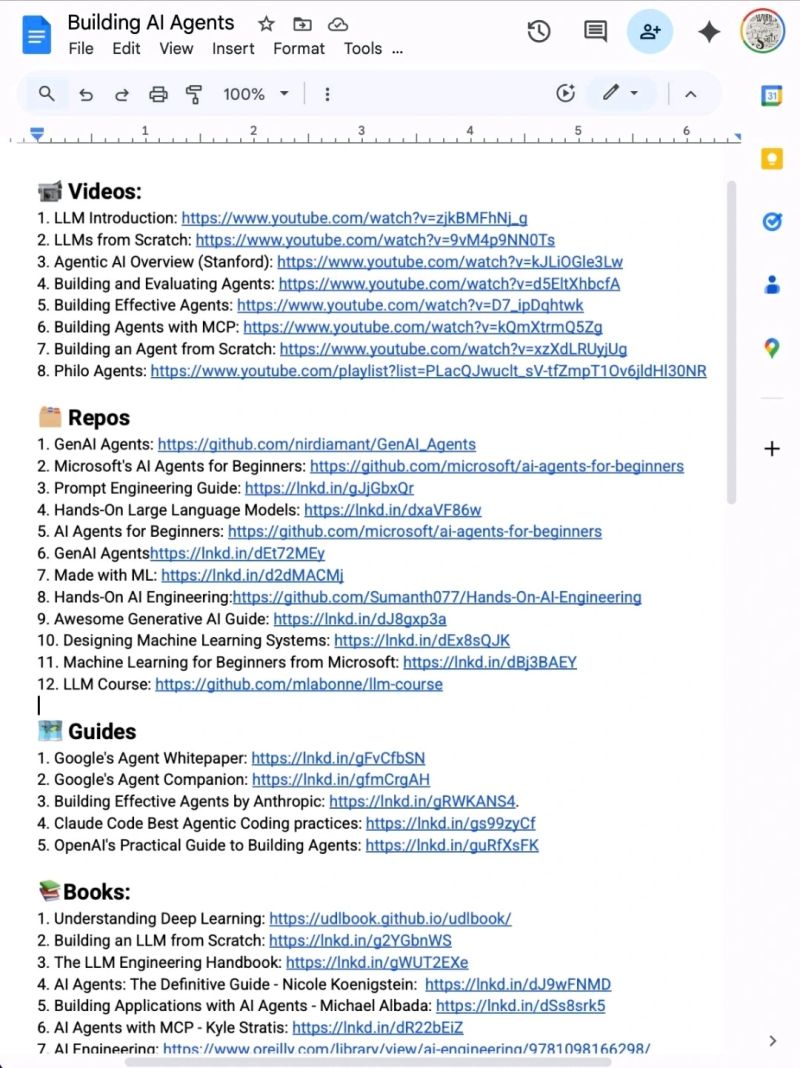
Stop wasting hours trying to learn AI. 📘📚
I have already done it for you.
With one list. Zero confusion. And no fluff
📹 Videos:
1. LLM Introduction: https://t.co/kyDon6qLrb
2. LLMs from Scratch: https://t.co/2hyMhuKoiI
3. Agentic AI Overview (Stanford): https://t.co/FXu6cAqITC
4. Building and Evaluating Agents: https://t.co/ZigR1tdOFL
5. Building Effective Agents: https://t.co/uYwfwO55mO
6. Building Agents with MCP: https://t.co/4arFTW1b3i
7. Building an Agent from Scratch: https://t.co/eOmveyM9Hz
8. Philo Agents: https://t.co/zLu7x1tx9m
🗂️ Repos
1. GenAI Agents: https://t.co/eXCl2YaRPv
2. Microsoft's AI Agents for Beginners: https://t.co/3CSW4zPAwf
3. Prompt Engineering Guide: https://t.co/GVzvxPYDVO
4. Hands-On Large Language Models: https://t.co/0rgDvhx3pI
5. AI Agents for Beginners: https://t.co/3CSW4zPAwf
6. GenAI Agentshttps://lnkd.in/dEt72MEy
7. Made with ML: https://t.co/9z5KHF9DMe
8. Hands-On AI Engineering:https://t.co/dldAj5Xkr6
9. Awesome Generative AI Guide: https://t.co/U2WZhT4ERV
10. Designing Machine Learning Systems: https://t.co/sYAZX34YdQ
11. Machine Learning for Beginners from Microsoft: https://t.co/NjFxHbC9jZ
12. LLM Course: https://t.co/N34YTPu1OK
🗺️ Guides
1. Google's Agent Whitepaper: https://t.co/bW3Ov3vMW0
2. Google's Agent Companion: https://t.co/wredwWAbBA
3. Building Effective Agents by Anthropic: https://t.co/fxtE4alVrJ.
4. Claude Code Best Agentic Coding practices: https://t.co/lLSwJ9pG7C
5. OpenAI's Practical Guide to Building Agents: https://t.co/xgkEIogGfh
📚Books:
1. Understanding Deep Learning: https://t.co/CjcKpTemmV
2. Building an LLM from Scratch: https://t.co/DaWBxOx8o3
3. The LLM Engineering Handbook: https://t.co/ZA1n0N41Mf
4. AI Agents: The Definitive Guide - Nicole Koenigstein: https://t.co/boLkl1VlKb
5. Building Applications with AI Agents - Michael Albada: https://t.co/H1Xf5EkJLL
6. AI Agents with MCP - Kyle Stratis: https://t.co/JI3ELQZE6a
7. AI Engineering: https://t.co/Xk0JzMIf7o
📜 Papers
1. ReAct: https://t.co/QNqE4UU55w
2. Generative Agents: https://t.co/CwEpoJgY1U.
3. Toolformer: https://t.co/5m9xZd5teZ
4. Chain-of-Thought Prompting: https://t.co/KjVlgdWi77.
🧑🏫 Courses:
1. HuggingFace's Agent Course: https://t.co/7FSUYKxIdG
2. MCP with Anthropic: https://t.co/IkZGiWm2yS
3. Building Vector Databases with Pinecone: https://t.co/2YRoMfLdXd
4. Vector Databases from Embeddings to Apps: https://t.co/23A50ixbHJ
5. Agent Memory: https://t.co/uc3L9BrNF7
Repost for your network ♻️
#Kerala politicians complain that the state didn’t get anything in the #UnionBudget.AP has managed to attract multiple large #datacenter investments. it comes from sustained effort, policy clarity, and investor-friendly governance.Complaining is easy.Creating jobs takes real work
No #budget boost for markets? Expected. The #USIndia#TradeDeal has been brewing. Most probably the governemnt knew this itself will be the best boost for the markets
Arattai is on the surface a simple product but it has a lot of depth inside.
Let me list the engineering frameworks (all homegrown) that power Arattai.
First is what we call our messaging/AV framework. This has been the "real time" workhorse of Zoho for a while and this is what offers you those crisp calls and meetings that connect quickly. It has been perfected for 15 years.
Then we have a distributed framework that allows us to distribute the workload among many servers and databases, and provides fault tolerance, performance monitoring, security and so on. This is the backbone of Zoho and powers a lot of what you see on the surface and also keeps our systems secure. We have been perfecting this for over 20 years now!
We have teams actively working on these frameworks and they provide strong support to the Arattai team.
Our staying power comes from the depth of all the R&D we do. Recently I have moved full time to R&D and you will see many more innovations from us.
Finally being a dedicated engineer is like being a Rishi.
This is what I told our Arattai team yesterday: all of you have worked hard for over 5 years without expecting that the product would ever take off.
Allow neither praise nor criticism nor fame to distract you, resolutely stay the course.
That is our mindset.
@ndtv@dpkBopanna@reetksahni#sarjapur#dommasandra area road condition is the worst. Primary issue is the dusty roads with a lot of potholes.I pity the condition of the residents after paying huge property tax and road tax. Can't use 4 wheeler due to traffic jams and cant use 2 wheelers due to dusty road.
🔴#BREAKING | Bengaluru: Standoff between police and residents amid protests over infrastructure mess
NDTV's @dpkBopanna joins @reetksahni with more details
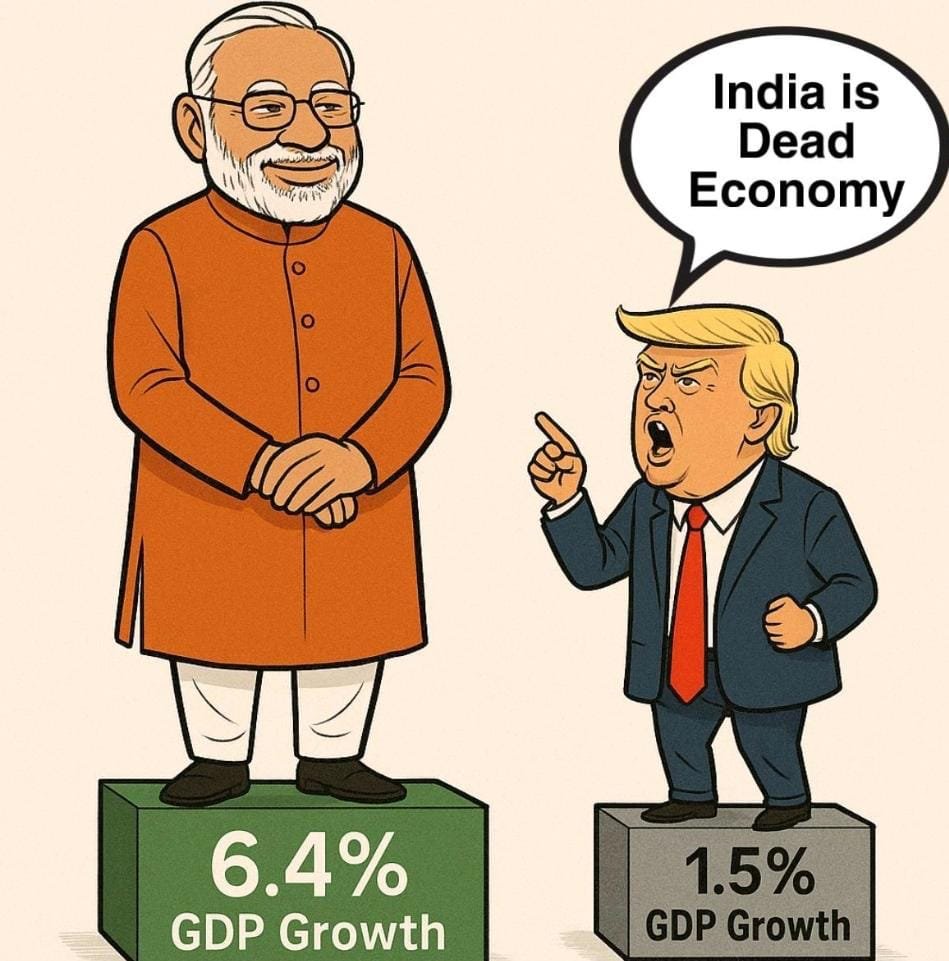
Reporter: India says US imports Russian Uranium, chemicals and fertilisers while criticising India’s energy imports from Russia
Donald Trump: I don't know anything about that. I have to check. Will get back to you
(Source: US Network Pool via Reuters)
#DonaldTrump#India #Russia
@akshaypg1990@Jointcptraffic@siddaramaiah@kdevforum It is just the beginning. Wait for complete occupancy of big projects like Prestige city & Bhavisha . Add the metro construction work to that. If there is no infra upgrade then it is going to be nightmare to commute to Sarjapur
The A171 Investigation does not point out to Pilot Error
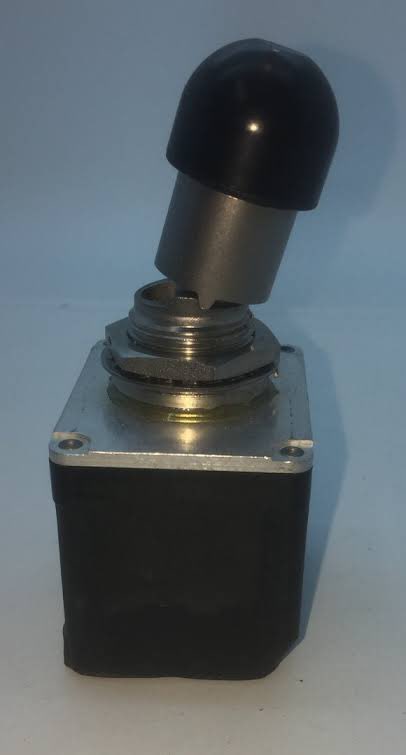
The Fuel switch Revelation does not say that Pilots turned off the Fuel Switches, it could have been a software error where the system switched off the Fuel Supply and the systems logged it
Boeing is doing everything in its PR to blame the Pilots and its easy to do so because the dead won’t come back to defend themselves
When the Pilots are having the conversation that none of them switched off the Fuel Switches, the possibility of Software error becomes high