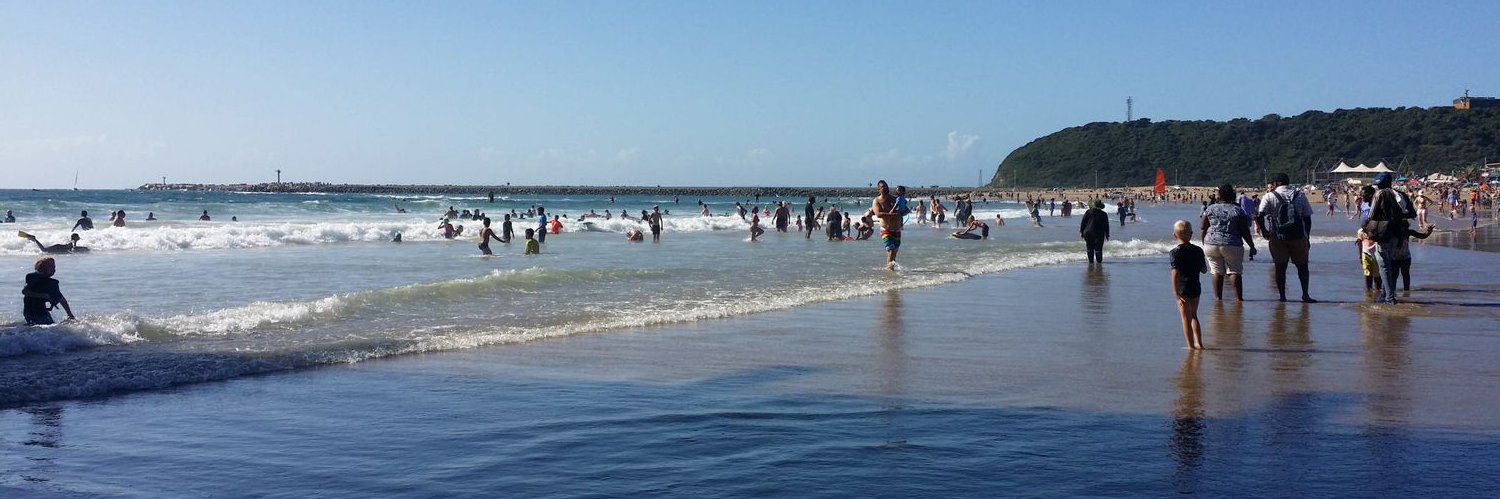
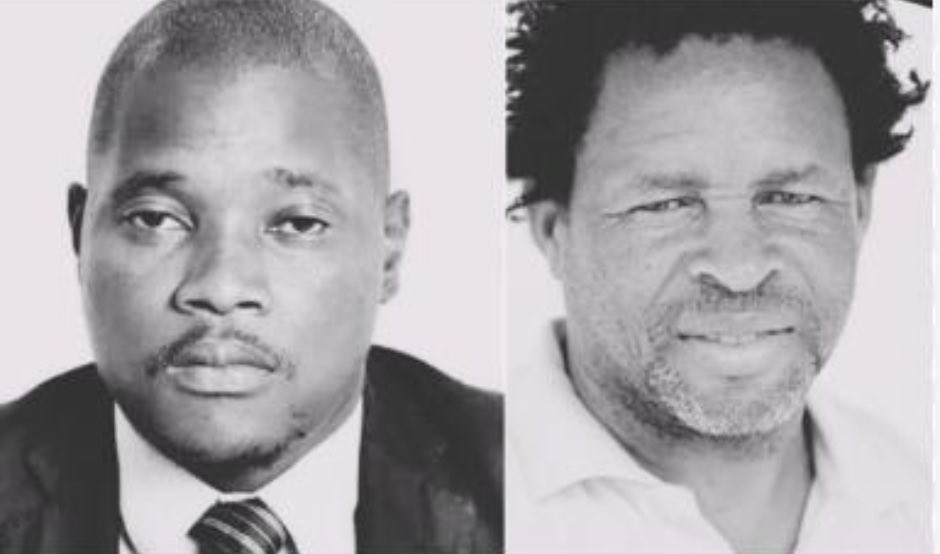
'The only way we can understand what Israel is doing in an overall sense is not a series of war crimes. It is one big crime and that the name for that is genocide.' My question to Israeli historian Benny Morris - which he didn't answer - in @mehdirhasan's new @AJHeadtoHead.
This is Waterfalls, a medium-density suburb in Harare, with big houses on large stands. In colonial times, it was mainly a white suburb. In London terms, you could compare it to somewhere like Croydon, and in Johannesburg to a place like Norwood. Now look at the road in this video.
Here is the joke. The Minister of Transport, the man responsible for this disaster, was recently declared Minister of the Year in Zimbabwe. In other words, he was judged the best minister in the entire cabinet under Emmerson Mnangagwa. Just imagine how catastrophically useless the rest of them must be to be beaten by someone presiding over this level of decay.
When we talk about incompetence, corruption, and the looting of public funds, some people think we are just politicking. This is what we are talking about.
This is supposed to be a relatively affluent suburb. Yet motorists are forced to abandon what is meant to be the road just to get where they are going. Sometimes they have to drive on the wrong side because it is slightly less destroyed, and then they get fined for it.
This is not an accident. This is what happens when a country is run by an incompetent, corrupt, and ruthless mafia. This is today’s Zimbabwe.
Perhaps it is important for me to share a bit of history.
When Zimbabwe became independent in 1980, roads were controlled, repaired, and maintained by local authorities, the city councils. When the ZANUPF government realised how much money was coming from motorists, they took over control of the roads and of the taxes that are supposed to ensure that roads are properly maintained.
These include vehicle licence fees, tollgate fees on highways, carbon tax, and taxes from fuel. Every dollar spent at the fuel pump includes a portion that is supposed to go to road maintenance.
This is a revenue stream close to a billion dollars every year. There is no shortage of money. Zimbabweans pay four different taxes just to own and use a car. The problem is that this money is looted.
This is the money that should be fixing these roads. Instead, it is being stolen.
They do not just steal the road tax money. They also steal from motorists again when people are forced to repair damage caused by this dilapidated road infrastructure, and then they congratulate the minister responsible with an award for it.
Yes @daddyhope is right, and anyone who has lived under this system can see it. Mnangagwa's government has mastered the cruel science of keeping people poor just enough to be hungry, desperate enough to be scared, and dependent enough to be controlled.
Poverty in Zimbabwe is not an accident. It is not “economic challenges.” It is a weapon.
As Nelson Mandela once said, “Overcoming poverty is not a task of charity, it is an act of justice.”
But our rulers fear justice and that is because justice gives citizens power.
The gap between the rich and the poor did not widen by itself. It was engineered.
When the ruling class can fly in private jets while citizens queue for mealie-meal, that is not governance, that is domination.
When ministers own mansions and fleets of cars while hospitals have no syringes, that is not mismanagement, it is deliberate neglect.
This isn’t new in politics.
John Adams, one of America’s founding thinkers, warned that “Poverty is produced by the government and used to subdue citizens.”
Mnangagwa has perfected exactly that.
When people are poor, they don’t ask for democracy, they ask for survival.
When they are hungry, they don’t challenge authority they chase handouts.
And when they depend on a politician for food, they stop asking questions about corruption.
That is why poverty NEVER ends here.
Thomas Sankara said:
“He who feeds you controls you.”
ZANU-PF understands that Message very well.
Food aid, farming inputs, and handouts are not social welfare, they are chains.
And the rich–poor divide is the fence that protects the powerful. When the rich are too comfortable to protest and the poor are too scared to try, those in power become untouchable.
So when Hopewell calls out this system, he is not “insulting the government” he is exposing its survival strategy.
And the louder the regime attacks critics, the more it confirms the truth.
Zimbabwe will only change when citizens stop begging for crumbs and start demanding institutions that work.
Not handouts.
Not slogans.
Not propaganda.
Real governance.
Real justice.
Real equality.
Because as Kwame Nkrumah warned, “Seek ye first the political kingdom, and all else shall be added.”
But our leaders seek power first, and subtract everything else from the people.
In the end, poverty in Zimbabwe is not a national tragedy it is a political design.
And it is time we dismantle it.
I have waited too long, but I am going to delete this account, as 'x' is a dangerous propaganda machine of the far right under Elon Musk. Please reconnect on @sarahbracking.bsky.social or https://t.co/EEIgG9BlOT or [email protected]
70 years ago, a woman discovered the structure of DNA.
But 2 Cambridge men stole her work and won the Nobel Prize.
She was erased from history and died of cancer.
Here’s how the biggest theft in science buried Rosalind Franklin’s name in history… 🧵u
The detention of Blessed Mhlanga is a cowardly act by the Zimbabwean government.
Blessed is not a flight risk, yet the jackboot tactics used in the past are being used again.
Arresting journalists for practicing journalism is a clear sign of a regime that lacks confidence in its mandate!
It is clear that the side shows that have been created against Blessed and other journalists by well know covert ZANUPF social media influencers are deliberate so that we don’t talk about this issue!
@futurepensions @HMRCcustomers@HMRCgovuk 17th attempt to call the Future Pensions Line. Normally just cut off after the automated messages. This morning, called at 8.03 atomic time. Line cut unanswered 39 mins later. do you have anyone on that line?
Woke up thinking I was in Berlin in 1884, or Ukraine in July 1919. Back to the future. Two imperialists carving up someone else's country for rare earth minerals in the fake name of multipolarity.
Stefan Leins will speak on greenwashing in finance in Amsterdam @UvA_AISSR on 28 January
with @SarahBracking @cmlwong Marc Brightman, Barbara Lambotte
https://t.co/rQVrQXObq2
Examining conferring of authority and legitimacy on financial actors and markets in relation to climate
change and environmental governance: what role for science? @maud_bo
Very happy to announce the 2025 Wageningen Political Ecology Spring school (7-11 april):
Political Ecologies of the Countryside: agrarian roots, environmental transformations & capitalist conflicts
Please spread the word or consider joining! @PolEcoNet
https://t.co/Xe4r8gVWVe
Here are 40 (preliminary) names of some of the 130 people killed since 21 October.:
1. Feliz Joaquim Tamba, 53 years
2. Silvio José Jeremias, 22 years
3. Ernesto Jacinto Nepute, 29 years
4. Augusto Cumbane Jr, 13 years
4. Hélder Sérgio Vilanculos, 18 years
5. Alberto Francisco Masseco, 39 years
6. Jorge Narciso Langa, 20 years
7. Abel João Bonde, 20 years
8. Pascoal Guambe, 24 years
9. Patrício Paulo Vilanculos, 42 years
10. Pedro Perreira Jecinau, 34 years
11. Aly Momade Mhambuane, 20 years
12. Albino José Sibia AKA Mano Shottas, 30 years
13. Arlindo Zefanias Simango, 36 years
14. Alexandre Rosita Nhanala, 14 years
15. Beto Abdul Fidaussene, 20 years
16. Daudo Jate Abudo, 32 years
17. Rafael Domingo’s Cumpeu, 23 years
18. Manuel Ernesto Cuinica, 23 years
19. Abel dos Santos Timane, 25 years
20. Francisco Amós Cumbana, 26 years
21. Cerena Carlitos Farnela, 17 years
22. Ercidio João Muandro, 56 years
23. Emilio Feliciano Benjamin, 40 years
24. Domingos Muianga, 31 years
25. Amnosse Chitlhango, 26 years
26. Azarias Mavie, 35 years
27. Belmiro Guambe, 34 years
28. Reginaldo Felix Macie, 16 years
29. Antônio Joaquim Nhanguililuiguane < 18 years
30. Moisés Absalão Mugumezule, 23 years
31. Ana Bernardo Semente, 56 years
32. Melita, 19 years
33. Matias Raimundo
34. Carimo Taiobo
35. Carlos Langa
36. Armando David Dlalane
37. José Polisario Chichava
38. António, 30 years
39. Filipe
40. Maenda
More names will come in the second list. Still talking to families and verifying information.
Geração 18 de Março
#freemozambique
#MozambiqueElections
For those of you who just started following the news on Mozambique, note that 19 October is a very important date that will help you understand where Mozambique is right now and why things escalated.
Follow the thread to understand:
🧵 🪡
Thank you @maud_bo Maud for inspiring me and being the lead author here. We say lets move beyond sciencewashing in green finance @KCLSustainable
https://t.co/BPfBV0JNSt